Newsletters


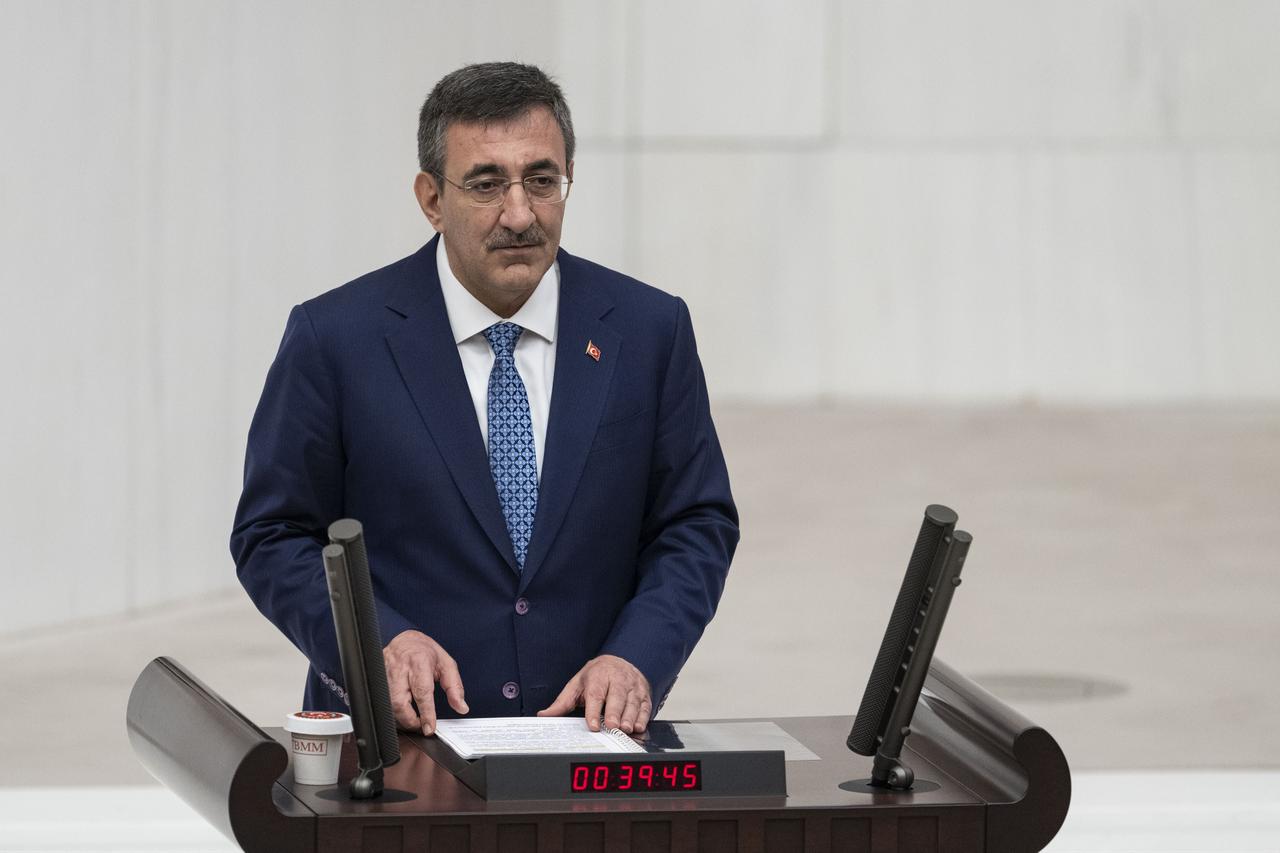


Türkiye will not use Treasury funds to cover losses from liquidating 131 troubled investment funds, Vice President Cevdet Yilmaz said Wednesday, as authorities seek to draw on available assets and recovered proceeds to repay investors.
Yilmaz outlined the work of the Fund Coordination Board, established at the direction of President Recep Tayyip Erdogan, during a parliamentary session. He explained that high-risk free funds do not carry the state guarantee applicable to the banking system.
Each fund's own resources will be the primary source for meeting investors' claims during liquidation, while authorities will also use money recovered from those who obtained excessive or unjust gains, along with proceeds from the sale of assets removed from the system, Yilmaz added.
"The funds currently held by each fund will be used as a priority in the liquidation process," Yilmaz said.
As of Oct. 5, the 131 funds under liquidation accounted for 4.6% of all investment funds and 7.7% of total portfolio value, while their combined assets represented 2.4% of households' financial assets. "In other words, the problem has occurred in a limited area of the fund market," Yilmaz emphasized.
Ziraat Bank will manage the liquidation of 125 funds, while Is Bank will handle six. The 125 funds under Ziraat Bank's management have 151,247 individual investors, compared with 388,718 across the six funds handled by Is Bank.
Under the legal framework, investors will be paid according to their respective shares. The first payments to investors in 17 funds undergoing ordinary liquidation are expected Thursday, covering 43,643 people. Small investors and money market funds will receive priority in the broader process.
For extraordinary liquidation, interim payments of up to ₺1 million ($20,326) in principal could begin in October if Parliament approves the draft law, while the final liquidation balance is expected to be settled within five to six months.
Yilmaz noted that disruptive market activity can occur even in developed economies with strong oversight, stressing the need to identify and address such problems quickly.
"Problems can emerge in financial markets at different times and for various reasons. What matters is identifying these market-disrupting structures as quickly as possible and resolving them as effectively as possible," he said.
The State Supervisory Council's inquiry will clarify the roles and responsibilities of the institutions and independent regulators involved, Yilmaz added. President Erdogan has tasked the council with the review, with 10 inspectors currently working in the field.
Turkish authorities are continuing to investigate capital market irregularities that came to light after several investment funds failed to meet investor redemption requests in September, triggering a market rout.
The Capital Markets Board (CMB) ordered the liquidation of 131 investment funds managed by seven portfolio companies, affecting 455,758 individual investors and more than $19 billion in assets at the time.
Prosecutors are investigating trading in 26 Borsa Istanbul-listed stocks over suspected market manipulation, while also examining money transfers and links between individuals and accounts that recorded unusually large gains.
The investigation has expanded to 217 suspects. Of those, 85 have been arrested and 98 placed under judicial control.
Among those arrested are Tera Yatirim Holding Chairperson Emre Tezmen, Tera board members Emre Alkin and Kerem Alkin, Tera Portfoy General Manager Alper Ozturk and Pusula Holding Chairperson Serdar Turhan.
Authorities are also examining financial transactions involving executives and their relatives, including bank activity, money transfers and cryptocurrency movements abroad dating back to 2024.
They have frozen assets belonging to dozens of suspects and seized luxury vehicles, private jets and yachts allegedly linked to people under investigation.


 Set as preferred source
 Set as preferred source


 2 min read

 1 min read