Newsletters


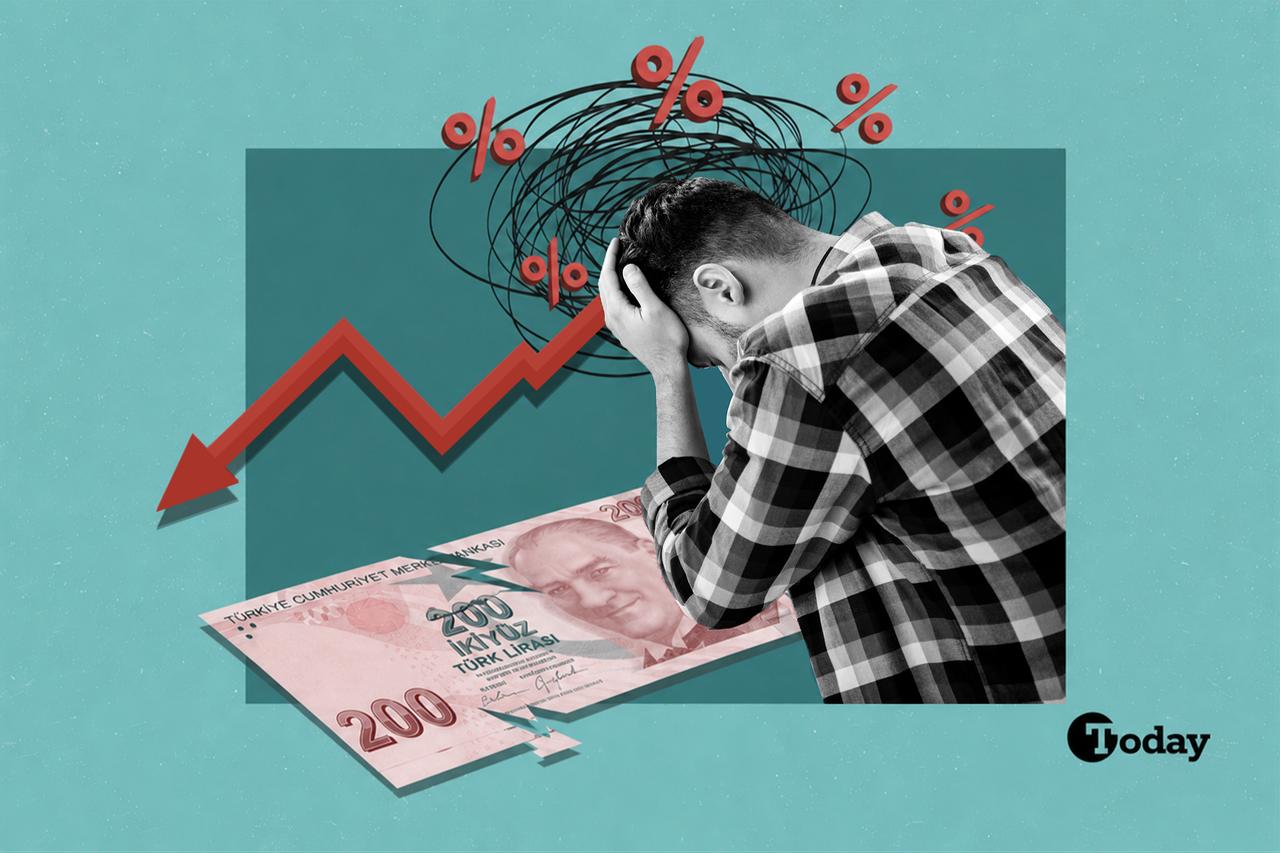


A home they had been saving for. A car they hoped to buy. A wedding they had been planning. Even a dishwasher for their mother. Those are some of the plans now hanging in the balance as Türkiye's latest investment fund turmoil leaves hundreds of thousands of savers waiting to see how much of their money they will get back.
The shift is brutal in its simplicity: money that was supposed to eventually become something tangible is now caught up in market turmoil. Investors who were preparing for major purchases are instead waiting for clarity, with no clear sense of when they can move forward with plans built around their savings.
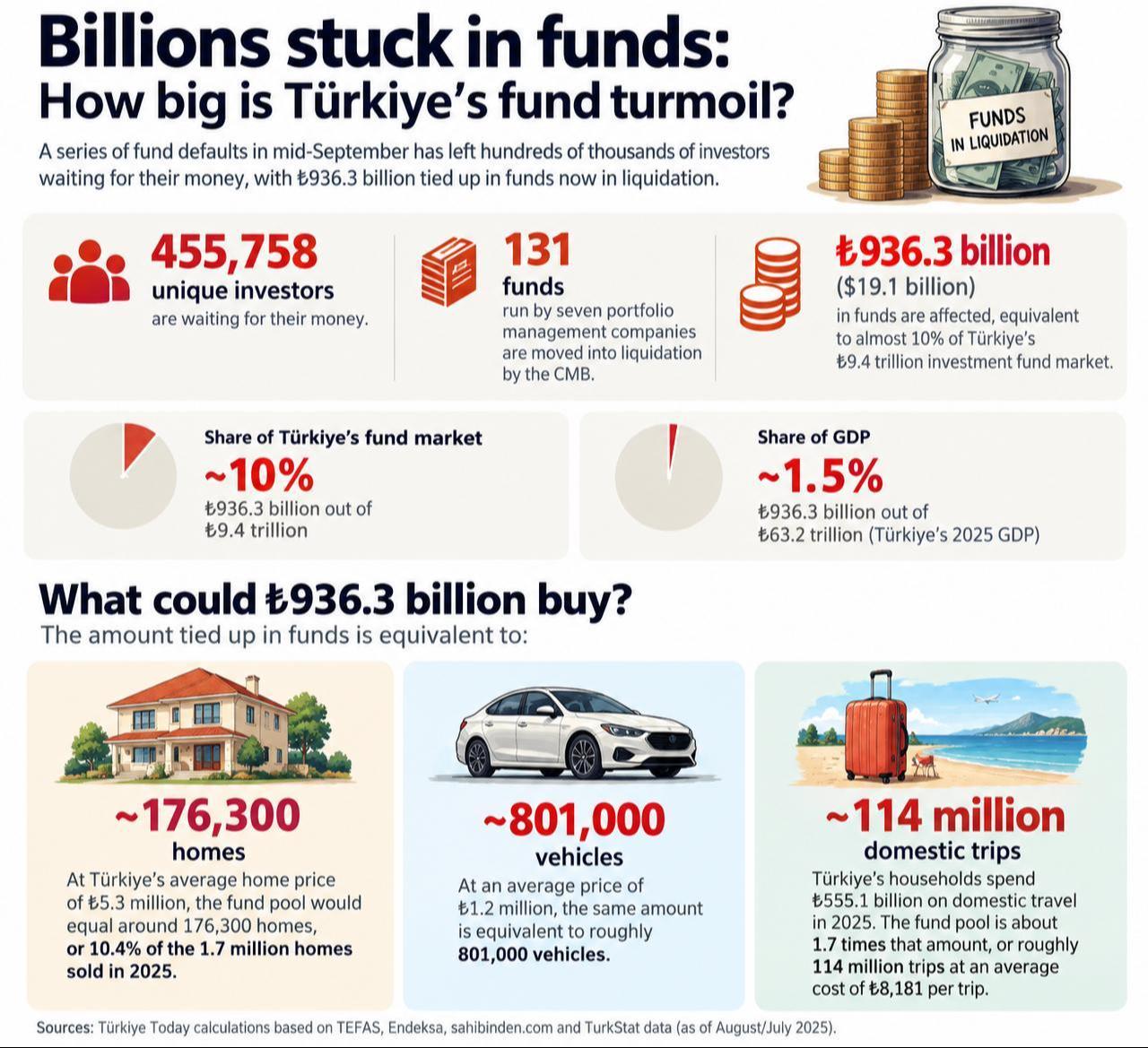
After a series of fund defaults in mid-September, which had particularly attracted investors seeking drastically higher returns, 455,758 unique investors are now waiting for their money after the Capital Markets Board (CMB) moves 131 funds run by seven portfolio management companies into liquidation to contain the fallout.
The funds hold about ₺936.3 billion ($19.1 billion), equivalent to almost 10% of Türkiye's ₺9.4 trillion investment fund market as of Sept. 17, according to calculations by Türkiye Today based on market data from the Electronic Fund Trading Platform (TEFAS).
Meanwhile, the broader Borsa Istanbul, which has 6.8 million individual investors, shed roughly ₺1.5 trillion ($30.6 billion) in market capitalization, falling to ₺17.4 trillion between Sept. 17 and Sept. 28, a 7.8% drop that adds to the wider market fallout.
Türkiye's economy is worth ₺63.2 trillion at current prices in 2025, making the ₺936.3 billion tied up in the affected funds equivalent to about 1.5% of GDP.
Even though it is not possible to determine how much of these funds belongs to households or was intended for major purchases and other expenses, a significant portion is believed to represent individual investors' savings.
To put the amount into everyday terms, at Türkiye's average home price of ₺5.3 million, the ₺936.3 billion fund portfolio would be equivalent to around 176,300 homes, or about 10.4% of the 1.7 million homes sold across Türkiye in 2025, based on August data from real estate market tracking platform Endeksa.
At an average price of ₺1.2 million, the same amount is equivalent to roughly 801,000 vehicles, based on July data from Türkiye's leading online classifieds platform, sahibinden.com.
The amount is also larger than what households spend on domestic travel over an entire year. Türkiye's households spend ₺555.1 billion on domestic travel in 2025, according to TurkStat, making the fund pool about 1.7 times that amount.
With average spending of ₺8,181 per domestic trip, the ₺936.3 billion would correspond to roughly 114 million trips.

The significance of these comparisons lies in what happens when the money is no longer available for its intended use, forcing households to put major purchases on hold.
Industry representatives cited by Türkiye daily said the disruption could spill over into consumer-dependent sectors, led by real estate, automotive, furniture, white goods, transportation, insurance, auto services and construction.
Household final consumption, accounting for over half of GDP, rose 3.5% year-on-year in the second quarter of 2026 but fell 1.3% from the previous quarter, marking a second consecutive quarterly decline and signaling a clearer slowdown in domestic demand.
Professor Hakan Kara, a former chief economist at the Central Bank of the Republic of Türkiye (CBRT), said the turmoil could depress growth by hitting household wealth and restricting access to savings.
"This event, through the asset and liquidity effects, will further slow economic activity and growth," Kara said in a post on X.
He also assessed that weaker demand could ease inflationary pressure and increase the likelihood of a rate cut at the CBRT's October meeting. Under normal conditions, he said, a shock of this scale could have warranted a 150-200 basis-point cut.
"Because of the risk of a shift into foreign currency and concerns about losing reserves, the central bank would prefer 100 basis points," he noted.
The central bank has kept its policy rate at 37% for five consecutive meetings, most recently on Sept. 10, while maintaining its overnight lending rate at 40%.
Following the fund rout, the CBRT stepped in to ease liquidity conditions, saying it would increase one-week repo funding when needed, revise banks' borrowing limits, and reduce collateral haircuts while closely monitoring financial markets.
Data from the central bank's open market transactions show that the bank has supplied nearly ₺900 billion ($18.7 billion) through one-week repo auctions since Sept. 17, when the measures were first announced.
In its latest decision, the bank pointed to a continued weakening in domestic demand and an easing in underlying inflation, while warning that higher energy prices linked to geopolitical developments remain an upside risk to inflation.
Governor Fatih Karahan had already highlighted a sharper slowdown in domestic demand in the bank's August Inflation Report briefing, highlighting that "the weakening in domestic demand has become more pronounced." The bank has also pointed to weaker demand as supportive of the disinflation process.
At the same time, the central bank has previously highlighted the wealth effect from rising asset prices as a driver of domestic demand.
In November 2025, Governor Fatih Karahan said the rise in gold prices had generated more than $100 billion in additional household wealth and "supports consumption demand through this wealth effect channel."
A bank study in May 2025 on gold prices found that the rise in gold-related wealth has supported demand in housing and automobiles, illustrating how gains in household assets can translate into spending.
Türkiye's annual inflation eased to 31.5% in August, falling for the third consecutive month, while a 2.1% monthly inflation expectation in the CBRT's September survey implied annual inflation could fall to around 30.1% in September.


 Set as preferred source
 Set as preferred source


 1 min read
 1 min read