Newsletters


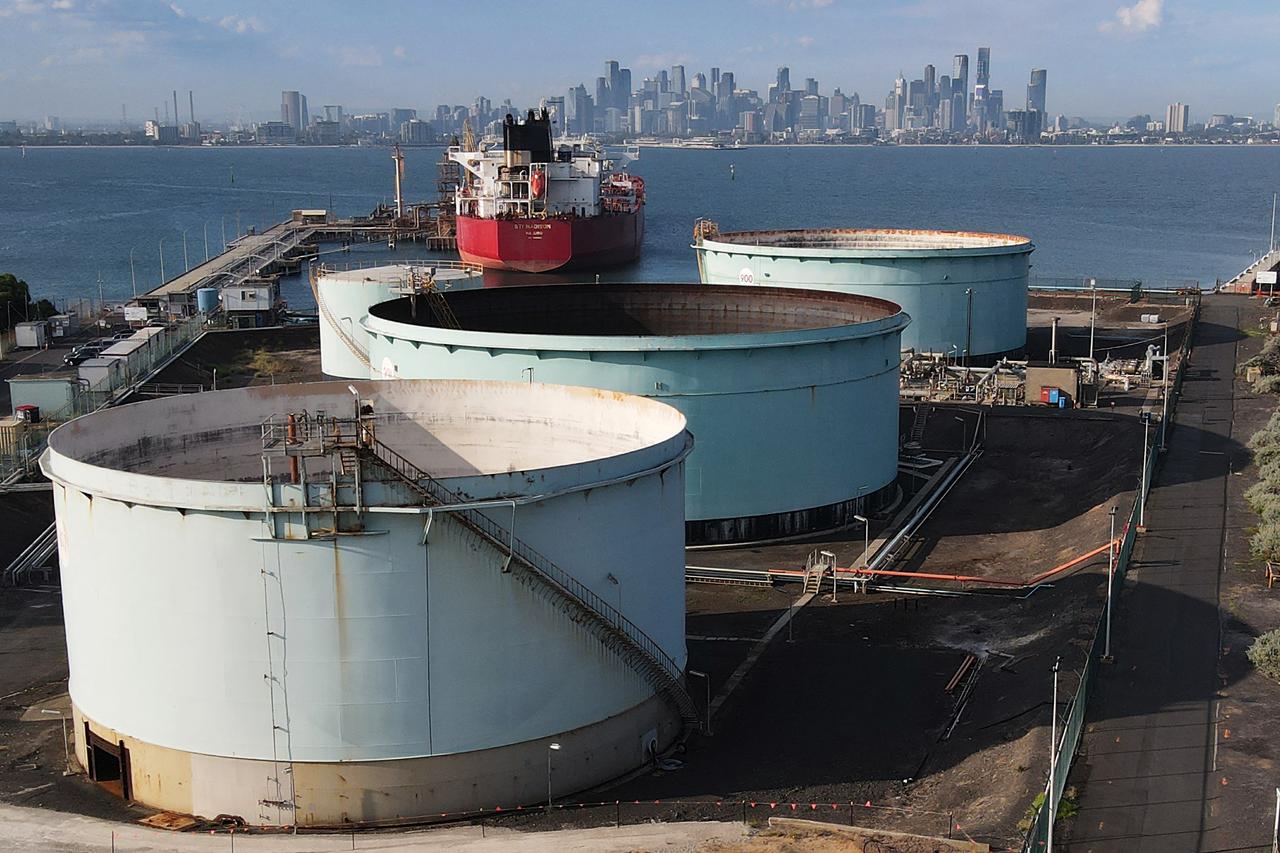


Oil prices tumbled over 10% after U.S. President Donald Trump said Monday he had ordered a five-day delay to planned military strikes on Iran’s energy infrastructure, citing ongoing talks he described as "very good" and "productive."
International benchmark Brent crude slid below $100 per barrel, while U.S. benchmark WTI crude fell to as low as $85 per barrel. Earlier, equities in Europe and Türkiye sank Monday as mutual threats by the U.S. and Iran to target energy infrastructure further fueled already elevated inflation risks amid surging oil prices, mirroring a sell-off that swept Asian markets.
The pan-European STOXX 600 fell over 2% to 560 points, with Germany’s DAX and France’s CAC 40 also declining, while the U.K.’s FTSE 100 dropped 2.5% to 9,674.95.
Türkiye’s benchmark index, the BIST 100, fell nearly 3% to 12,660, with banking stocks leading losses with a 6.7% drop amid rising regional tensions, mounting inflationary pressure, and widening current account deficit risks due to higher energy costs.
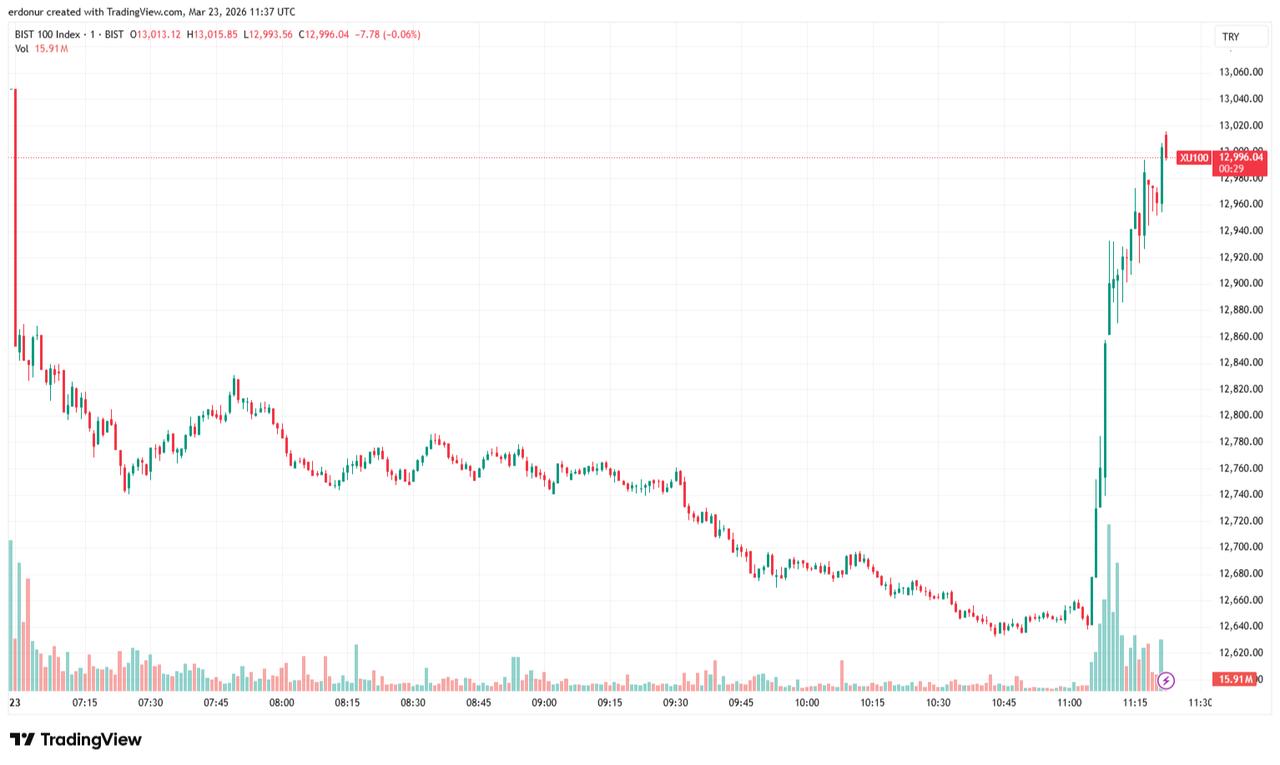

Later in the day, markets reversed course after Trump’s remarks. In Europe, the STOXX 600 turned positive, while Türkiye’s BIST 100 recovered above the 13,000 level. U.S. equity futures also jumped, with S&P 500 futures up 2.7%, Nasdaq 100 futures rising 2.6%, and Dow futures advancing 2.7%.
Gold, which fell as much as 7% earlier in the day, pared losses to trade down 1.3% at $4,432.09 per ounce.
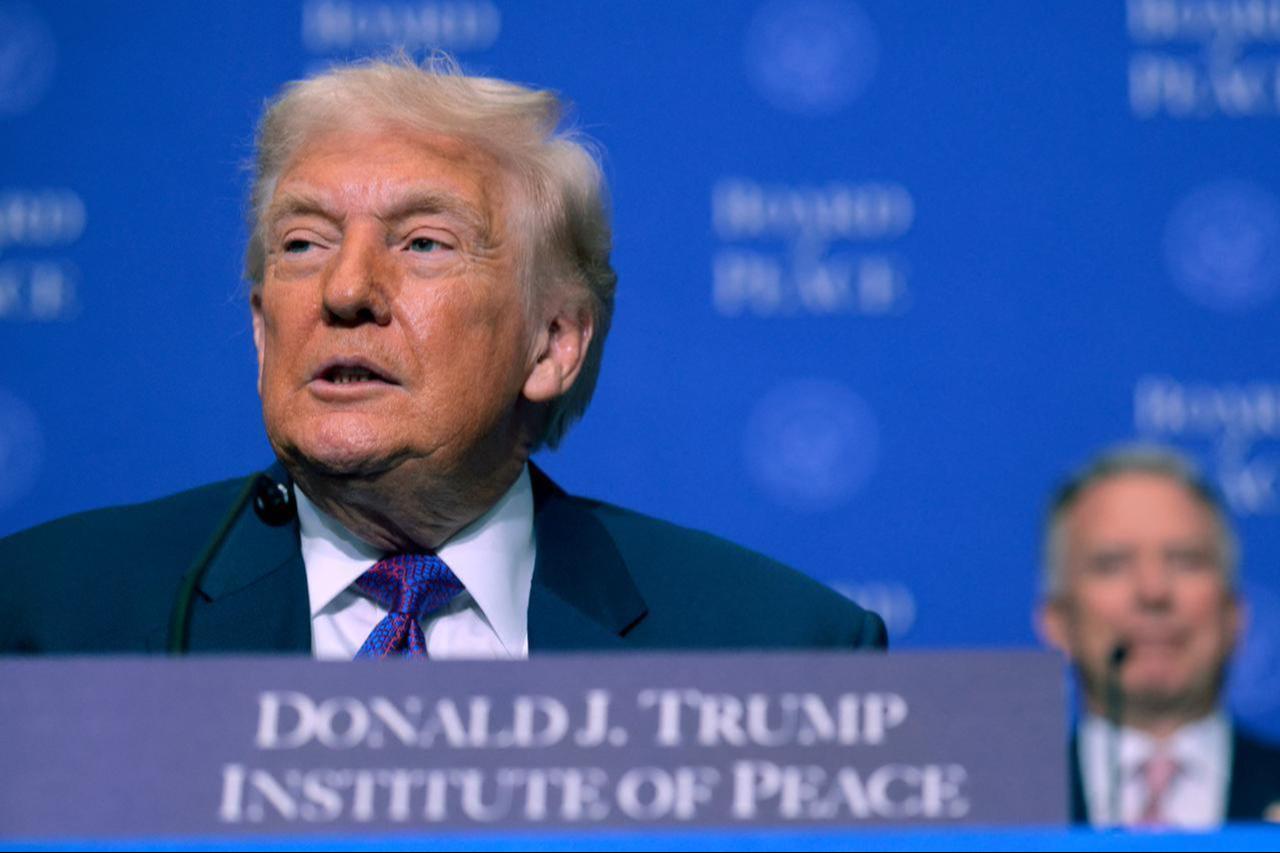
Iran said Sunday it would strike the energy and water systems of its Gulf neighbors if U.S. President Donald Trump followed through on his threat to target Iran’s electricity grid within 48 hours, dimming hopes for an early end to the war, now in its fourth week.
Trump warned that Iran had two days to fully reopen the vital Strait of Hormuz, which remains effectively closed to most vessels, with limited prospects for naval protection for shipping. The strait, which accounts for roughly a fifth of global oil and gas shipments, continues to drive up costs.
Oil prices remained slightly above Friday’s close, with international benchmark Brent hovering around $113 per barrel. Futures for the coming months also remain elevated above $90 per barrel, as global banks raise their price forecasts, suggesting high prices are likely to persist.

Last week, major central banks, including the U.S. Federal Reserve, the Bank of Japan, the European Central Bank and the Bank of England, held interest rates steady and warned about the inflationary impact of rising energy prices.
Rate cut expectations have been largely priced out of markets, a shift that is also reflected in bond movements. The yield on the 10-year U.S. Treasury climbed to a nine-month high of around 4.4%, marking an increase of roughly 44 basis points since the war began.
In Europe, borrowing costs are rising in tandem. Germany’s 10-year Bund yield, a benchmark for the eurozone, climbed to around 3.06%, hovering near levels last seen in 2011.
Türkiye’s bond market is seeing sharper moves. Two-year yields, which were around 34% earlier this year, have surged to 44% on Monday. Earlier this month, the Central Bank of the Republic of Türkiye (CBRT) raised its funding costs to 40% and kept its policy rate at 37% at its Monetary Policy Committee (MPC) meeting.
According to the central bank’s weekly data, interventions to stabilize the Turkish lira cost $23 billion from official reserves in the first two weeks of the conflict, while about $12 billion in carry trade positions exited the market in the first two weeks of March, with outflows expected to widen into the fourth week.


 Set as preferred source
 Set as preferred source


 1 min read

 1 min read