Newsletters




Oil prices fell sharply on Monday after U.S. President Donald Trump announced that fresh negotiations with Iran would begin later in the day, easing concerns over a prolonged disruption to global energy supplies through the Strait of Hormuz.
International benchmark Brent crude traded at around $83.4 per barrel, while U.S. benchmark West Texas Intermediate (WTI) slipped below $80 to $79.4 per barrel as of 6:06 a.m. GMT.
However, the sharp drop in oil prices failed to lift equity markets across Asia, as investors remained cautious over AI-related valuations and continued to question whether massive spending on artificial intelligence infrastructure will deliver sufficient returns.
Japan's Nikkei fell 1%, while South Korea's Kospi slumped 5.5%. The Japanese yen continued to strengthen after a rare joint currency intervention by Tokyo and Washington, rebounding from its weakest level against the U.S. dollar since 1986 to an intraday high of 155.23 per dollar. A stronger yen also weighed on Japanese exporters, adding pressure to the Nikkei.
China's Shanghai Composite edged down 0.5%, while Hong Kong's Hang Seng rose 0.3%. In Europe, Pan-European Stoxx 50 futures climbed 0.7%, and futures tied to major U.S. indexes also moved higher, with Nasdaq futures gaining 0.8%.
Precious metals advanced alongside the market moves. Gold rose 0.5% to $4,065 per ounce, silver gained 1.2% to $58.3, while palladium and platinum increased 0.6% and 1.3% to $1,650 and $1,280, respectively.
In cryptocurrency markets, Bitcoin and Ethereum fell 1.1% to $62,700 and $1,850, while the total cryptocurrency market capitalization slipped 0.9% to $2.15 trillion.


Trump announced Sunday that negotiations with Iran would begin Monday after the United States held off on planned military strikes in favor of a diplomatic solution. He did not disclose where the talks would take place or who would attend.
"Now what we're doing is we're talking to them in the form of a negotiation. It begins tomorrow afternoon," Trump said. The reversal came as Gulf allies urged de-escalation and sought to prevent a wider regional conflict that could further disrupt energy markets.
Hours after Washington called off the planned strikes, Iran indicated it was close to reaching an agreement with Oman on a new shipping route through the Strait of Hormuz, though details of the proposal were not immediately disclosed.
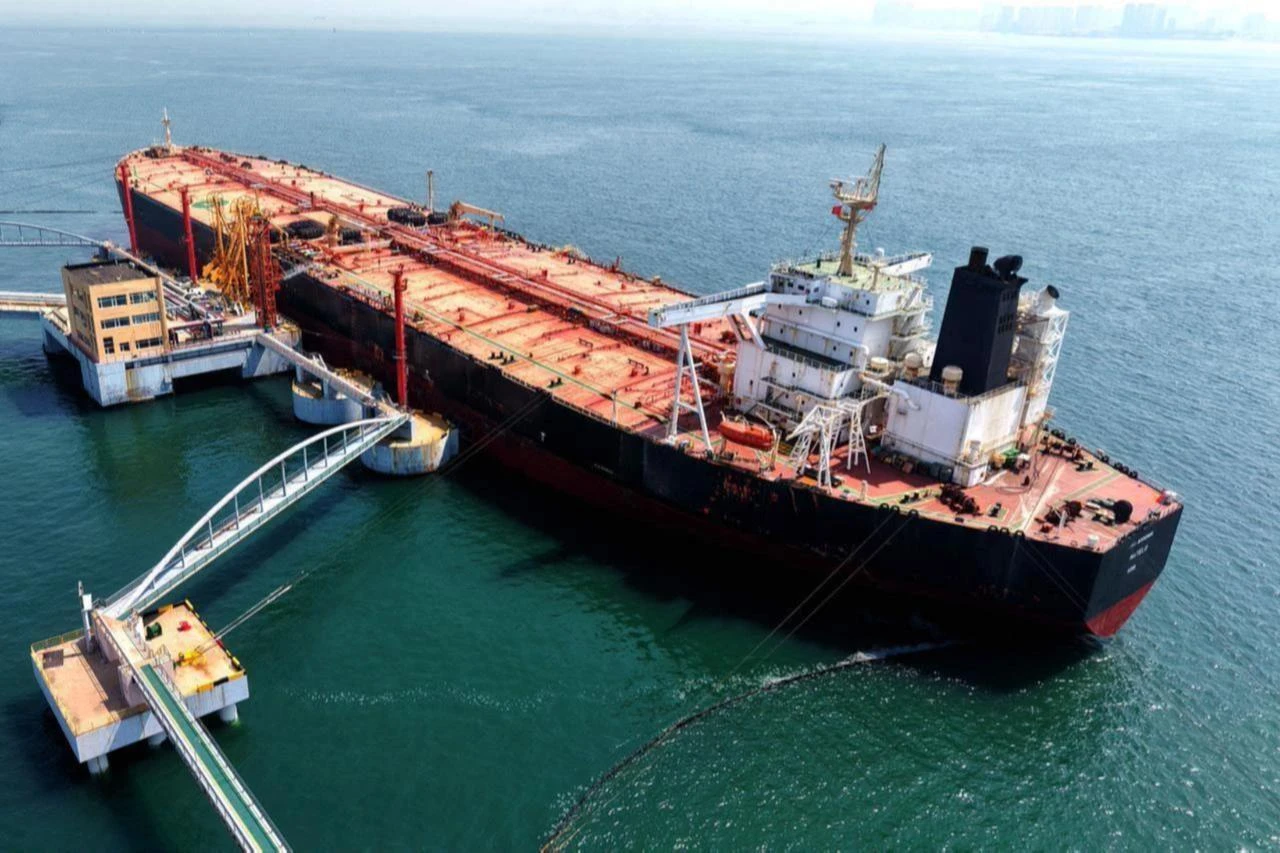
The conflict, which began in late February after U.S. and Israeli strikes on Iran, has repeatedly rattled global energy markets. Shipping through the Strait of Hormuz has been severely disrupted, sending oil prices above $100 a barrel at times before easing on hopes that negotiations could restore normal maritime traffic.


 Set as preferred source
 Set as preferred source


 1 min read
 1 min read