Newsletters




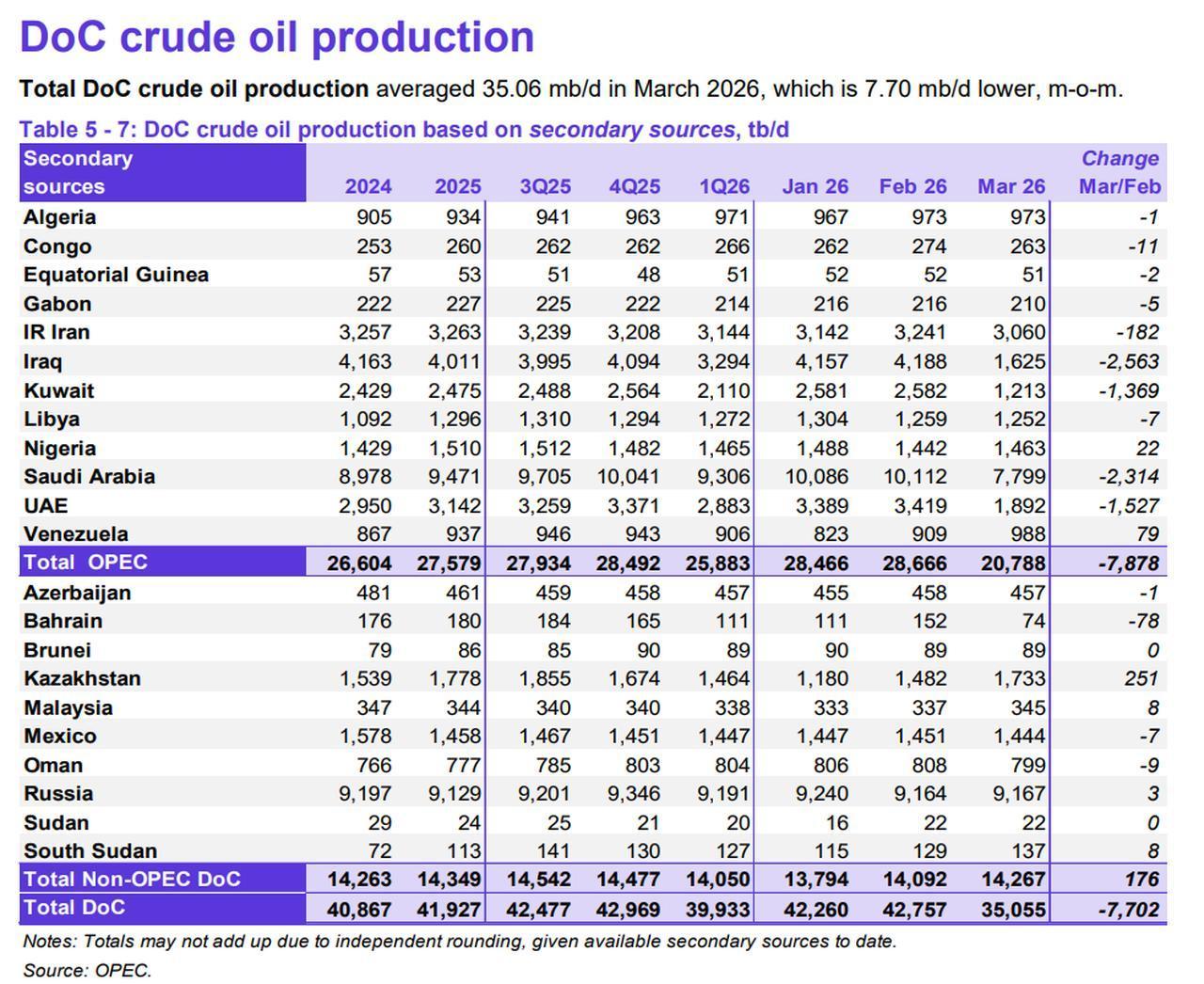
Crude oil production from the Organization of the Petroleum Exporting Countries (OPEC) fell sharply in March, retreating by 7.9 million barrels per day compared to the previous month to reach 20.8 million barrels per day, according to its latest monthly report.
The decline followed escalating disruptions in the Strait of Hormuz, a key global energy corridor, as conflict between the United States, Israel, and Iran brought traffic through the waterway to a near halt.
The broader OPEC+ group, which includes non-OPEC producers, also recorded a steep drop, with combined output decreasing by 7.7 million barrels per day to 35 million barrels per day over the same period.
The contraction was driven primarily by steep declines in Iraq and Saudi Arabia, as countries were forced to cut production due to filling storage capacity amid frozen exports. Iraq’s daily production dropped by 2.5 million barrels to 1.6 million barrels, while Saudi Arabia’s output fell by 2.3 million barrels to 7.8 million barrels.
The United Arab Emirates recorded a decline of 1.5 million barrels to 1.89 million barrels, while Kuwait’s output fell by 1.4 million barrels to 1.2 million barrels, as both countries were among the hardest hit by Iran’s missile and drone attacks on their energy infrastructure.
Iran largely remained unaffected, posting only a smaller reduction, with output easing by 182,000 barrels to 3 million barrels.

Oil production increases in Venezuela and Nigeria, which were not directly hit by the conflict, remained insufficient to offset broader losses, rising by 79,000 and 22,000 barrels to 988,000 and 1.5 million barrels per day, respectively.
Despite supply disruptions, OPEC kept its global demand forecasts unchanged for both this year and next. The organization expects oil demand to rise by 1.4 million barrels per day in 2026, reaching 106.5 million barrels per day. Growth is projected to be driven largely by non-OECD countries, where demand is set to increase by 1.26 million barrels per day.
For 2027, global demand is forecast to climb by a further 1.34 million barrels per day to approximately 107.87 million barrels per day.
Shipping activity through the Strait of Hormuz continued to falter entering the seventh week, even after a temporary ceasefire between the United States and Iran took effect on April 8. The waterway, which typically carries around one-fifth of global oil and LNG supply, remains under pressure as uncertainty over control and access persists.
Commercial vessel crossings declined by 10% during the first five days of the truce compared to the previous period, according to data compiled by Anadolu Agency from the shipping traffic tracker Marine Traffic platform. Between April 8 and 12, a total of 55 ships passed through the strait, including 29 loaded vessels.
Traffic had already collapsed following the outbreak of hostilities, dropping by more than 90% from a daily average of 129 ships recorded between Feb. 1 and 27.
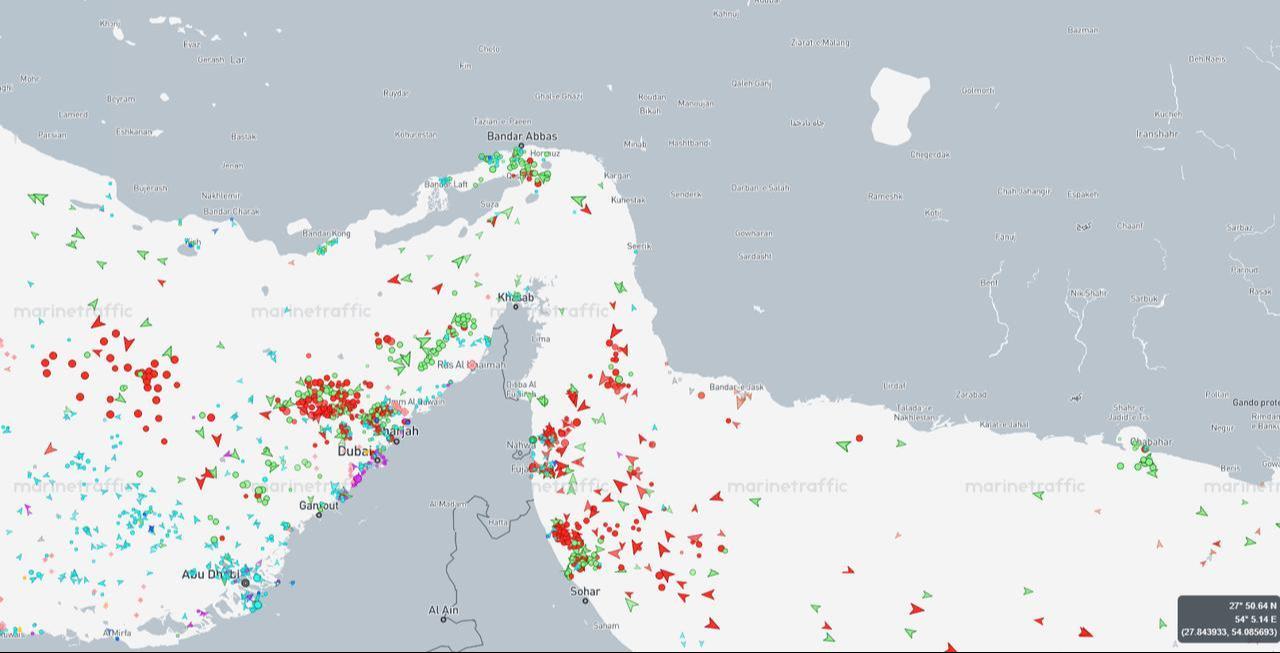
Most recently, U.S. President Donald Trump announced that naval forces would begin blockading ships attempting to pass through the strait after peace negotiations held in Islamabad failed to deliver an outcome.
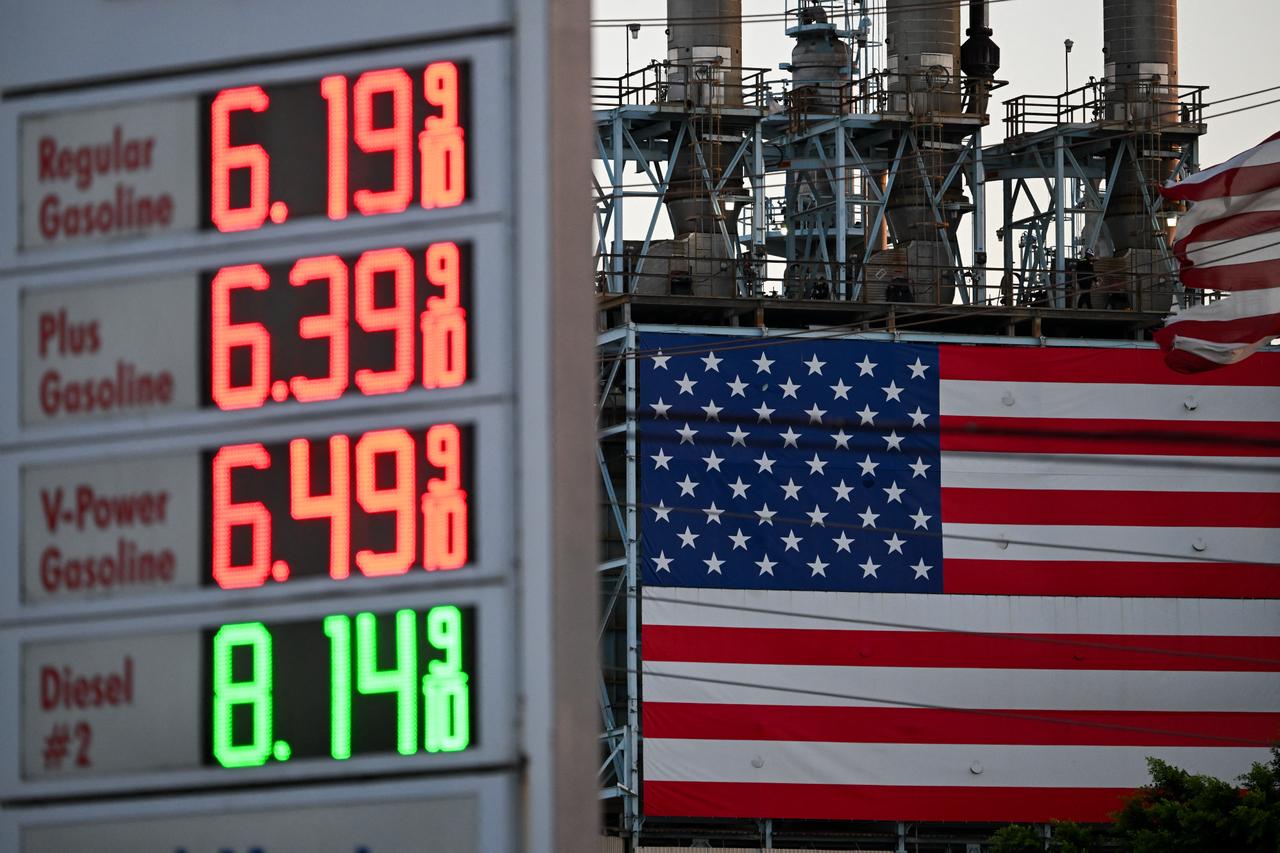
The move stirred concerns that shipping volumes would come under further pressure, with oil prices rebounding above $100 per barrel after a brief easing last week following the declaration of a two-week ceasefire.
Analysts at the U.S.-based investment bank Morgan Stanley expect Brent crude prices to peak at $110 per barrel in the second quarter of 2026 before easing to around $100 in the third quarter and stabilizing near $80 by 2027, suggesting that despite ongoing disruptions in the Strait of Hormuz, longer-term supply-demand dynamics may steer the market toward balance.


 Set as preferred source
 Set as preferred source


 2 min read

 1 min read