Newsletters


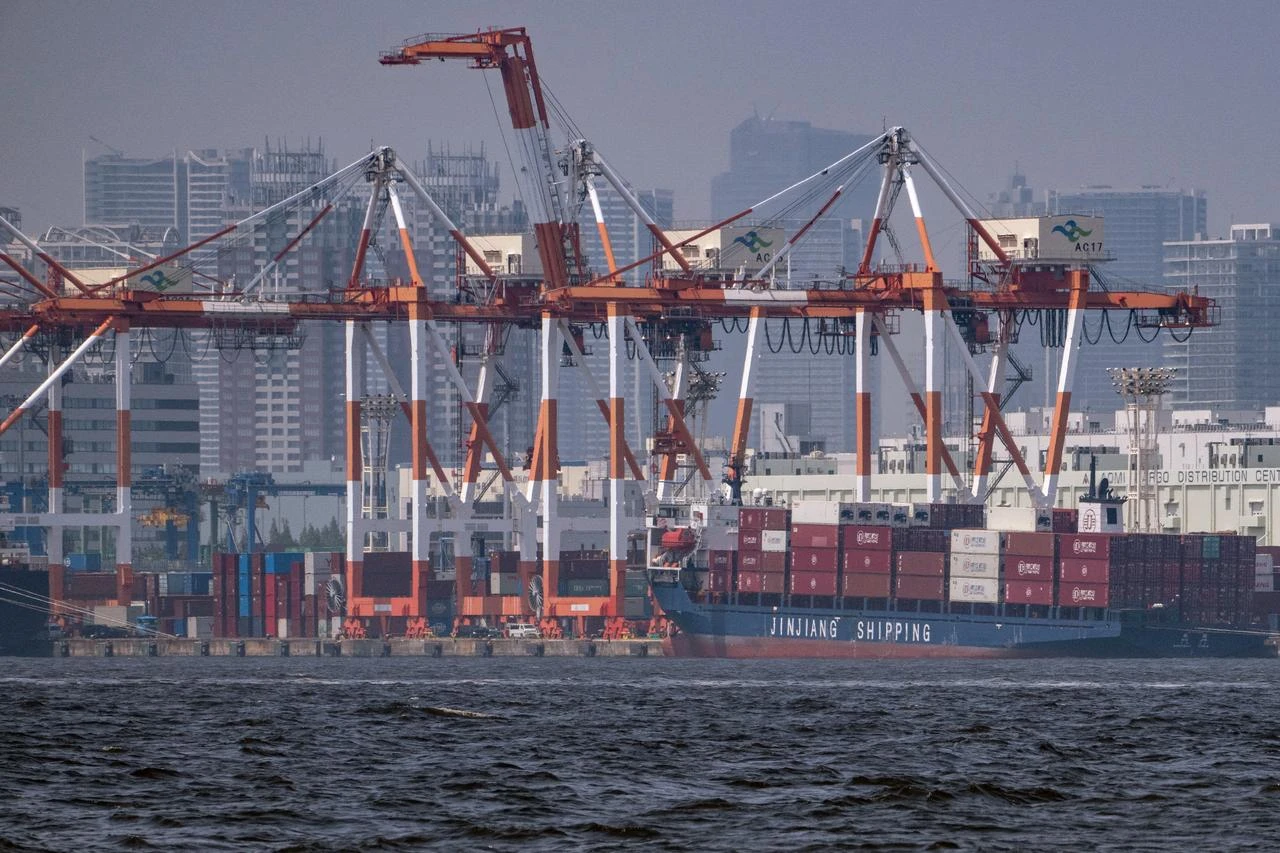


New U.S. import tariffs on 60 trading partners—including Türkiye, which faces the higher 12.5% rate—came into force Friday over their alleged failure to curb goods produced with forced labor. They replace President Donald Trump’s expiring global tariff, re-establishing the tariff wall invalidated by the Supreme Court in February.
The duties of 10 to 12.5%, imposed under Section 301 of the Trade Act of 1974 after a months-long investigation, cover 99.4% of U.S. imports and are designed to withstand the legal challenges that felled Trump's earlier levies, drawing immediate protests from the European Union, Japan, Australia and others.
Türkiye is among the 60 economies named in the White House memorandum directing the U.S. Trade Representative (USTR) to impose the duties, and falls in the group assigned the 12.5% rate applied to economies found not to have imposed a forced labor import prohibition.
A 10% rate applies to Argentina, Bangladesh, Cambodia, Canada, Ecuador, El Salvador, Guatemala, Honduras, India, Indonesia, Jordan, Malaysia, Mexico, Pakistan, Sri Lanka, the United Kingdom and Trinidad and Tobago, economies that have imposed or committed to forced labor import bans.
The European Union, Taiwan, Japan, South Korea and Switzerland receive rates that, combined with existing most-favored-nation tariffs, total 10 or 12.5%, in line with their trade pacts with Washington. All other economies, including China, Russia and Vietnam, face the flat 12.5%.
The new duties entered into force at 12:01 a.m. Eastern Time (ET) Friday, the moment Trump's temporary 10% global tariff expired after 150 days, with goods in transit exempted until July 28.
"The United States has had a forced labor import ban for nearly a century, and rigorously enforces it. It's well past time for our trading partners to do the same," U.S. Trade Representative Jamieson Greer said in a statement.
"Today's action will begin to correct what is both a human rights abuse and a distortive trade practice to improve the welfare of workers everywhere," he added.

Numerous products are exempted, including oil and gas, fertilizer, certain foodstuffs, aircraft and parts, critical minerals, and goods already subject to Section 232 national security tariffs such as autos, steel, aluminum and copper, a U.S. official cited by Reuters said.
Goods compliant with the U.S.-Mexico-Canada Agreement are also exempt, citing the integrated North American supply chain.
The memorandum also directs tariff-rate quotas to be established by Sept. 1, allowing certain volumes of textiles and apparel from Bangladesh, Cambodia, Indonesia and Malaysia to enter tariff-free, tied to those countries' imports of U.S. cotton and textile inputs.
Speaking to Reuters, Kelly Ann Shaw, a former Trump White House trade adviser, said the final action closely tracked what was telegraphed, with some 471 products added to an exclusion list: "I think this is more status quo in terms of the economic impact."
The Section 301 route, which has survived past court challenges, is considered more resistant to litigation than the emergency-powers tariffs the Supreme Court struck down, a ruling that has forced the U.S. to pay out $81 billion in tariff refunds this fiscal year, according to Sky News.
"Once the 301 duties are placed, they have a lot of flexibility to adjust them," said Ryan Majerus, a trade lawyer and former Commerce Department official who spoke to Reuters.
"It's a sledgehammer. It's also intended to keep the ... 10% baseline in place, and they think they're well protected when this goes to court," he added.
Democrats accused the administration of legal shopping.
"With his global tariffs expiring tonight, Trump is once again flipping through the statute books looking for any authority to keep them in place. Today's forced labor justification is too convenient to be taken seriously," said Rep. Richard Neal, the top Democrat on the House committee responsible for trade.
A senior administration official disputed that the duties were a direct replacement, saying rigorous U.S. forced labor enforcement gives rivals an unfair advantage and that both parties in Congress have demanded action on global supply chains.
EU foreign policy chief Kaja Kallas said the bloc viewed the tariffs as a shock: "If you compare our labor laws to the ones of the United States, I mean, we have paid vacations, we have very good labor conditions for our employees, so it's not really grounded," she told Reuters in Manila.
A European Commission spokesperson nonetheless said the tariffs align with last year's EU-U.S. trade agreement and expected Washington to honor its commitments.
"The EU notes positively the fact that this outcome is in line with the U.S. tariff commitments agreed under the EU-U.S. Joint Statement," a European Commission spokesperson reportedly said, adding it provided "positive momentum" to continue the work on exploring further tariff exemptions and deepening cooperation.
"This is essential to continue providing our respective markets with much-needed stability and predictability," the spokesperson said.
Japan's chief government spokesperson Minoru Kihara called the tariffs "regrettable," Australia's trade minister Don Farrell said the 12.5% duty was "unjustified, inconsistent with our free trade agreement, and should be removed," Singapore's foreign minister said there was "no technical or economic basis" for them, and Norway and Brazil also objected.
Canada, hit Monday with separate 50% tariffs on some $20 billion of goods, responded mutedly, pledging continued engagement.
The action lands amid a broader tariff offensive: 25% duties on many Brazilian goods took effect last week, and Washington is separately investigating 16 economies over excess industrial capacity, probes that could yield further duties.
"This makes it much more likely that they stay for the duration of Trump's term," the Atlantic Council's Josh Lipsky told Agence France-Presse (AFP), signaling "a much more protectionist world's largest economy."


 Set as preferred source
 Set as preferred source


 1 min read
 1 min read