Newsletters


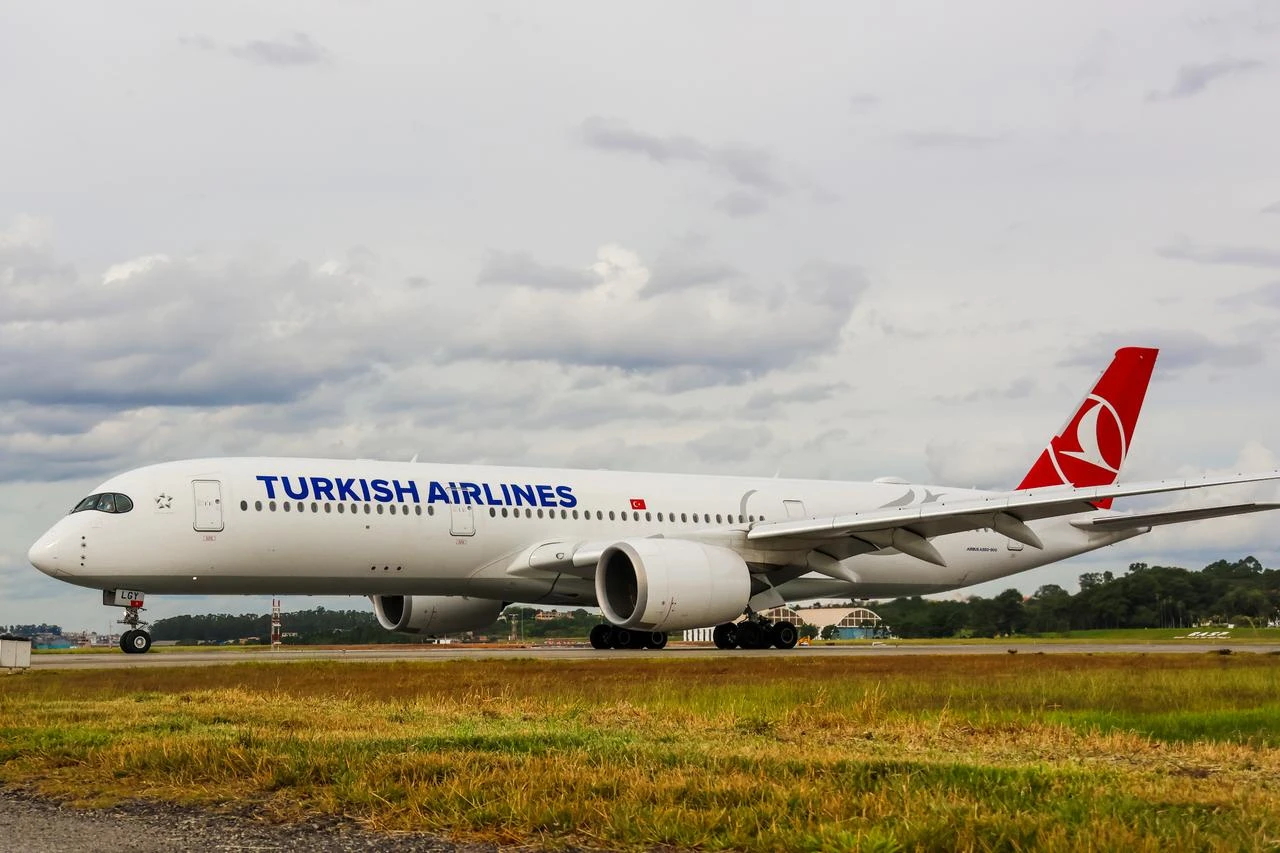


Türkiye's flag carrier Turkish Airlines saw its profitability shrink sharply in the second quarter as the Iran war drove up oil prices and widened jet fuel refining margins, sending fuel expenses soaring despite continued growth in passenger traffic and cargo operations.
Quarterly revenue rose 20.5% year on year to $7.2 billion, but the gains were largely offset by a 92.9% jump in fuel expenses to $2.8 billion, according to figures released on Wednesday.
Following the release, the company's shares listed on the Borsa Istanbul dropped as much as 3.8% during the session.
The airline carried 23.2 million passengers during the quarter, lifting passenger revenue 14.9% to $5.7 billion. Cargo remained the strongest-performing segment, with revenue surging 58% to $1.3 billion as volumes rose 11.3% to 601,000 tons.
Despite the stronger operating performance, a $706 million operating profit turned into a $64 million operating loss. Net income plunged 71.5% to $197 million, while the net profit margin narrowed to 2.7% from 11.6%.
In the first half, revenue climbed 20.8% to $13.1 billion, driven by a 17.1% increase in passenger revenue to $10.4 billion and a 44.1% rise in cargo revenue to $2.3 billion. Passenger traffic reached 44.5 million, up 5.5%, while cargo volumes grew 13.3% to 1.2 million tons.
Fuel expenses for the past six months rose 55.1% to $4.3 billion, while profit from main operations swung to a $121 million operating loss from a $630 million operating profit a year earlier.
Net income fell 34.6% to $423 million, narrowing the net profit margin to 3.2% from 6.0%.
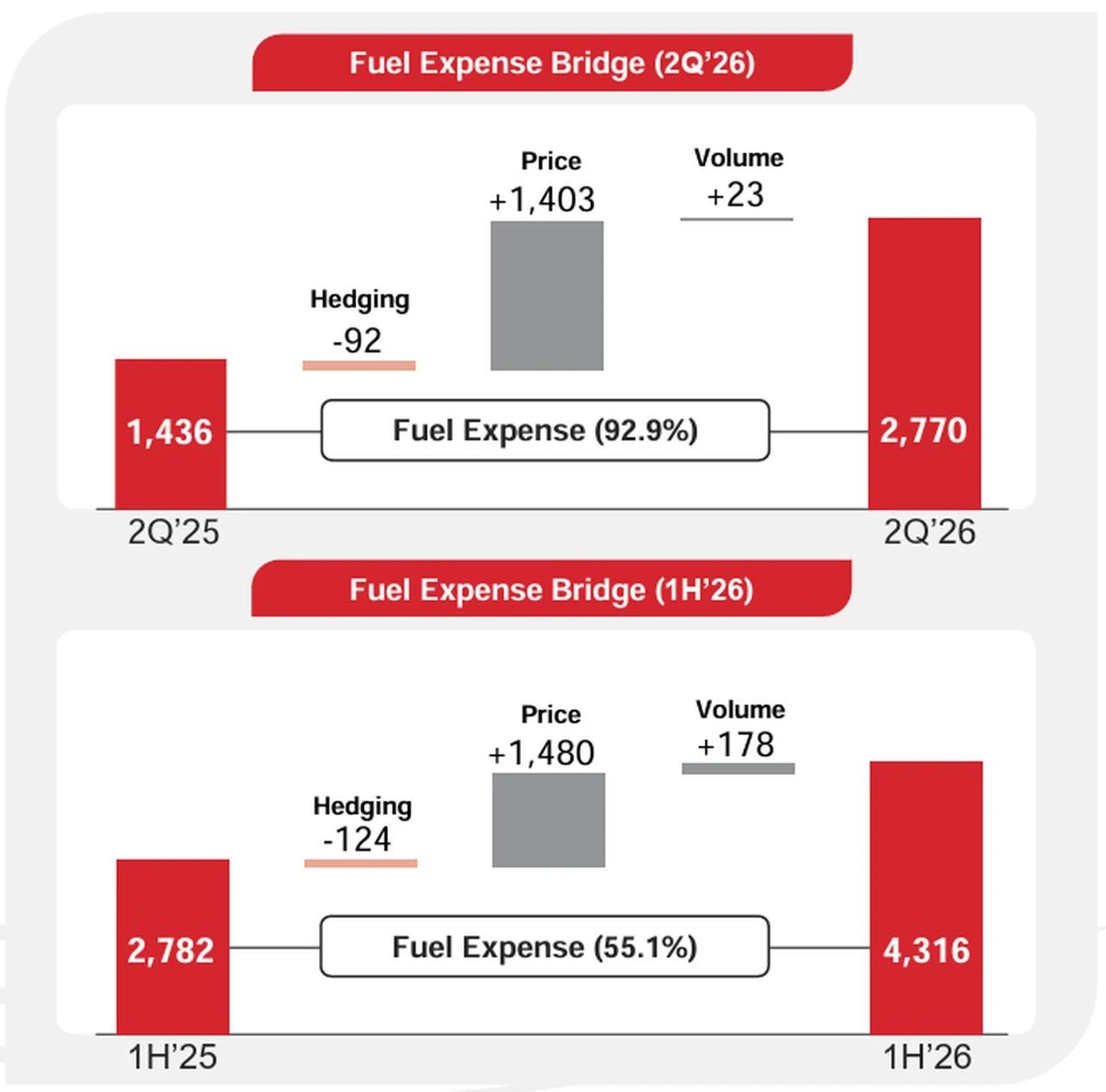

Turkish Airlines attributed the sharp rise in fuel costs to higher Brent crude prices and wider jet fuel refining margins following the outbreak of the Iran war earlier this year, which disrupted energy flows through the Strait of Hormuz.
The waterway is a critical chokepoint for global energy trade, carrying around one-fifth of the world's seaborne jet fuel exports before the conflict disrupted shipments. As crude prices surged, jet fuel prices climbed even faster as refiners struggled to meet demand for aviation fuel and other middle distillates, driving refining margins sharply higher.
After briefly exceeding $200 per barrel during the conflict, the average weekly jet fuel price eased to $158.77 per barrel in the week ended July 31, according to International Air Transport Association (IATA) data, still remaining 76.4% above the average level a year earlier.
The fuel shock has weighed on airlines worldwide, prompting IATA to nearly halve its 2026 industry profit forecast to $23 billion from $41 billion. The association also lowered its expected industry net profit margin to 2.0% from 3.9%, warning that fuel will account for about $350 billion, or roughly 31% of airlines' total operating costs this year.


 Set as preferred source
 Set as preferred source


 1 min read
 1 min read