Sign in
 Newsletters





Central Bank of the Republic of Türkiye (CBRT) reserves are estimated to have plunged by $17 billion in the week ending Nov. 20, marking the sharpest weekly drop since June 2023, as offshore lira borrowing costs surged to nearly 52% on Monday.
The decline appears to have been driven largely by falling gold prices, which account for more than half of the central bank's reserves, alongside continued foreign currency sales by the bank to contain domestic FX demand.
Gold prices suffered their steepest weekly decline in eight months last week, plunging approximately 9.4% to a 14-month low of $3,514.08 per ounce on Nov. 20, as expectations of further U.S. interest rate hikes, a stronger dollar and forced liquidations amid a global equity selloff weighed on bullion.
Based on calculations from the TCMB's daily analytical balance sheet, total reserves are estimated to have fallen to $142 billion from $159 billion in the week ending Nov. 13.
If confirmed, the decline would rank as the second-largest weekly reserve loss since June 2023, bringing the cumulative drop over the past two weeks to approximately $19 billion.
The central bank's gross reserves started 2026 at $189.1 billion before reaching a yearly peak of $218.2 billion on Jan. 30, when gold prices were trading near their record highs of around $5,600 per ounce. They then plunged to $149.2 billion on June 26.
Between January and October, reserves rose in four months but fell in six, with March recording the steepest monthly loss at $54.9 billion.
The declines continued in September and October, when reserves shed $17 billion and $13.1 billion, respectively.
Reserves briefly rebounded by $4.2 billion in the week ending Oct. 9 but then fell for three consecutive weeks, reaching $158.1 billion on Oct. 30.
A gain of approximately $3 billion in the week ending Nov. 6 lifted them to $161.1 billion before another two weeks of losses brought the total down to an estimated $142 billion.
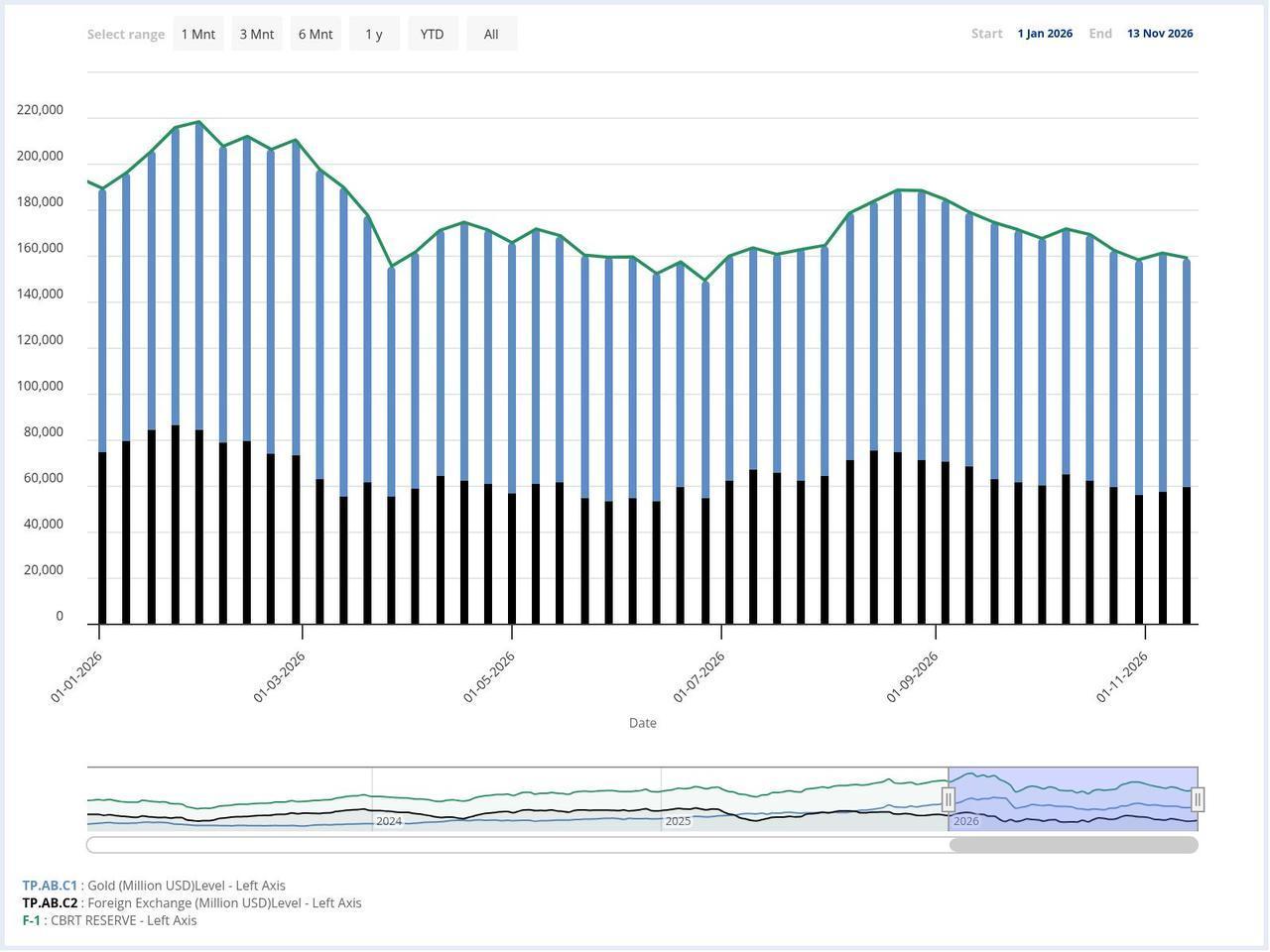

The latest estimate puts reserves $51.9 billion, or approximately 27%, below their year-end 2025 level of $193.9 billion and $76.2 billion, or approximately 35%, below their Jan. 30 peak.
The TCMB is scheduled to publish its official reserve figures and weekly monetary and banking statistics on Thursday, Nov. 26, at 2:30 p.m. local time.
The latest official figures, covering the week ending Nov. 13, showed that gross reserves had already fallen by $2.11 billion to $158.95 billion.
Gold holdings accounted for the bulk of the decline, dropping by $4.34 billion to $99.7 billion, while foreign currency reserves increased by $2.23 billion to $59.25 billion.
The yellow metal accounted for approximately 63% of total gross reserves, making its price movements a major factor in the valuation of the central bank's reserve assets.
The net international reserves stood at $41.3 billion in the week ending Nov. 13, while net reserves excluding swaps reached approximately $28.4 billion.
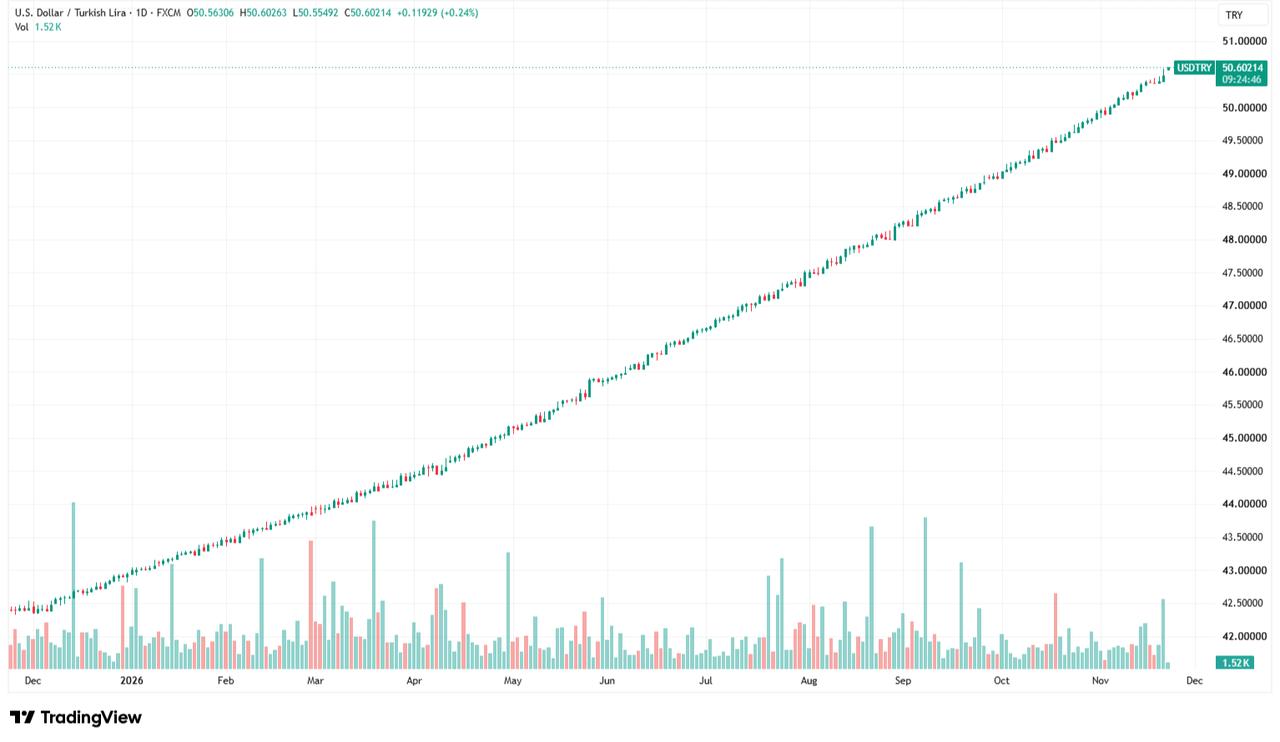
The lira continued to weaken against the dollar last week, with USD/TRY rising around 0.3% to close at approximately 50.52 on Nov. 20. The depreciation continued on Monday, with the dollar climbing to around 50.60 against the lira.
The cost of borrowing Turkish lira in offshore markets has climbed to its highest level since February, with the implied overnight lira yield jumping nearly 16 percentage points to 51.8% on Monday from around 36% last week.
The increase puts offshore funding costs well above Türkiye's domestic policy rate of 36%, making it significantly more expensive for foreign investors to borrow lira through currency swaps and other offshore transactions.
According to Bloomberg, the sharp increase points to foreign investors scaling back carry trade positions, in which they borrow currencies with lower interest rates and invest in higher-yielding assets such as Turkish lira deposits and government bonds.
The implied offshore overnight rate for next-day transactions also remained elevated at 44.9%, slightly below the intraday peak of 46.8% reached on Friday.
The gap between offshore and domestic borrowing costs reflects tighter lira liquidity abroad. As investors close positions and demand lira to settle transactions, the cost of sourcing the currency through offshore markets can rise sharply.


 Set as preferred source
 Set as preferred source


 2 min read

 1 min read