Newsletters




Turkish Trade Minister Omer Bolat said there is no cause for concern that a free trade agreement between the European Union and India could lead to significant losses for Türkiye in the EU market.
Bolat rejected media claims that Ankara might lower customs duties toward India as a result.
“Reports and commentary that sometimes appear in the media claiming that our country will also lower customs duties toward India due to the Free Trade Agreement between the EU and India are completely unfounded,” Bolat said.
“Türkiye has no such agenda or planning.”
Bolat made the remarks in comments to the Turkish news agency Anadolu while assessing the Türkiye–EU Customs Union and the EU–India Free Trade Agreement.
He said discussions on updating the Customs Union are not new, noting that the issue was first raised with the EU in 2014 and that expectations have since been discussed by both sides.

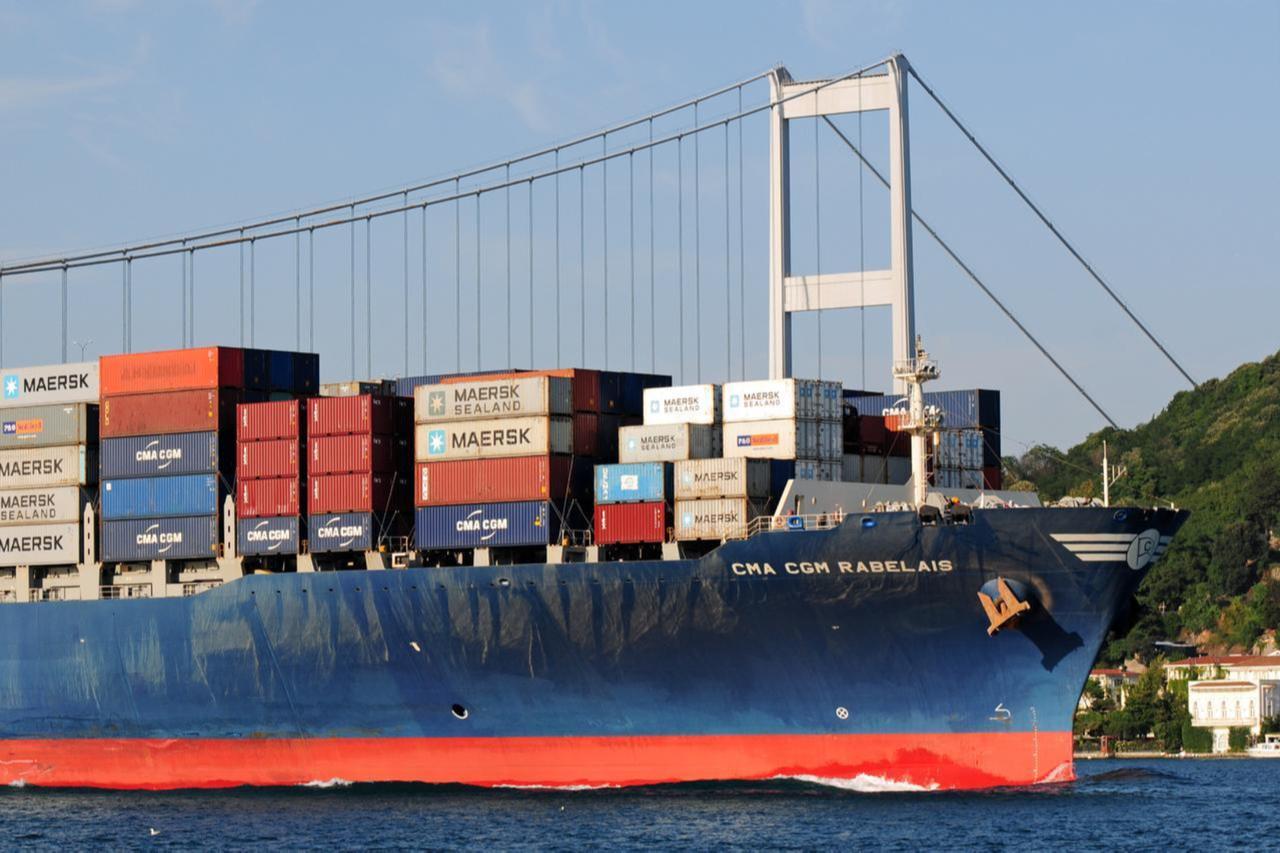
Bolat said the Customs Union, in force since 1995, has played a key role in Türkiye’s economic transformation and its integration into European value chains.
He said harmonization with EU technical regulations has strengthened Türkiye’s industrial base and global competitiveness, particularly in industry, where efficient and competitive value chains have formed and contributed to economic growth and prosperity on both sides.
Bolat noted that bilateral trade volume has increased eightfold over the past 30 years, reaching $233 billion, while the export-to-import coverage ratio has climbed to 100%.
“This process has brought not only growth in volume but also a structural transformation,” he said, adding that the share of medium- to high-technology products in Turkish exports has risen to 43.5% and Türkiye’s share of global exports has doubled to 1.07%.
He said, however, that a structure focused solely on industrial goods no longer reflects today’s global economic dynamics.
“The fact that the current system does not cover critical growth areas such as trade in services, the digital economy, public procurement and agriculture leads to bilateral trade and economic relations remaining below their potential,” Bolat said.
Bolat said structural problems, including asymmetries created by EU free trade agreements with third countries and Türkiye’s limited role in decision-making, are central to discussions on updating the Customs Union.
He also cited transportation quotas faced by Turkish carriers and expectations regarding the free movement of Turkish businesspeople within the EU.
“Updating the Customs Union has become a structural and strategic necessity to ensure the resilience and efficiency of European value chains in an increasingly unstable international economic environment,” Bolat said, adding that Ankara views the update process as independent of EU free trade agreements with other countries.
He said since 2023, Türkiye and the EU have resolved a significant portion of mutually prioritized trade issues through what he described as a positive approach, with the High-Level Trade Dialogue serving as both a problem-solving mechanism and a platform preparing the ground for the update process.
“Updating the Customs Union has become not only Türkiye’s demand but also a necessity for the EU’s economic security,” Bolat said, citing geopolitical risks, supply chain vulnerabilities and the need to reduce dependencies in areas such as energy and defense.
At this point, he said, claims that the Customs Union operates to the detriment of the Turkish economy are “disconnected from reality.”
Bolat said Türkiye realized 43% of its exports to the EU in 2025, with trade increasing in what he described as a balanced manner. While the export-to-import coverage ratio with the EU stood at 50% when the Customs Union entered into force, it has now risen above 100%.
He said exports to EU countries totaled $117 billion in 2025, while imports stood at $115 billion.
Bolat added that more than 60% of the roughly $295 billion in foreign capital entering Türkiye over the past 25 years has come from EU countries. He said EU-origin investments exported $37.5 billion last year.
“Claiming that the Customs Union operates against Türkiye is completely baseless,” he said.
Bolat said the European Green Deal has fundamentally altered competitiveness conditions for access to the EU market, turning green transformation into both a market entry requirement and a source of competitive advantage.
He said Türkiye aims to strengthen its position as a “fast, high-quality, reliable and green supplier” by quickly adapting to new EU standards.
Bolat said the ministry has introduced support mechanisms to reduce compliance costs and expand financing opportunities, including the Green Deal Compliance Project Support–Responsible Program to help exporters manage their green transition.
He said market diversification remains a key export strategy, with 60 countries designated as “Target Countries for Exports” in 2026 to reduce reliance on a single market while preserving Türkiye’s strength in the EU.
Bolat also pointed to the Distant Countries Strategy, under which actions spanning finance, logistics, promotion and diplomacy have been implemented for 18 countries.
The ministry, he said, provides a wide range of export supports, including credit advantages, employment support in labor-intensive sectors and tax incentives, which “play an important role in easing potential competitive pressure.”
Bolat said the EU–India agreement should be viewed as part of the bloc’s effort to diversify trade partners as global trade patterns shift.
He said Türkiye also aims to expand its preferential trade network, which currently includes 24 free trade agreements and six preferential trade agreements.
Although India is the world’s fifth-largest economy, Bolat said its exports account for 11% of gross domestic product and its export-to-import coverage ratio is 62%, reflecting what he described as a more inward-oriented production structure.
He said EU tariffs on key Indian exports are already zero or low, meaning the agreement will primarily expand market access for the EU rather than India.
“I am of the opinion that there is no cause for concern that this agreement could initially create a significant market loss for our country in the EU market,” Bolat said.
He added that Türkiye’s exports under the Customs Union benefit from free circulation without rules-of-origin requirements, giving them an advantage over products from EU free trade partners such as India.
Bolat said technical regulations now matter more than tariffs, describing Türkiye as a value chain partner integrated into EU production processes through three decades of Customs Union experience.
He cited geographic proximity, logistical advantages, and full compliance with EU standards as key strengths.
Any potential trade diversion involving India-origin products entering Türkiye via the EU will be closely monitored, he said, adding that necessary measures would be taken if risks emerge.
Nevertheless, Bolat reiterated that claims Türkiye will lower customs duties toward India due to the EU–India agreement are “completely unfounded.”


 Set as preferred source
 Set as preferred source


 1 min read
 1 min read