Newsletters




Türkiye is preparing to enter the ranks of the world's leading quantum computing countries with a 54-qubit system scheduled to go online in 2027, as the government looks to build domestic capabilities in one of the most advanced areas of computing.
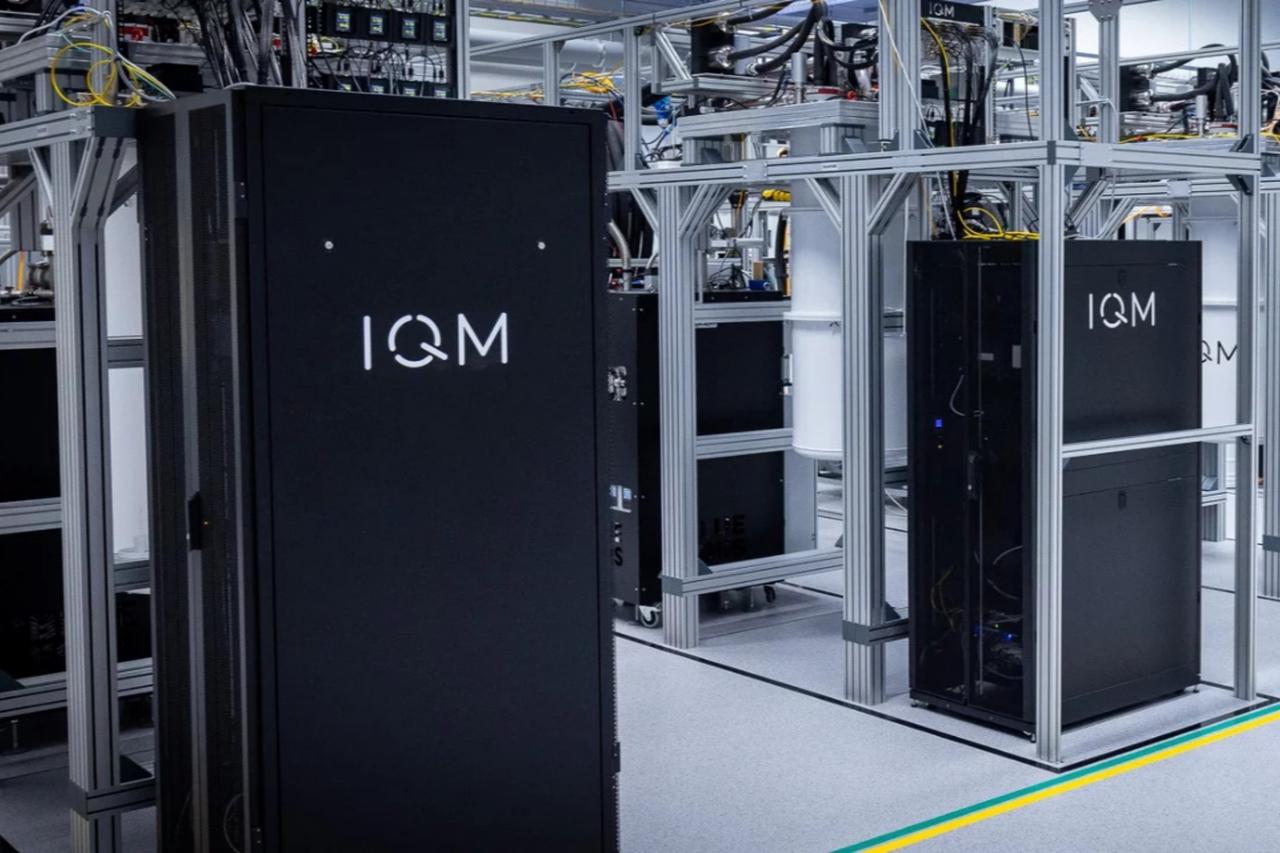
Industry and Technology Minister Mehmet Fatih Kacir announced that Türkiye has signed an agreement to install an IQM Radiance R3 quantum computer at the Scientific and Technological Research Council of Türkiye (TUBITAK), making it the country's largest quantum computing system.
The project aims to give domestic researchers access to advanced processing capabilities without relying entirely on foreign infrastructure, although authorities have yet to disclose its financial value.
"With the 54-qubit IQM Radiance R3 quantum system, which we will bring online in 2027, we are taking a major step toward joining the world's 15 leading countries in quantum computing," Kacir wrote in a social media post.
He added that the government would retain full control over the computer's hardware, data and intellectual property generated through research conducted on the system.
The IQM Radiance platform uses superconducting quantum processors, which operate at extremely low temperatures to maintain the quantum states needed for computation.
Unlike conventional computers, which process information through bits representing either 0 or 1, quantum computers use quantum bits, or qubits. Through properties such as superposition and entanglement, qubits can process information in ways that allow quantum algorithms to tackle certain complex problems differently from classical computers.
The 54-qubit architecture uses tunable couplers to control interactions between neighboring qubits. Its square-lattice configuration supports high connectivity and is designed to accommodate surface-code quantum error correction, an approach researchers use to detect and correct errors in quantum operations.
According to IQM's published specifications for its 54-qubit processor, the system achieves median two-qubit gate fidelity of 99.5%, with a maximum of 99.85%. Its reported quantum volume is 64, while its circuit layer operations per second (CLOPS) score stands at 2,550.
Gate fidelity measures how accurately quantum operations are performed, while CLOPS indicates how quickly a processor can execute layers of quantum circuits.
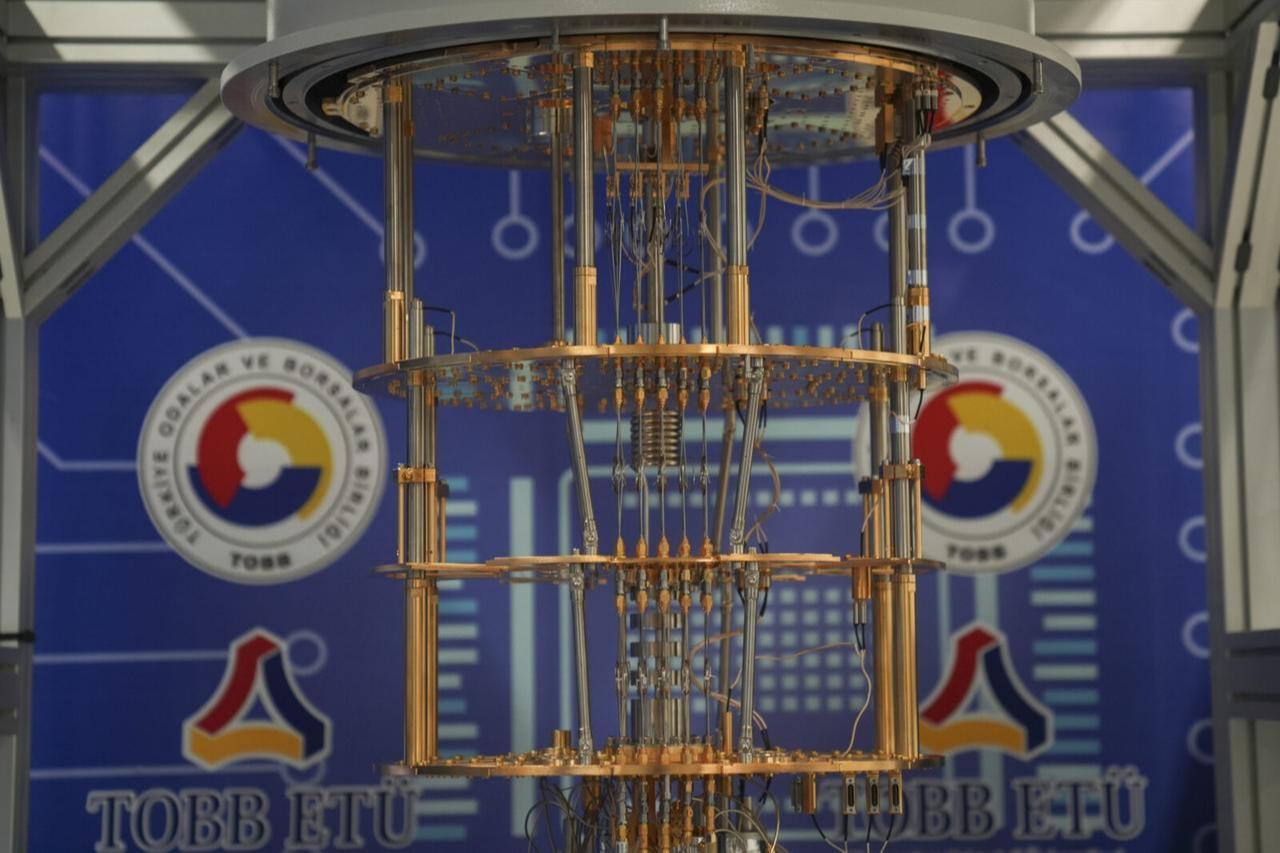
The system also requires specialized cryogenic equipment to cool its superconducting circuits to temperatures close to absolute zero, alongside advanced control electronics that manipulate qubits through microwave signals.
These specifications describe the manufacturer's 54-qubit processor benchmarks and do not constitute independently verified performance results for the system planned for installation in Türkiye.

The system will connect to Türkiye's high-performance computing infrastructure, with researchers able to apply for access through TRUBA, TUBITAK's national computing platform, according to Bloomberg HT.
The hybrid setup will combine conventional supercomputers with quantum processors, allowing researchers to tackle specialized calculations while drawing on existing computing resources. Universities, research centers, public institutions and private-sector companies are expected to benefit.
Kacir identified artificial intelligence, cybersecurity, advanced materials and complex optimization as priority research areas.
Other potential applications include molecular simulations and drug discovery and optimization problems in energy, transportation and logistics. However, quantum computing's practical advantages over conventional systems remain limited to specific tasks.
The investment builds on Türkiye's earlier efforts to develop domestic expertise. In November 2024, TOBB University of Economics and Technology unveiled QuanT, a locally developed five-qubit quantum computer.
The planned 54-qubit IQM system will significantly expand the country's available quantum computing capacity. Similar IQM systems have been installed at major European computing centers, including Germany's Leibniz Supercomputing Centre and Italy's CINECA.


 Set as preferred source
 Set as preferred source


 1 min read
 1 min read