Newsletters





Türkiye is stepping up its international engagement in artificial intelligence, aiming to secure a leading role in setting global standards, ease exports of domestic AI products, and strengthen its regional influence through expanded diplomatic outreach.
The effort falls under the 2026-2030 Türkiye AI Action Plan, coordinated by the Ministry of Industry and Technology, which sets international cooperation and diplomacy as core objectives, Anadolu Agency (AA) reported.
Türkiye plans to continue contributing to the AI agenda within the Organization for Economic Co-operation and Development (OECD) AI Principles and the Global Partnership on AI Safety network, as well as at the United Nations (U.N.) and Group of 20 (G20).
The country will also provide technical input to standard-setting and ethics governance platforms, including ISO/IEC, the International Telecommunication Union (ITU) and the U.N. Educational, Scientific and Cultural Organization (UNESCO).
Türkiye also plans bilateral and regional technology alliances, data agreements, and framework agreements on sharing computing resources, along with mechanisms for mutual recognition and conformity cooperation for Turkish AI products and sector-specific foundation models in target markets.


By the end of 2027, Türkiye aims to sign bilateral AI cooperation framework agreements with at least five countries, reach memorandums of understanding with at least three international institutions and launch mutual recognition or conformity cooperation initiatives in at least three target markets.
Technical opinions or position papers are to be submitted through OECD, G20, UN, ISO/IEC, ITU, and UNESCO processes, with contributions to joint declarations or participation in working groups.
The success of international partnerships will not be measured only by signed agreements.
Each cooperation effort will be assessed for concrete outcomes such as technical working groups, joint testing protocols, mutual recognition mechanisms, joint project calls, and data-or computing-sharing frameworks that facilitate exports. Results are to be tracked through annual progress reports.
Data and computing-sharing efforts will take into account regulations from Türkiye's Personal Data Protection Board (KVKK), international data protection obligations, data sovereignty, reciprocity, national security, trade secrets, and intellectual property principles.

As part of regional cooperation, Türkiye plans to run capacity-building programs with the Organization of Turkic States (OTS), the Organization of Islamic Cooperation (OIC), the D-8 Organization for Economic Cooperation and other regional partners, positioning itself as a bridge for the regional spread of AI solutions.
Regional cooperation will begin with pilot programs involving a limited number of countries and specific use cases, then expand into broader multilateral initiatives.
Initial pilots are planned in shared language technologies, public-sector AI literacy and narrow applications in agriculture and energy, with successful models to be scaled up to multilateral platforms.
Türkiye will launch a pilot with at least two OTS member countries to develop a joint Turkic Languages Large Language Model covering the Oghuz, Kipchak and Karluk language families.
The model training will draw on shared infrastructure and the high-performance computing capacity of member states.
The model is intended for use in public services, education, translation, information access and cultural heritage applications.
Terms for data contributions, intellectual property, licensing and commercialization will be determined through a joint governance protocol, with the first version targeted for production by the end of 2027.

Joint pilot projects with D-8 countries are planned in agriculture, energy, trade and industry, while cooperation with the OIC will focus on trustworthy and ethical AI governance, public-sector AI capacity and digital literacy programs.
With countries that share similar climate conditions, language families, or sector structures, Türkiye plans to develop data catalogs, joint data-access mechanisms, and model adaptation programs in agriculture, energy, and health.
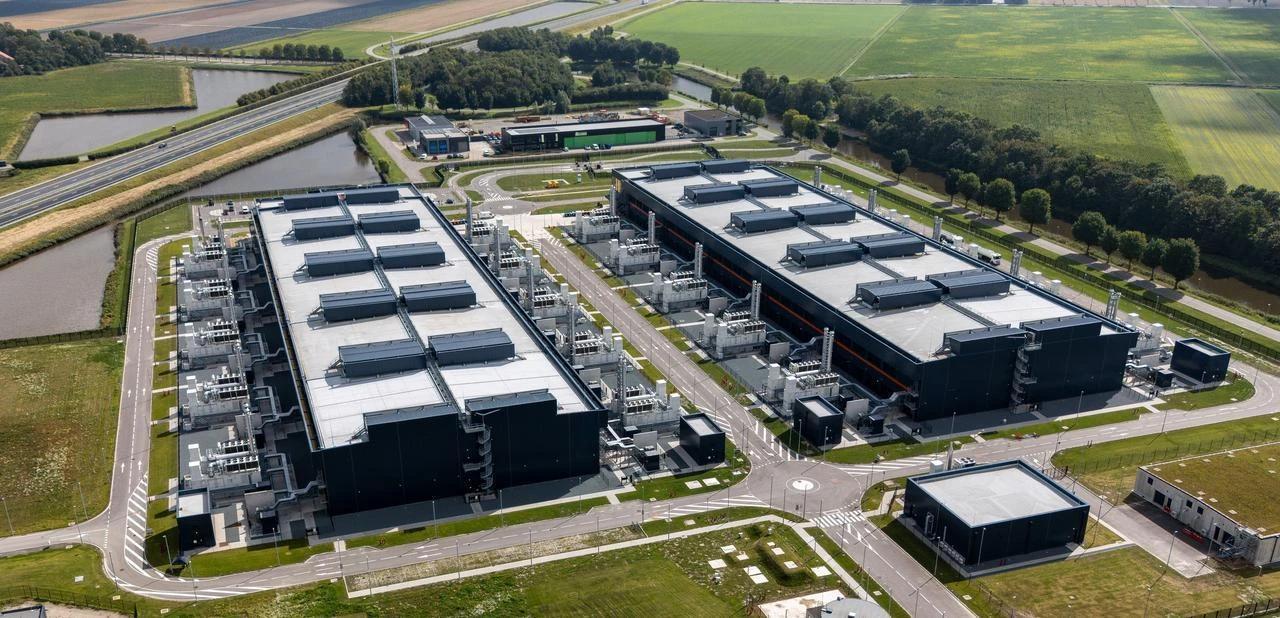
Türkiye is also planning shared data centers, computing capacity, and data governance models with regional partners. OTS members, Gulf countries and nearby nations with energy and connectivity advantages have been identified as priority partners.
By the end of 2027, Türkiye aims to launch capacity-building programs with at least three regional partners, establish joint computing infrastructure or data center agreements with at least two strategic partners, and roll out joint data catalogs or model adaptation programs in at least two sectors.
Establish at least one regional AI cooperation program under the OTS, D-8, or OIC, benefiting at least 500 public officials, researchers, or entrepreneurs.
Istanbul, Türkiye's largest city, is positioned as the country's international AI showcase and investment diplomacy hub, hosting global events, investor meetings, demo days, and joint development programs. Platforms such as Terminal Istanbul are expected to serve as gathering points for these activities.


 Set as preferred source
 Set as preferred source


 1 min read