Newsletters




Türkiye is ready to pursue joint energy projects with Greece, including electricity and natural gas connections through Cyprus, Energy and Natural Resources Minister Alparslan Bayraktar said, as Ankara seeks to develop alternative routes linking regional energy markets.
"We would be happy to work together with Greece. Why not? We are talking about broader cooperation," Bayraktar told representatives of international media outlets in Istanbul.
Bayraktar pointed to Türkiye's previous plans to supply electricity to the Turkish Republic of Northern Cyprus (TRNC) through an undersea cable, using renewable power generated in Türkiye to replace fuel-oil-fired electricity generation on the island.
The proposal has faced opposition from Greece and the Greek Cypriot administration, which took the matter to Brussels.
In April 2026, the European Network of Transmission System Operators for Electricity (ENTSO-E) clarified that it would not consider adding a separate Türkiye-TRNC connection to its 10-year network development plan without the consent of the transmission system operator certified for the entire island.
The EU, meanwhile, backs the competing Great Sea Interconnector, designed to connect the Greek Cypriot administration with Greece and eventually Israel. The project has received a €657 million ($735.1 million) grant from the EU's Connecting Europe Facility.
Bayraktar said Ankara had also offered to allocate capacity to companies seeking to supply electricity to the Greek Cypriot administration through the proposed undersea connection, but the offer was rejected for political reasons.
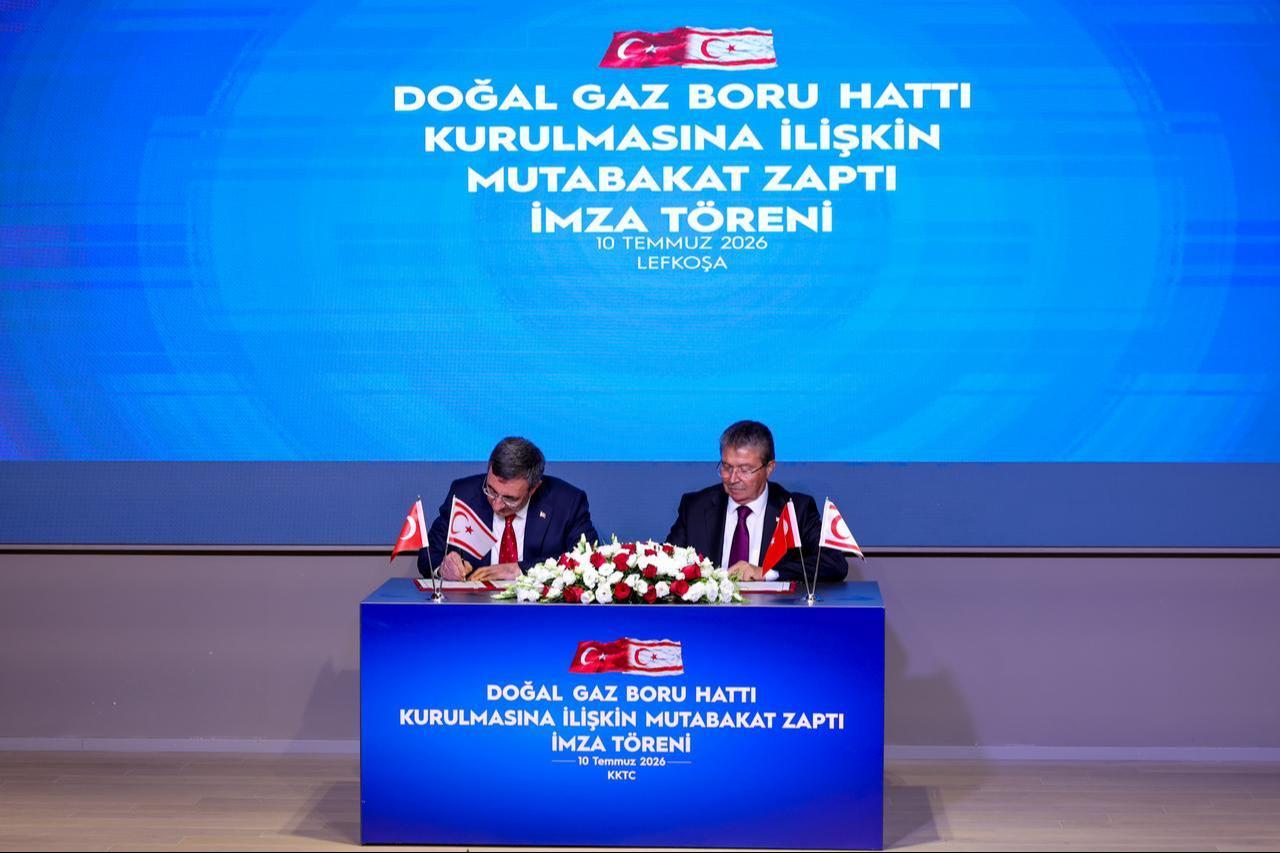
Türkiye is also considering a natural gas pipeline to TRNC, which could enable cleaner electricity generation on the island and potentially allow supplies to reach its southern part.
The minister outlined a broader possibility involving reverse flows through the proposed pipeline if natural gas were discovered in the Eastern Mediterranean.
"Gas could reach the island, then Türkiye and, through Türkiye, the European market. This way, we could develop an alternative to existing supply routes," he added.

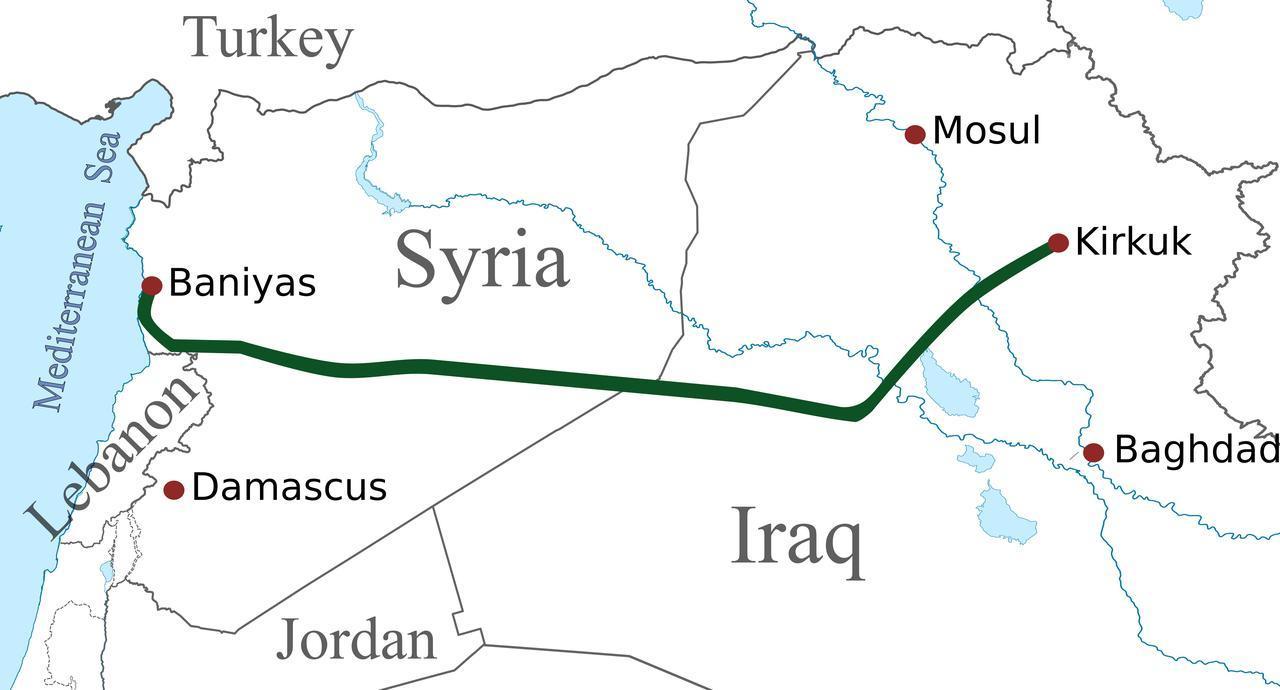
Beyond Greece, Bayraktar signaled Türkiye's willingness to participate in competing energy transportation projects, including the possible revival of the Kirkuk-Banias oil pipeline between Iraq and Syria.
"We are open to such partnerships and are not afraid of alternative routes. There is enough market for everyone," he emphasized.
Türkiye had proposed increasing the daily capacity of its existing oil transportation route from 1.5 million barrels to 2.5 million barrels, while the Syrian route could reach between 1 million and 1.5 million barrels.
Bayraktar acknowledged that Ankara considered its own route more competitive in terms of costs and more favorable in terms of security and stability.
He also reiterated Türkiye's long-standing proposal to extend the Iraq-Türkiye crude oil pipeline to Basra, noting that the existing line had never operated at full capacity.
On the international front, Türkiye planned to expand the activities of state-owned Turkish Petroleum Corporation (TPAO) through partnerships and acquisitions, with operations already underway off Somalia and preparations continuing for Pakistan.
The Oruc Reis seismic research vessel was heading toward Pakistani waters, Bayraktar noted.
TPAO was also considering potential operations in Syria, Iraq and Lebanon, although future decisions would depend on economic and geological conditions.
Türkiye wants to renew and expand its natural gas supply agreement with Algeria's state-owned energy company Sonatrach, as Ankara seeks to secure larger volumes from established suppliers while diversifying its import routes.
The existing liquefied natural gas (LNG) agreement covers 4.4 billion cubic meters annually and expires in September 2027. Türkiye is looking to raise annual supplies to 6 billion-6.5 billion cubic meters and extend the contract by five to 10 years, according to Bayraktar's earlier remarks in May.
Bayraktar also voiced strong support for the Trans-Caspian pipeline project, which would carry Turkmen natural gas across the Caspian Sea to Azerbaijan, allowing it to enter the Southern Gas Corridor and reach Türkiye and European markets.
The proposed connection would complement existing infrastructure linking Azerbaijan with Türkiye through the South Caucasus Pipeline and TANAP, which connects to the Trans-Adriatic Pipeline (TAP) on the Turkish-Greek border.
Türkiye currently has 40%-45% unused capacity in TANAP, which has a total capacity of 31 billion cubic meters. The system is expected to carry 16-17 billion cubic meters this year.
However, declining production at Azerbaijani gas fields means additional supplies must be secured before that spare capacity can be used.
In February 2025, Türkiye and Turkmenistan agreed to begin deliveries through an Iranian swap arrangement, initially targeting 1.3 billion cubic meters by the end of that year. The arrangement was designed as an interim solution ahead of a direct Trans-Caspian connection.
Ankara had initially planned to build on the swap arrangement before moving toward the Trans-Caspian pipeline, Bayraktar said, noting that deliveries of Turkmen natural gas to Türkiye through Iran under the agreement had been suspended amid payment difficulties linked to U.S. sanctions on Iran.


 Set as preferred source
 Set as preferred source


 2 min read
 1 min read