Newsletters


Türkiye plans to launch its lunar spacecraft in early 2027, Industry and Technology Minister Mehmet Fatih Kacir announced Monday, as the vehicle developed under the country's First Moon Mission enters a critical testing phase.
"We are sending our lunar spacecraft, having completed production, assembly and integration activities, to Turkish Aerospace Industries (TAI) for system-level environmental testing. We plan to launch it into space in the early months of 2027," Kacir stated.
Kacir said the roughly 3.5-ton spacecraft, developed with more than 80% domestic content, will undergo a series of tests at TAI's Space Systems Integration and Test Center, including thermal vacuum testing to assess its resilience to the space environment, structural testing to verify it can withstand launch conditions, and electromagnetic compatibility testing to confirm its systems can operate safely together.
"We want to place our spacecraft on the lunar surface after completing our scientific studies. We will land our system on the Moon's surface. We developed our spacecraft with an 80% domestic content rate. We are sending our lunar spacecraft to TAI," he noted.
"We will verify its durability through testing there. After the tests are completed, we will send it to Kennedy Space Center. We plan to send it into space in the early months of 2027," Kacir said, adding that the program launched in early 2022 is now 77% complete.
The minister said the spacecraft will operate in a north-south lunar orbit at an altitude of 100 kilometers before being brought down to the Moon's surface in a controlled landing following its orbital mission.
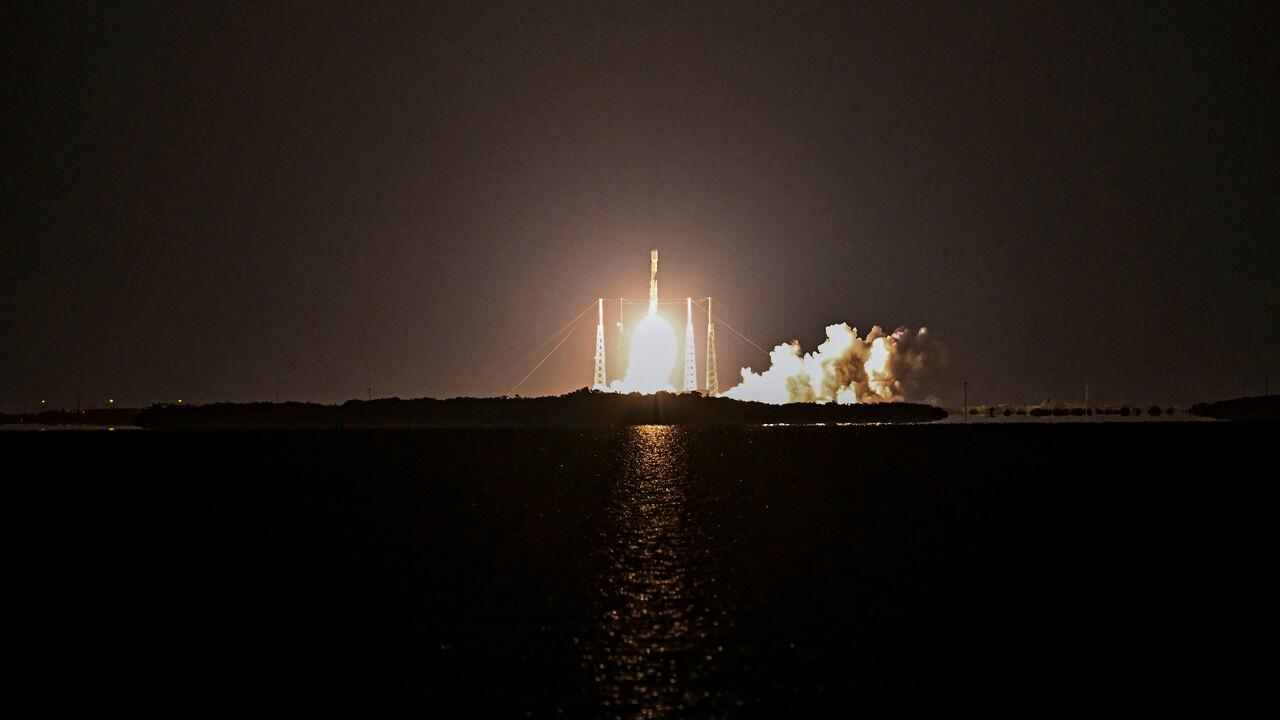

According to Kacir, the spacecraft is expected to take approximately two months to reach lunar orbit after launch.
He said the mission's duration could be extended up to 1.5 years depending on performance, during which Turkish scientists will conduct research using domestically developed equipment.
If successful, Türkiye would become the ninth country to complete a lunar mission.
Kacir said the mission will study the interaction between solar winds and the lunar surface, the mechanisms behind water formation on the Moon, the Moon's magnetic fields and surface characteristics, and will take radiation-environment measurements using domestically built equipment.
Kacir said experience gained from the IMECE and Turksat 6A satellite projects was carried over into the lunar spacecraft's development, with domestic capabilities used for critical systems including the flight computer, communications, power, thermal control, and attitude and orbit operations.
TUBITAK Space and Delta V, along with domestic technology firms and startups, are participating in the project, which has drawn contributions from roughly 2,000 engineers, researchers and technical personnel, according to Kacir.
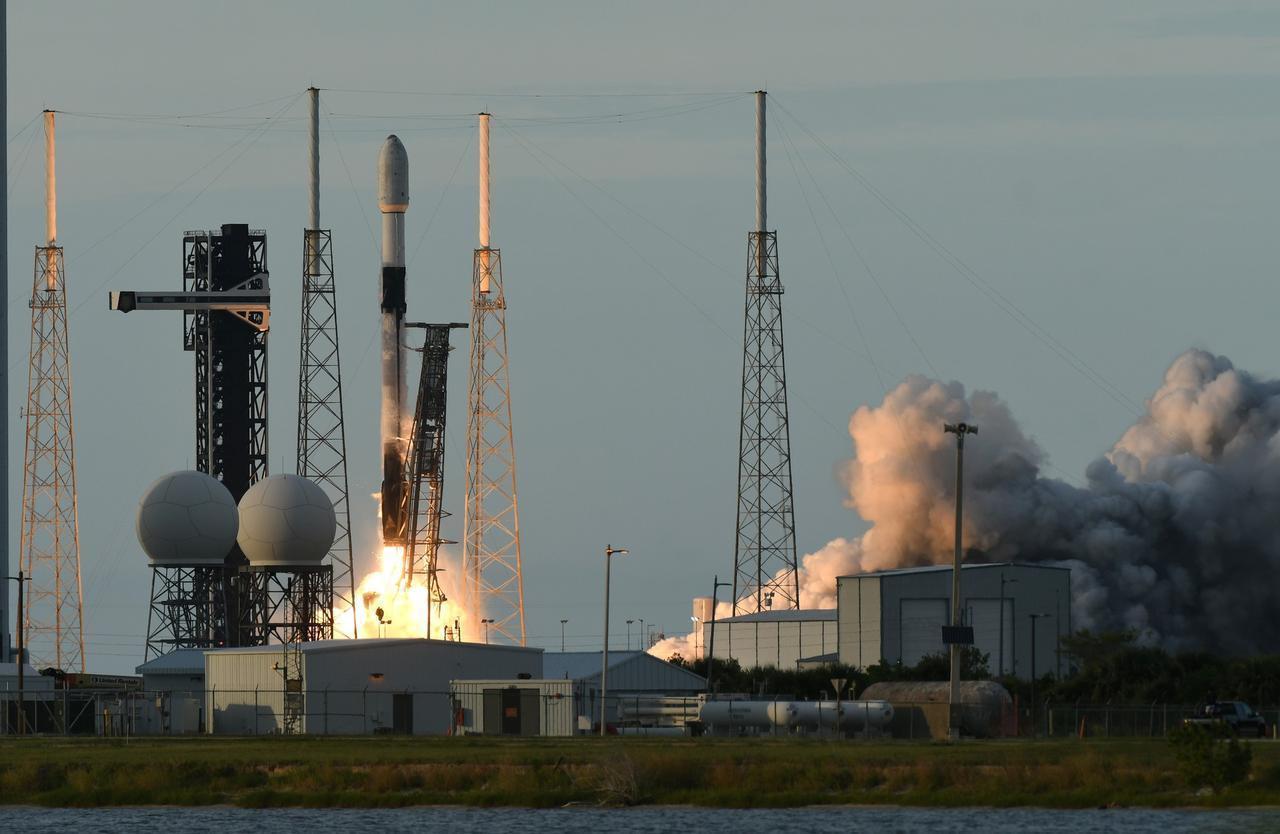
The Turkish minister said one of the spacecraft's most critical technologies is a hybrid propulsion system developed in Türkiye, which will be used for orbit-raising maneuvers and the final burns needed to exit lunar orbit at the mission's conclusion, noting that successful operation of the system would represent an important technological capability for Türkiye's future deep-space missions.
Kacir said the Lunar Research Program, officially launched in early 2022, has reached 77% completion.
He emphasized that the mission, Türkiye's first venture into deep space, is being carried out largely with domestic human resources, infrastructure and technology, calling it one of the National Space Program's most important goals.
Kacir also said Türkiye's spaceport under construction in Somalia would pave the way for independent Turkish access to space, and that work is under progress on establishing a space technology development zone in Ankara through cooperation between the Turkish Space Agency, TUBITAK and the Middle East Technical University (ODTU).
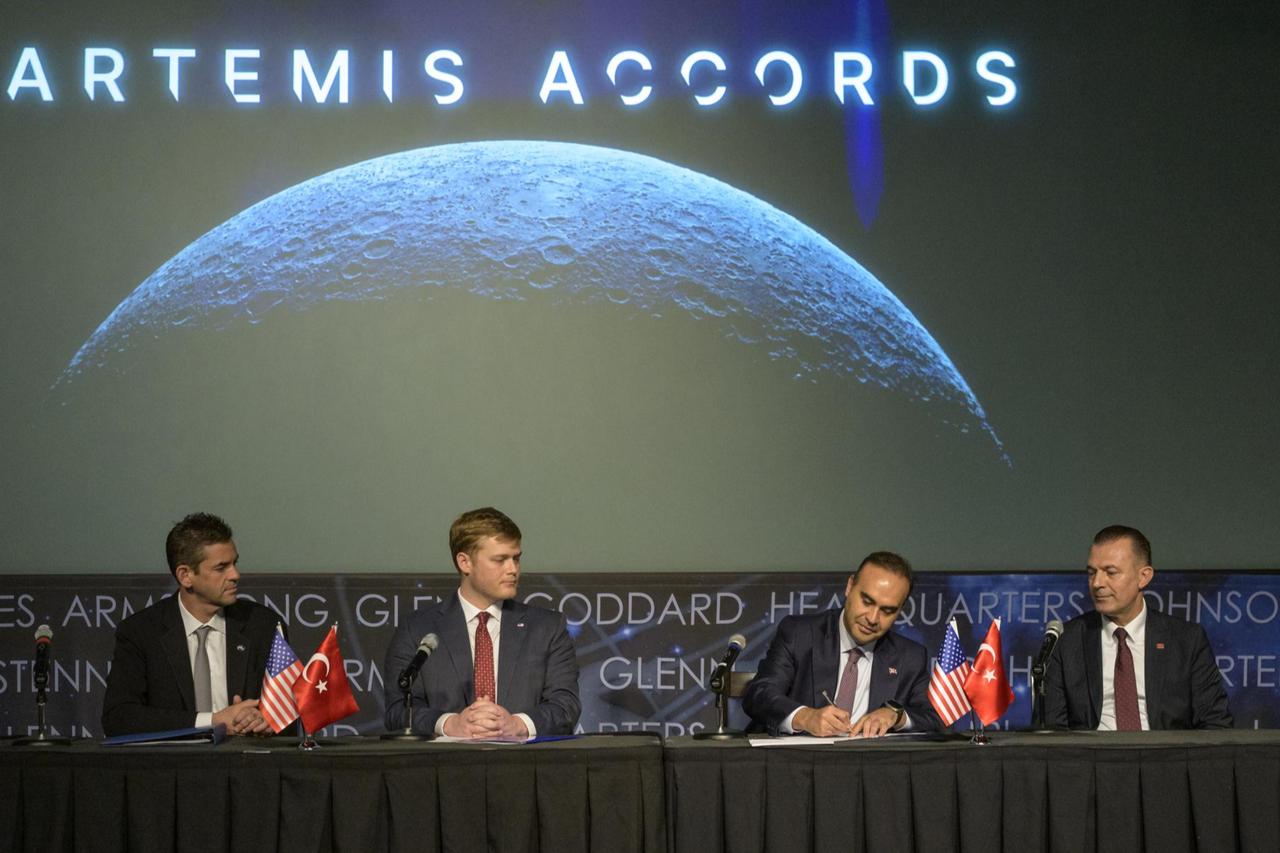
He noted that Türkiye had joined the Artemis Accords in a ceremony held at NASA headquarters, and said the country aims to build an ecosystem for space work similar to that of its defense industry.


 Set as preferred source
 Set as preferred source


 1 min read
 1 min read