Sign in
 Newsletters


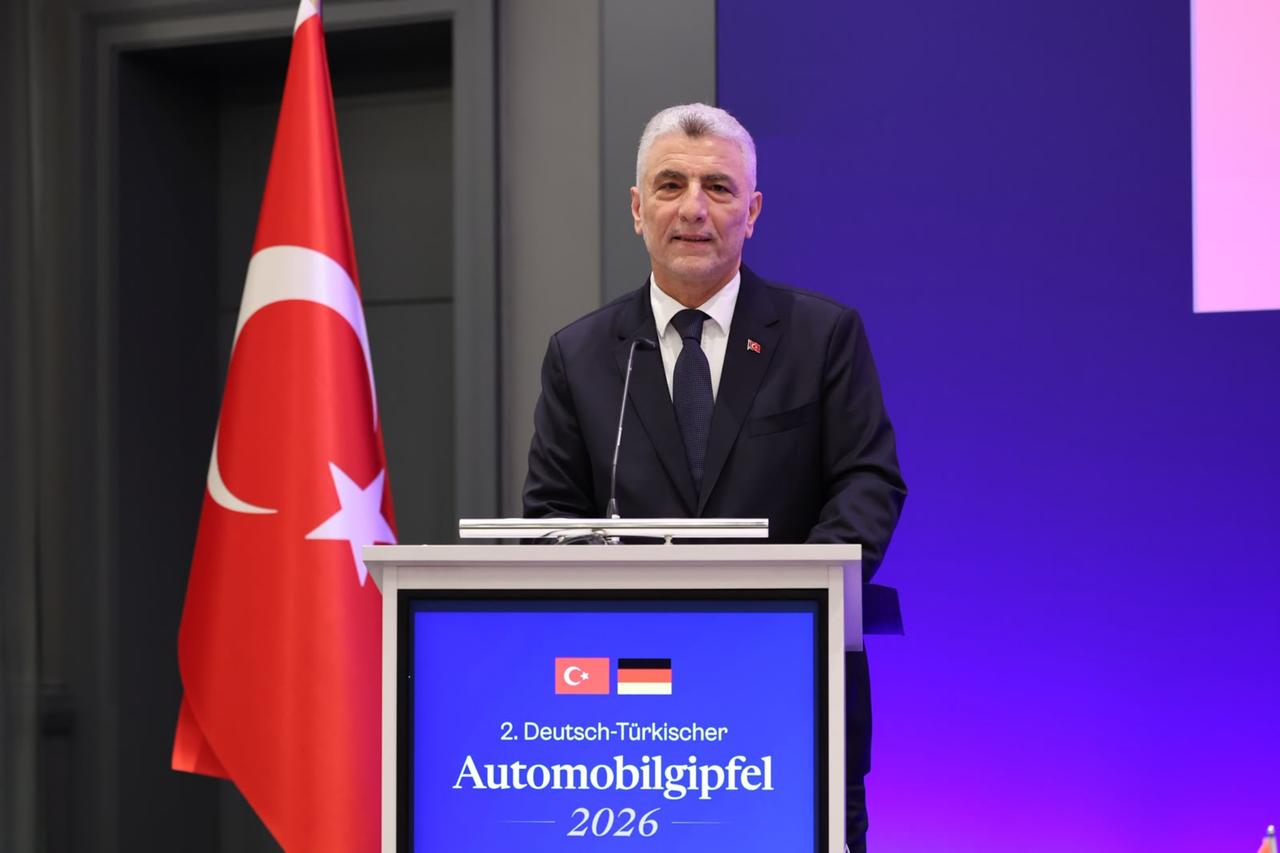


Trade Minister Omer Bolat called on the European Union on Thursday to recognize the rights Türkiye has gained from three decades of the Customs Union, warning that the bloc’s planned “Made in EU” framework could cut Türkiye out of an automotive supply chain the two sides have built together.
“We are not asking for privileged treatment,” Bolat told the second Turkish-German Automotive Summit in Berlin. “We want the European Union to recognize our rights arising from the 30-year Customs Union and Türkiye’s unique position.”
Speaking at a time when Europe’s industrial future is under intense debate, Bolat said economic and political integration between Türkiye and the EU, rooted in the 1963 Ankara Agreement, now spans 63 years.
The Customs Union has operated since 1996. Türkiye is not an EU member, but the arrangement removes tariffs and quantitative restrictions on industrial goods between the two sides. Bolat described Türkiye and Germany as longtime friends and allies whose ties go deeper than the EU framework alone.
Bolat said the global auto industry is being reshaped by electrification, digitalization, decarbonization and tougher competition, and that this raises the strategic value of the industrial partnership.
He pointed to the EU’s Industrial Accelerator Act and the “Made in EU” framework now taking shape as efforts to strengthen Europe’s competitiveness and strategic manufacturing capacity.
How the rules are written, he said, will directly affect production networks, investment decisions and the future of shared value chains.
He said the draft the European Commission published on March 4 does not yet reflect the integration that exists under the Customs Union.
His remaining concerns include a requirement that assembly take place inside EU borders, Türkiye’s exclusion from corporate fleet support mechanisms, and narrow “Made in EU” criteria for carbon dioxide emissions compliance.
“A vehicle produced in Türkiye is, from start to finish, a product of a European value chain,” Bolat said. European investment, engineering and components combine with Turkish manufacturing capability for sale in European and global markets, he said, while European-made vehicles and parts flow into Türkiye’s market and production lines.
As currently written, he argued, the measure amounts to an equivalent-effect measure that violates Customs Union rules.
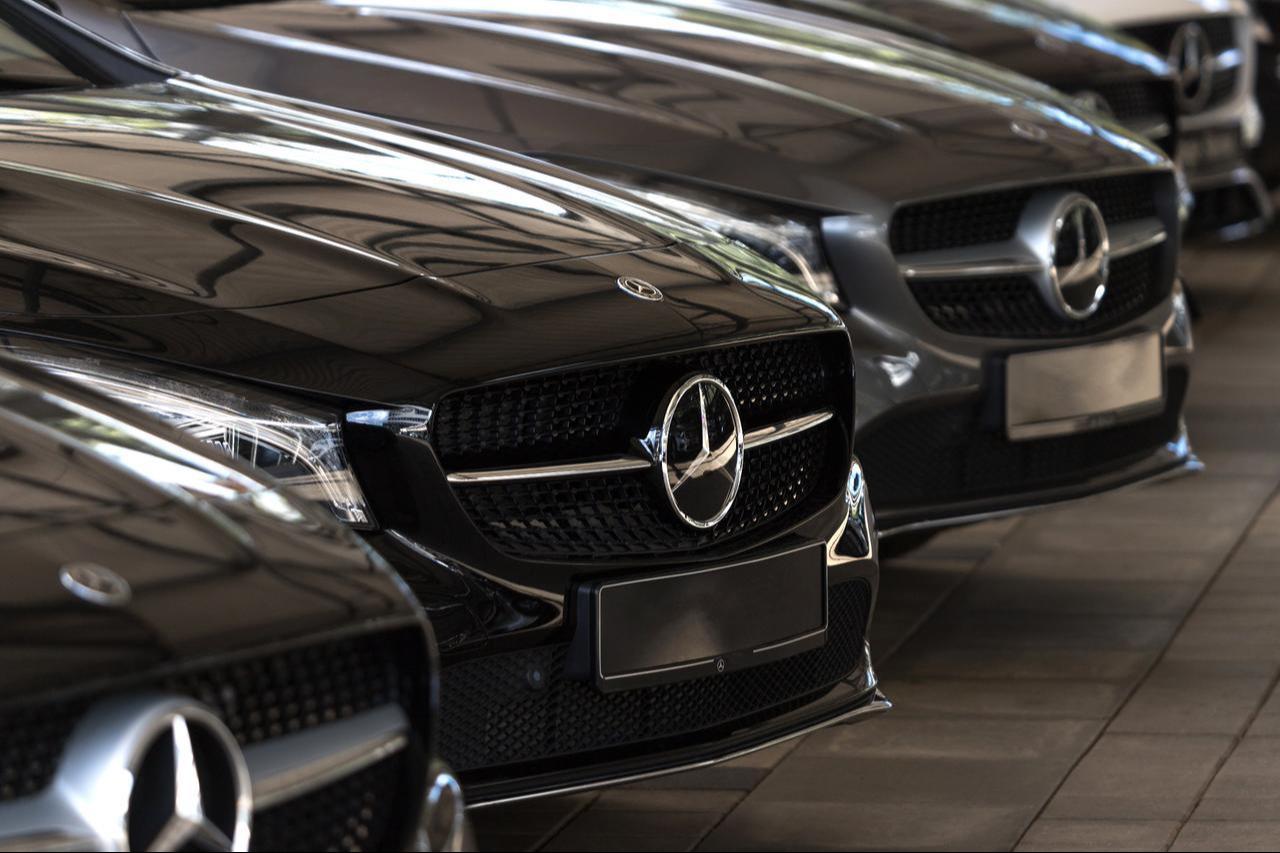

Bolat noted that Türkiye’s automotive story began with MAN’s investment in 1967 and Mercedes-Benz’s in 1971, and said that when one speaks of the Turkish auto industry, “one is actually speaking of the European automotive industry” for 75 percent of production, investment, exports, imports and domestic sales.
He said that, according to the Automotive Manufacturers Association, nearly all of Türkiye’s main industrial plants belong to European investors.
His examples included Oyak Renault (1969) and Tofas/Stellantis (1971) in Bursa, MAN in Ankara (1967), Mercedes-Benz in Aksaray and Istanbul (1971), Ford Otosan in Kocaeli/Golcuk (1997) and Eskisehir, Toyota’s European operation in Sakarya and Karsan in Bursa.
Türkiye’s domestic market, Bolat said, sells 1.3 million to 1.4 million vehicles a year, and 82 percent of vehicles imported this year are of European origin.
EU car sales in the Turkish market have quadrupled over the past five years, a rise of 300 percent, he said, because Ankara protected its market and its mostly European-owned industry against heavily subsidized imports from other regions.
Bilateral trade between Türkiye and the EU reached 204 billion euros last year and about $1 trillion (907 billion euros) over 2021-2025, Bolat said, with 25 percent of it in the auto sector.
He described Türkiye as the EU’s fifth-largest trading partner and the European auto industry’s third-largest.
Türkiye produced about 1.458 million vehicles last year against a capacity of 2 million, and European manufacturers’ plants accounted for 71 percent of that output.
Some 55 percent of the parts used in Turkish vehicle production are imported from the EU, supporting roughly 250,000 jobs in EU countries, he said.
On Germany, Bolat said bilateral trade stands at about $52 billion, making it Türkiye’s largest trading partner, with about 10.5 billion euros of it, or 25 percent, in automotive.
German manufacturers exported about 175,000 vehicles to Türkiye last year, and Germany leads automotive supplier trade with an 18 percent share.
German direct investment in Türkiye has reached 18 billion euros, compared with 2.5 billion euros of Turkish investment in Germany. He said plants run by German companies such as Bosch, ZF Friedrichshafen and Continental in Türkiye directly support about 59,000 jobs in Germany.
Citing the German Federal Statistics Office, Bolat said German motor vehicle exports to Türkiye rose 240 percent between 2019 and 2025, from 2.3 billion euros to 7.8 billion euros. Over the same period, Germany’s exports to China fell 46 percent, from 24 billion euros to 13 billion euros.
“These statistics clearly show that Türkiye is a safe harbor and a reliable growth engine for the German automotive sector,” he said.
Bolat said Ankara also expects its place in European value chains to be taken into account in the safeguard investigation the European Commission opened on Oct. 30 into imports of certain new hybrid passenger cars.
He warned that leaving Türkiye out of the “Made in EU” framework would be costly for both sides. Industry simulations, he said, show Türkiye’s automotive exports to the EU falling 53 percent within four years and 68 percent by 2035.
By 2035, about 330,000 jobs and 20 billion euros in automotive exports would be at risk in Türkiye, he said. On the EU side, roughly 250,000 jobs, 21 billion euros in automotive exports and 6 billion euros in EU-linked supplier business would be endangered. “Price increases will trigger inflation and supply chains will break,” he said.
Bolat said Ankara hopes common sense will prevail and that Türkiye will be included as a partner country in all provisions of the Industrial Accelerator Act from the start, without restrictions.
Any option that excludes Türkiye while granting preferential treatment to other countries is unacceptable, he said, and the decision should rest on commercial and economic rationality rather than politics alone.
On public procurement, he said Türkiye must be included from the outset. A law passed by the Turkish parliament last July authorizes the president to issue a decree ensuring equal treatment for EU and Turkish bidders in Turkish public tenders, he said, and Ankara is holding technical talks with the European Commission’s trade directorate on a separate bilateral procurement agreement.
Bolat thanked German automakers and executives who have argued that existing supply chain ties and industrial integration should not be damaged.
“We hope politicians will heed these very important calls from the automotive sector,” he said, adding that Ankara hopes Germany, its largest trading partner, will back a framework in the ongoing negotiations that recognizes Türkiye as an integral part of European automotive value chains.
He also thanked the Automotive Industry Exporters’ Association and other participants for organizing the summit.


 Set as preferred source
 Set as preferred source


 1 min read
 1 min read