Newsletters


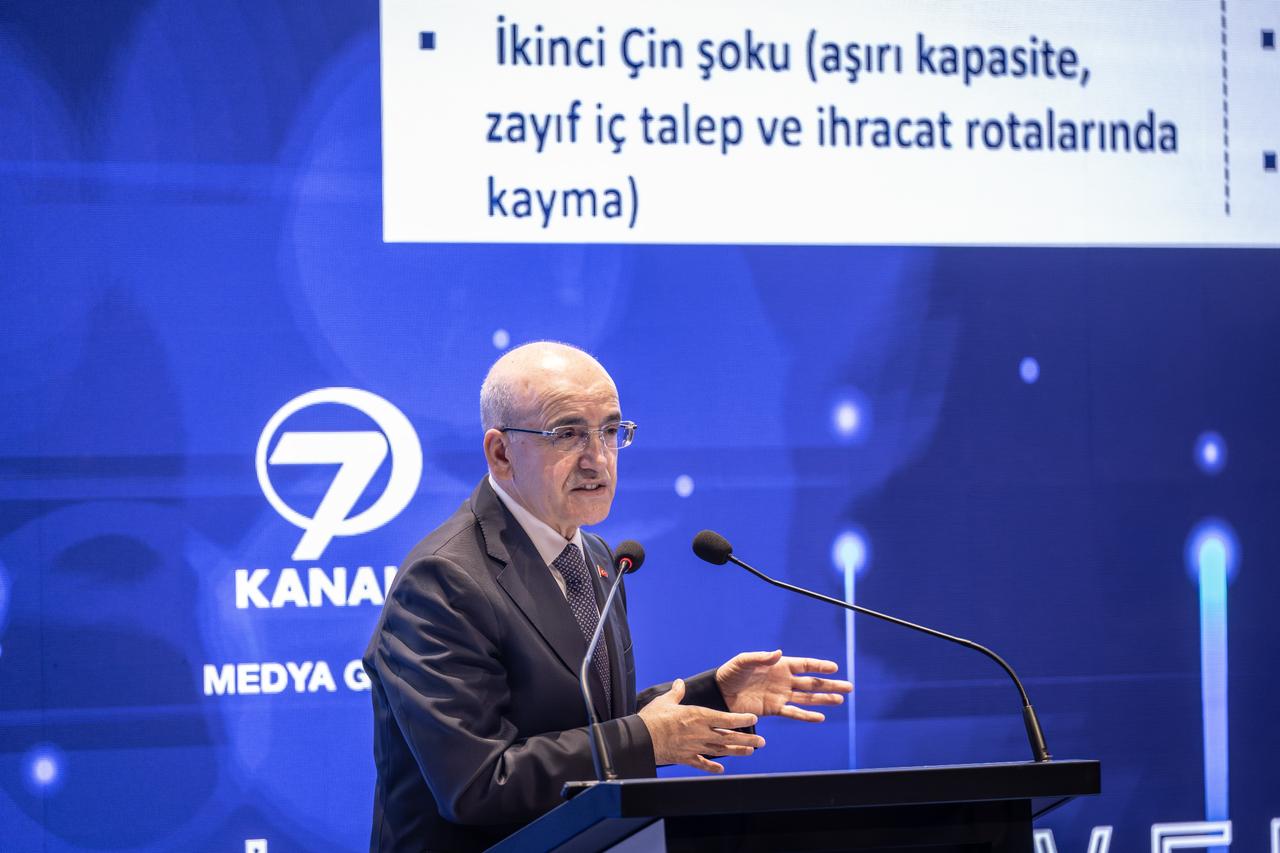


Treasury and Finance Minister Mehmet Simsek pushed back against intensifying criticism of Türkiye’s economic program from pro-government circles, arguing that disinflation efforts are lowering vulnerabilities even as global shocks build.
"This program is not perfect, and it does not deliver perfect results, but it has protected Türkiye from all the shocks of the past two years and helped the economy withstand them," Simsek said, in response to recent calls to abandon the disinflation program.
"There are views saying ‘the fight against inflation has gone too far, let’s stop at some point.’ This is a very myopic approach," he asserted, stressing that sustainable long-term growth depends on price stability.
Simsek’s remarks come as criticism of the program has intensified in recent days, most notably from pro-government outlet Yeni Safak, one of the most vocal critics among groups close to the ruling AK Party.
The newspaper ran a front-page headline on Tuesday declaring, "Türkiye’s disinflation program has collapsed," arguing that the policy has struggled to meet inflation targets since its launch in mid-2023 despite tight monetary conditions.
It also claimed that the shift toward orthodox economic policies has failed to deliver results, instead slowing economic activity, and called for a move toward looser monetary policy with lower rates and easier access to credit focused on boosting productivity.
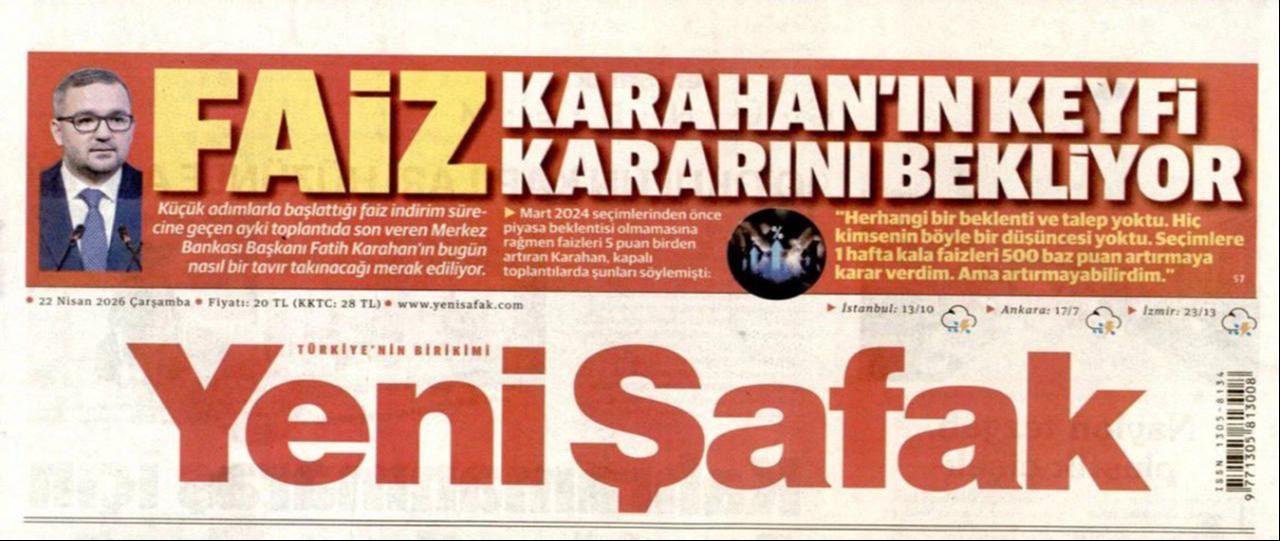
The criticism sharpened further on Wednesday, when the daily targeted the Central Bank of the Republic of Türkiye (CBRT) and its governor, Fatih Karahan, ahead of its Monetary Policy Committee (MPC) meeting, with the headline: "Waiting for Karahan’s arbitrary rate decision."

The central bank kept its policy rate unchanged at 37% on Wednesday, while the overnight lending rate stood at 40%, citing continued pressure from regional instability linked to the Iran war and rising energy costs.
Türkiye’s inflation declined to 30.9% after a brief rebound in February, maintaining its downward trend from a peak of 75.5% in May 2024.
Simsek recalled the three steps of the ongoing program: stabilizing risks, correcting imbalances, and locking in gains through structural reforms.
The first two phases have largely been completed, while the final phase is expected to continue through the end of 2027. "There will be no deviation in disinflation, and this is a gain," he said.
Simsek reiterated that low inflation remains central to long-term growth. "Sustainable high growth requires low inflation and fiscal discipline," he explained, noting that while some sectors face pressure, targeted fiscal support is being provided.
He also warned that global conditions—particularly energy prices—could weigh on the outlook. If oil averages around $80, inflation could run 2.8 to 3.5 points above baseline projections, while the current account deficit may widen by 0.7 to 1.1 points, he explained.
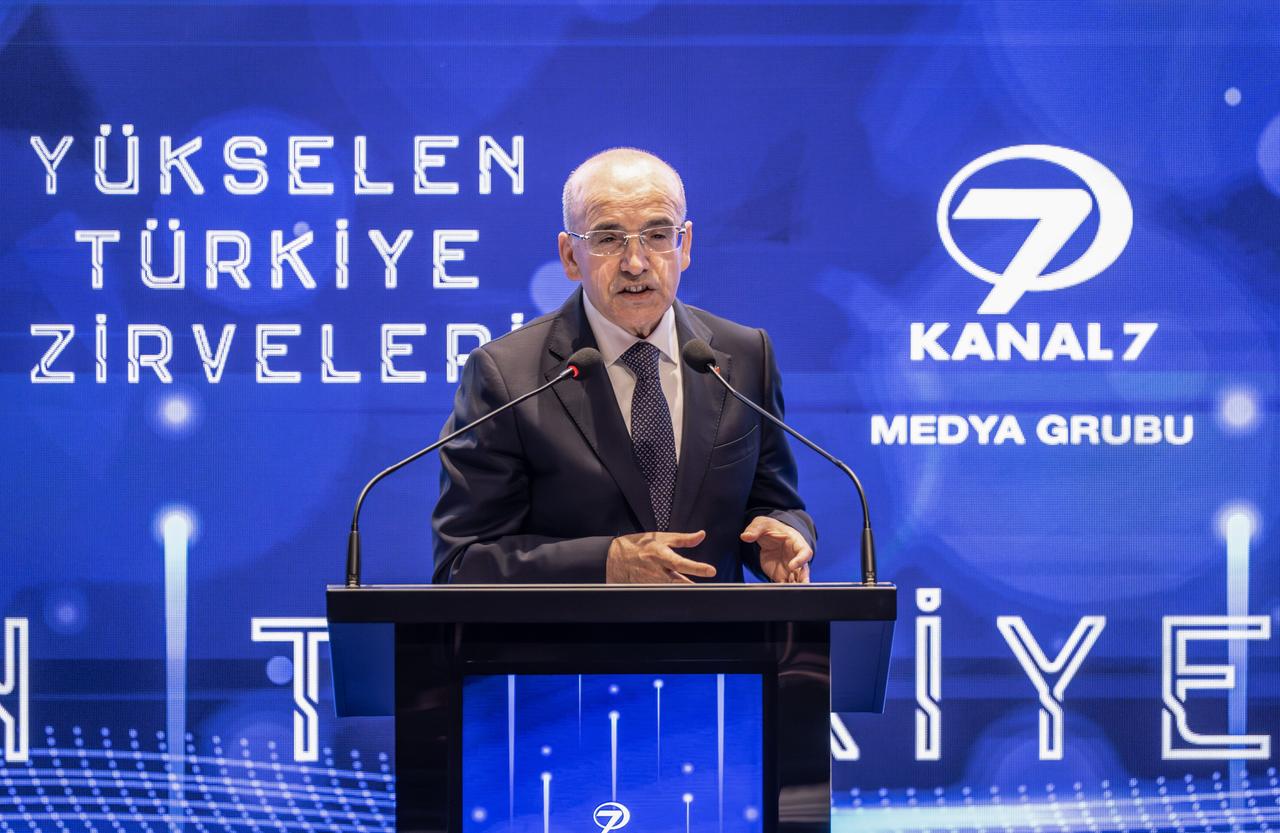
Looking ahead, he signaled upcoming "radical steps" to attract investment into manufacturing and strengthen Türkiye’s position in global supply chains, saying new measures will focus on shifting production toward higher value-added sectors and reducing external imbalances.
Simsek said incentives will be directed at industries where Türkiye runs trade deficits, while avoiding areas with excess capacity.
The minister also rejected claims that the program relies solely on monetary policy, stressing its broader reform scope.
"This program is not just about monetary policy, fiscal policy or income policy alone," he said, calling for a more comprehensive reading of the medium-term plan.
He emphasized that industrial transformation remains a top priority, with a shift toward higher value-added production, green energy and digital infrastructure.
On digitalization, Türkiye is ahead of many developing economies in artificial intelligence but still trails advanced countries, Simsek emphasized, adding that new infrastructure investments will focus on expanding fiber networks and building large-scale data centers to support AI development.


 Set as preferred source
 Set as preferred source


 2 min read

 1 min read