Newsletters


Türkiye's Yavuz Sultan Selim Bridge has generated ₺138 billion ($2.9 billion) in savings over its first 10 years in service and prevented 180,000 tons of carbon emissions, Transport and Infrastructure Minister Abdulkadir Uraloglu said.
"With the bridge, we have achieved a total of ₺138 billion in savings over 10 years, including ₺134 billion from time and ₺4 billion from fuel. We have prevented 180,000 tons of carbon emissions," Uraloglu said.
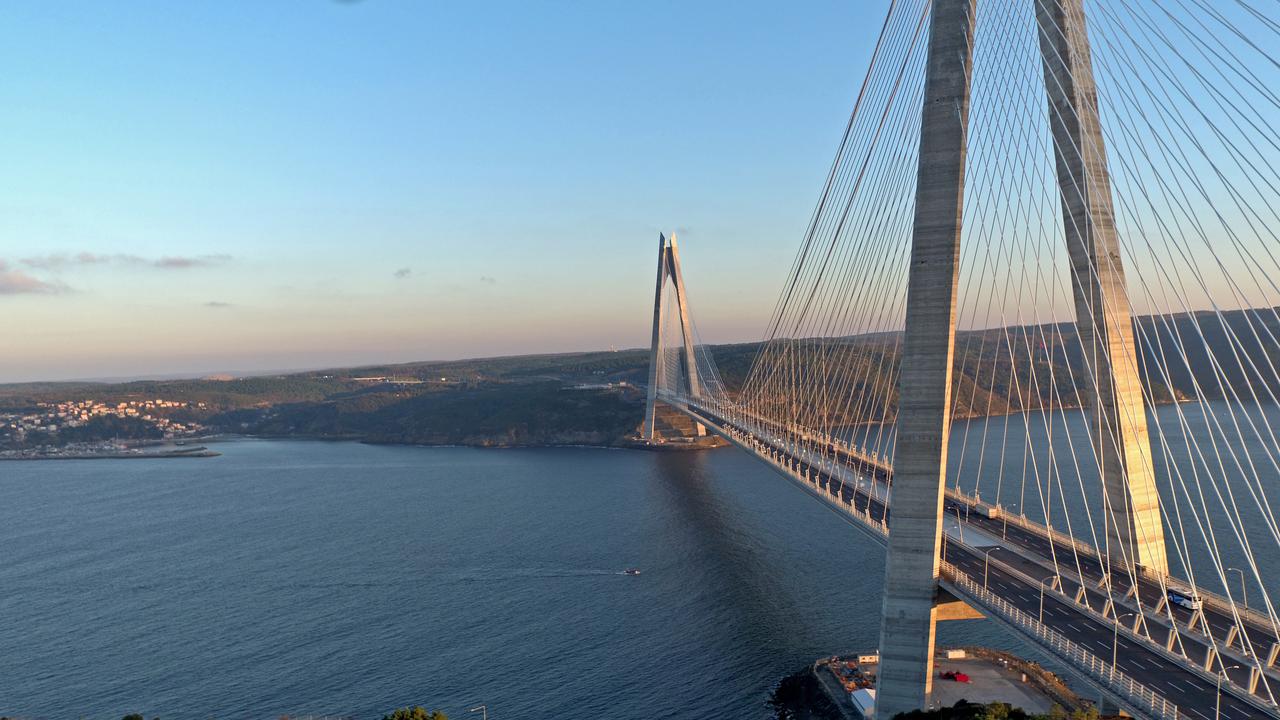
The bridge opened on Aug. 26, 2016, and has since helped ease Istanbul traffic while providing faster and safer access to Istanbul Airport in the northern part of the city.
Built at the Black Sea entrance to the Bosporus as part of the Northern Marmara Highway Project, the bridge connects Garipce in Istanbul's European-side Sariyer district with Poyrazkoy in the Asian-side Beykoz district.
"Yavuz Sultan Selim Bridge was built with modern design, an aesthetic structure, and the most advanced materials and engineering techniques. It has stood out as one of our country's landmark projects. The bridge serves a heavy and continuous flow of traffic," Uraloglu said.
The bridge carried 47 million vehicles in 2025, while traffic reached 30 million vehicles as of early August 2026, Uraloglu added.

The bridge was developed by ICA, a consortium of IC Ictas and Italy's Astaldi, with construction beginning in 2012. The approximately $2.9 billion project was financed through a public-private partnership, while a Hyundai Engineering & Construction-SK Engineering & Construction joint venture built the bridge.
The structure combines suspension and cable-stayed elements, with road lanes and railway space on the same deck. It has a 1,408-meter main span, a total length of 2,164 meters and a width of 59 meters.
The rail section is planned to form part of the Istanbul North Rail Crossing Project (INRAIL), a 127-kilometer double-track railway linking Cayirova and Catalca for passenger and freight services, while connecting Türkiye to trade routes such as the Trans-Caspian Middle Corridor, Iraq Development Road and Türkiye-EU corridor.
Türkiye reached preliminary financing agreements totaling $6.75 billion with six international financial institutions for the project in February 2026, with construction expected to begin in 2027.


 Set as preferred source
 Set as preferred source


 1 min read

 1 min read