Newsletters


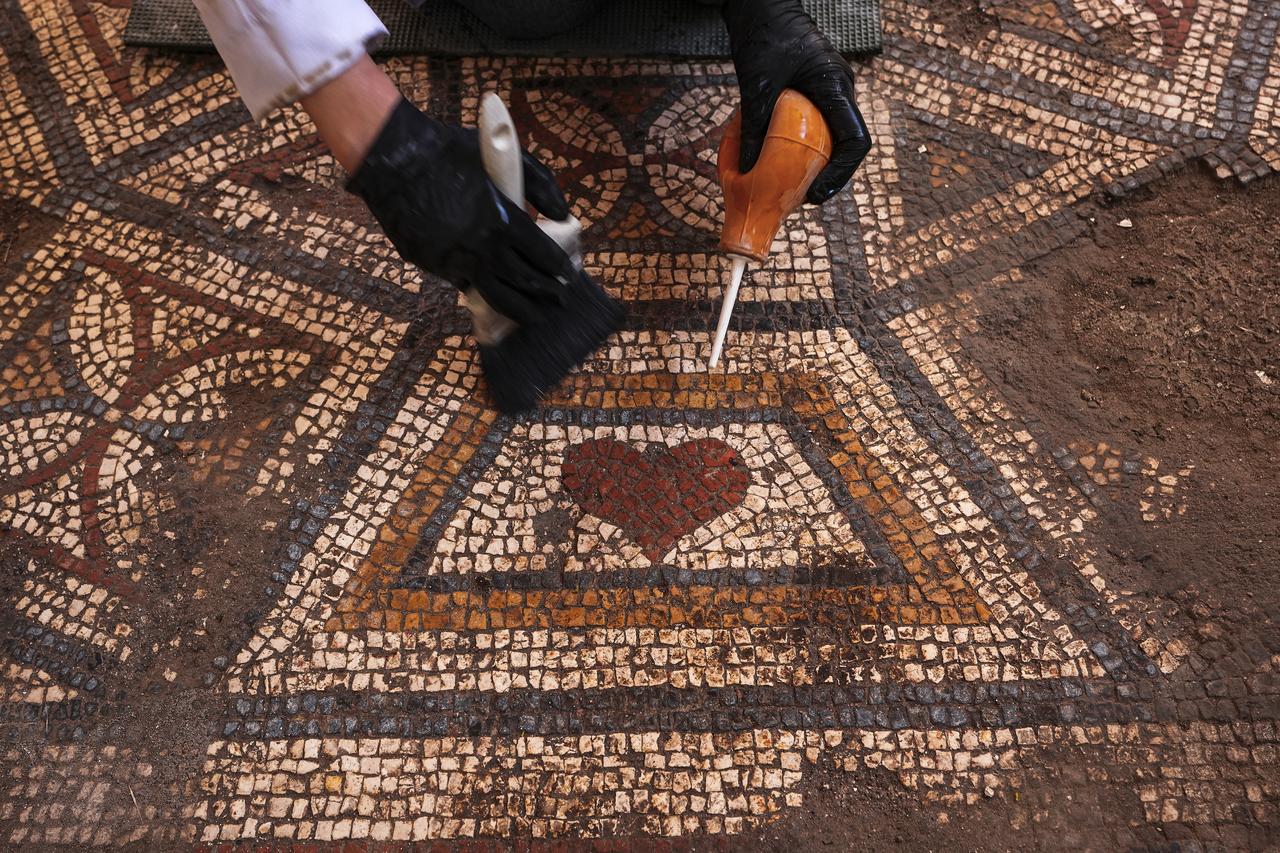


A 1,500-year-old mosaic discovered at the ancient city of Smyrna in Izmir is providing archaeologists with valuable insights into the symbolic world, beliefs and artistic traditions of Late Antiquity.
The mosaic was uncovered during excavations conducted under the Turkish Ministry of Culture and Tourism’s “Heritage for the Future Project” at the Agora of Smyrna. Archaeological work is continuing in the structure known as the “Mosaic Room,” located on the Northern Street of the ancient city.
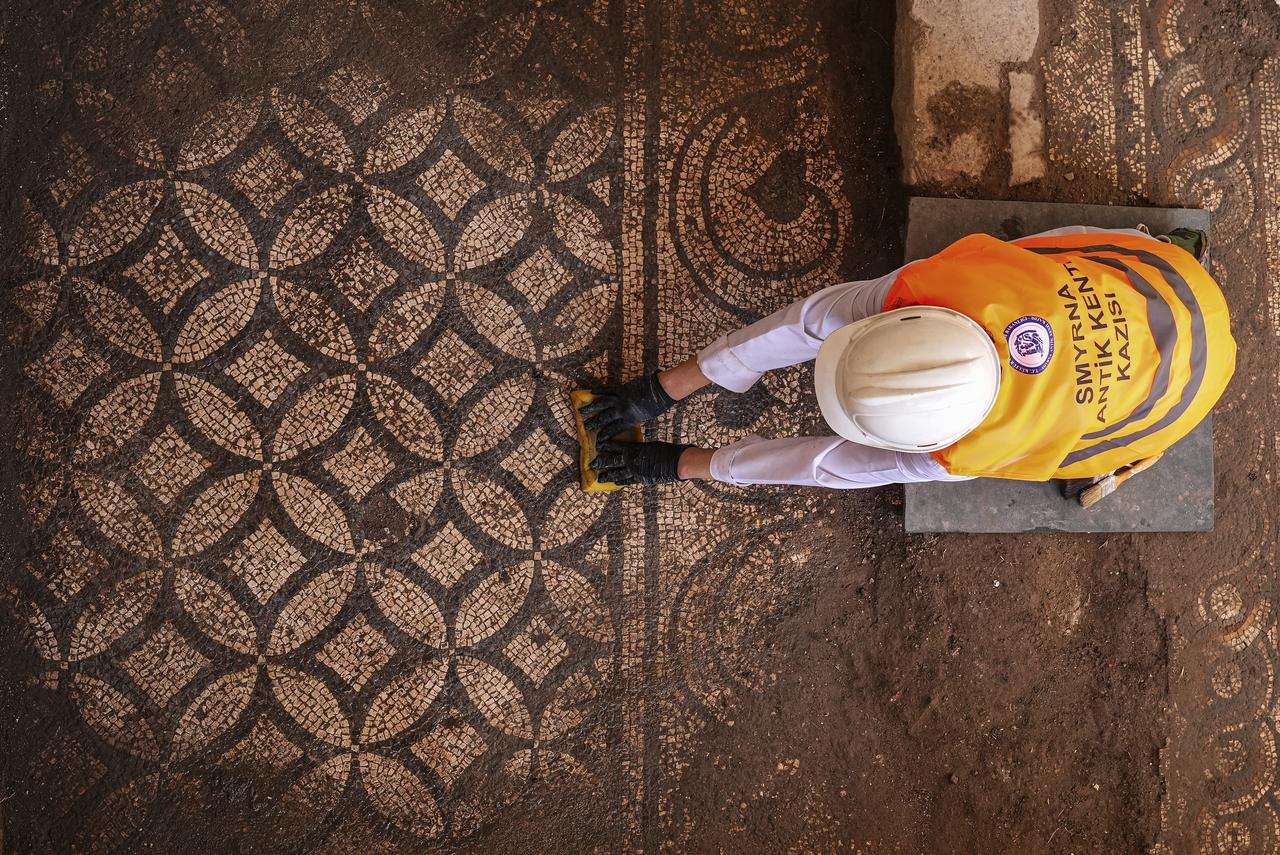
The mosaic floor, measuring approximately 5 by 2.5 meters, features a complex design composed of interlocking 12-sided panels, geometric patterns, and botanical motifs. The decoration includes triangles, squares and various geometric arrangements, along with plant figures such as a heart-shaped ivy leaf.
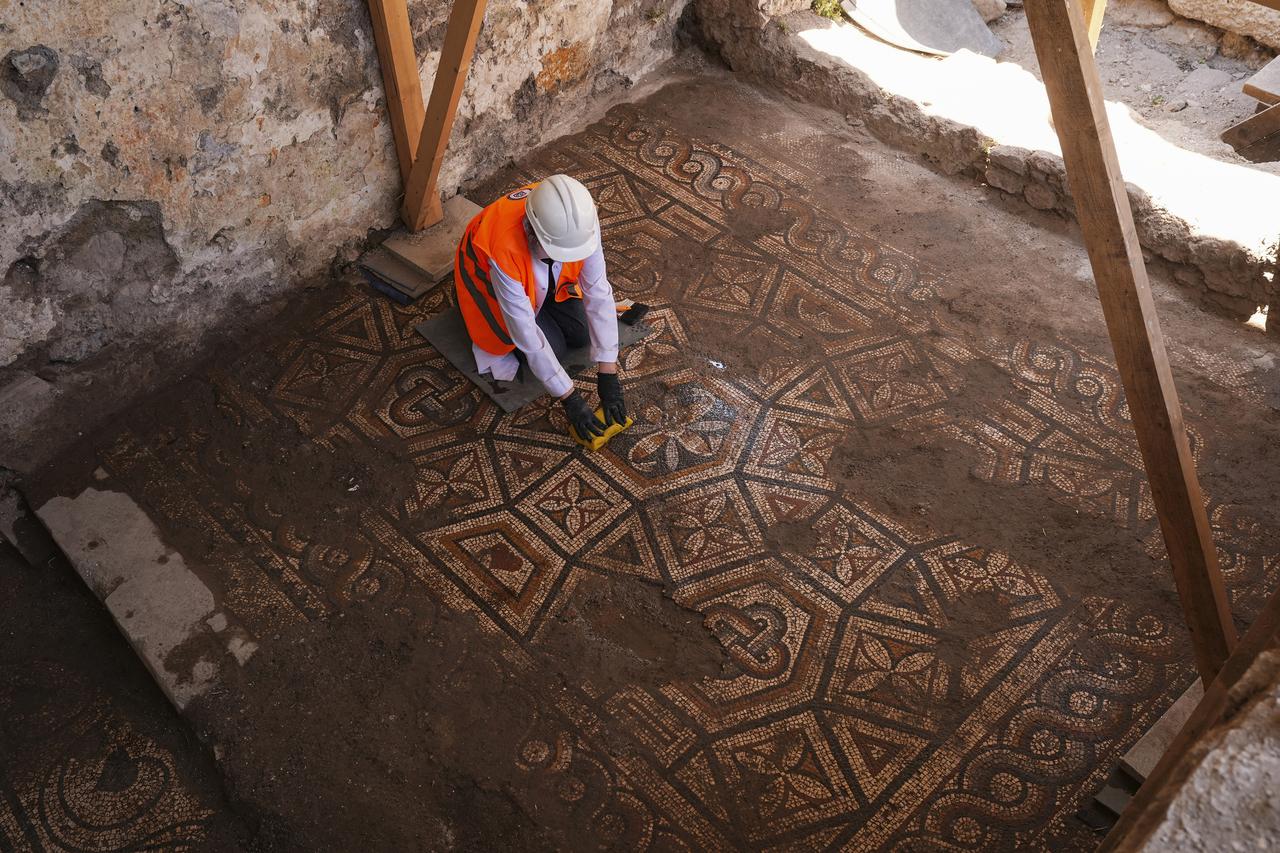

Excavation director Professor Dr. Akin Ersoy of Izmir Katip Celebi University said the mosaic has been dated to the period between the fourth and sixth centuries A.D. He noted that archaeologists have also identified traces of walls surrounding the area, allowing researchers to better understand the original structure.
Ersoy said evidence suggests that the site was reused during the Ottoman period in the 19th century, when a new structure was built over the ancient mosaic floor without causing significant damage.
Researchers stated that the motifs on the mosaic were not merely decorative but also carried symbolic meanings reflecting the beliefs and values of the period.
The heart-shaped ivy leaf is considered one of the most notable elements of the design. While the heart became widely recognized as a symbol of romantic love in later periods, ivy was associated in the ancient world with loyalty and devotion due to its ability to cling firmly to trees and walls.
Another important motif found on the mosaic is the “Solomon’s Knot,” which has historically been linked to wisdom and protection. Archaeologists believe such symbols were used to represent spiritual protection and to guard spaces against negative influences.
The mosaic also contains laurel leaf designs symbolizing sacredness, as well as four-leaf clover motifs associated with faith, love, and prosperity. Experts emphasize that ancient societies frequently assigned religious and protective meanings to natural and geometric forms.
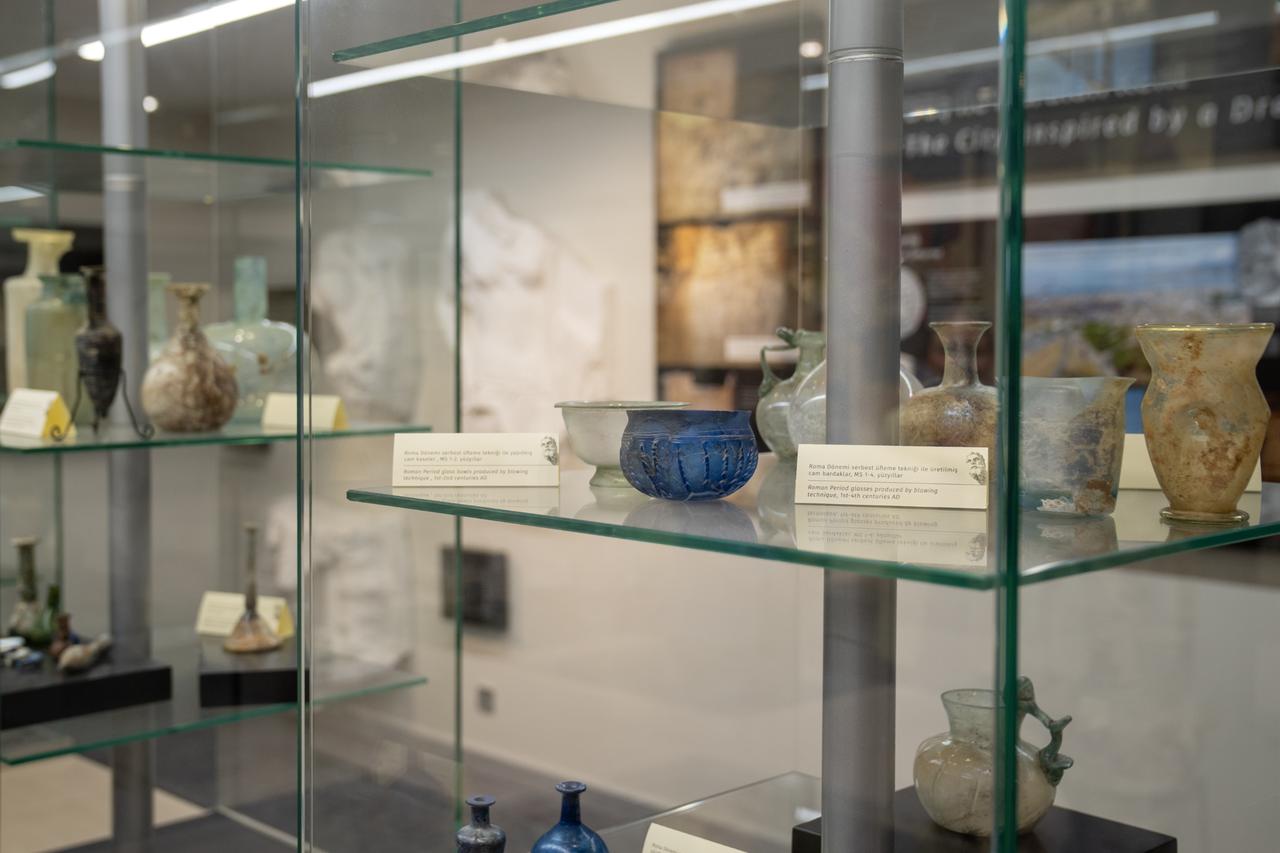
Archaeological findings indicate that the mosaic area remained significant even centuries after its original construction. Objects, including bags, pottery, and ceramic vessels from the late Ottoman and early Republican periods, were discovered in the area, showing that the space was reused approximately 1,500 years after the mosaic was created.
Ersoy said the limited damage to the mosaic suggests that later inhabitants preserved the earlier remains while adapting the space for new use.
Located in one of the Aegean region’s most important ancient settlements, Smyrna was a major center of art, philosophy, trade, and urban culture during the Hellenistic and Roman periods.
Archaeologists say the discovery of a new mosaic in the city center represents an important contribution to understanding the history and cultural development of the ancient city.


 Set as preferred source
 Set as preferred source


 1 min read
 1 min read