Newsletters


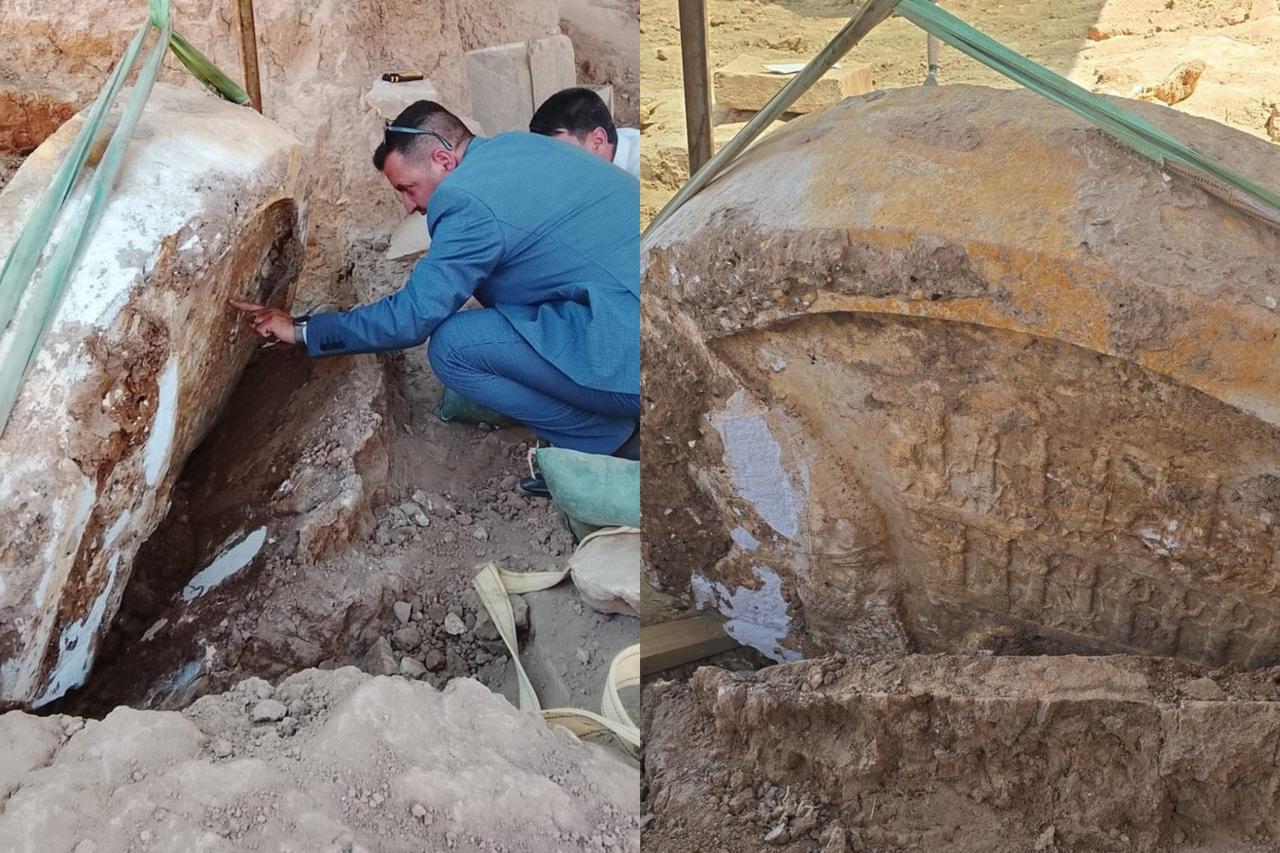


Iraqi authorities have announced the discovery of an ancient Assyrian monument dating back nearly 2,700 years during restoration work at the historic Shamash Gate in Iraq's Nineveh province.
The monument, found on June 6 by a joint Iraqi-American archaeological mission, is linked to the reign of Assyrian King Ashurbanipal, who ruled between 668 and 627 B.C., according to Iraq's state news agency INA.
Nineveh Antiquities Inspector Ruwaid Muwaffaq al-Laila said the stone monument dates to Ashurbanipal's reign and commemorates the king's architectural achievements in the ancient city of Nineveh.
Standing around 2 meters (6.5 feet) tall, the artifact was carved from Mosul marble. It bears a relief of the king, while cuneiform inscriptions are engraved on its back. Cuneiform refers to an ancient wedge-shaped writing system used in Mesopotamia.
Laila said the discovery came to light while teams were clearing debris and carrying out restoration work at the Shamash Gate.
The monument is currently undergoing study, with plans to display it either at its original discovery site or in a museum in Mosul, the capital of Nineveh province.
The find adds to restoration efforts in a region known for its rich Assyrian heritage. Many of Nineveh's archaeological sites were looted, blown up or heavily damaged while the terrorist group Daesh controlled Mosul between 2014 and 2017.
Since the liberation of Mosul, Iraqi authorities and international archaeological missions have been working to restore and rehabilitate heritage sites across the province.


 Set as preferred source
 Set as preferred source



 3 min read