Newsletters


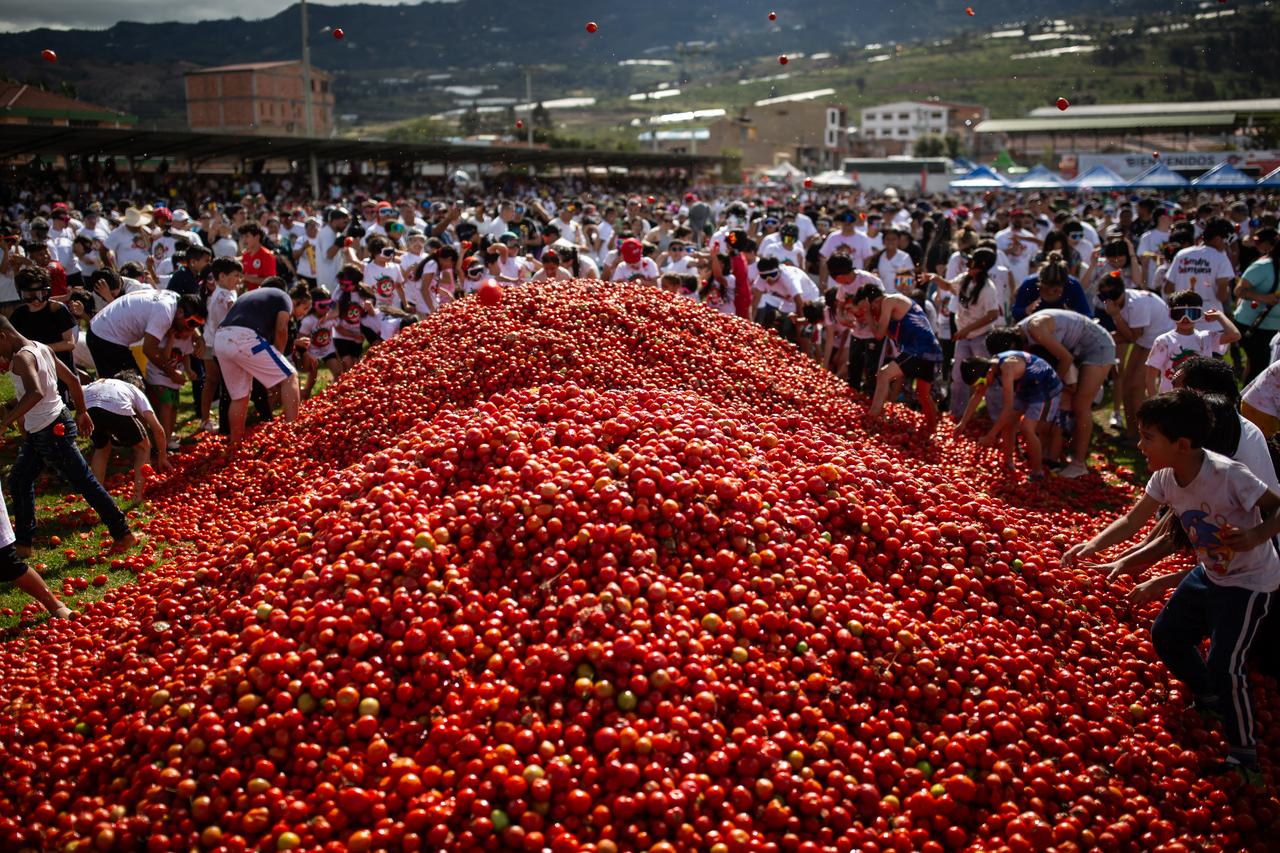


An estimated 20,000 to 30,000 residents and international tourists gathered in the small Colombian town of Sutamarchan on Sunday for the 16th edition of the Great Colombian Tomatina (Gran Tomatina Colombiana).
The annual event, a major cultural and tourism driver for the Boyaca region, culminated in a massive tomato fight at the municipal stadium.
Organizers confirmed that 40 tons of tomatoes were used during the festivities.
All produce utilized was officially certified as unfit for human consumption, ensuring that agricultural surplus and discarded inventory from local farms were repurposed rather than impacting the commercial food supply.
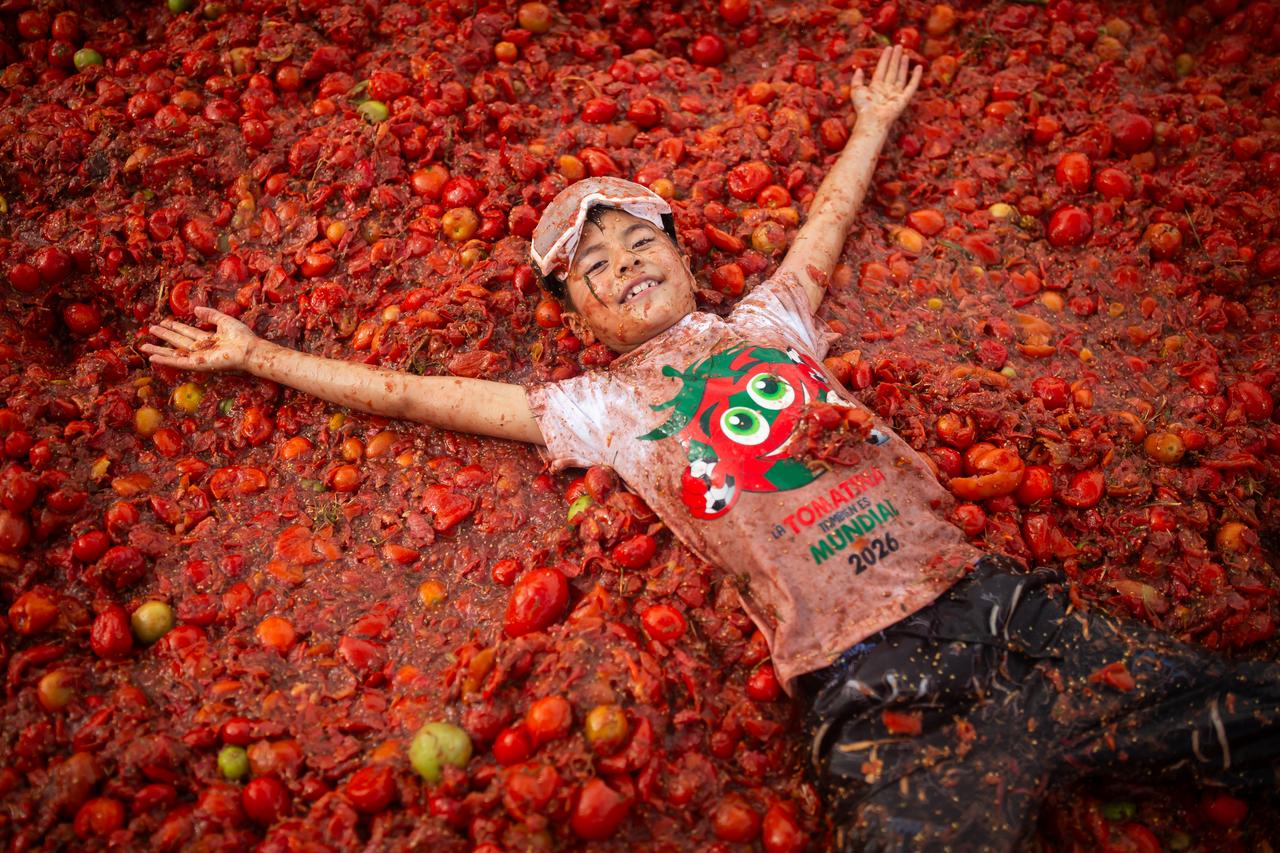

According to the official schedule, the 16th edition of the festival was uniquely themed as a prelude to the upcoming 2026 FIFA World Cup, adopting the official slogan "La Tomatina tambien es mundial" (The Tomatina is also global).
Participants wore jerseys representing various national football teams, as international visitors joined residents to blend sports culture with the traditional harvest celebration.
The three-day program featured expanded community and athletic activities. On Sunday morning, before the main battle, the municipality hosted a multi-distance marathon featuring 5K, 10K, and 20K courses that routed runners through both urban areas and rural agricultural fields.
Following the athletic events, a traditional parade of floats and allegorical costumes moved through the town, leading into regional skill competitions, including the "tomato glutton" contest and the crowning of the region's heaviest tomato.
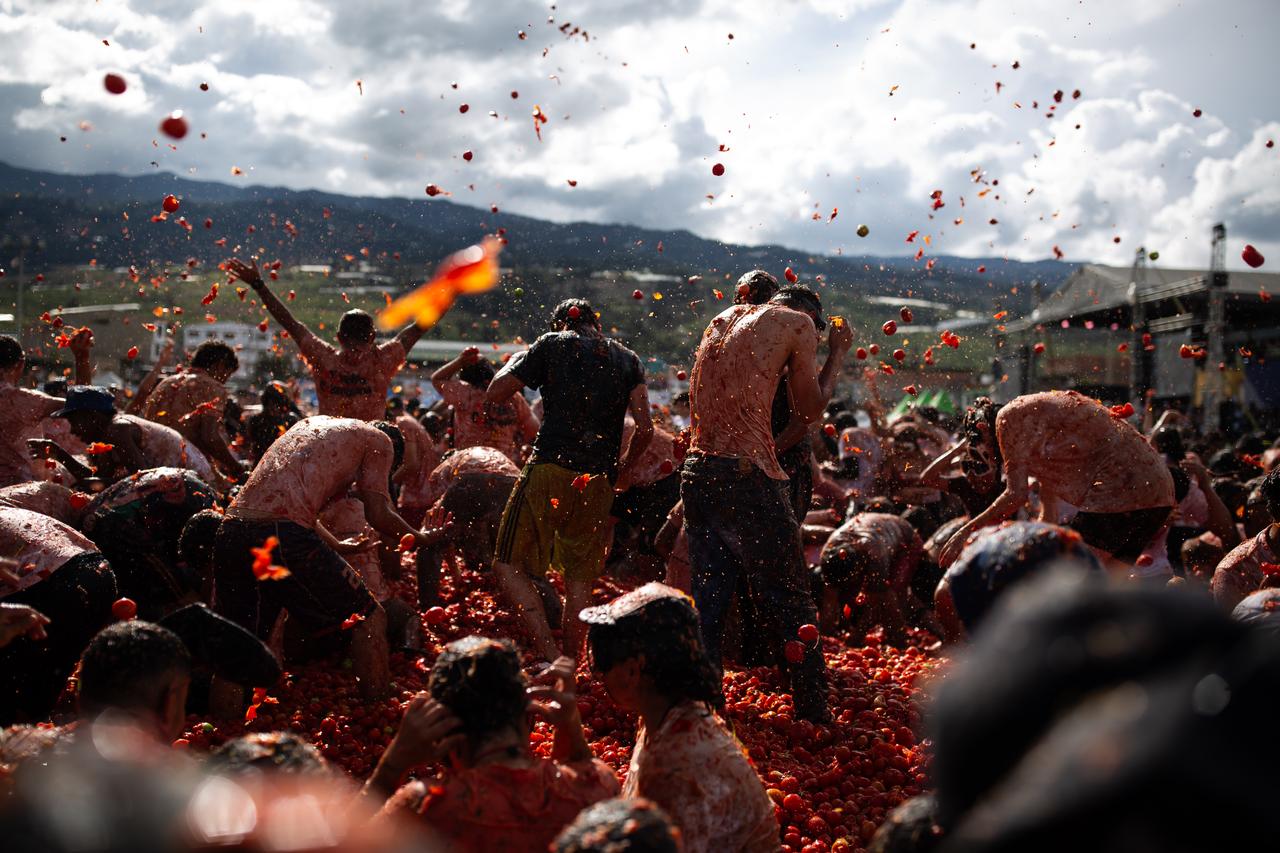
The main tomato battle commenced in the afternoon inside the municipal stadium, opening traditionally with the Colombian national anthem.
The hour-long fight concluded with the sounding of an emergency siren, after which volunteer fire crews from neighboring Villa de Leyva used high-pressure water hoses to wash down the participants and clear the public grounds.
The Great Colombian Tomatina has expanded significantly since its inception on June 5, 2005, when founder Heynner Suarez organized a local gathering that drew roughly 1,500 people and utilized three tons of tomatoes.
Over the past two decades, the festival has evolved into an internationally recognized event, requiring close coordination between the Boyaca regional administration and surrounding municipalities to accommodate the influx of tourists.
Beyond the entertainment aspect, the event serves to promote the agricultural output of the Ubate and Alto Ricaurte valleys, which form the core of Colombia’s tomato-growing industry.
The commercial component of the festival features dedicated farmers' markets and a gastronomic fair showcasing regional culinary products.
Municipal cleanup personnel confirmed that the organic residue collected from the stadium and streets will be transferred to regional composting facilities for agricultural reuse.


 Set as preferred source
 Set as preferred source


 2 min read