Newsletters


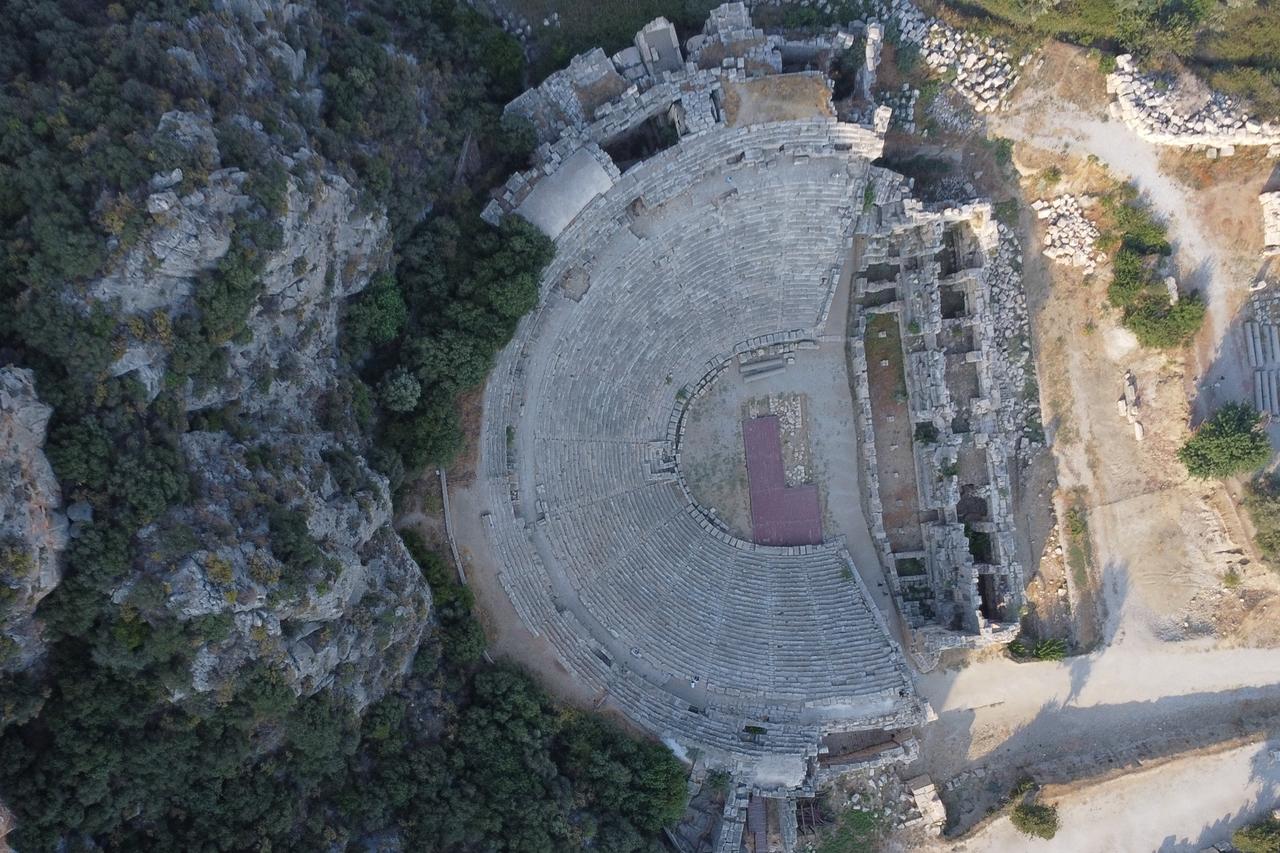


Antalya, one of Türkiye’s leading destinations for cultural tourism, continues to charm visitors not only with its natural beauty but also with the impressive ancient theaters that once hosted political assemblies, gladiator contests, and theatrical performances.
These monumental structures, built across the regions of Lycia, Pamphylia, and Pisidia, now welcome travelers from around the world seeking to experience the architectural brilliance and social life of antiquity.

Scholars emphasize that these theaters served as symbolic centers of ancient cities, reflecting not only architectural and engineering achievements but also the social dynamics and cultural identity of their time. According to Professor Nevzat Cevik of Akdeniz University, ancient theaters help researchers understand everything from a city’s prosperity to its public life. He notes that they “do not only reveal themselves through their architecture but also convey what once unfolded inside them,” offering rare insight into ancient society.
While many theaters were first erected during the Hellenistic period and typically held around 2,000 spectators, the Roman era ushered in a new phase of expansion and transformation. With Rome’s shift in cultural practices, the variety of spectacles widened. Gladiator matches, public festivals, and even staged animal–human encounters became part of the social landscape, prompting architectural modifications to protect spectators.
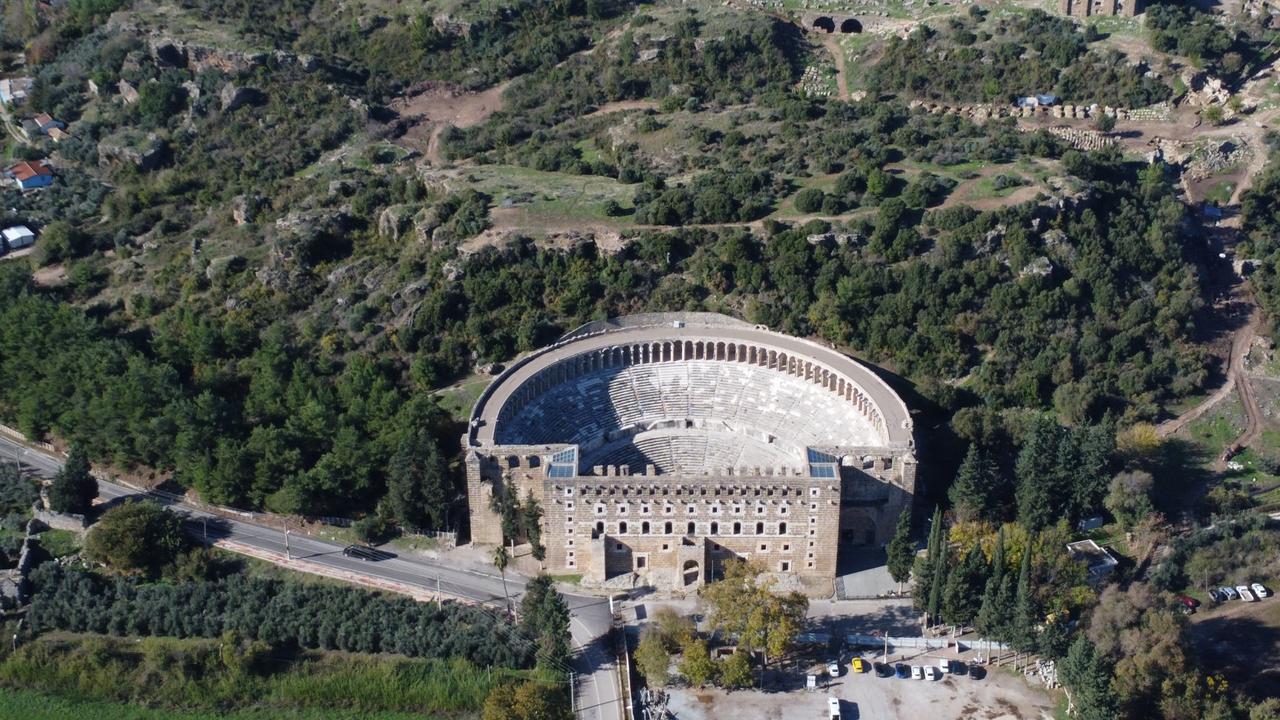
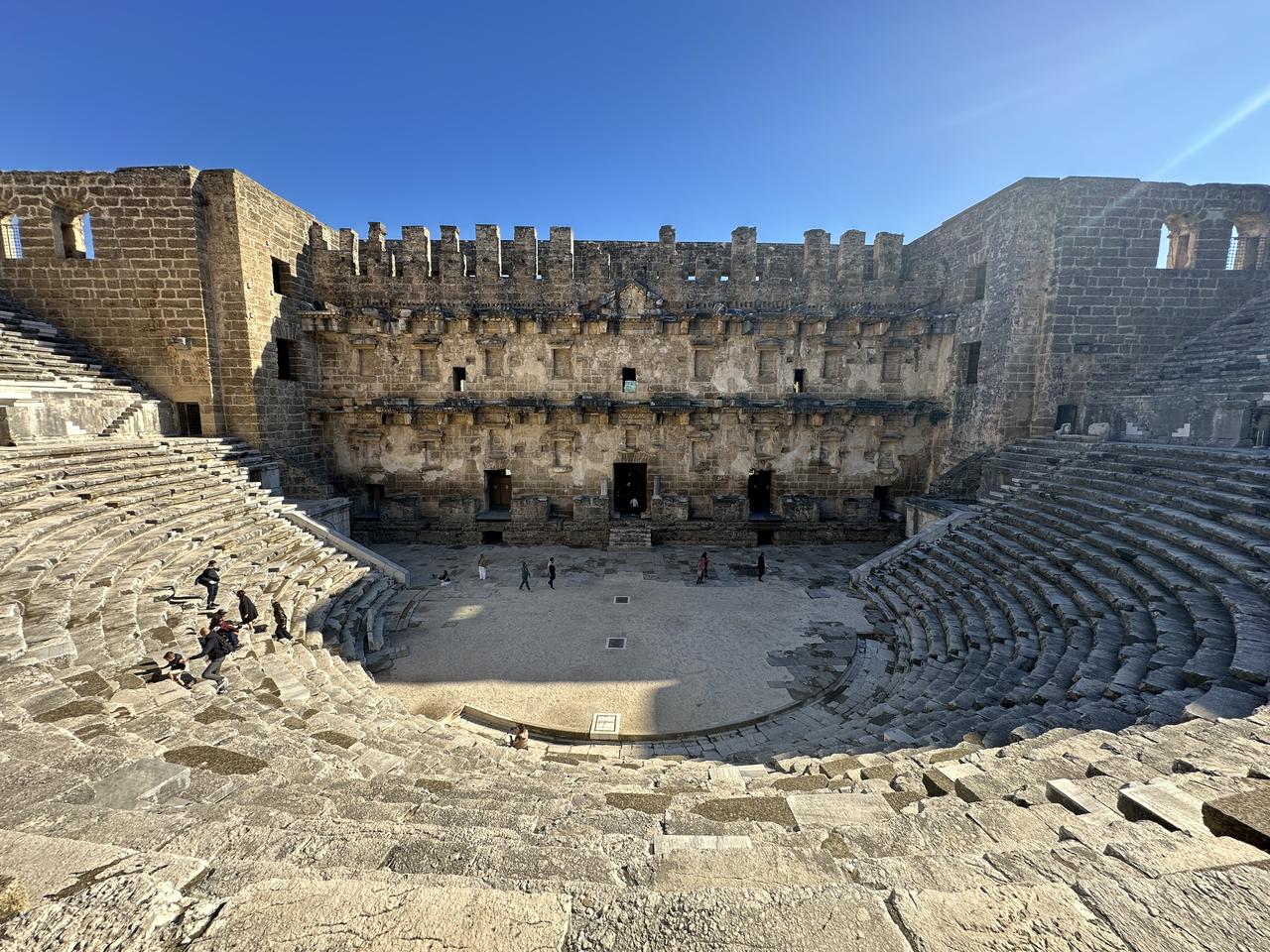
Among Antalya’s many ancient sites, the Aspendos Theater stands out as one of the best-preserved Roman theaters in the world. Commissioned by two brothers from the Roman period, it still retains its original stage building and seating arrangement.
With a capacity of roughly 15,000 people, Aspendos continues to host concerts and cultural events, enabling visitors to experience the structure much as ancient audiences once did.
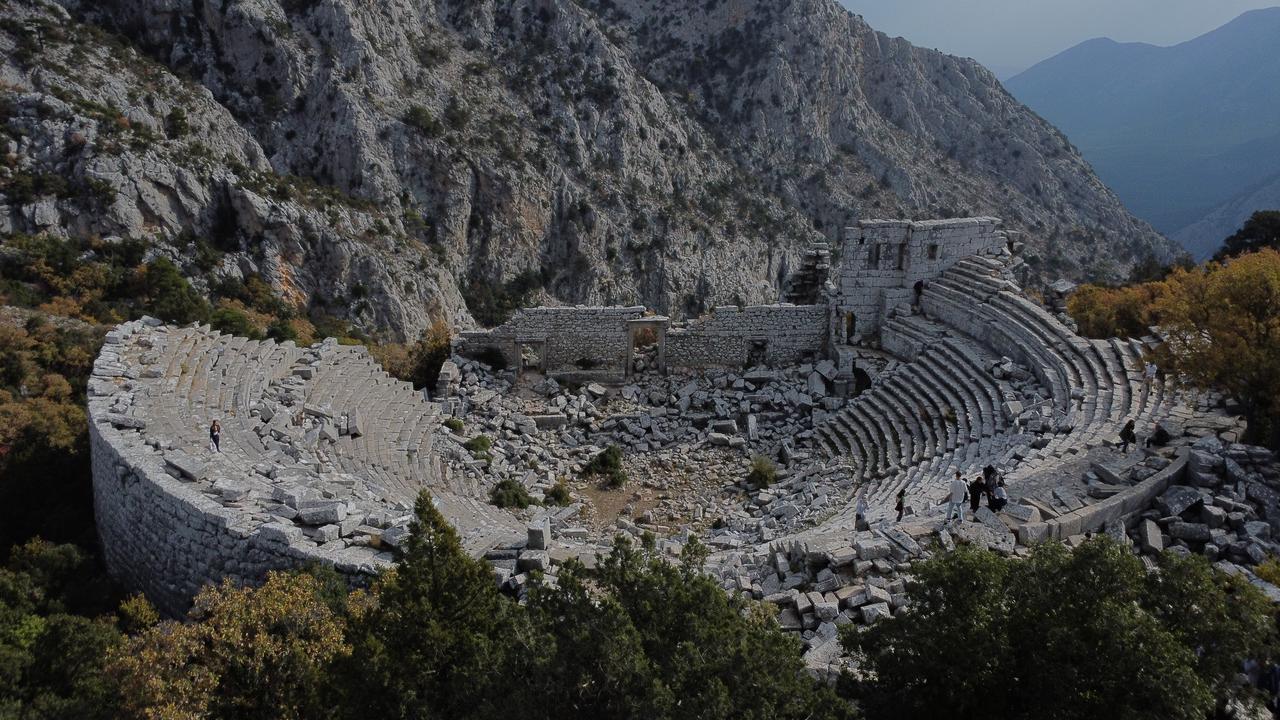
The theater at Termessos, situated high inside Gulluk Mountain National Park, offers one of the most striking settings in the region. Perched like an “eagle’s nest,” it opens onto sweeping views of forests and mountain peaks, giving visitors a rare opportunity to explore cultural heritage within untouched natural surroundings. The ancient city is also known for its rich biodiversity, which adds another dimension to the visitor experience.
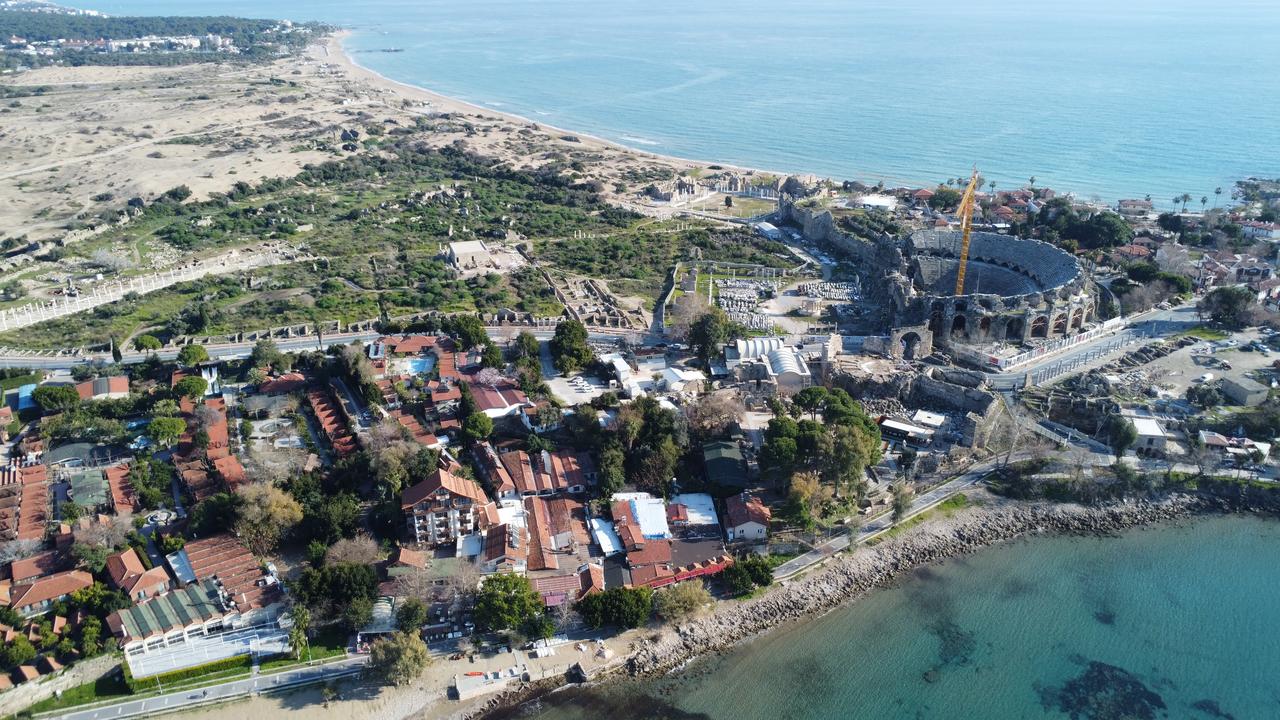
Side, once a major port city of Pamphylia, boasts one of the region’s most imposing theaters with a multi-storey stage building and elaborate decorations. The theater at Myra, located in Demre, remains one of the best-preserved Roman theaters with its seating rows and partially standing stage structure.
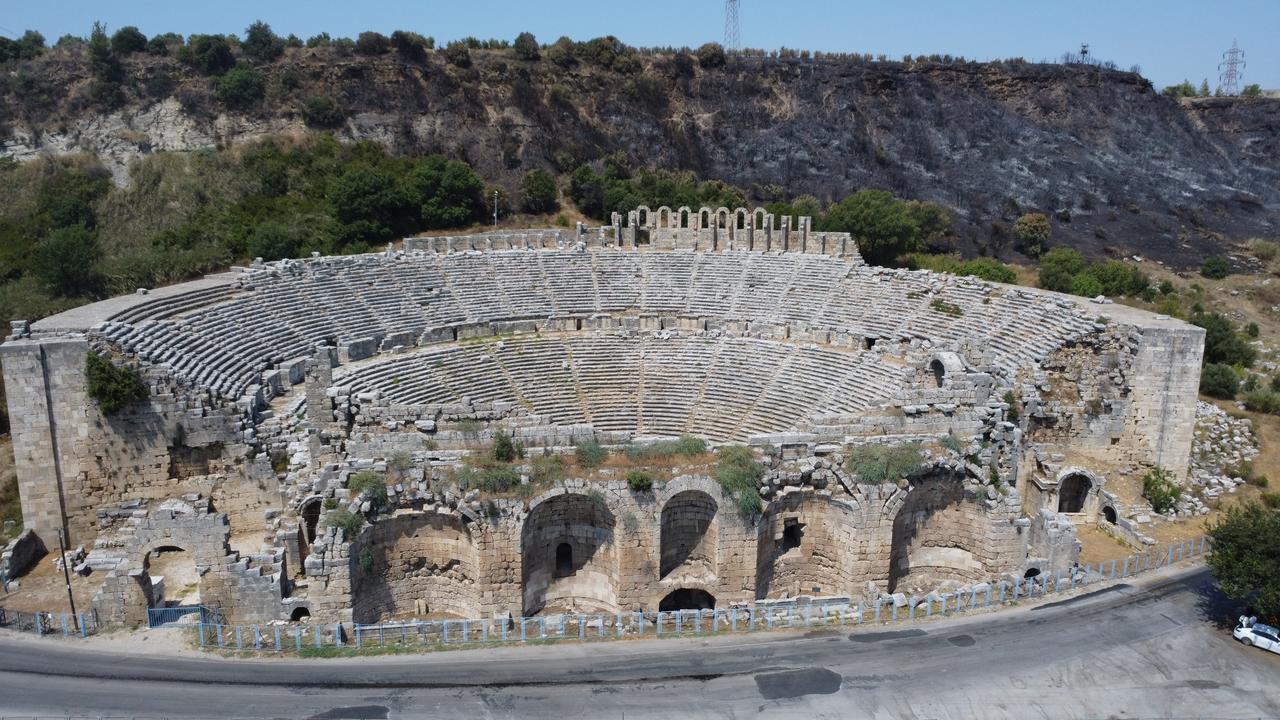
Other noteworthy sites include Perge, celebrated for its well-planned urban layout and marble sculptures; Patara, once a political center of the Lycian League; Xanthos, listed on the UNESCO World Heritage Tentative List; Limyra, where waterways flow through the ancient settlement; Simena, overlooking the turquoise bays of Kekova; and Selge, a mountain city of Pisidia. Each theater continues to serve as a focal point for travelers exploring Antalya’s archaeological wealth.
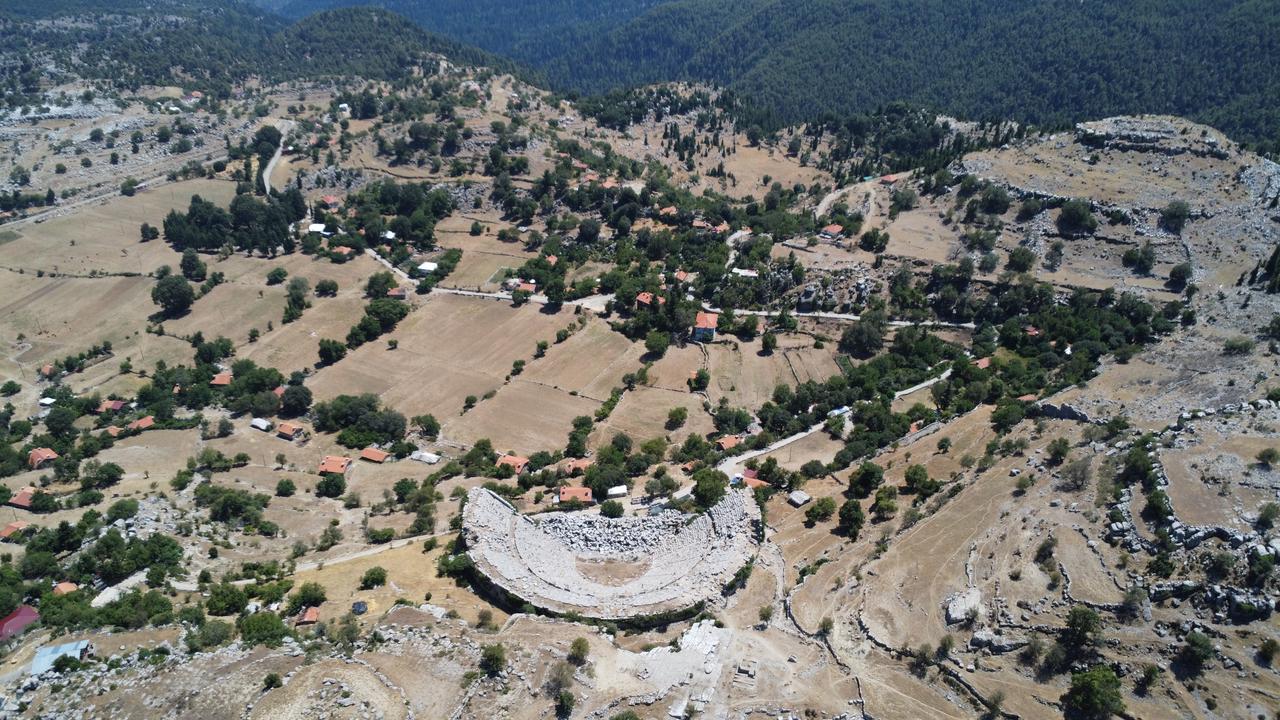
Kudret Sezgin of Hitit University, who oversees excavations at Limyra, notes that the theater there was originally built in the second century B.C. and later expanded during the Roman period. The structure suffered significant damage during a major earthquake in 142 A.D., which devastated much of Lycia. A renowned local benefactor named Opramoas funded its reconstruction, increasing its capacity to approximately 6,000 spectators.
Researchers explain that ancient theaters functioned as venues for political gatherings, cultural festivals, dramatic plays, and public entertainment.


 Set as preferred source
 Set as preferred source



 1 min read