Sign in
 Newsletters


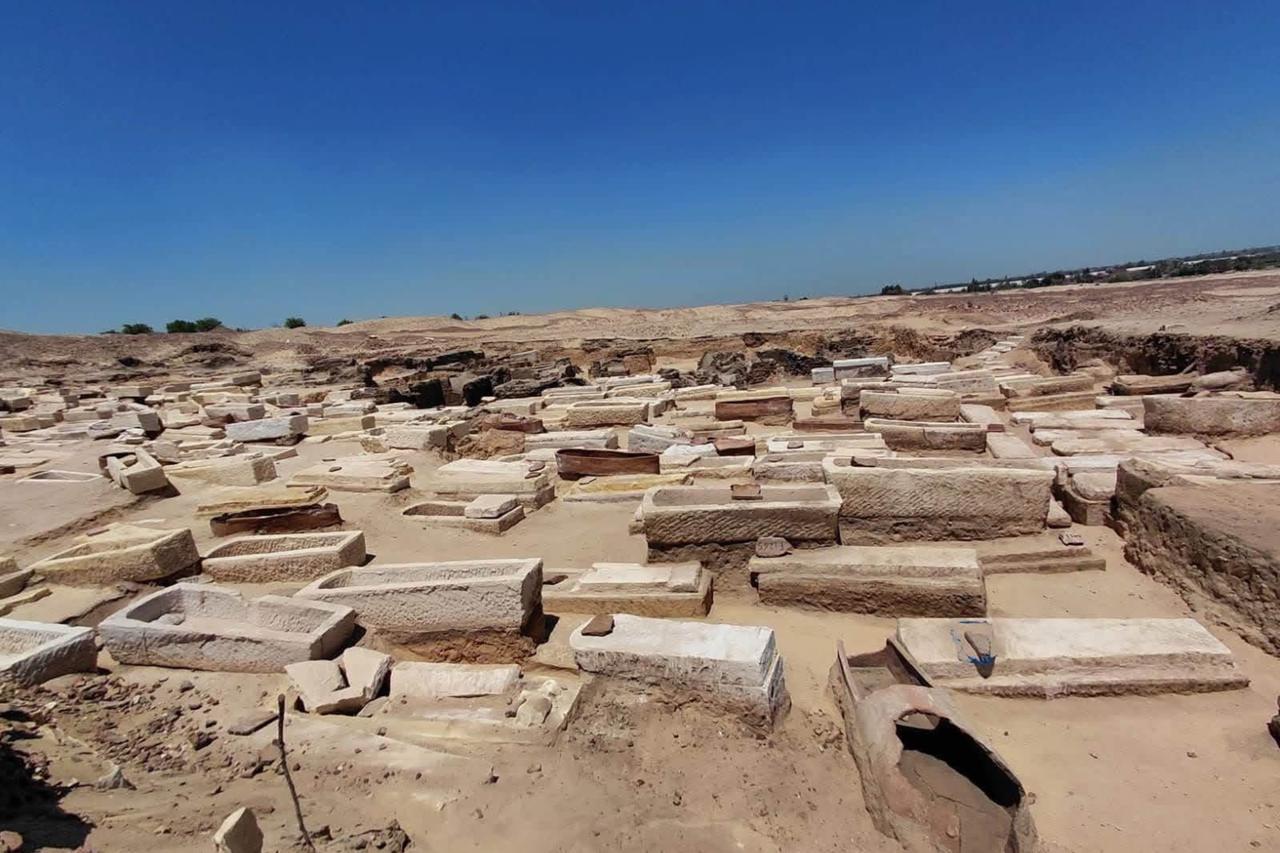


Egyptian archaeologists have uncovered hundreds of coffins, gold tongues and funerary objects at an ancient cemetery in northern Egypt, with preliminary findings suggesting the burial ground was largely used by middle-class residents more than 2,000 years ago.
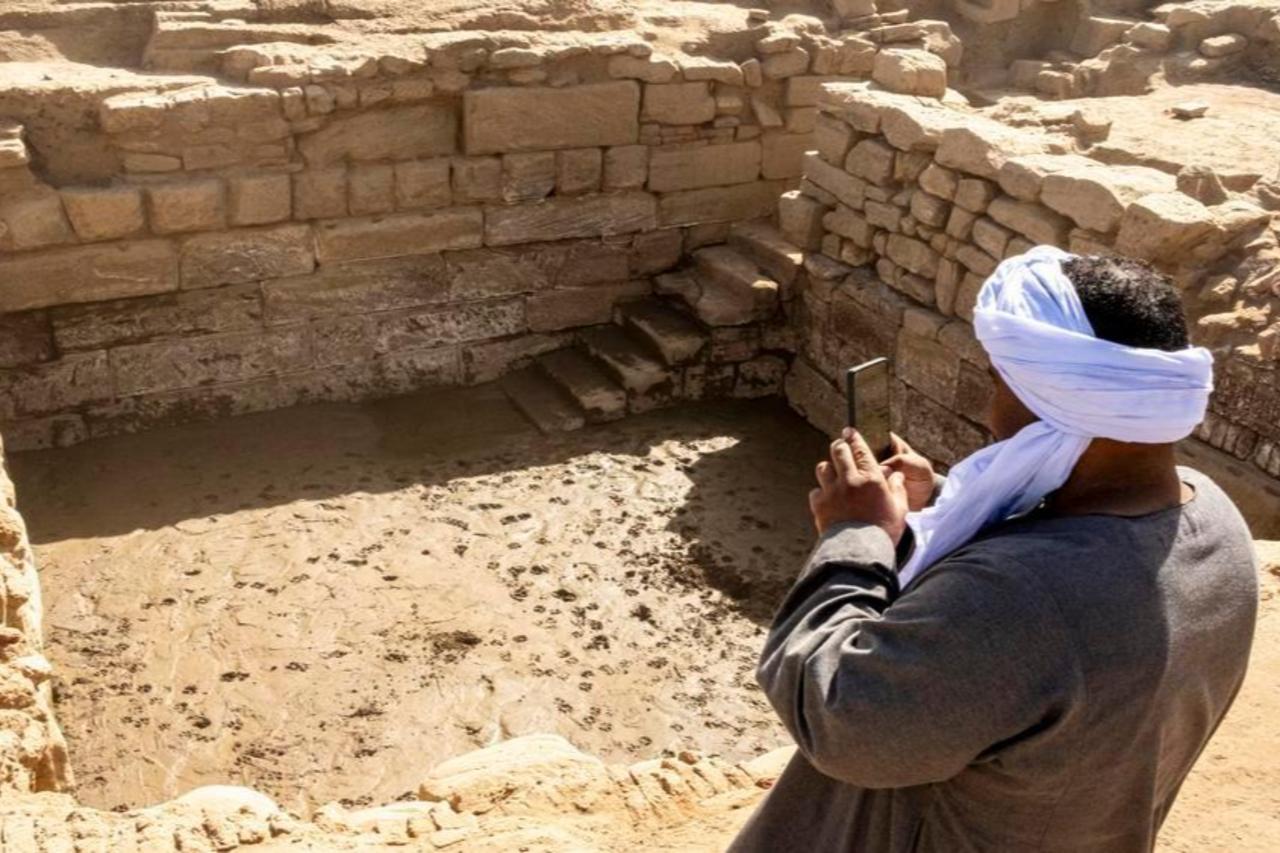
The discovery was made at Tell Kom Abu Billo in Egypt's Menoufia province, where excavations brought to light stone and pottery coffins, remains of wooden coffins and vaulted tombs built from mudbrick, according to a statement released Wednesday by Egypt's Ministry of Tourism and Antiquities.
The cemetery contains burials dating from the end of ancient Egypt's Late Period through the Ptolemaic era and into the early Roman period, although initial studies suggest that many of the graves belong to the third and second centuries B.C.
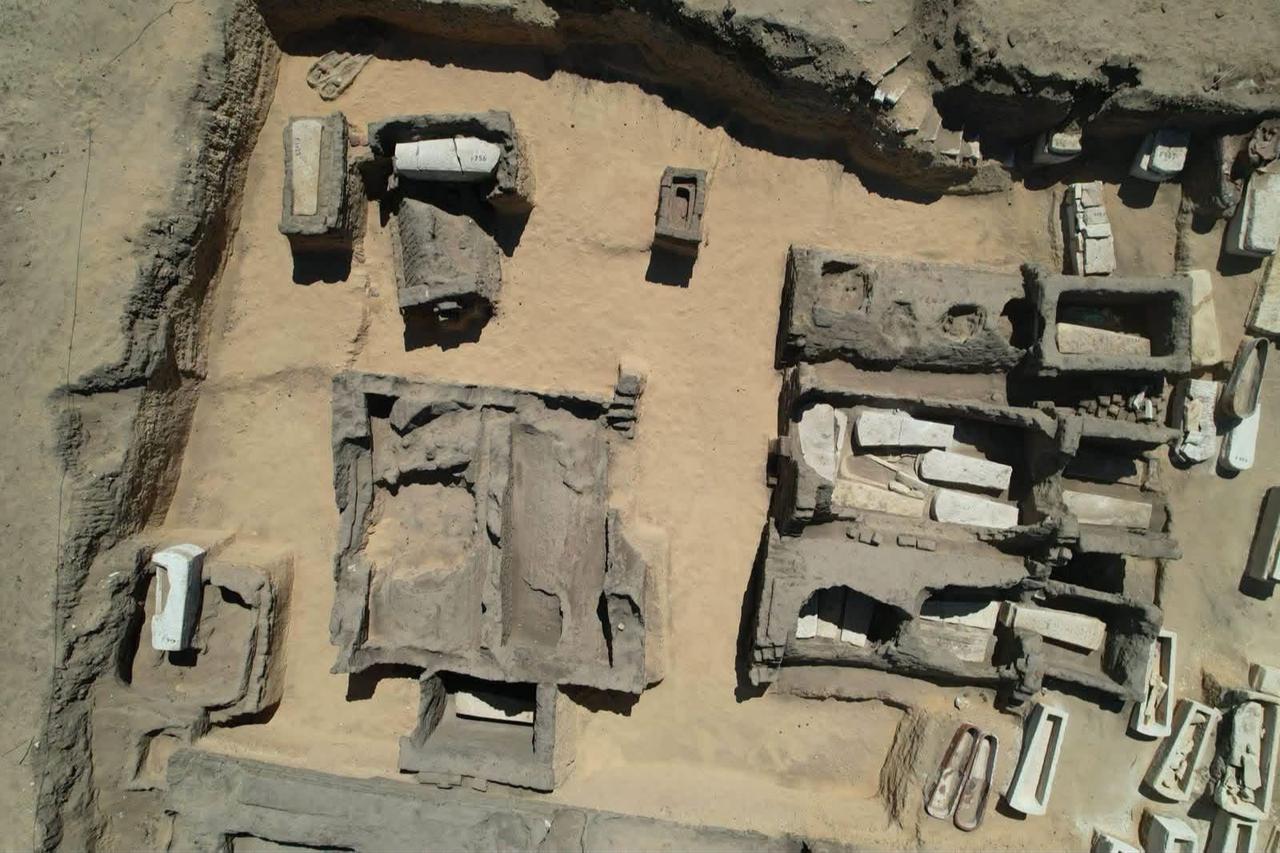

Hisham El-Leithy, secretary-general of Egypt's Supreme Council of Antiquities, said the large concentration of coffins and burials within an open courtyard had not previously been documented at the archaeological site.
An initial examination of the objects placed alongside the deceased suggests that the cemetery primarily served middle-class residents rather than members of society's highest ranks.
Archaeologists also identified architectural remains extending beneath surrounding layers of sand and debris, indicating that additional structures may still be buried nearby.
Among the discoveries were tongue-shaped gold pieces, an earring, a necklace pendant and thin sheets of gold, alongside scarab-shaped amulets and small funerary figurines known as "ushabtis."
Ushabtis were figures placed in ancient Egyptian burials, traditionally intended to serve the deceased in the afterlife, while some of the examples uncovered at the cemetery carry hieroglyphic inscriptions.
The excavation also turned up miniature sphinxes, fragments of statues representing Horus, the falcon-headed Egyptian god, and two falcon burials discovered among the coffins.
Other artifacts depict Isis-Aphrodite, a divine figure combining Egyptian and Greek religious traditions. One clay object portrays the goddess seated on a lotus flower while nursing the infant Harpocrates.
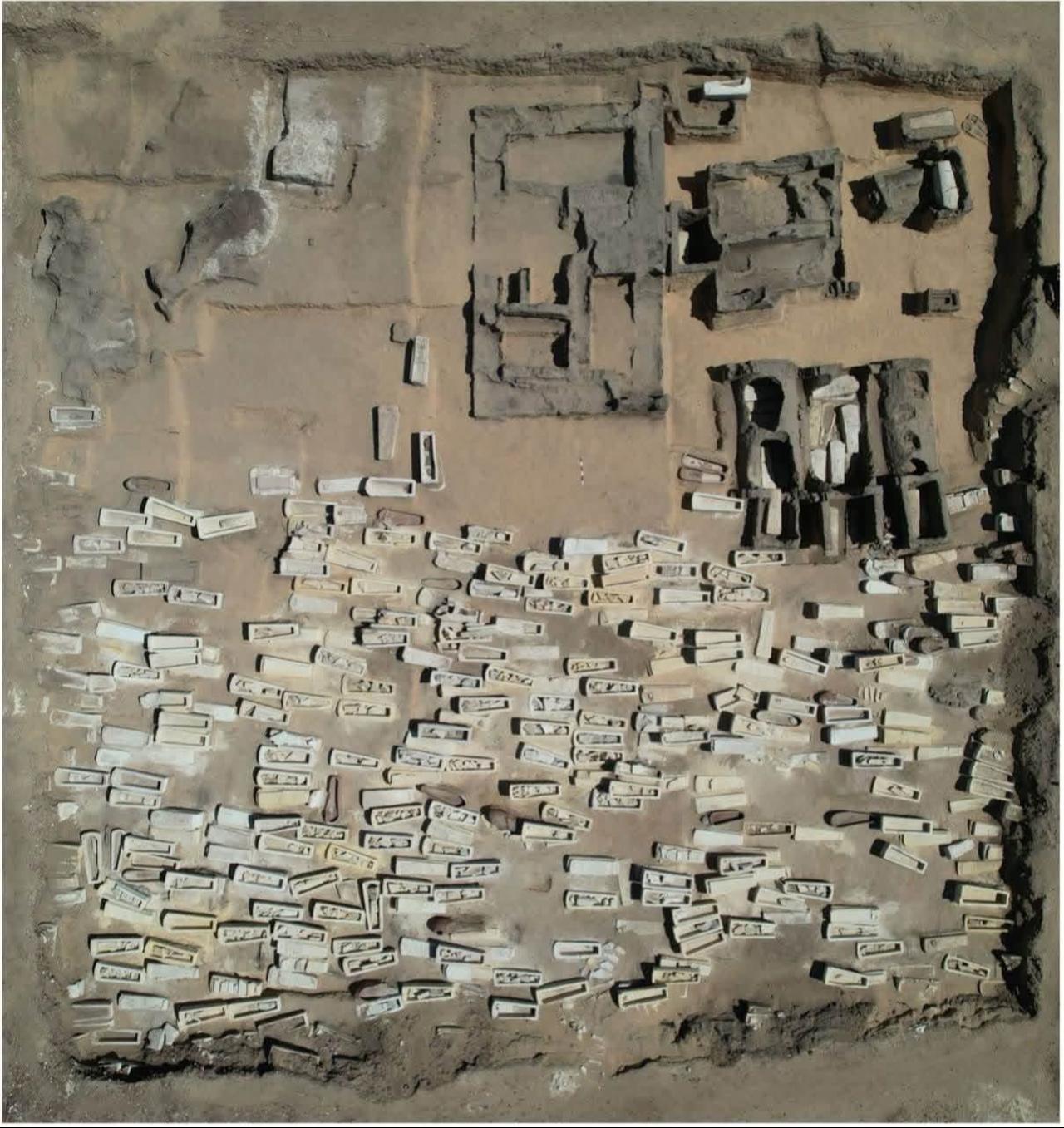
Although some coffins were found without their lids, others had been broken apart by earlier damage and quarrying activities.
The human remains were poorly preserved, but archaeologists identified traces of embalming substances and resins, along with fragments of funerary coverings decorated in yellow, red, blue and gold.
The burial ground forms part of the archaeological area of ancient Terenouthis, near the eastern entrance to Wadi El Natrun, a region historically associated with the natron salts used in Egyptian mummification.
Earlier excavations at the site had already revealed remains of the ancient settlement and a temple dedicated to Hathor, an important goddess in Egyptian religion.
Egypt's Ministry of Tourism and Antiquities said archaeological excavations and scientific studies would continue to establish more about the cemetery's occupants, burial practices and funerary traditions.


 Set as preferred source
 Set as preferred source


 1 min read
 1 min read