

 Newsletters


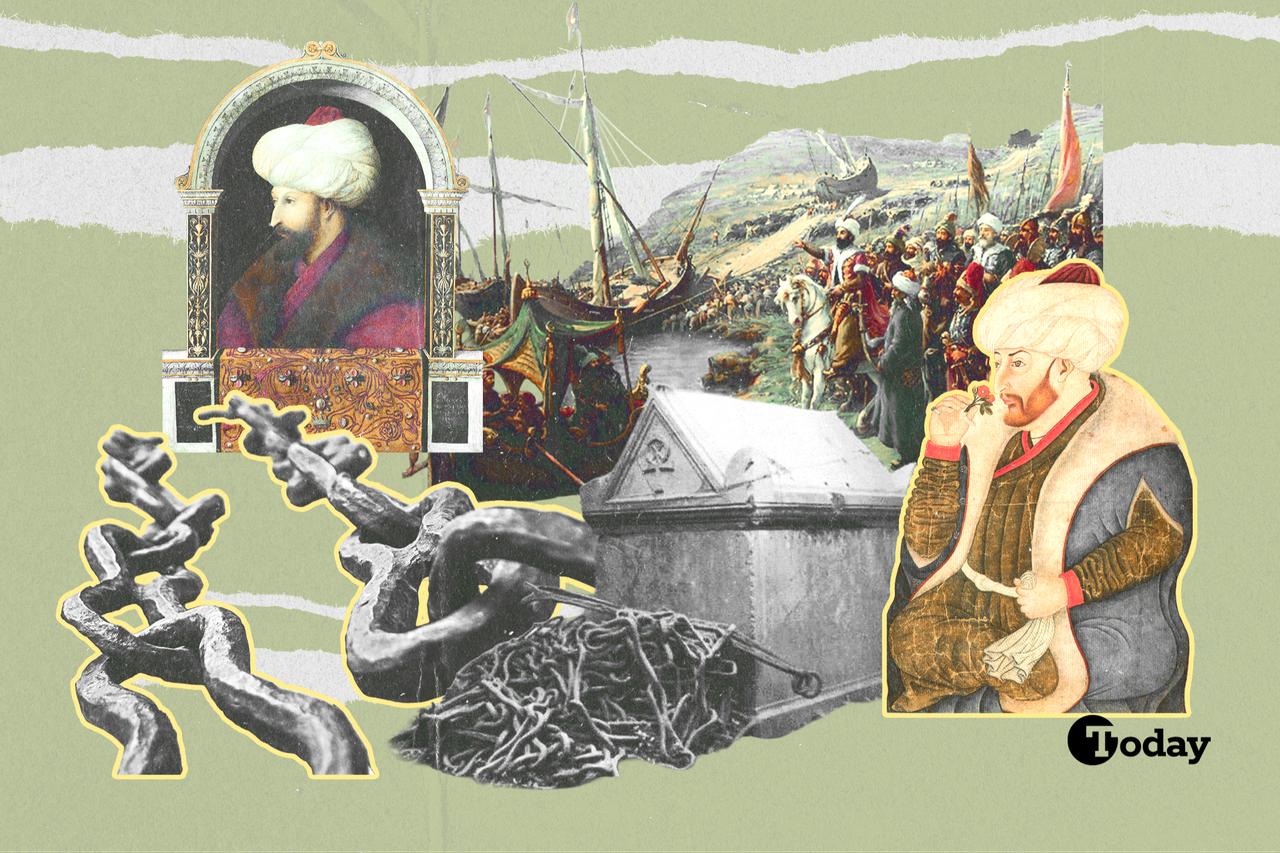


History has a way of whispering its secrets – if you listen closely…
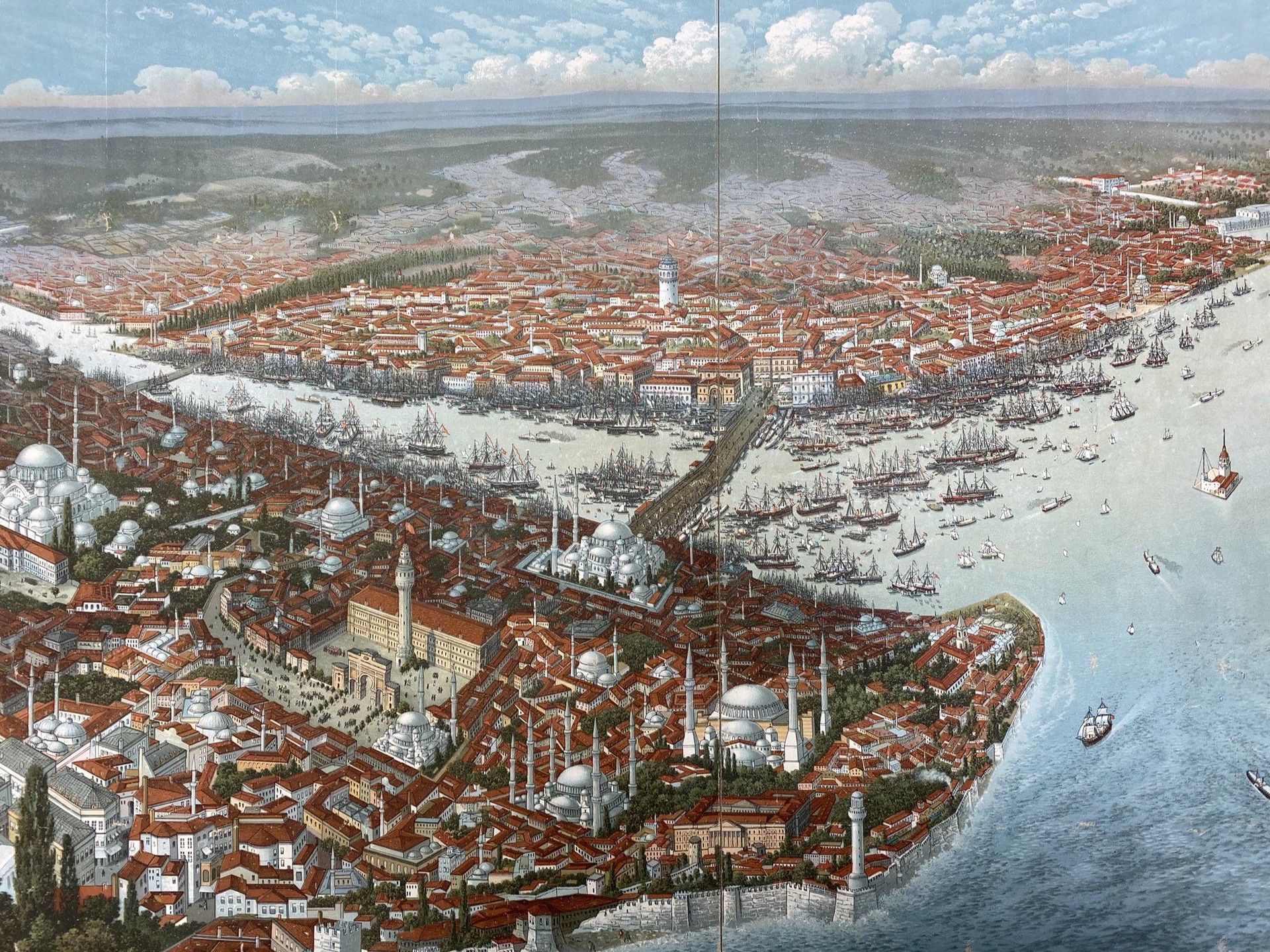
In the forested hills behind the walled Genoese colony of Galata, the night sky twinkled not only with stars, but with the restless flicker of torchlight. Ottoman war galleys lurched forward in the darkness, their great hulls groaning like angry beasts. These ships were not riding the waves of the Bosphorus. They were sailing over land, hauled across a sea of greased timbers to outflank the wrought-iron chain that sealed the entrance to the Golden Horn.
The great chain. The city’s maritime defence system. The barrier guarding the lightly defended sea walls of Constantinople’s natural harbour.
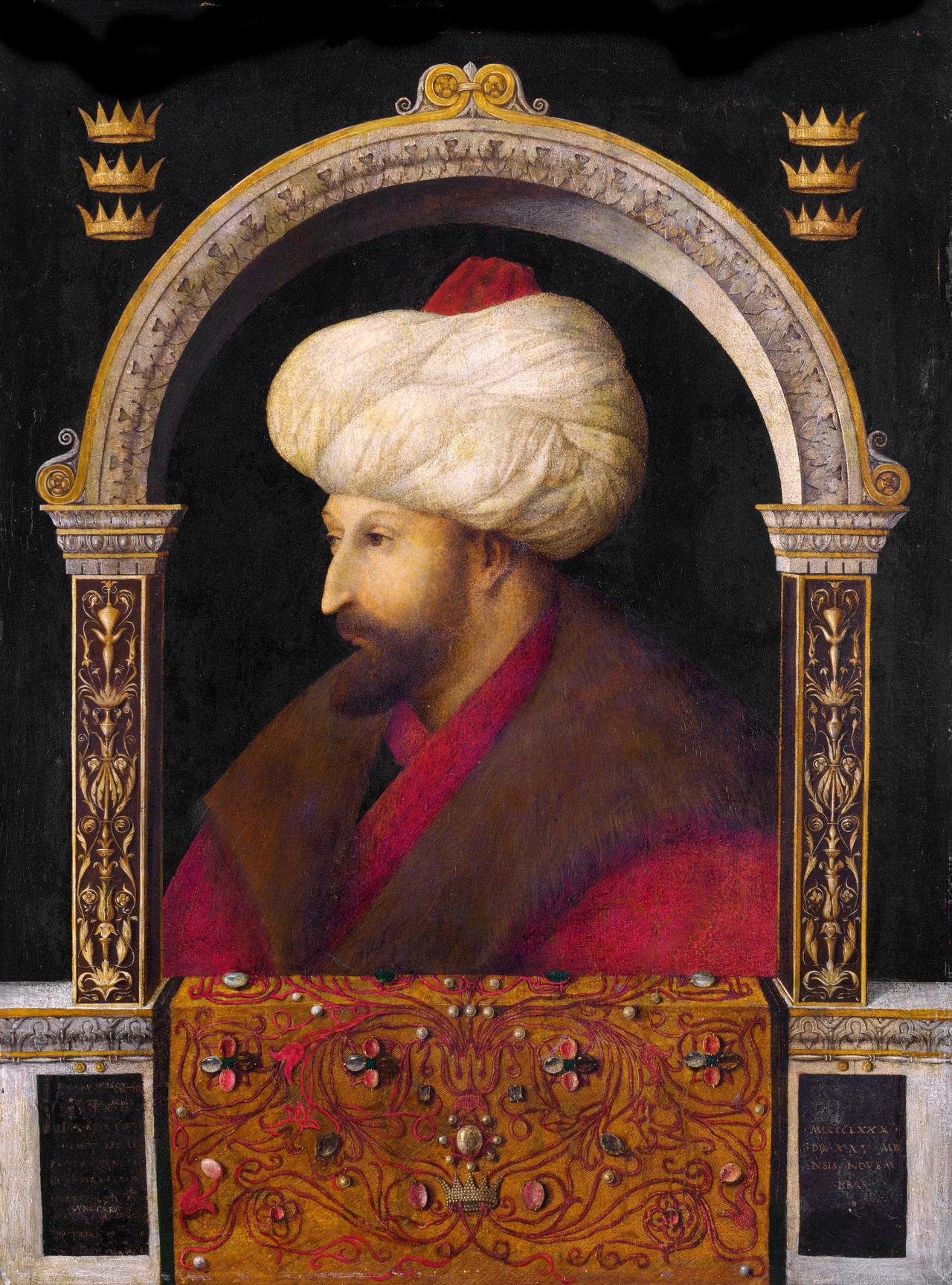

“Heave!” shouted the young Sultan as he rode amongst his men. His boots were caked with mud, his robes spattered with dirt, and his voice hoarse from issuing commands. Oxen strained against their harnesses. Coarse ropes snapped taut, biting into men’s shoulders as they slipped and staggered through ground slick with tallow.
“Heave!”
Again, and again the order rang out. Mehmed leant forward in the saddle, urging them on. The first ship crested the ridge, hesitated for a moment, then slid onto the oiled logs below, gliding down into the still waters of the Golden Horn.
No loud splash betrayed it. No ripple carried a warning.
As ship followed ship into the harbour behind the chain, Ottoman guns slowly turned to face the walls of Constantinople. Sultan Mehmed II was poised to fulfil the prophecy.
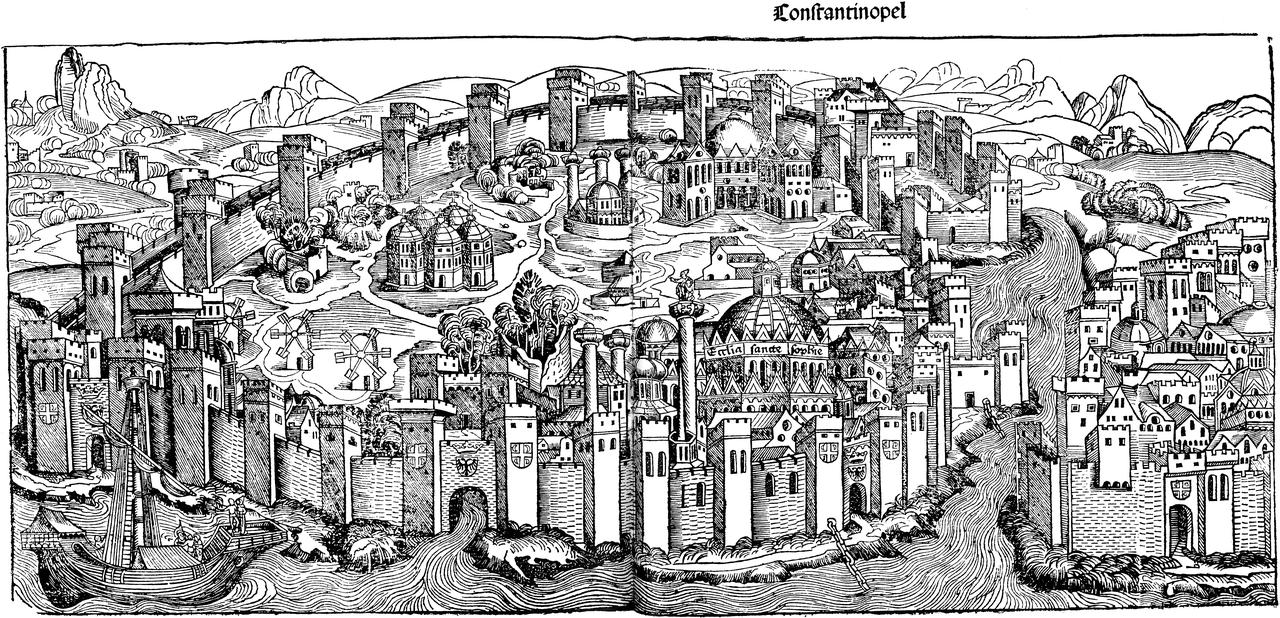
The appearance of the Ottoman fleet within the Golden Horn dispelled any lingering illusion that Constantinople would not fall. Panic spread quickly through the city as its overstretched garrison scrambled to defend a shoreline previously guarded by little more than faith and the wrought-iron chain. Bells rang in alarm and lament. Men were hastily deployed, thinning defences elsewhere and leaving these sections of the walls weaker, more exposed, and dangerously vulnerable. After fifty-three days, the siege was entering its final phase.
For weeks, Mehmed’s colossal cannon had pounded the Theodosian Walls, hurling vast stone shots that shattered masonry once believed impregnable. The assaults were relentless. Each breach was repaired, each attack repelled by defenders fighting with remarkable bravery. Yet Mehmed persisted. He had patience, and a plan. With his fleet now inside the Golden Horn, Constantinople was encircled.
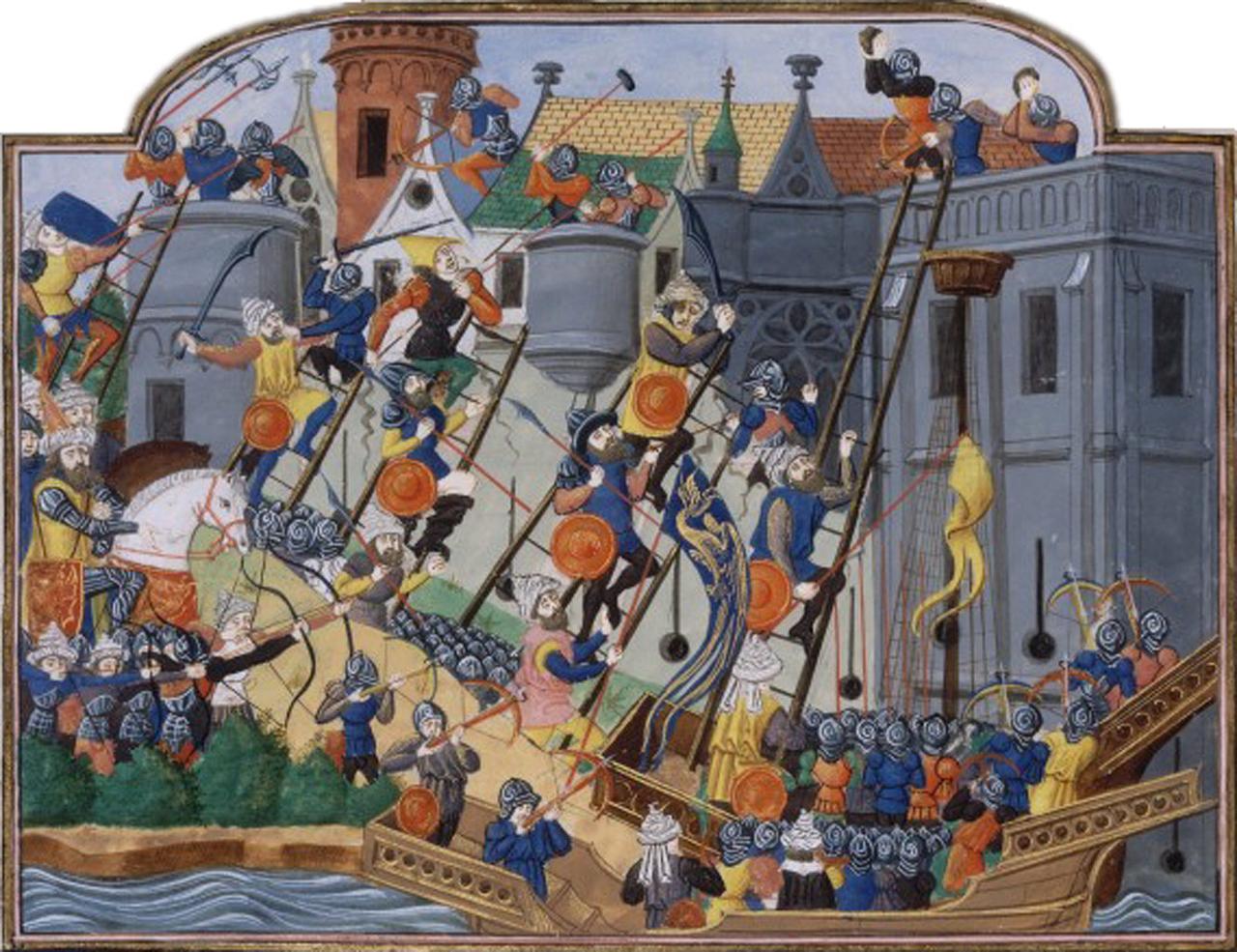
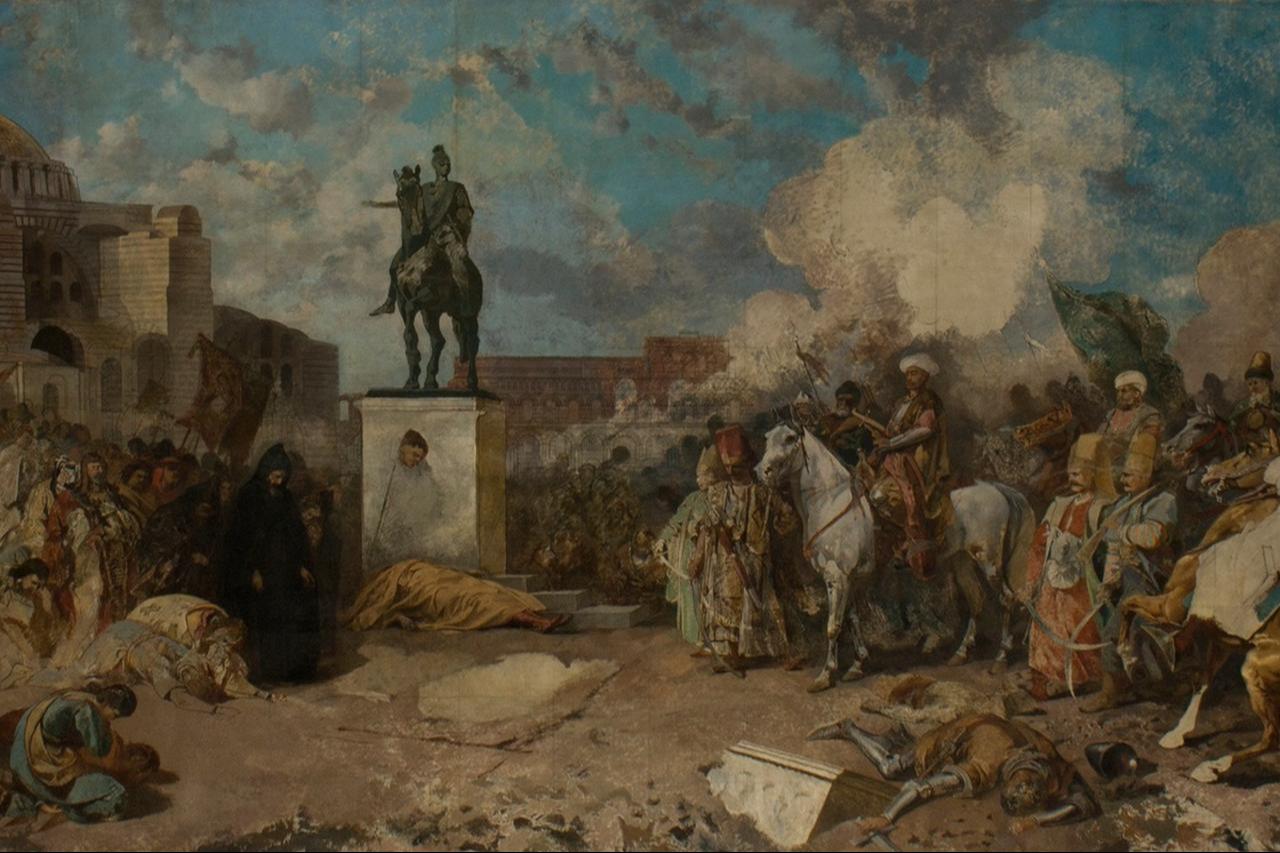
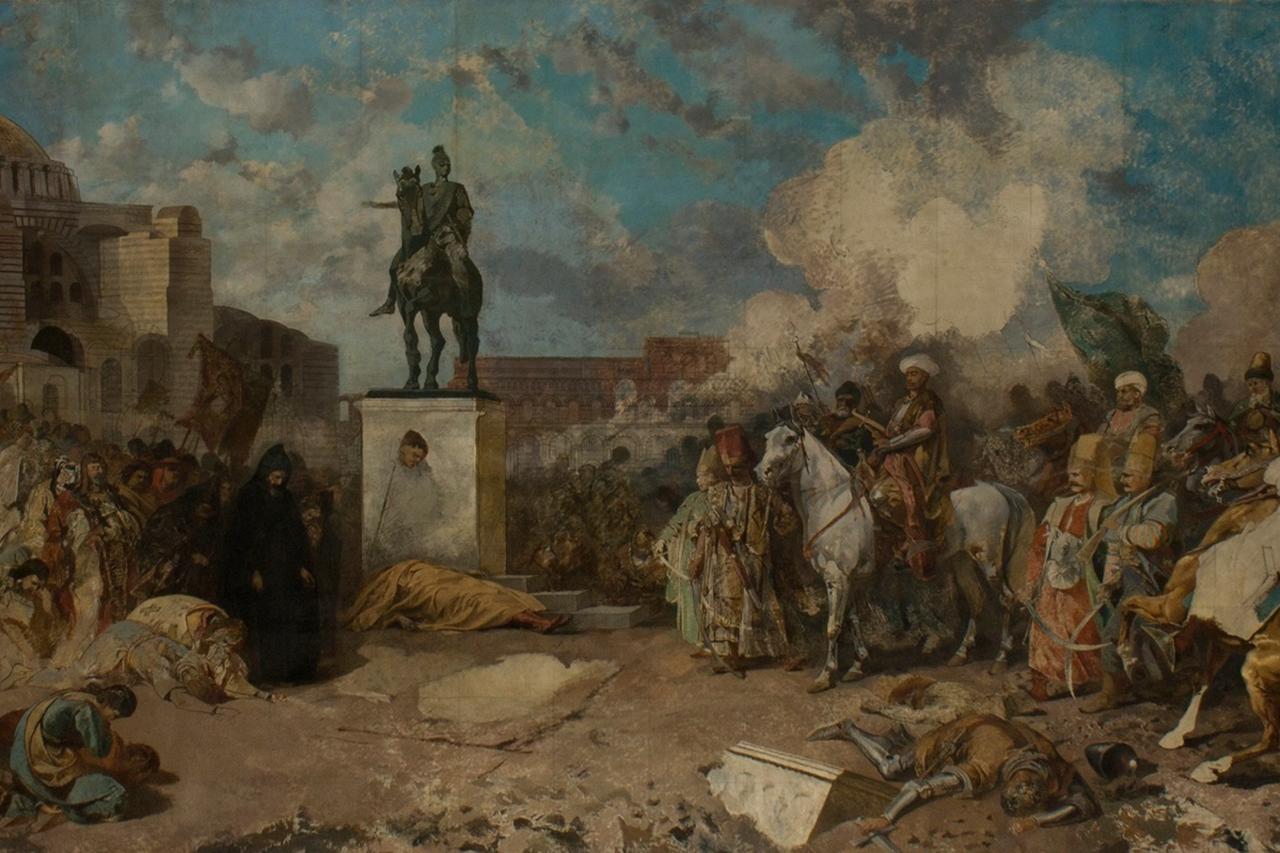
In the early hours of May 29, 1453, Mehmed ordered the final assault. Wave upon wave of Ottoman troops surged towards the walls. The Sultan held back his elite Janissary Corps until the moment was right. As dawn broke and the first light touched the city’s battered walls, the kettledrums sounded. The Janissaries advanced. Near the Gate of Saint Romanus, they overpowered the defenders, and the last Roman emperor, Constantine XI Palaiologos, died fighting alongside his men.
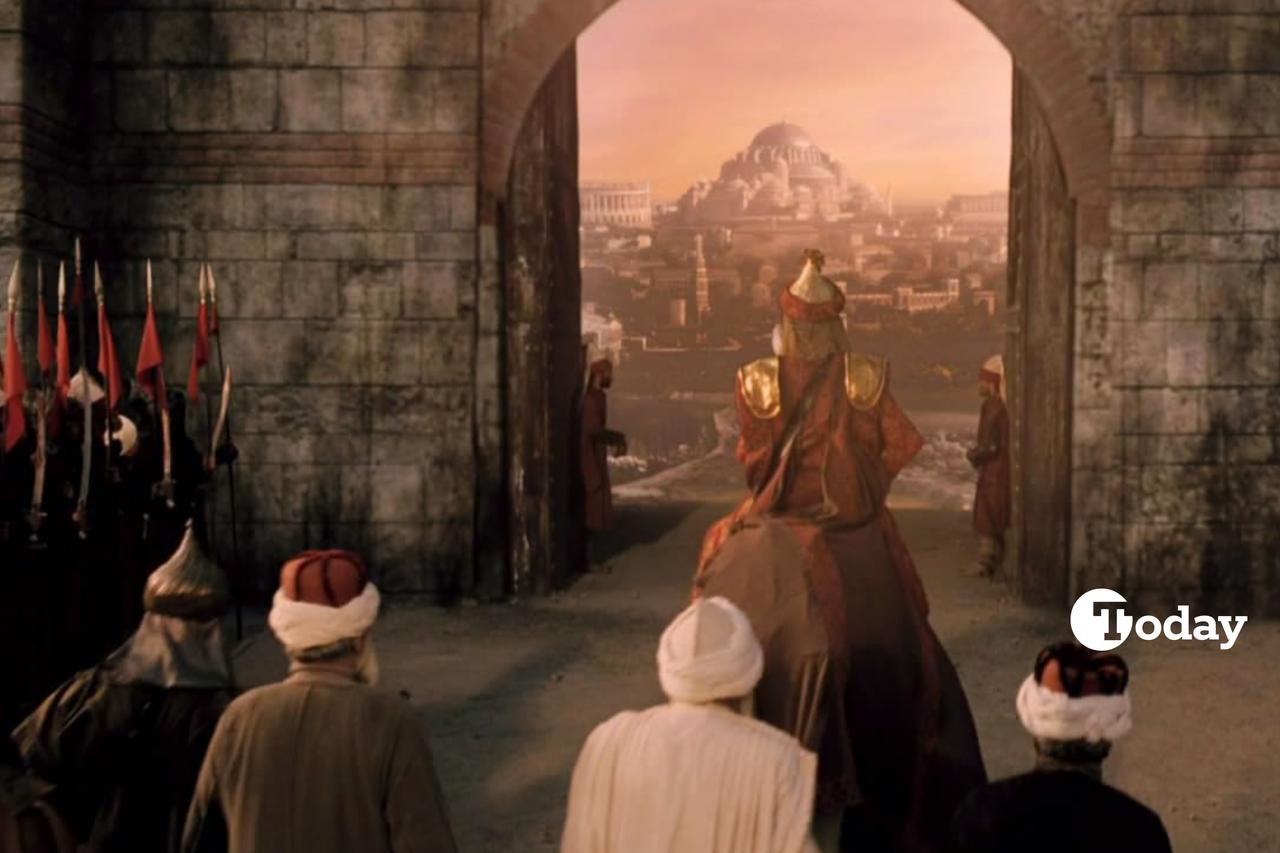
Later that day, Sultan Mehmed made his triumphant entry through a different gate, the Gate of Charisius, near the highest point of the city.
Rome had fallen.
Constantinople had been conquered by a twenty-one-year-old sultan who succeeded where generations before him had failed. The Red Apple, the capital of the Eastern Roman Empire, Constantinople – it was his.
From that day forward, Sultan Mehmed II would be known as Fatih – the Conqueror.
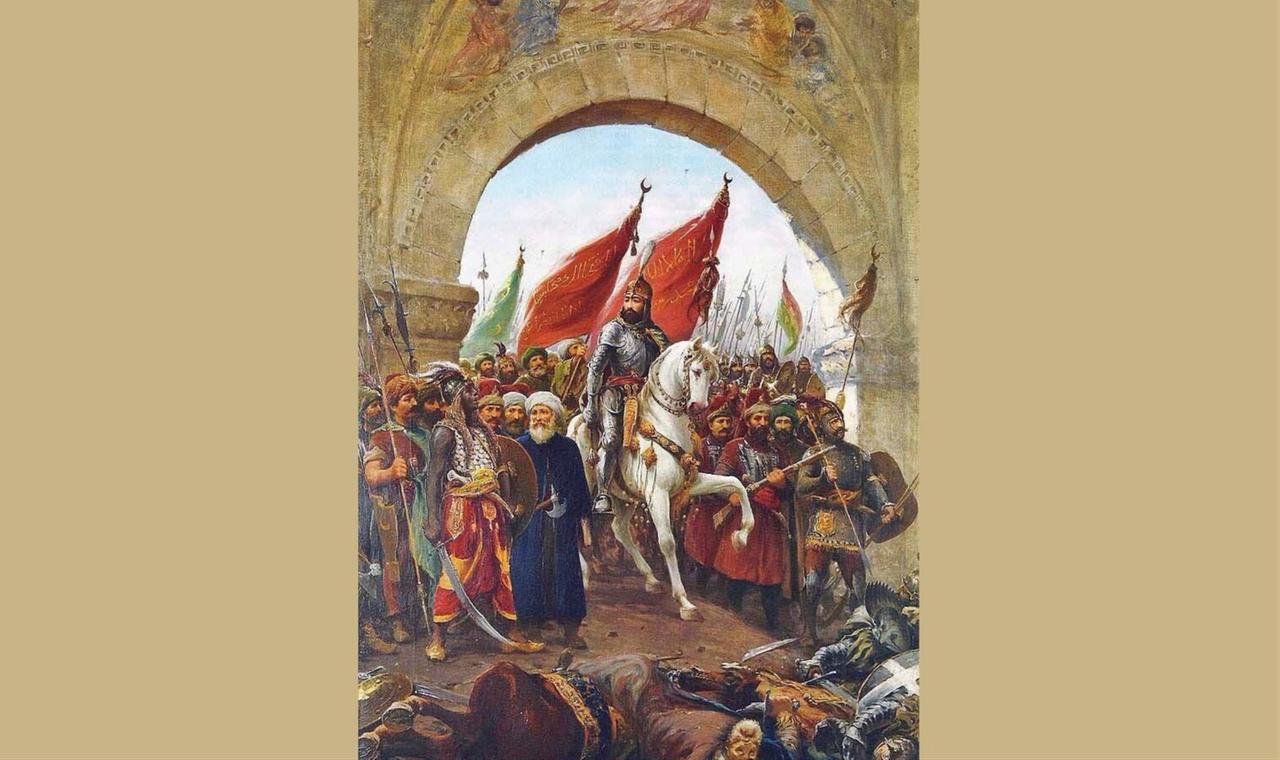
For Mehmed, the conquest of Constantinople was more than a glorious military triumph. It was the fulfilment of a prophecy.
“Verily, you shall conquer Constantinople. What a blessed army will that army be, and what a blessed commander will that conqueror be.”
This hadith, attributed to the Prophet Muhammed, transformed the conquest of Constantinople into a sacred cause. It inspired Muslim rulers, from the Umayyad Caliphs to the Ottoman Sultans, to capture the city. Each attempt ended in retreat, defeat, or death, strengthening the belief that when Constantinople finally fell, it would do so under the leadership of an extraordinary man.
Mehmed was taught the significance of this prophecy. He studied theology with the same intensity that he devoted to military strategy, statecraft, languages, history, and mathematics. To him, the conquest of Constantinople was not merely the capture of a city, but the transfer of sovereignty from one civilisation to another. To take Constantinople was to inherit Rome itself.
Seen in this light, the wrought-iron chain across the Golden Horn becomes more than a defensive weapon. It was a symbol of resistance, of a world refusing to yield. By hauling his fleet over land, Mehmed not only outmanoeuvred his enemy. He demonstrated ingenuity, tenacity, and faith. In doing so, he proved himself worthy of the title foretold in the Conquest Hadith: the blessed conqueror.
For this reason, history remembers Fatih Sultan Mehmed not simply as the conqueror of Constantinople, but as the man who fulfilled the Prophet Muhammed’s prophecy.
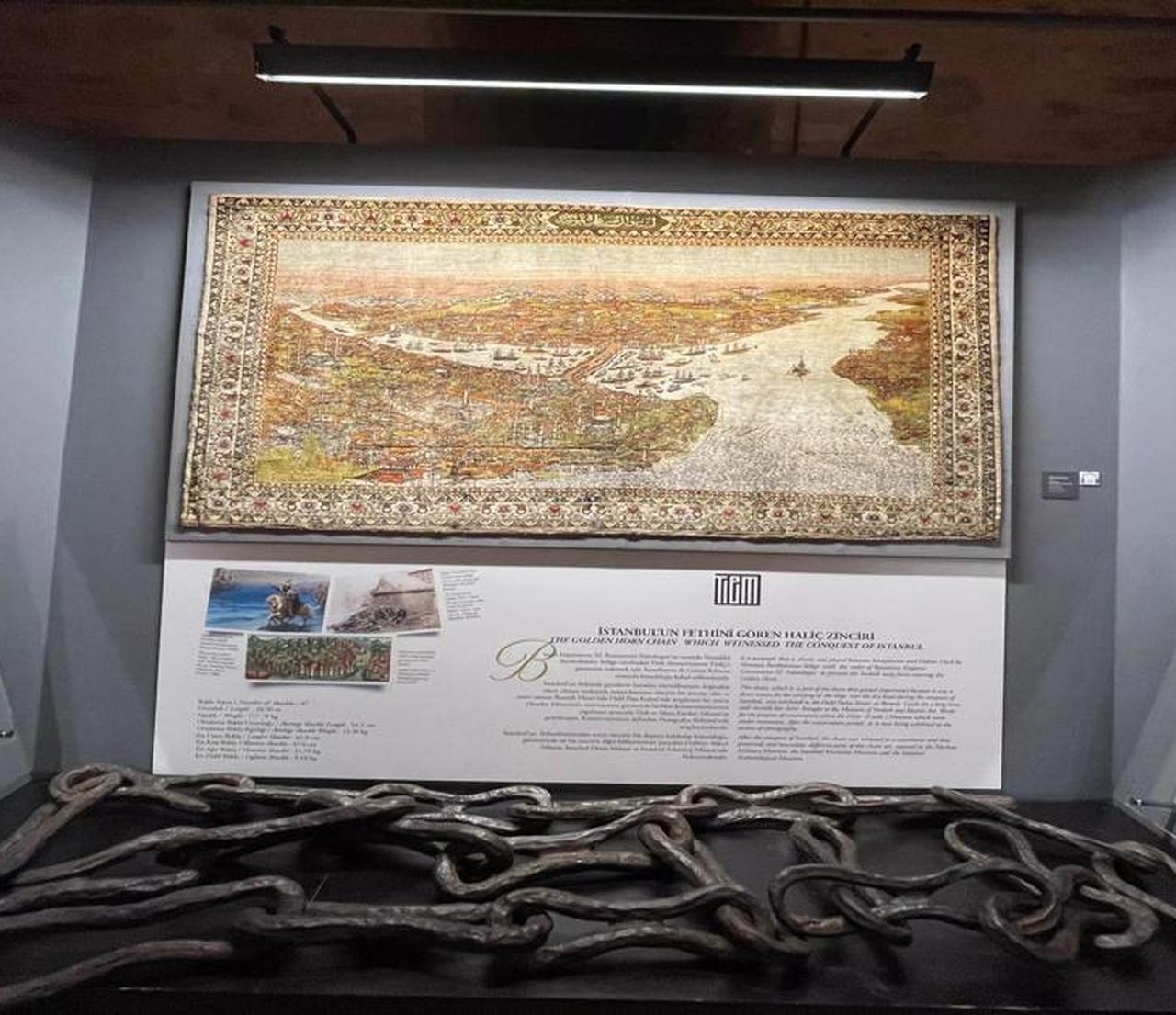
Today, fragments of that formidable defensive chain still survive. No longer barring the entrance to the Golden Horn, floating on wooden booms, tethered to the old city walls on one side and to Galata on the other, its heavy wrought-iron links now lie scattered across Istanbul’s museums, with the largest surviving section housed in the Military Museum.
In Ottoman times, the chain was stored in the Military Warehouse at Hagia Irene, reduced to a relic of a defeated empire. The iron is heavy and cold. Rust has crept in its joints. Perhaps traces of sea salt still cling to its surface, remnants of the waters it once protected. Stand before it and you can almost sense what it witnessed: Torches flickering against the night sky, men stumbling in the mud as they dragged ships over land, and a young sultan poised to conquer the greatest city on earth.
The chain rests now, silent and at peace. It did not fail its empire because it broke, but because Fatih Mehmed refused to bow before it. Ottoman sultans bowed only to Allah. No chain could bind them or stand in the path of destiny.
Until we meet again in the next "Sultan’s Salon"…


 Set as preferred source
 Set as preferred source


 1 min read
 1 min read


