Newsletters


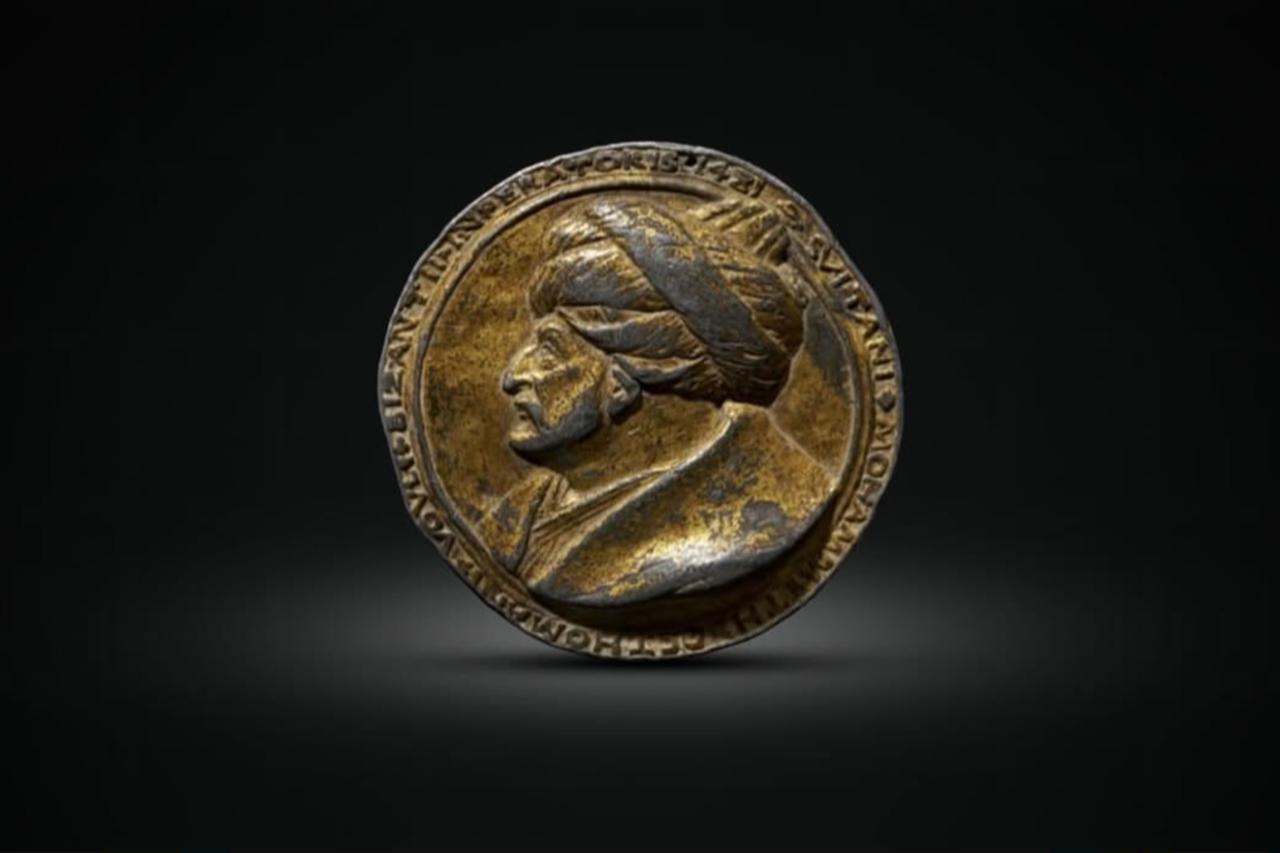


A rare Renaissance-era medallion depicting Ottoman Sultan Mehmed II, widely known as Mehmed the Conqueror, is set to go up for auction in Dubai next month. The piece, produced by the Italian Renaissance artist Constanzo da Ferrara in 1481, is regarded as the only known example of its kind and is expected to draw strong attention from international collectors.
The auction will be organized by Arthill, a company known for bringing Ottoman-era artworks to collectors and art enthusiasts through specialized sales.
The medallion dates back to 1481 and carries the signature of Constanzo da Ferrara, an Italian Renaissance artist who was invited to the Ottoman court. According to the information shared ahead of the auction, the bronze medallion represents the first casting of the work, while its front surface features a gold-toned finish known as “tombak,” a traditional Ottoman gilding technique applied to metal.
Historically, the piece was produced after the King of Naples, Ferdinand, sent Constanzo da Ferrara to Istanbul at the request of Sultan Mehmed II. The resulting portrait medallion became one of the rare artistic objects reflecting the cultural exchanges between the Ottoman Empire and Renaissance Europe.
Because of its rarity and historical significance, the medallion has already emerged as one of the most notable items in the upcoming auction catalogue. The work will be sold through a bidding process during Arthill’s international sale in Dubai.
Although the medallion is described as the only known example in its specific form, historical records indicate that three related examples of the work exist.
One of these pieces was purchased by the Istanbul Metropolitan Municipality in 2022 for £38,000. The remaining examples are also known to have originated in Istanbul, highlighting the historical link between the object and the Ottoman capital.
The upcoming auction follows a series of sales organized by Arthill featuring Ottoman artifacts. Just last month, the company presented the “Vizier Collection,” a selection of approximately 200 objects that shed light on the daily life of Ottoman administrators.
The collection included palace-made jewelry, silver objects bearing the imperial “tughra,” the stylized calligraphic signature used by Ottoman sultans, as well as medals, decorations, Beykoz glassware, tombak metalwork, clocks, weapons and ceremonial accessories. These items attracted considerable attention from collectors.
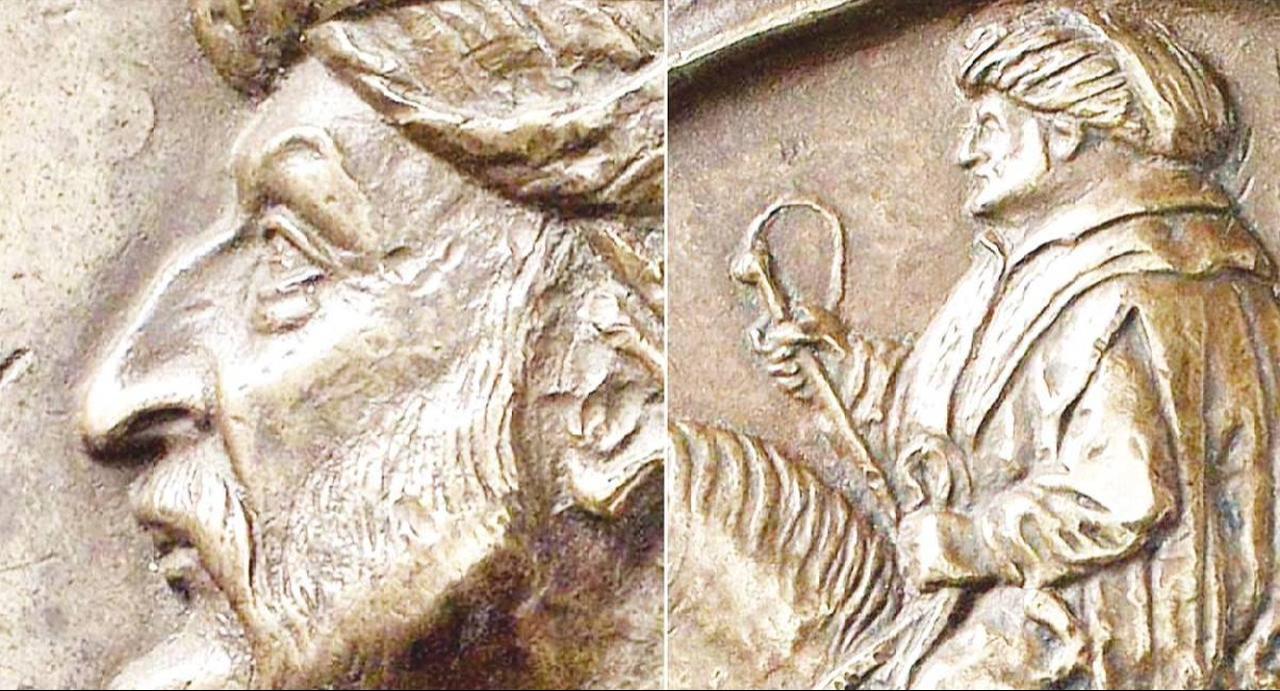

Huseyin Kocabas, chairman of the board at Arthill Museology, said interest in Ottoman artworks remains strong at auctions around the world. He noted that Turkish and Islamic works of art have gained international prestige and continue to be actively sought after by collectors.
Kocabas added that calligraphy collections in particular attract attention across different regions, explaining that high-level collectors and art enthusiasts often try to obtain such works not only for their artistic value but also for the historical prestige associated with the Ottoman Empire.
He also pointed out that major museums such as the British Museum, the Louvre and the Metropolitan Museum of Art remain key references for global audiences interested in Ottoman heritage, while mentioning the Turkish Room at the Rijksmuseum as another notable example.
Kocabas explained that the foundations of the Arthill collection were originally laid by his grandfather and father, who worked to bring back cultural artifacts that had been taken abroad.
He described the company’s “Ottoman Dynasty” and “Legacy” collections as efforts to carry historical heritage into the present day. In his words, the collection represents more than a group of artworks, describing it as “the memory of a dynasty, the voice of a civilization and the cultural memory of a society.”


 Set as preferred source
 Set as preferred source


 3 min read