Newsletters


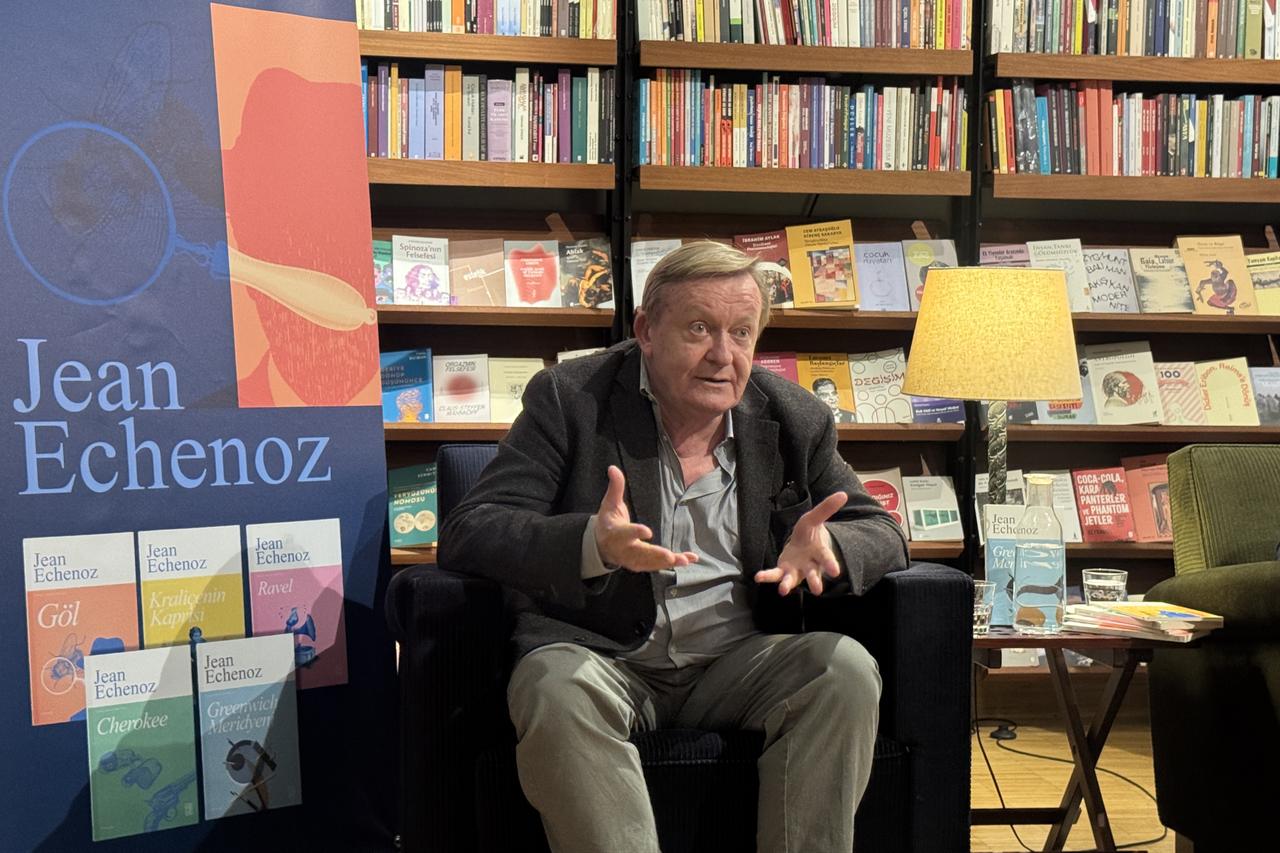


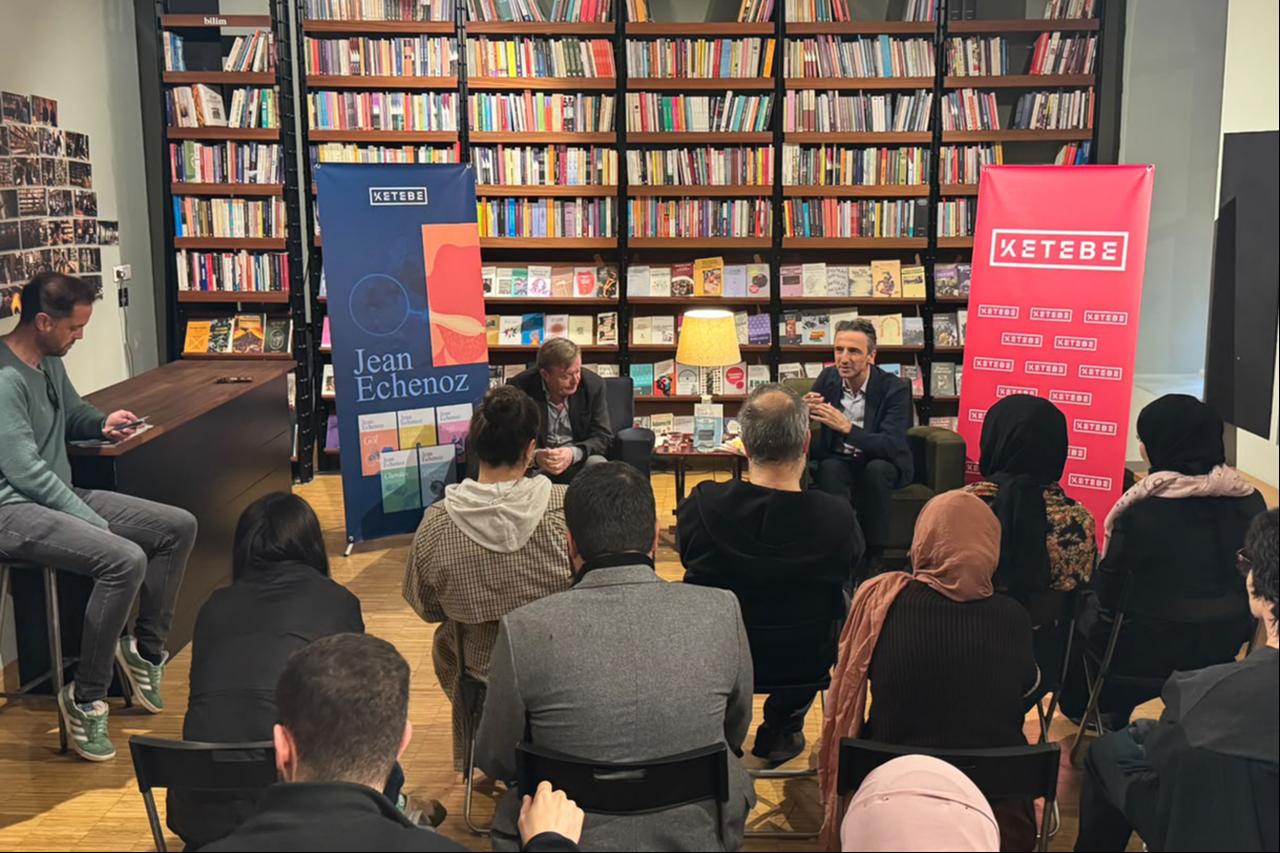
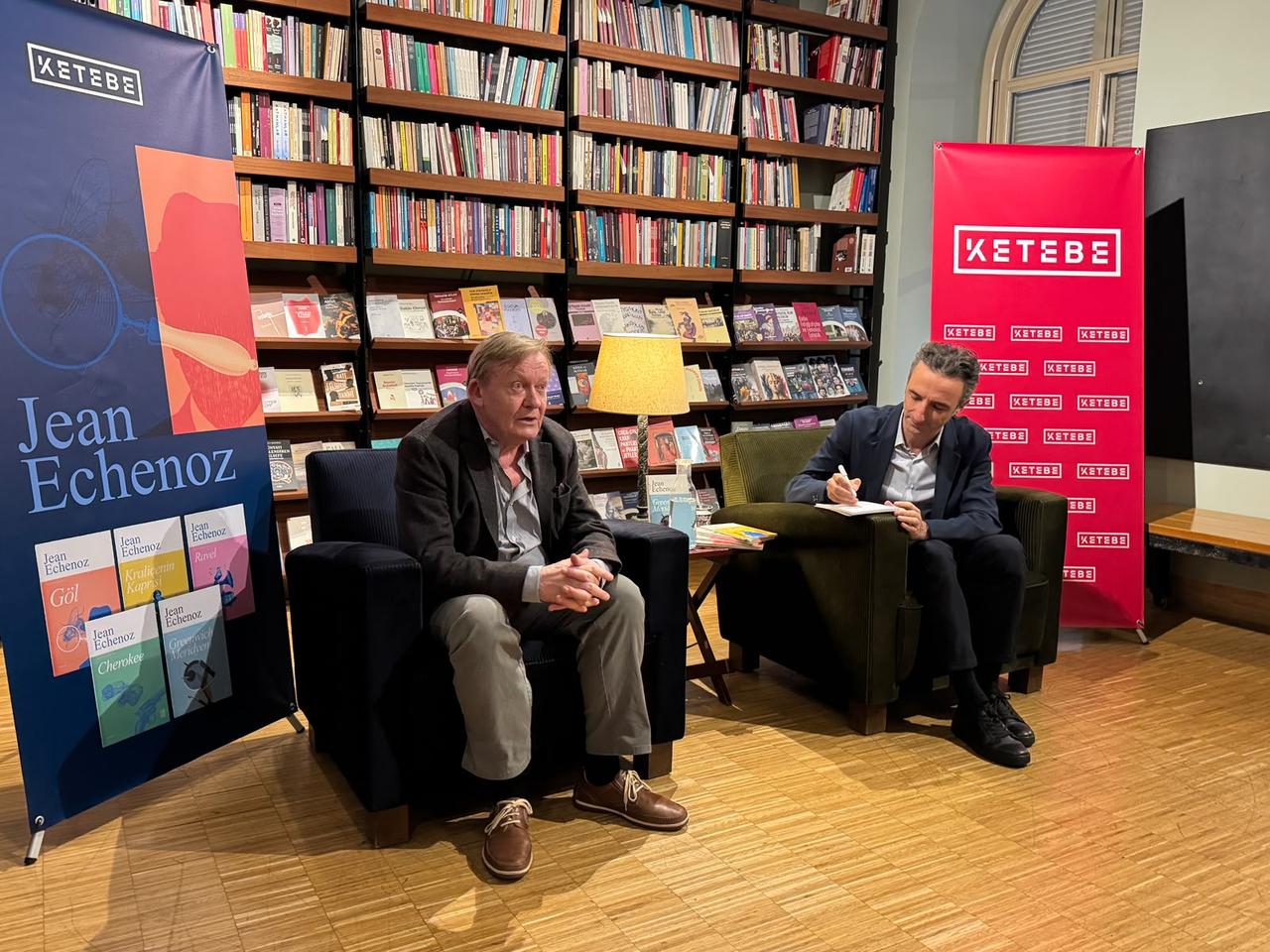
French author Jean Echenoz met readers in Istanbul this week, talking about his literary journey, his approach to the novel and his shifts between forms over the course of his career.
Speaking at an event organized by Ketebe Publishing at the Robinson Crusoe 389 bookstore in Beyoglu district, Echenoz described his work on genre and form from his earliest books to the present.
Born in France in 1947, Echenoz studied sociology. He won the Prix Medicis for his 1983 novel "Cherokee." His 1989 book "Lac" earned the European Literature Grand Prize, as well as the French Society of Authors and Literati’s grand prize for the novel. His novel "Je m’en vais" won the Prix Goncourt in 1999.

Echenoz said he worked on a variety of texts from his youth but began concentrating on literary genres around age 40. Early in his career, he said, he was drawn to forms considered minor in France, including detective fiction, science fiction and spy novels, and these shaped his work.
"What interested me were certain literary genres, particularly kinds of novels, that are regarded as somewhat secondary in France. I don’t know whether that’s the case in Türkiye. I’m not familiar with Türkiye’s literary landscape, so forgive me, but in France I can say this: there are genres known as more popular, more secondary fiction, such as detective novels, science fiction and spy novels," he said.
"I focused on these first. What really burned for me was the question of how to use the different colors of the French language inside the novel."
He said he spent the first 10 to 15 years of his career working with different forms of the novel before gradually pushing past their limits toward freer fiction.
Describing how he found his own style, Echenoz said he set aside the conventions of particular genres and began producing fiction that did not fit neatly into any category.
"Once I put those models aside, I began to shape my own fictional texts, my own novels. I started producing freer works that didn’t correspond directly to any specific category," he said. "After enjoying that freedom for a few years, and writing novels in the forms I wanted, I realized I’d grown a bit bored and tired of the novel, of fiction. I moved on to texts focused on the lives of real people."
Echenoz went on to write about real figures, including French composer Maurice Ravel, Czech distance runner Emil Zatopek and scientist Nikola Tesla.
He said treating real lives in a literary way brought its own difficulties.
"To tell a life is to work like a biographer, to prepare a biography. Of course, I’m not a biographer. I’m a novelist. Working on real people is extremely hard," he said. "As a novelist, you face a major challenge here. Writing a biography without being a biography specialist means giving yourself freedom on one hand, while on the other not betraying the reality of those people. I had to walk a very thin tightrope."
The more he worked on biographical books, Echenoz said, the less the form interested him. In recent years, he said, he has returned to the novel and continued to experiment with form.
He added that he has also recently worked on an opera libretto and continues to move between genres.
Echenoz will meet readers again Sunday at 4 p.m. at the Halil Dikmen Hall of the Istanbul Painting and Sculpture Museum at Mimar Sinan Fine Arts University.


 Set as preferred source
 Set as preferred source



 1 min read