Newsletters


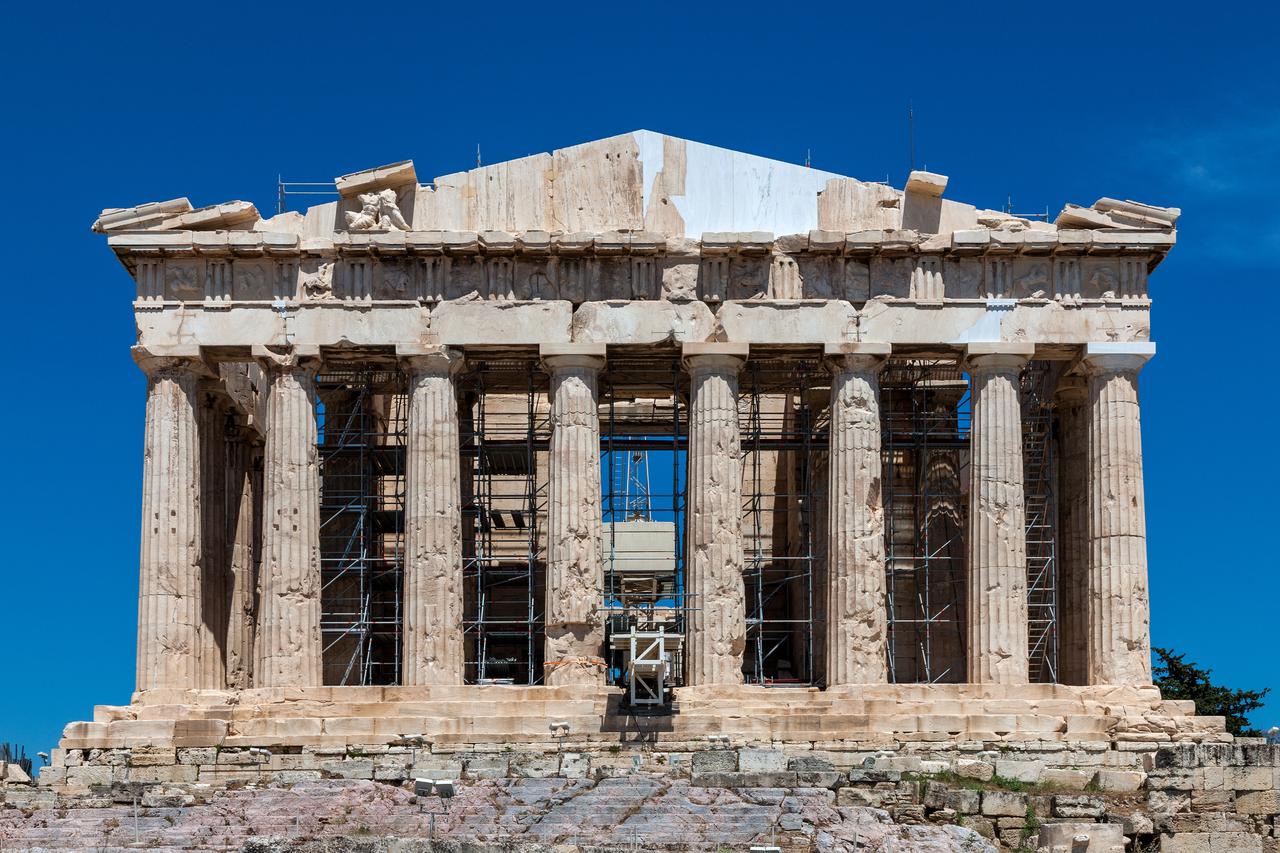


Greece's culture ministry said Thursday that it had completed a long-running restoration of the western facade of the Parthenon in Athens, bringing the world-famous monument as close as possible to its appearance in the early 1800s.
The 2,500-year-old temple, built in honor of the goddess Athena, stands on a hill overlooking the Greek capital and draws more than four million visitors each year. The latest restoration focused on the west pediment, the triangular upper section of a classical temple facade, where specialists worked to fill in gaps and strengthen the structure.
The ministry said archaeologists, engineers and craftsmen used both surviving ancient fragments and new marble during the restoration of the western facade.
Culture Minister Lina Mendoni said the west pediment could now be seen in a way that had not been possible for two centuries.
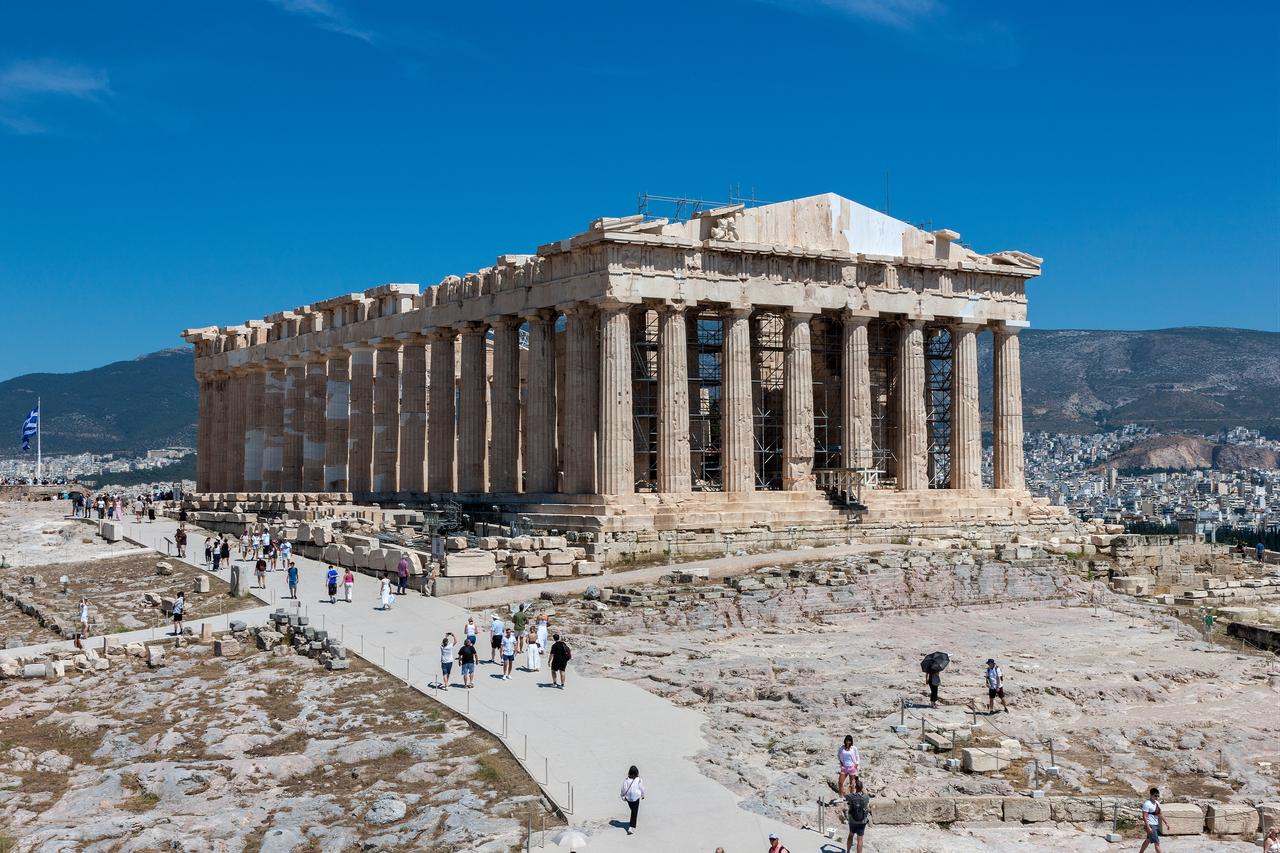

"Today, we look upon the west pediment of the Parthenon as we have not seen it for two centuries," Mendoni said in a statement.
She added that for the first time in about 220 years, the west side of the Parthenon was being presented in its fullest possible form, describing the sight as "truly overwhelming." Mendoni also said the restoration had been "a project of exceptional difficulty."
The ministry noted that the temple has been restored as closely as possible to its state immediately following the removal of roughly half its surviving statues by British ambassador Lord Elgin. The removal of the statues took place between 1801 and 1812.
Those statues are now showcased in the British Museum in London. Britain maintains that the works were legally acquired, while successive British governments have stated the matter is for the museum to decide.
The issue remains part of wider discussions between Greece and Britain. Under chairman George Osborne, a former finance minister, the British Museum has been holding extensive talks with Greek officials over a potential arrangement that would allow the Parthenon sculptures to be displayed in Athens.
Greek Prime Minister Kyriakos Mitsotakis has also repeatedly raised the matter with his British counterparts. Other Parthenon sculpture fragments are kept in museums across Paris, Copenhagen, Munich, Vienna, and Würzburg.


 Set as preferred source
 Set as preferred source


 3 min read