Newsletters


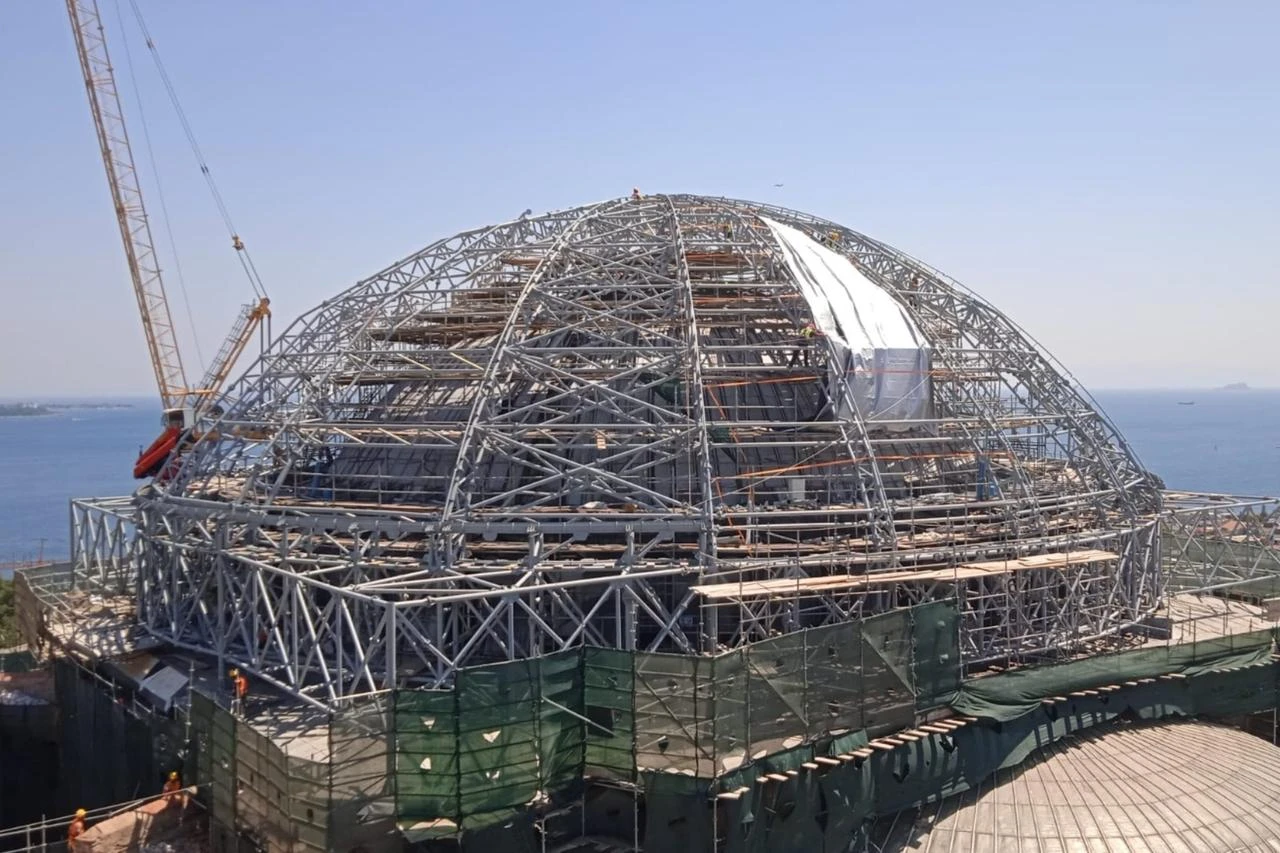


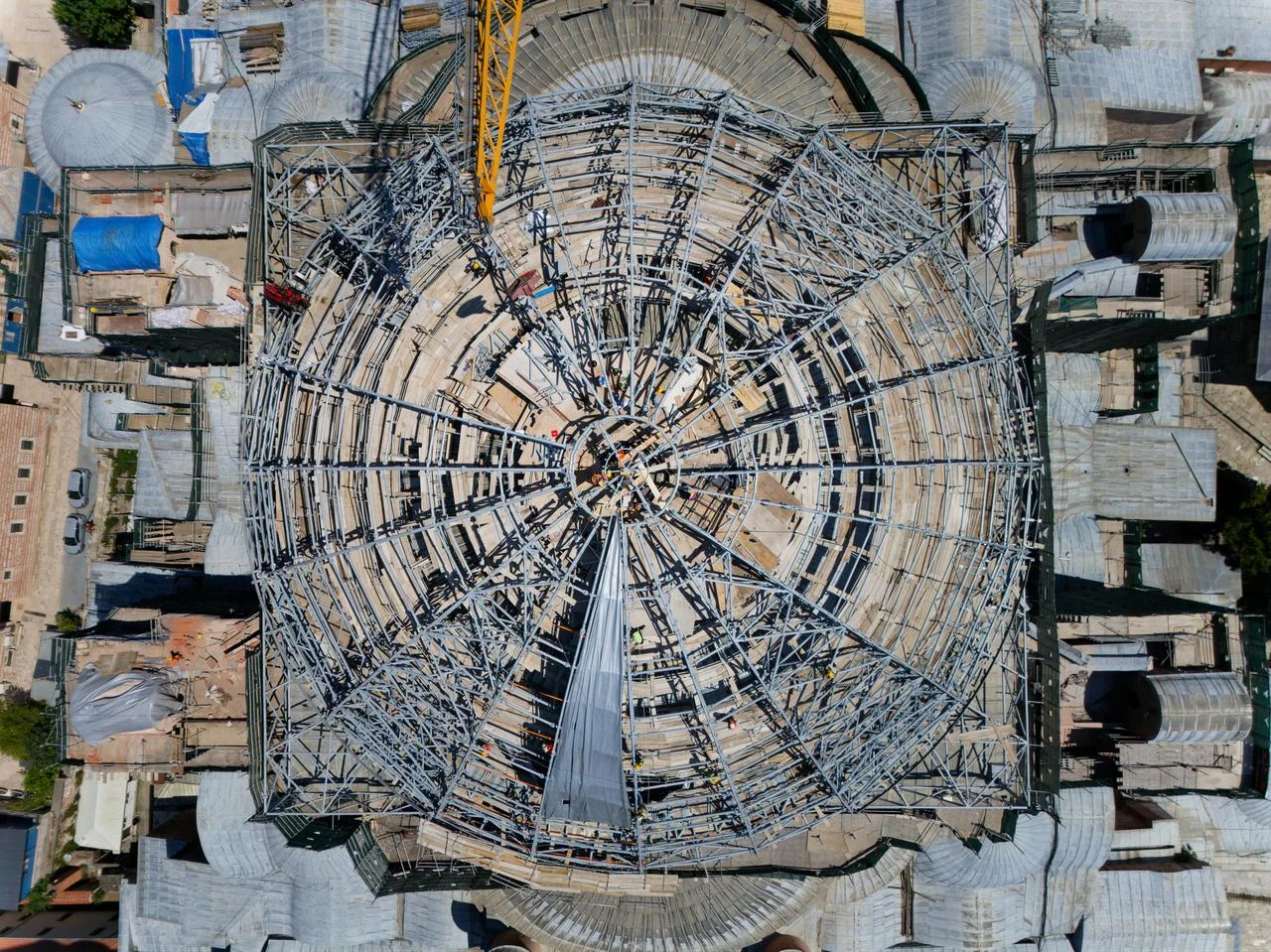
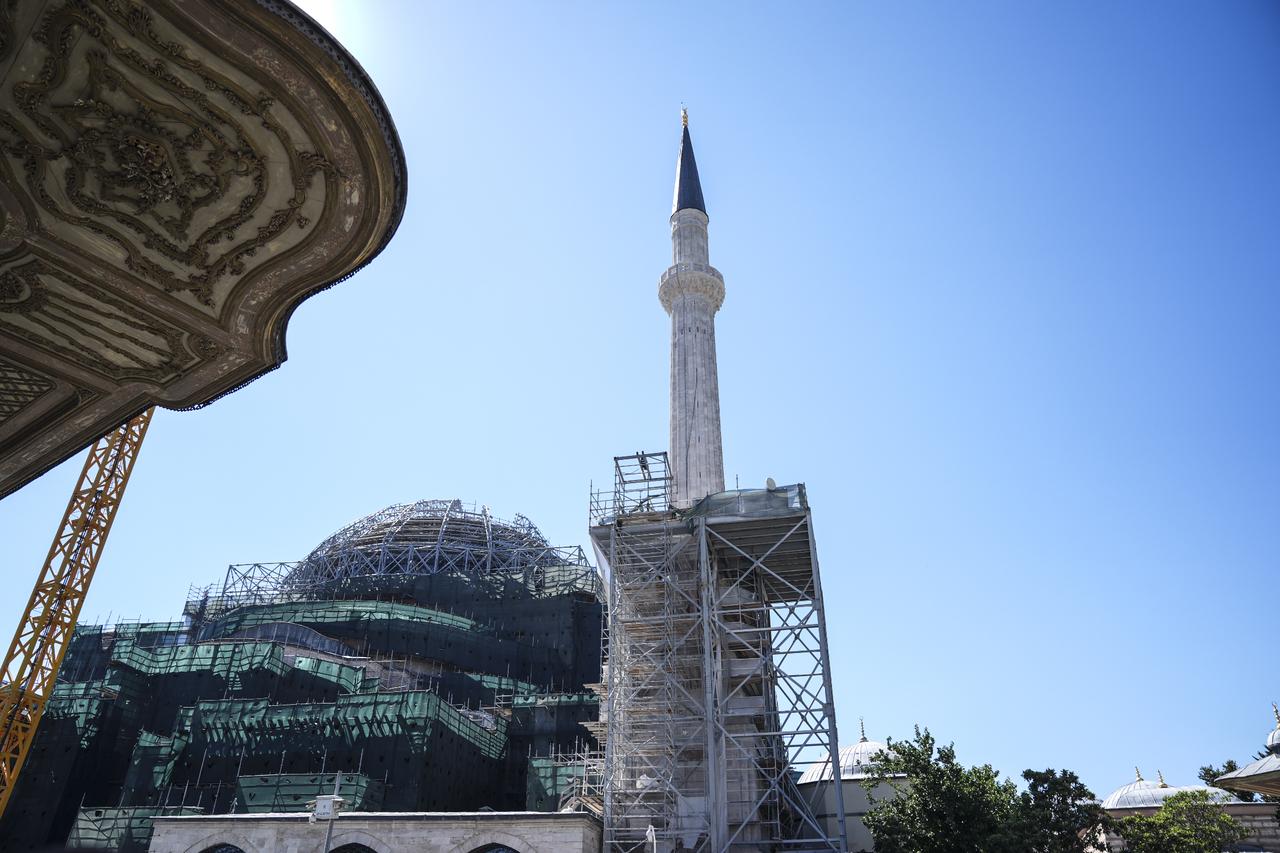
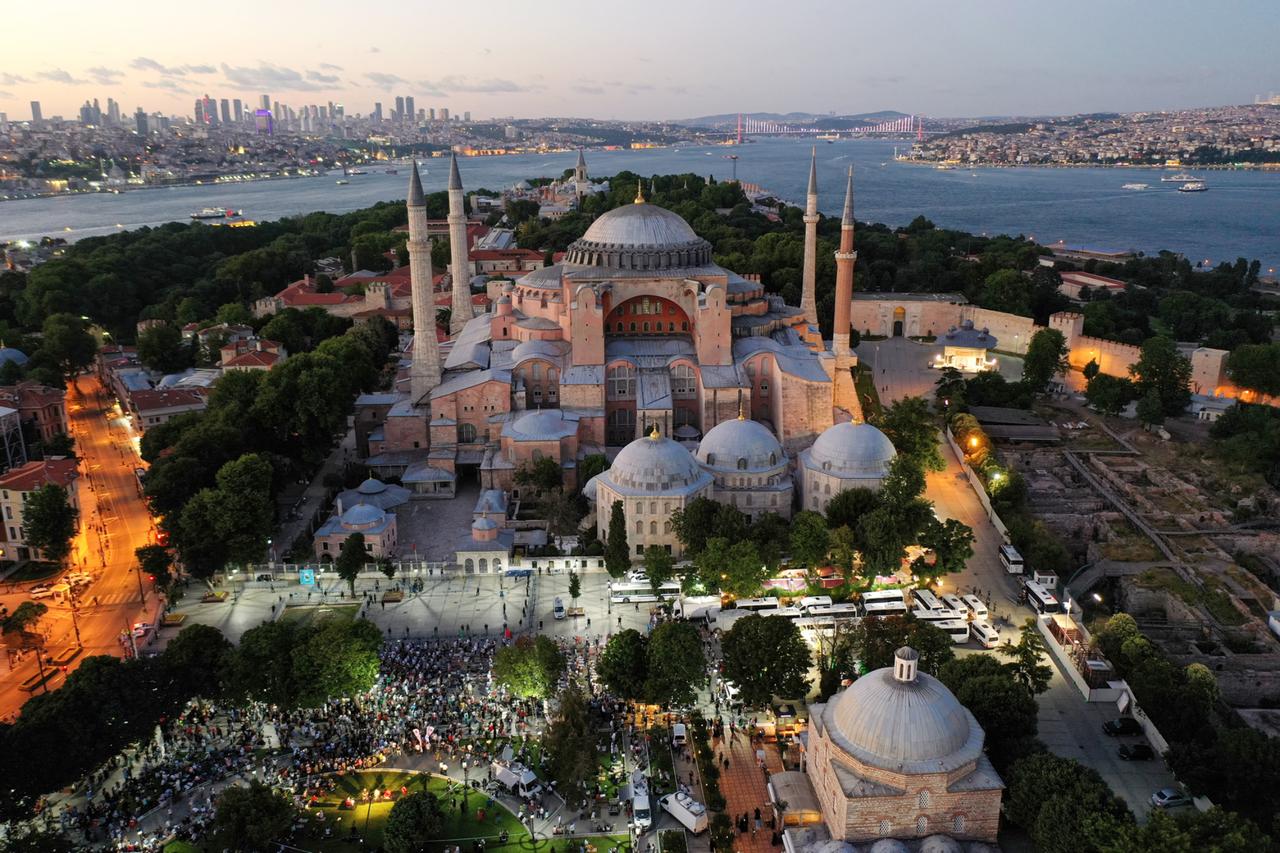
Restoration work on Hagia Sophia's main dome has entered a new phase, as crews begin covering the temporary steel roof built to protect the historic structure, its interior mosaics, and workers from the elements.
The operation forms part of what Türkiye's Directorate General of Foundations describes as the most extensive conservation, restoration and structural strengthening project carried out at Hagia Sophia during the country's republican era.
The temporary roof will allow teams to repair or replace the dome's lead covering, strengthen its exterior and conserve the mosaic decorations on its inner surface under controlled and secure conditions.
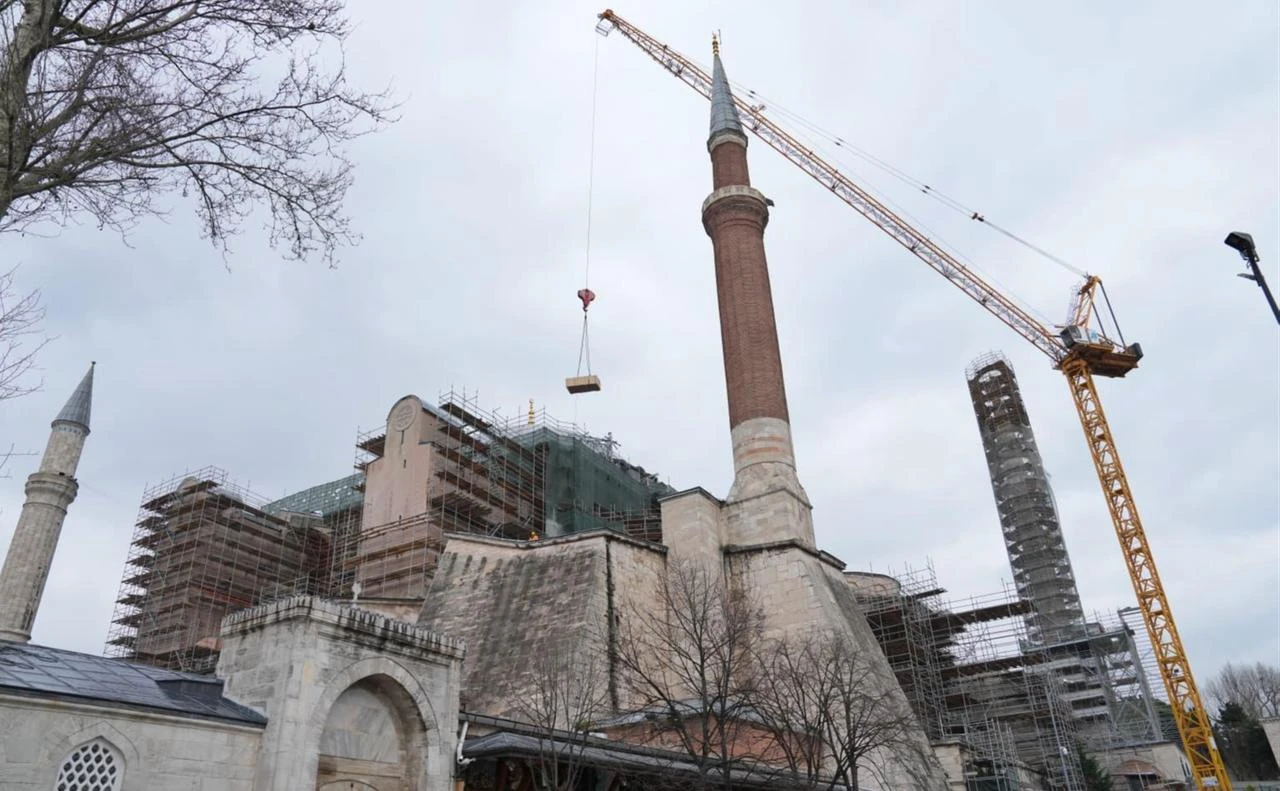

Detailed structural assessments carried out at Hagia Sophia found that the main dome required strengthening. The existing lead sheets, which form a weather-resistant layer over the dome, must therefore be removed, repaired or replaced before the broader reinforcement work can move forward.
Because removing this covering could leave the structure exposed to seasonal weather, the project's scientific committee concluded that the dome should first be enclosed beneath a temporary steel construction and a specially selected protective membrane.
The grey covering was chosen to blend in with the appearance of the dome's lead surface. It was also produced from flame-retardant material that meets high fire-safety standards.
Before the installation got underway, specialists completed calculations covering the dome's existing weight balance, the temporary structure's load-bearing capacity and the possible effects of wind.
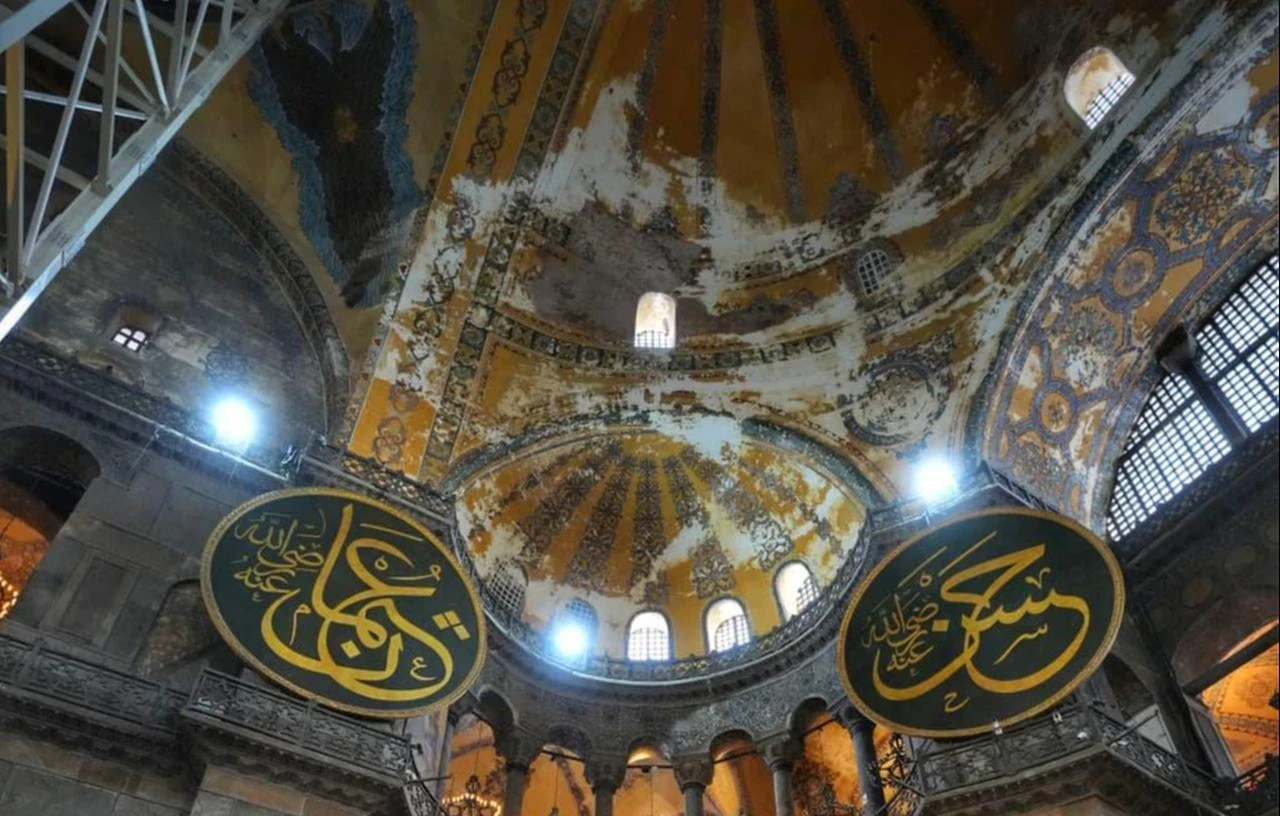
The protective enclosure will enable teams to carry out work on both sides of the dome at the same time. While the external surface is repaired and strengthened, conservators will work on preserving, restoring and securing the mosaics decorating the interior.
The temporary system was planned to avoid damaging Hagia Sophia's original materials and architectural fabric, while also keeping the working environment protected from rain, wind and other outside conditions.
Culture and Tourism Minister Mehmet Nuri Ersoy said the work was being carried out under the guidance of a scientific committee and with particular attention to preserving the monument's original character.
Ersoy marked the sixth anniversary of Hagia Sophia's reopening for worship by describing the building as a legacy entrusted by Ottoman Sultan Mehmed II and one of the greatest symbols of the conquest of Istanbul.
"We will continue with determination to pass Hagia Sophia, one of the most valuable legacies of our civilization, on to future generations in the strongest possible condition through a scientific approach to conservation. Hagia Sophia, Fatih's legacy, will continue to live forever with the call to prayer, worship and all its magnificence," Ersoy said.
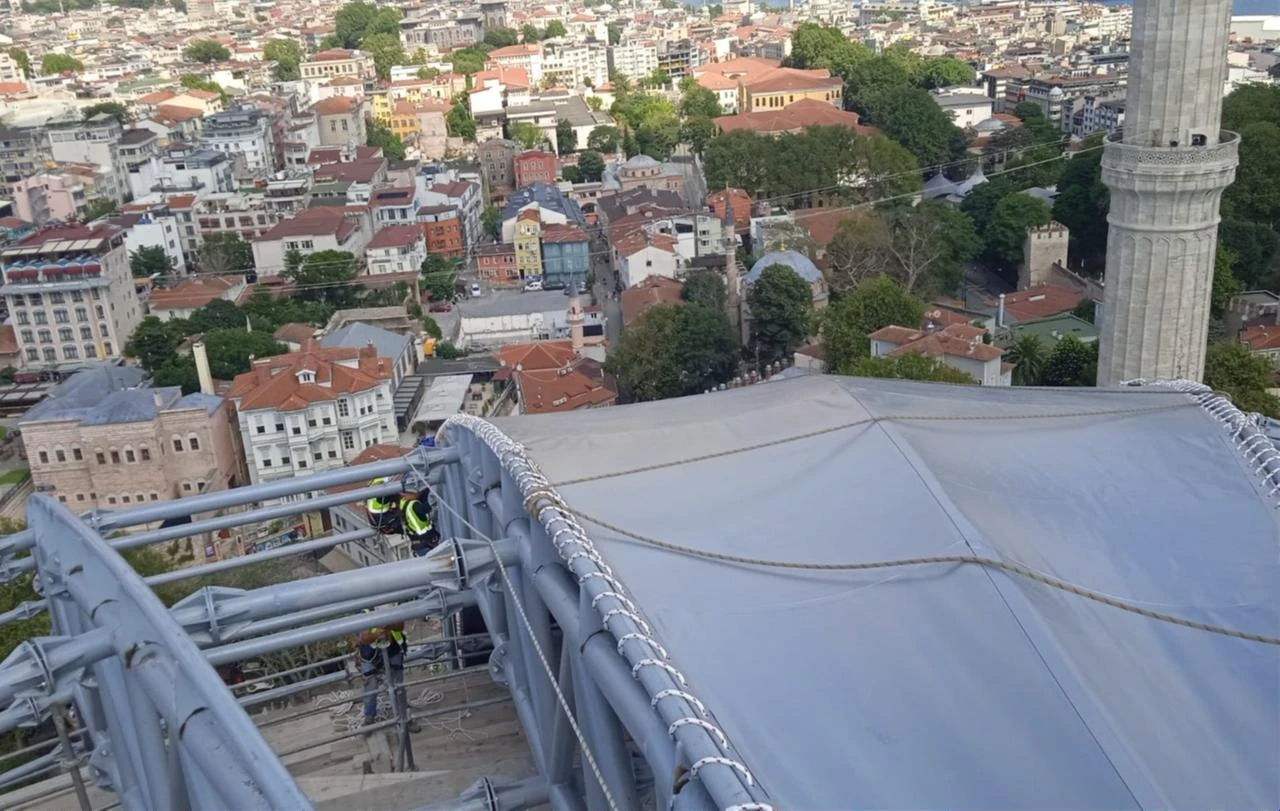
The protective covering will allow the main restoration work to continue without disruption from changing weather conditions, while safety measures will remain in place throughout the work area.
Hagia Sophia Grand Mosque will remain open to worshippers and visitors throughout the restoration process.


 Set as preferred source
 Set as preferred source


 2 min read
 1 min read