Newsletters


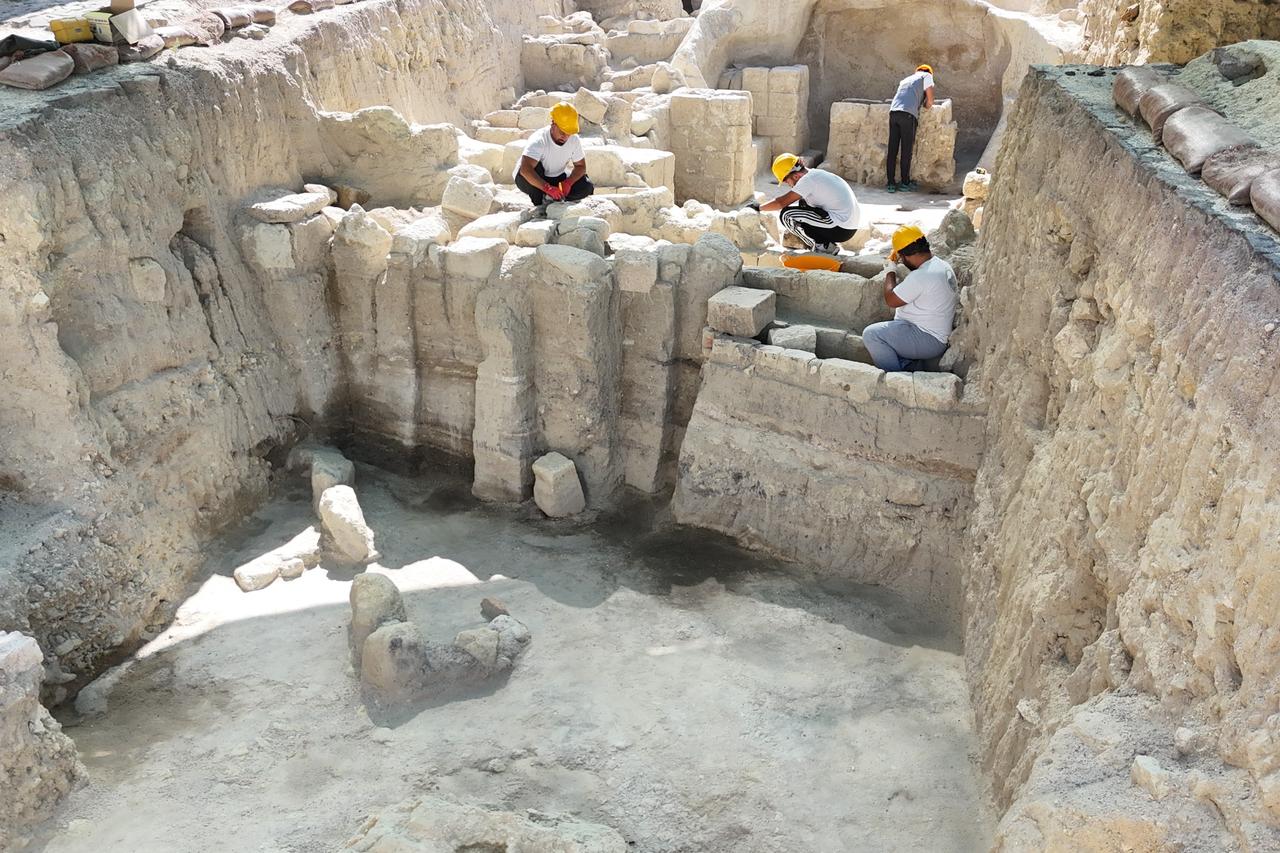


New archaeological traces uncovered during ongoing rescue excavations in Cappadocia are beginning to shed fresh light on the region’s underground settlement culture, reinforcing its reputation as one of Türkiye’s most complex historical landscapes.
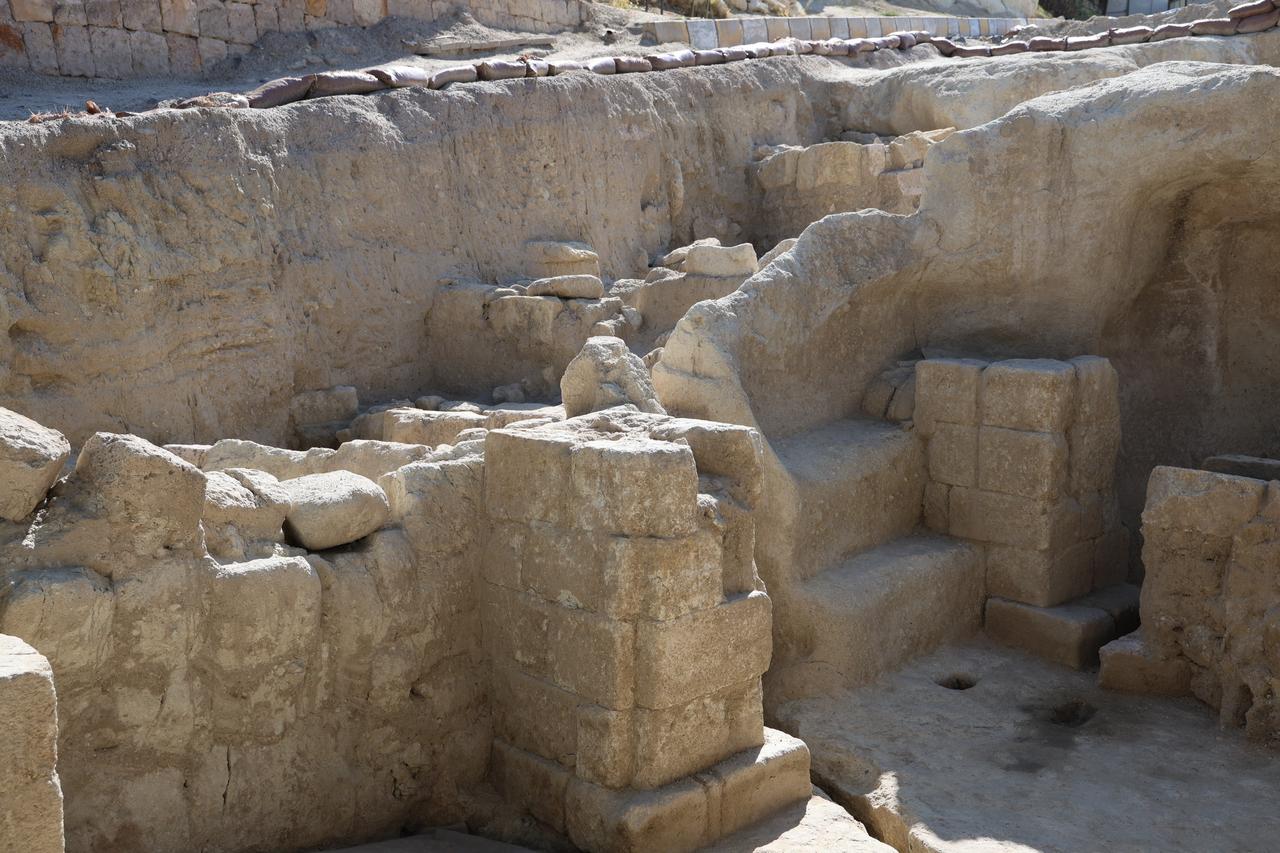
Work carried out at the Goreme Open-Air Museum continues to reveal rock-cut underground spaces that offer new insights into how ancient communities lived, sheltered, and adapted to changing historical conditions over thousands of years.
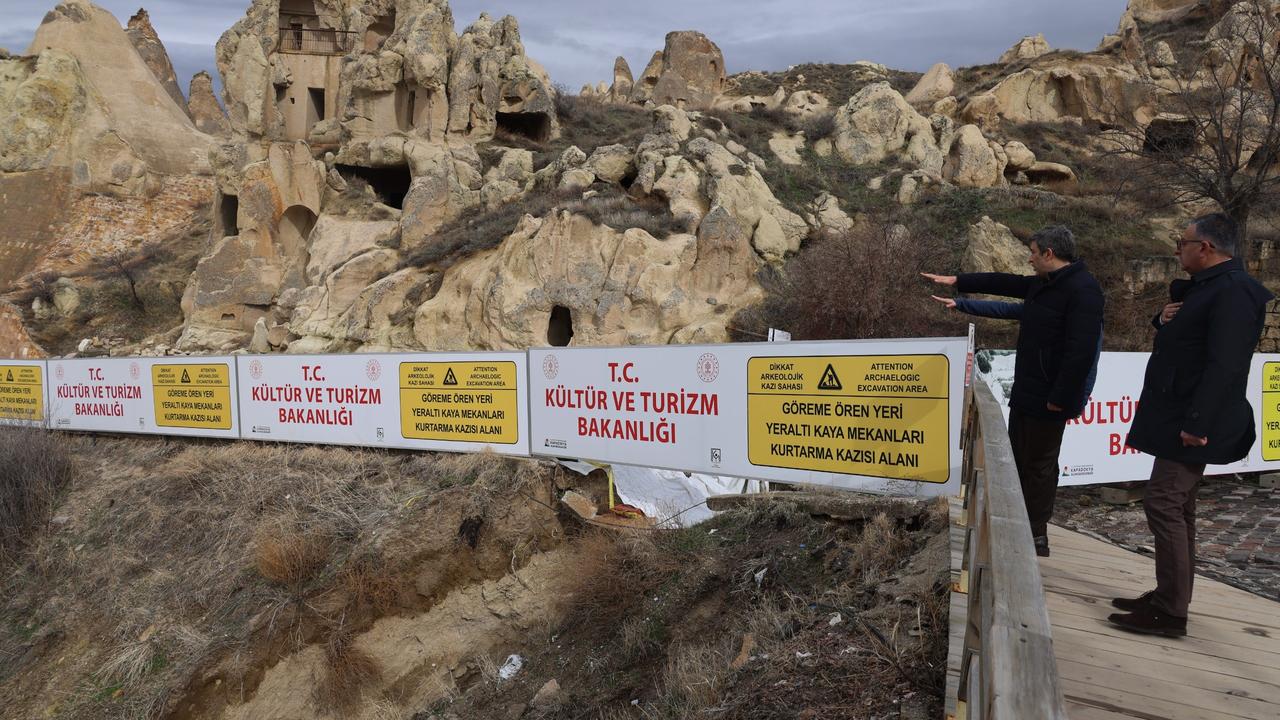

Rescue excavations, emergency archaeological works conducted to protect cultural heritage threatened by natural or human-related risks, are progressing carefully at the Goreme Open-Air Museum, one of Cappadocia’s most visited heritage sites.
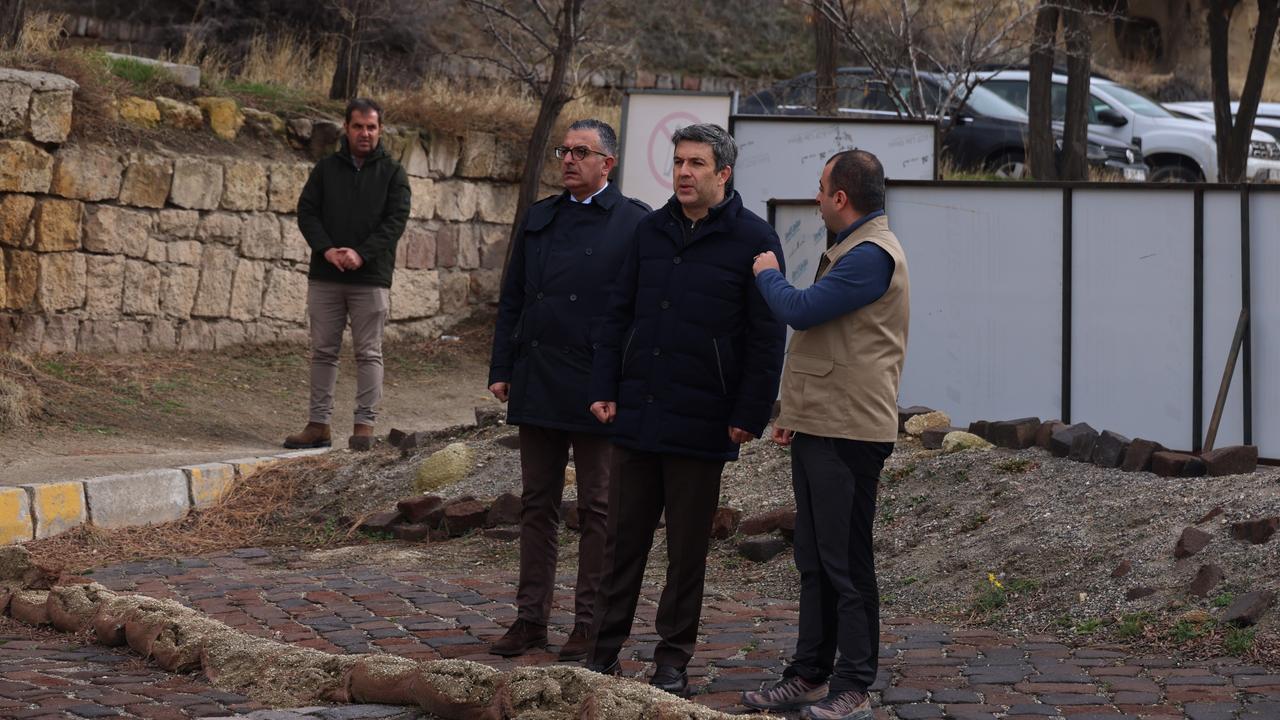
Cappadocia Area Director Aydin Cem Aslanbay inspected the excavation zone and received detailed briefings from Nevsehir Museum Director Gokhan Maskar regarding excavation techniques, field documentation, and newly identified archaeological data.
Officials explained that the discoveries are helping researchers piece together previously unknown sections of underground rock-carved spaces while preserving the site’s fragile historical fabric.
According to field authorities, the exposed structures provide valuable clues about daily life in ancient periods and contribute to a clearer understanding of settlement traditions across Cappadocia.
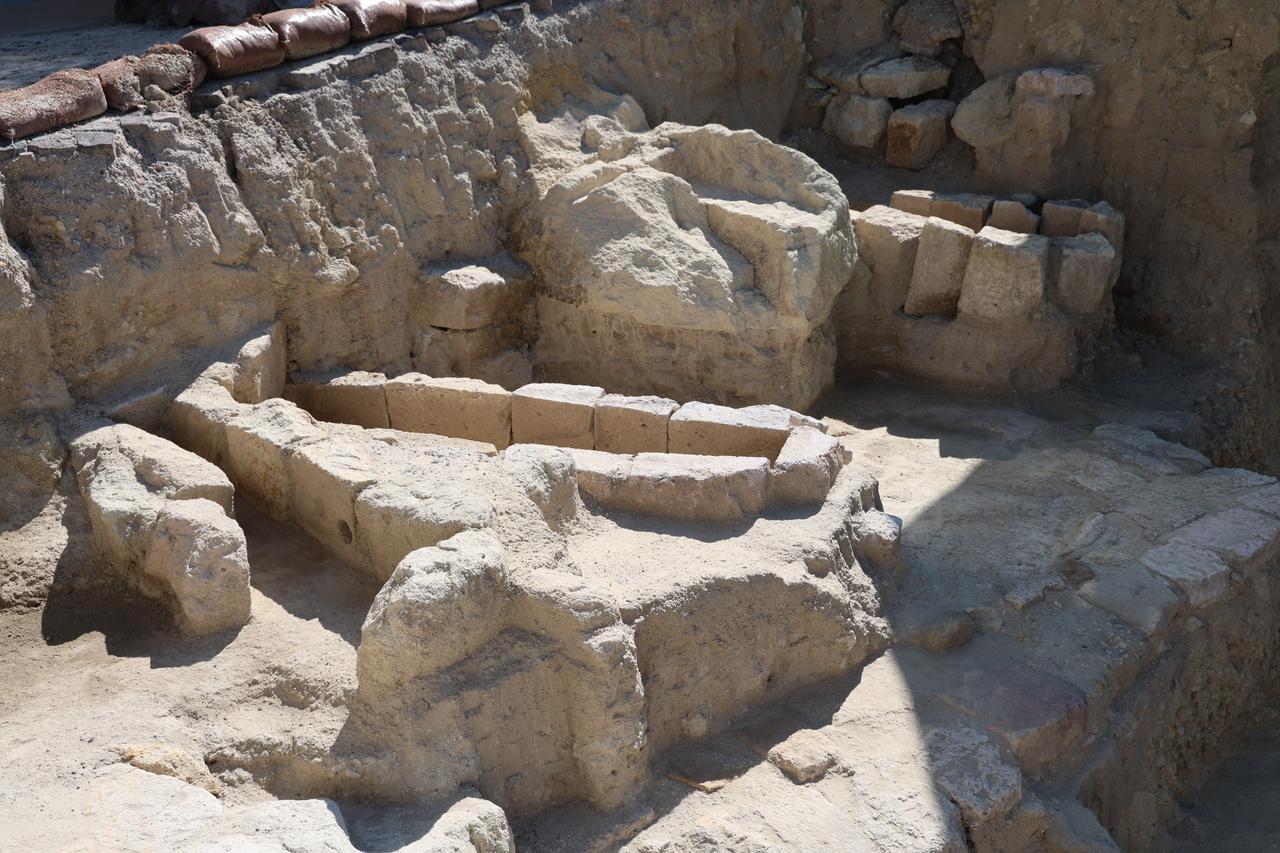
Archaeologists state that the newly uncovered remains carry traces of multiple civilizations that inhabited the region across different eras.
The underground rock spaces demonstrate how communities carved living areas into soft volcanic tuff—a natural rock formed from ancient volcanic ash that dominates Cappadocia’s landscape.
Aslanbay emphasized that each discovery strengthens knowledge of the region’s historical continuity, stating, “These findings, which carry the traces of civilizations, present new information about Cappadocia’s past. Every archaeological study reveals the cultural memory of the region more strongly.”
Researchers note that underground settlements in Cappadocia were often connected through hidden passages extending from houses on the surface, forming complex networks of corridors and chambers designed both for habitation and protection.
Cappadocia contains an estimated 150 to 200 underground settlements of varying size, although the number may be higher due to widespread rock-carved structures throughout the region’s roughly 25,000-square-kilometer area.
Larger complexes are often described as “underground cities,” while smaller ones function more like underground villages.
Historical evidence suggests that many of these spaces were primarily used as temporary shelters during periods of danger.
Over centuries, residents expanded rooms deeper into the rock, added defensive traps, and created narrow passages that could be sealed off when necessary.
Archaeological interpretations connect the development and expansion of these settlements to several historical periods.
Evidence indicates possible contributions from Anatolian civilizations, including the Hittites, while the most intensive use occurred during the Byzantine era between the 5th and 10th centuries, when local Christian communities used underground cities for refuge during regional conflicts.
Officials stress that Cappadocia’s inclusion on the UNESCO World Heritage List brings significant responsibility for conservation.
Excavation efforts are therefore supported not only by archaeological research but also by restoration, conservation practices, and sustainable tourism planning.
Maskar explained that all findings are being scientifically documented and placed under protection procedures managed by specialist teams, ensuring that newly uncovered areas remain preserved for future study.
Experts believe that once conservation processes are completed, some of the newly revealed underground sections could eventually be integrated into tourism routes, potentially enriching visitor experiences by offering deeper access to Cappadocia’s layered past.
Aslanbay noted that cooperation between institutions will continue in order to protect the region’s cultural heritage while transferring it accurately to future generations, emphasizing that all work is being carried out with scientific precision.


 Set as preferred source
 Set as preferred source


 2 min read