Newsletters


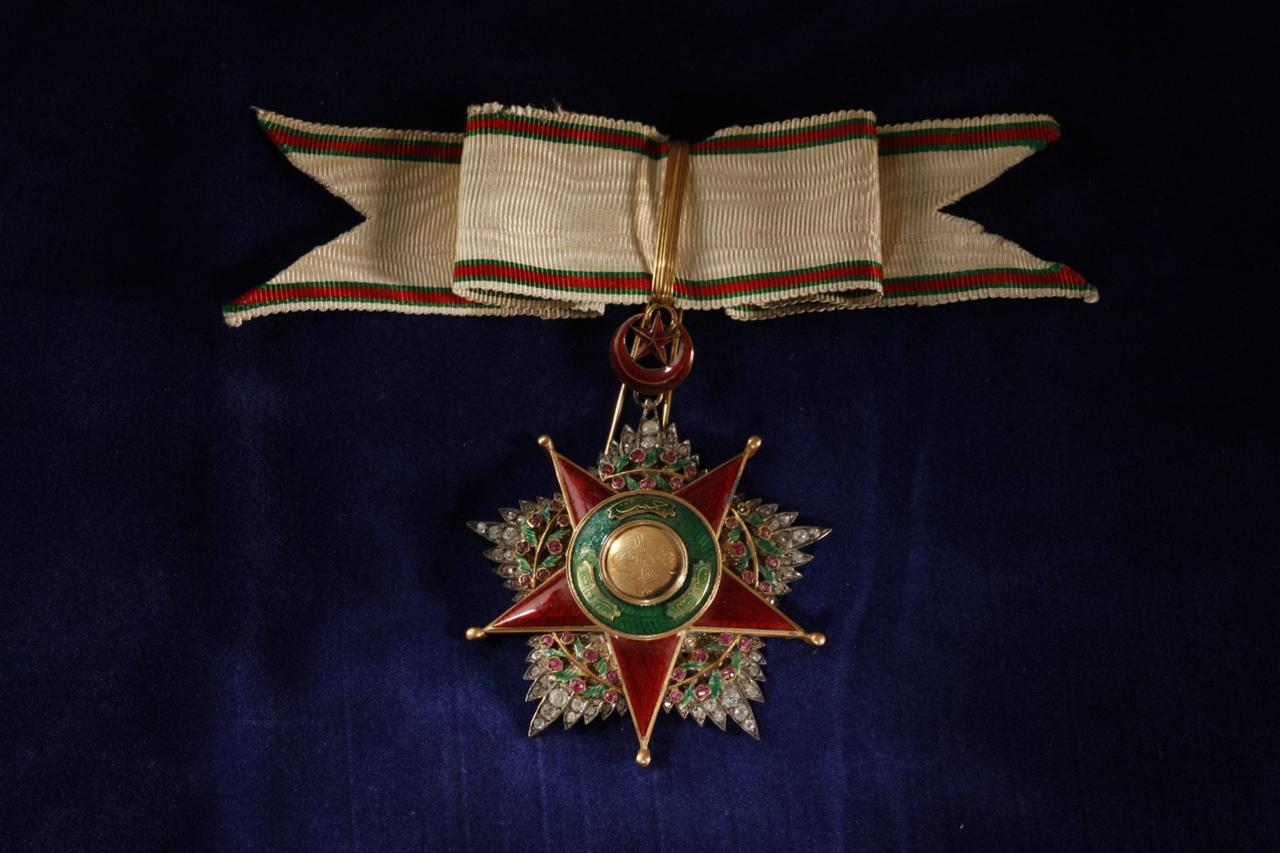


A historic Ottoman decoration created exclusively to honor women’s humanitarian efforts continues to live on today in the institutional collection of Türkiye’s state mint, highlighting an early example of official recognition for women’s social contributions.
According to information obtained by Anadolu Agency from the Ministry of Treasury and Finance, the Order of Compassion (Sefkat Nisani) was introduced in 1878 by Ottoman Sultan Abdulhamid II. The decoration was specifically designed to recognize women who stood out through charitable work, relief activities and acts of solidarity, particularly during times of war and disaster.
Today, rare examples of the decoration are preserved in the collection of the Mint and Stamp Printing House General Directorate, known historically as the Darphane-i Amire, the institution responsible for producing the empire’s coins, medals and state decorations for centuries.
The order emerged during the 19th century, a period when the Ottoman Empire developed a more modern system of state decorations. Within this system, the Order of Compassion stood out because it was created solely to honor women.
Officials describe the decoration as both a state award and a symbolic recognition of the role women played in humanitarian and social responsibility efforts across Ottoman society.
The order was awarded not only to women from the Ottoman imperial family but also to individuals who made notable contributions to public welfare. Women who led charitable initiatives or humanitarian assistance campaigns were among those who received the distinction, and the award was sometimes granted to foreign recipients as well.
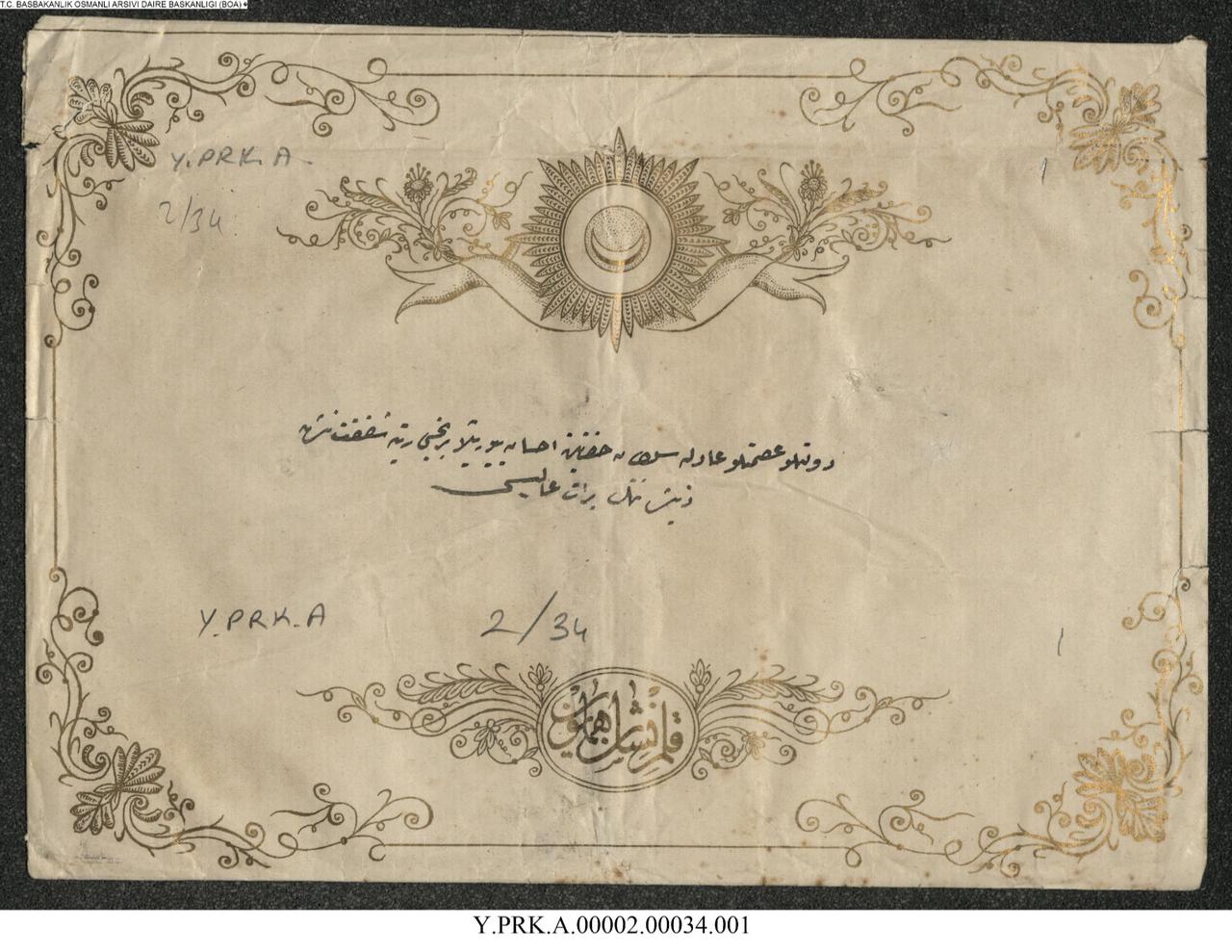

The decoration quickly gained recognition beyond the Ottoman Empire. Several prominent European royal figures received the award in acknowledgement of their humanitarian involvement.
Among them were Queen Alexandra of the United Kingdom and Queen Wilhelmina of the Netherlands, who were honored for their support in relief activities connected to wartime circumstances.
Lady Layard, who assisted refugees arriving in Ottoman territories during the Russo-Ottoman War of 1877–1878—known in Ottoman history as the “93 War” because it took place in the Islamic calendar year 1293—was also recorded as one of the earliest recipients of the order.
The decoration was also awarded to several influential women in Ottoman intellectual and cultural life.
One of the recipients was Fatma Aliye Topuz, widely regarded as one of the first prominent female writers of Ottoman literature. Following the Ottoman-Greek War of 1897, she founded the Nisvan-i Osmaniye Imdat Cemiyeti, a charitable organization established to assist soldiers’ families. Her humanitarian initiatives led Sultan Abdulhamid II to present her with the Order of Compassion.
Another notable recipient was Halide Edip Adivar, the well-known writer and thinker, who received the decoration at a young age for her translation work and cultural contributions.
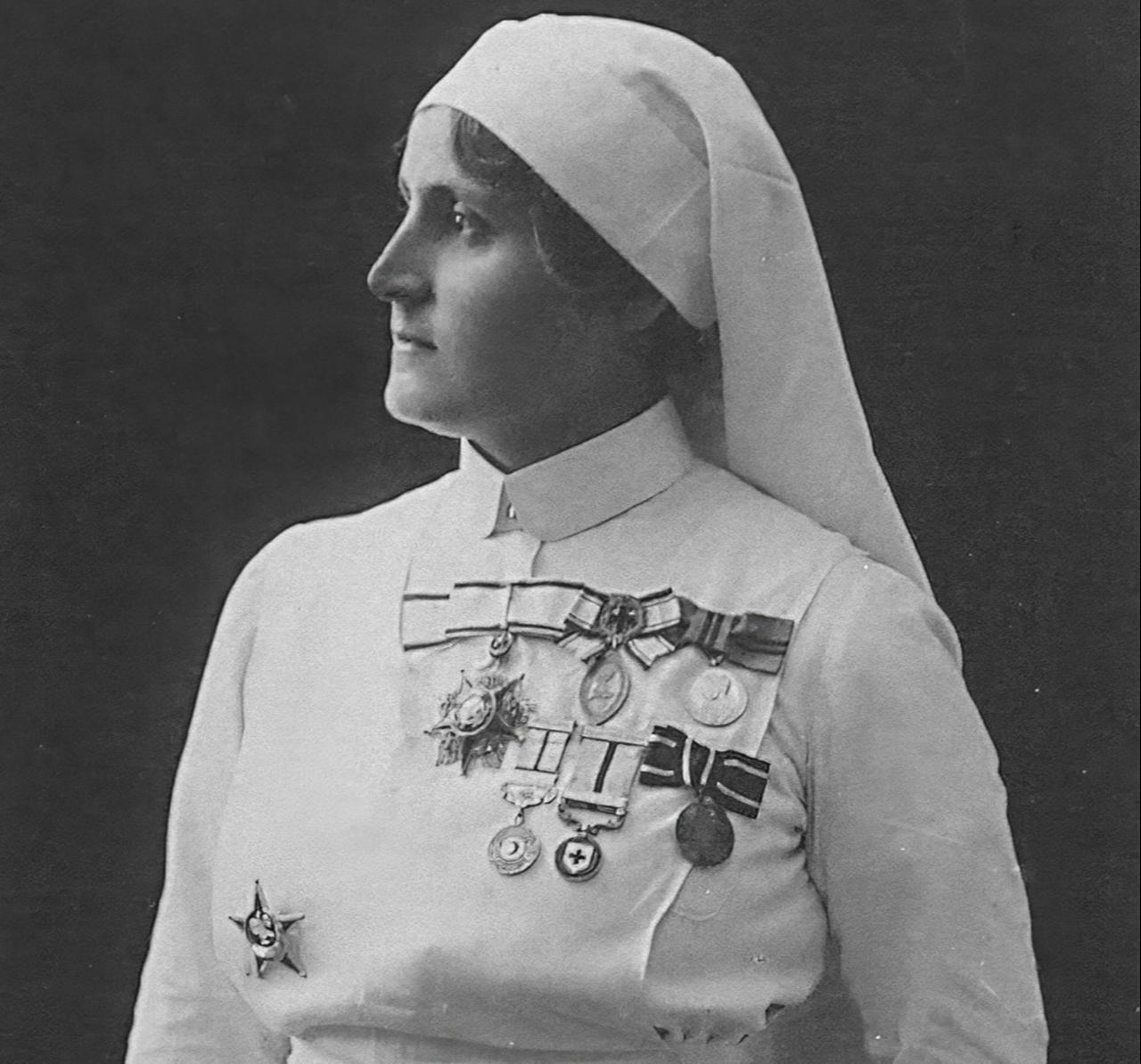
The award was also granted to Safiye Huseyin Elbi, a volunteer nurse who cared for wounded soldiers during the Balkan Wars and the Gallipoli campaign, recognizing her humanitarian service during wartime.
Other women honored with the decoration included poet Nigar Hanim, who was active in cultural and charitable initiatives, and Ayse Sidika Hanim, known for her efforts to expand educational opportunities for girls.
Different ranks of the Order of Compassion, produced during the Ottoman period at the imperial mint, are now preserved in the institutional collection of the Mint and Stamp Printing House.
Beyond documenting the Ottoman tradition of charitable engagement, these artifacts also demonstrate the technical and artistic achievements of Ottoman medal and decoration design.
The mint, which produced the empire’s coins, medals and official decorations for centuries, used advanced jewelry techniques and enamel craftsmanship when creating the order.
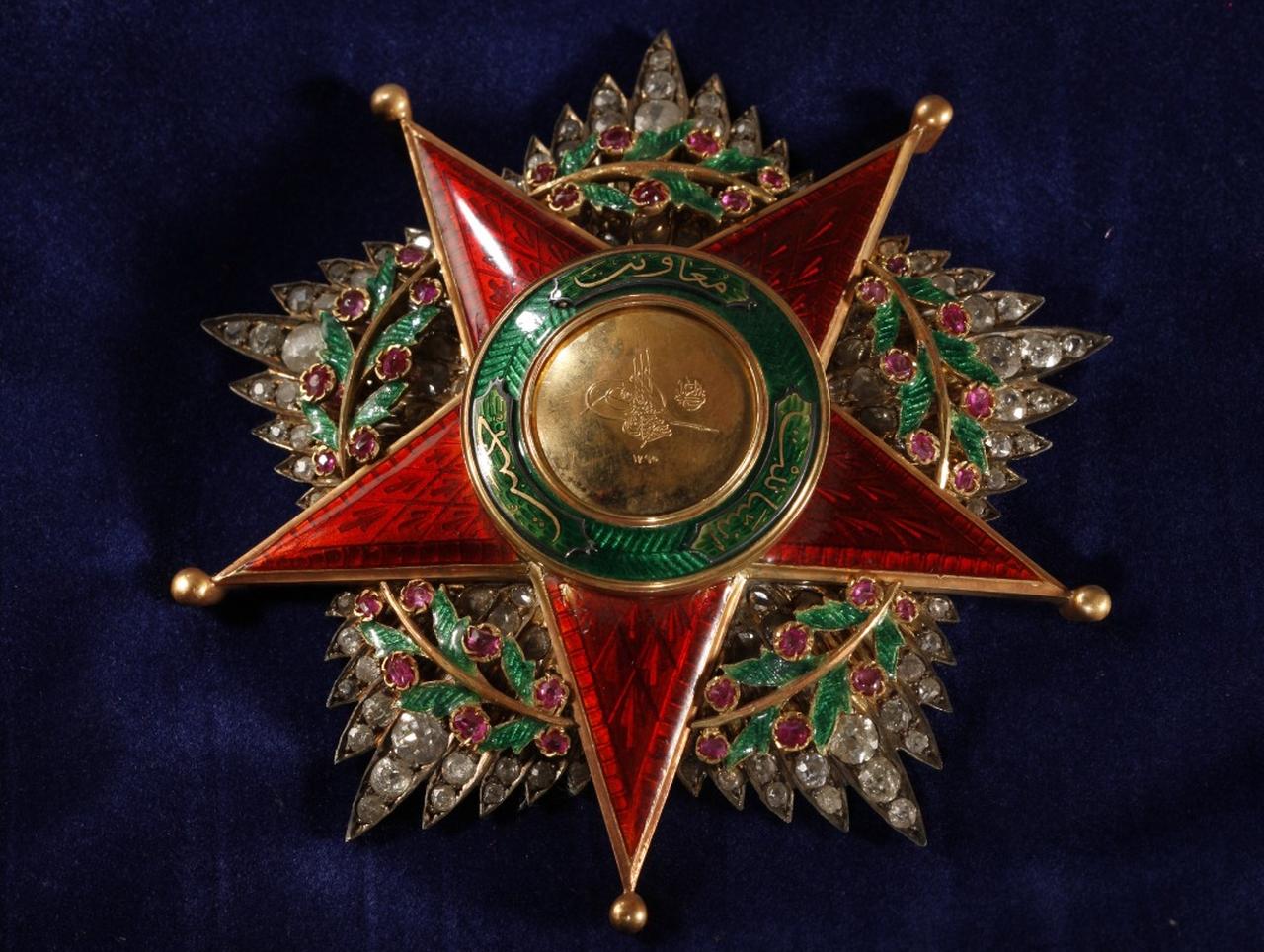
The Order of Compassion is notable not only for its historical meaning but also for its detailed artistic design.
At the center of the decoration is a gold plate bearing the tughra, or imperial calligraphic monogram, of Sultan Abdulhamid II, with the date 1295 (1878) marking the year the order was established.
Surrounding the central medallion is a green enamel ring featuring three key Ottoman concepts: insaniyet (humanity), muavenet (assistance), and hamiyet (devotion or civic virtue). Together, these terms reflect the Ottoman understanding of charity, solidarity and public responsibility.
The decoration was typically crafted using gold, silver, enamel and precious stones. Its star-shaped design featured red and green enamel surfaces, diamond-like rays and a decorative ribbon, making it one of the most visually refined examples among Ottoman state decorations.
The order was produced in three ranks, with the highest grade designed in a more elaborate star form known as a “semse,” giving it a more striking ceremonial appearance.


 Set as preferred source
 Set as preferred source



 3 min read