Newsletters


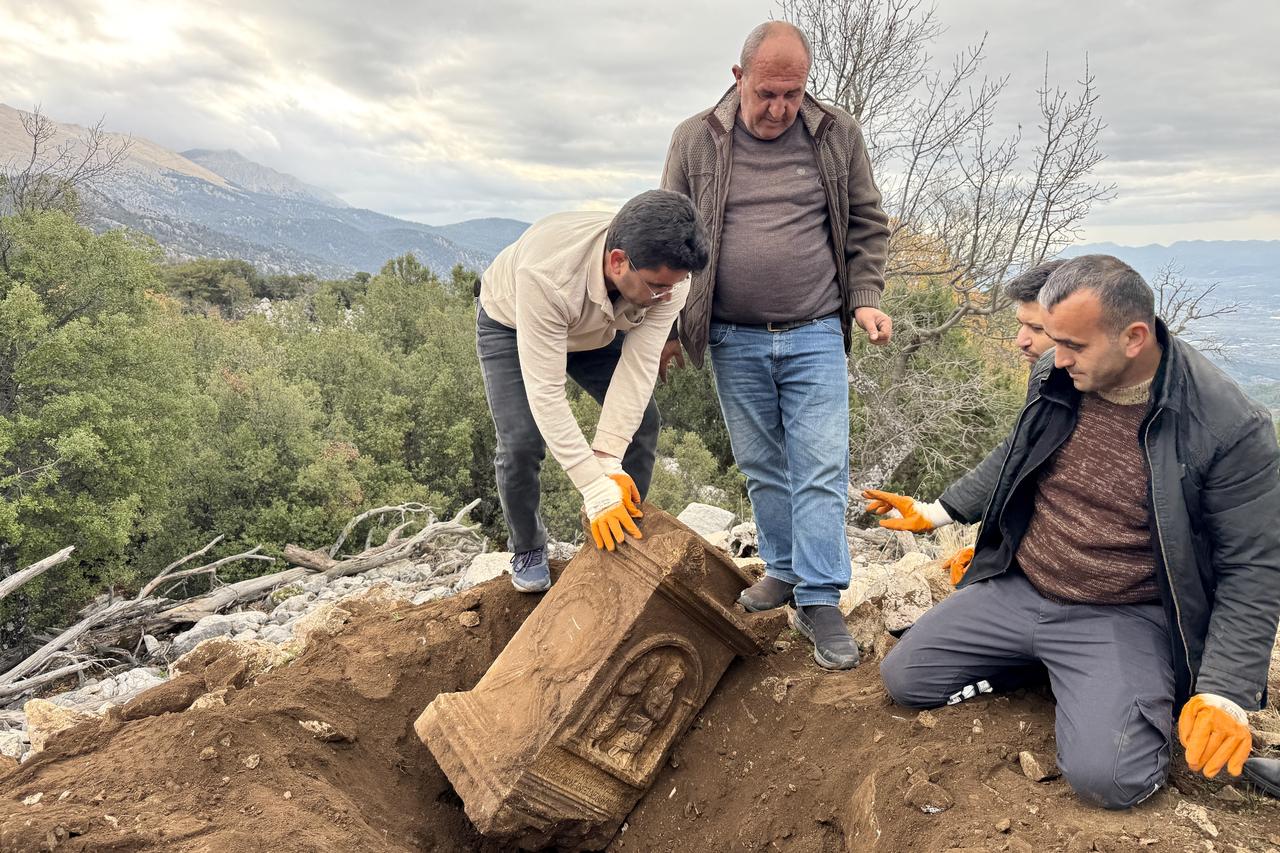


A human-shaped grave stele unearthed by a goat herder in the rugged highlands of Mugla’s Seydikemer district has been secured and transferred to the Fethiye Museum, where it will soon be exhibited. The remarkable discovery, identified as a Roman-era memorial stone, has drawn attention for its detailed reliefs and inscription, which archaeologists say offer valuable insight into family life and social status in ancient Anatolia.

Local officials reported that the herder noticed the carved stone while tending his animals in a forested area near Kayacik. After he alerted the Fethiye Museum Directorate, experts carried out an on-site assessment and confirmed its historical importance. Because of its weight, estimated at around 300 kilograms, the team initially buried it for protection and installed motion-triggered cameras (referred to in Türkiye as fotokapan) to secure the location.
Once preparations were complete, archaeologists and support workers hiked roughly 45 minutes from the nearest road to reach the spot. They wrapped the stele carefully and then transported it by hand for nearly seven hours across steep and rocky ground, a task that required both caution and endurance.
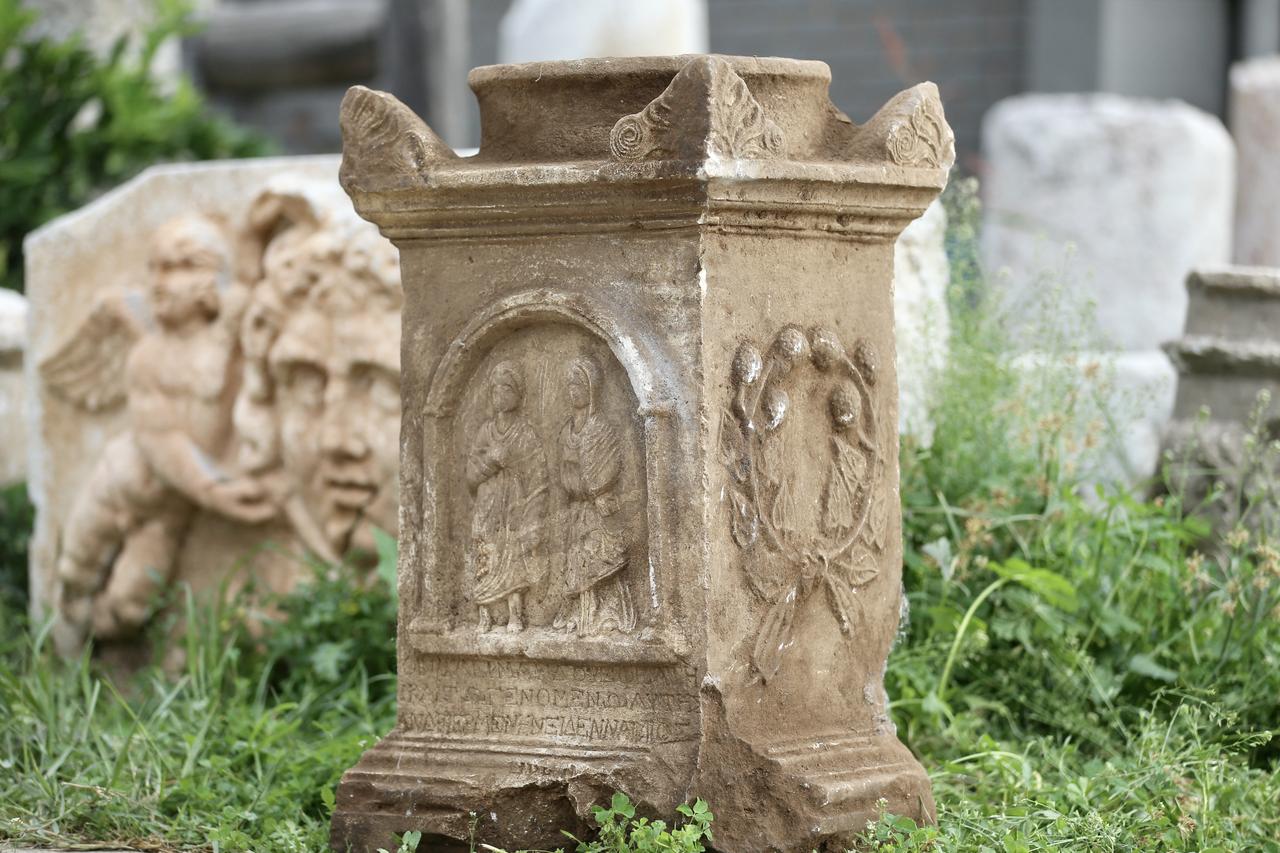
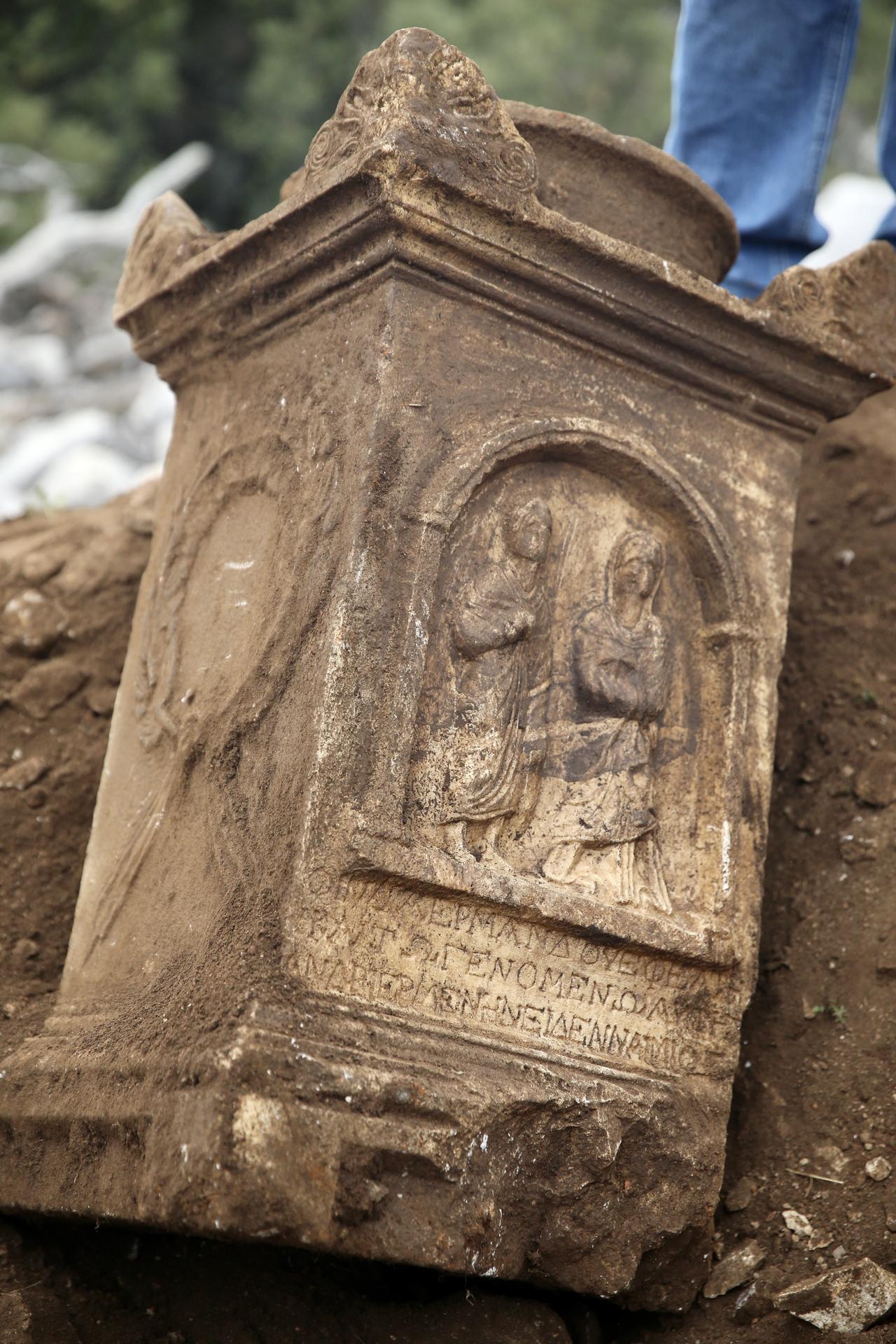
Archaeologist Ahmet Meke, who took part in the recovery, said the piece likely dates to the first–third centuries C.E. and represents a type of altar-shaped grave stele commonly seen across Anatolia. He explained that what sets this example apart is its elaborate relief carving and inscription, elements that give it significant epigraphic value.
According to Meke, the front of the stone depicts a man and a woman, suggesting a family portrait commemorating the deceased. The clothing and styling of the figures, he noted, offer a window onto everyday life and the social fabric of Roman-period communities in the region. He added that the accompanying inscription contains information about the individual buried there.
One of the side faces bears a wreath, a symbol associated with honor and distinction. Meke said this detail indicates that the person commemorated on the stele held a respected position within local society.
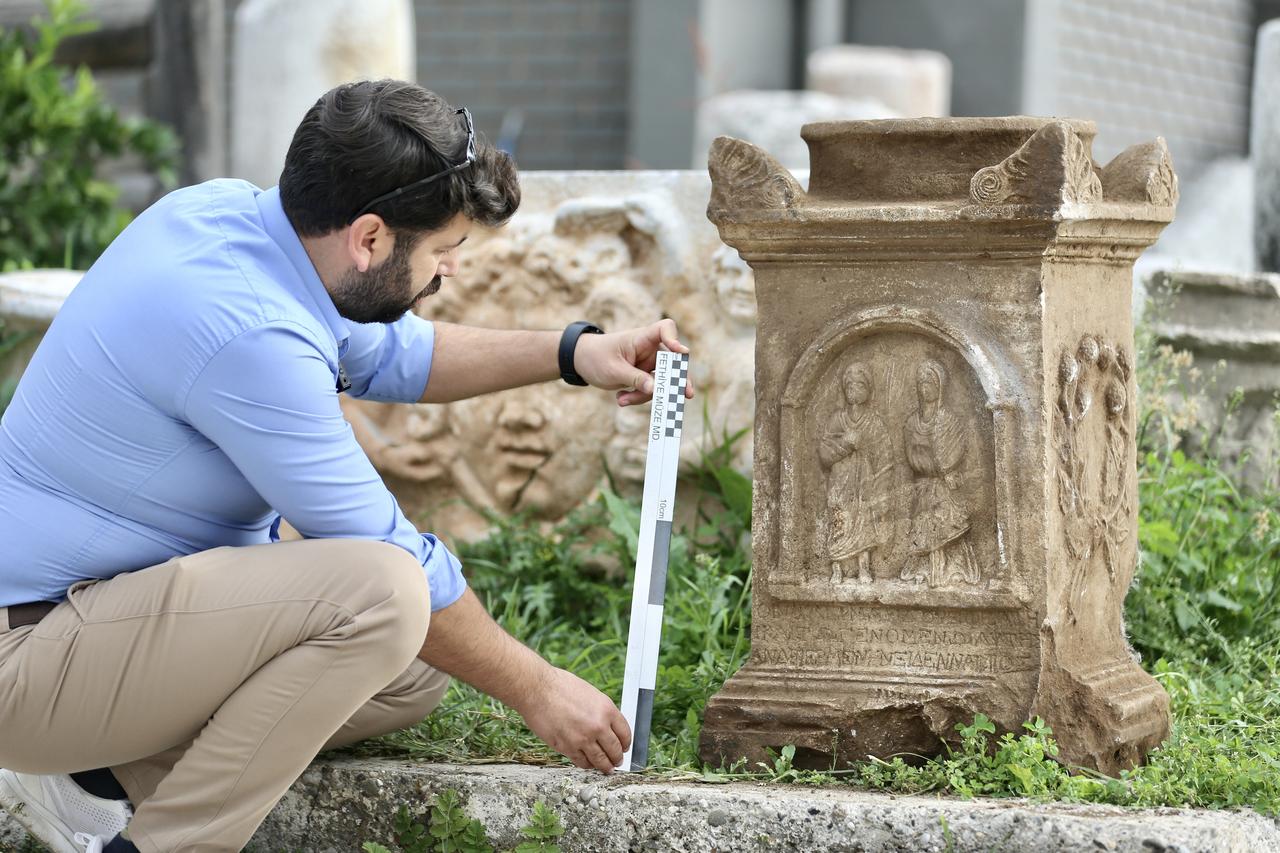
Museum specialists will now begin cleaning and conservation work before adding the artifact to the museum inventory. The site where it was found has been proposed for protected status, and motion-triggered cameras remain in place for security.
Meke emphasized the importance of public cooperation in safeguarding cultural heritage, noting that the herder’s quick report made the rescue possible.


 Set as preferred source
 Set as preferred source


 2 min read