Newsletters


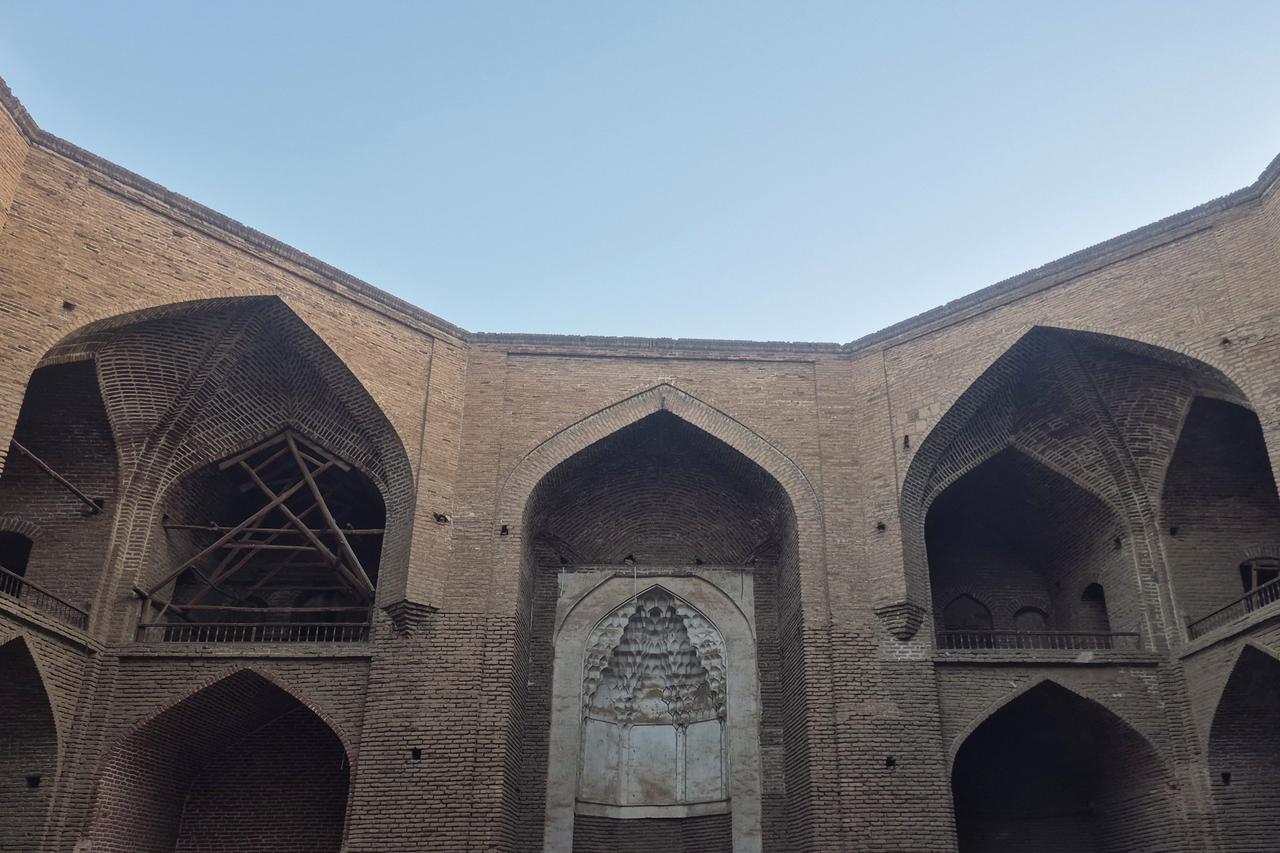


Iran's historic Muttalib Khan Mosque, originally built under the Ilkhanids and later rebuilt during the Qajar era, stands out for its open-air design, towering prayer niche and distinctive brickwork.
Located in Khoy, a city in Iran's West Azerbaijan province, the mosque dates back to the Ilkhanid period (1256–1353), while sections destroyed over time were reconstructed during the Qajar dynasty, giving the building its present appearance.
Unlike conventional domed mosques, Muttalib Khan Mosque features an open courtyard and a square prayer hall, with its architecture bringing together elements from different periods of Iranian history.

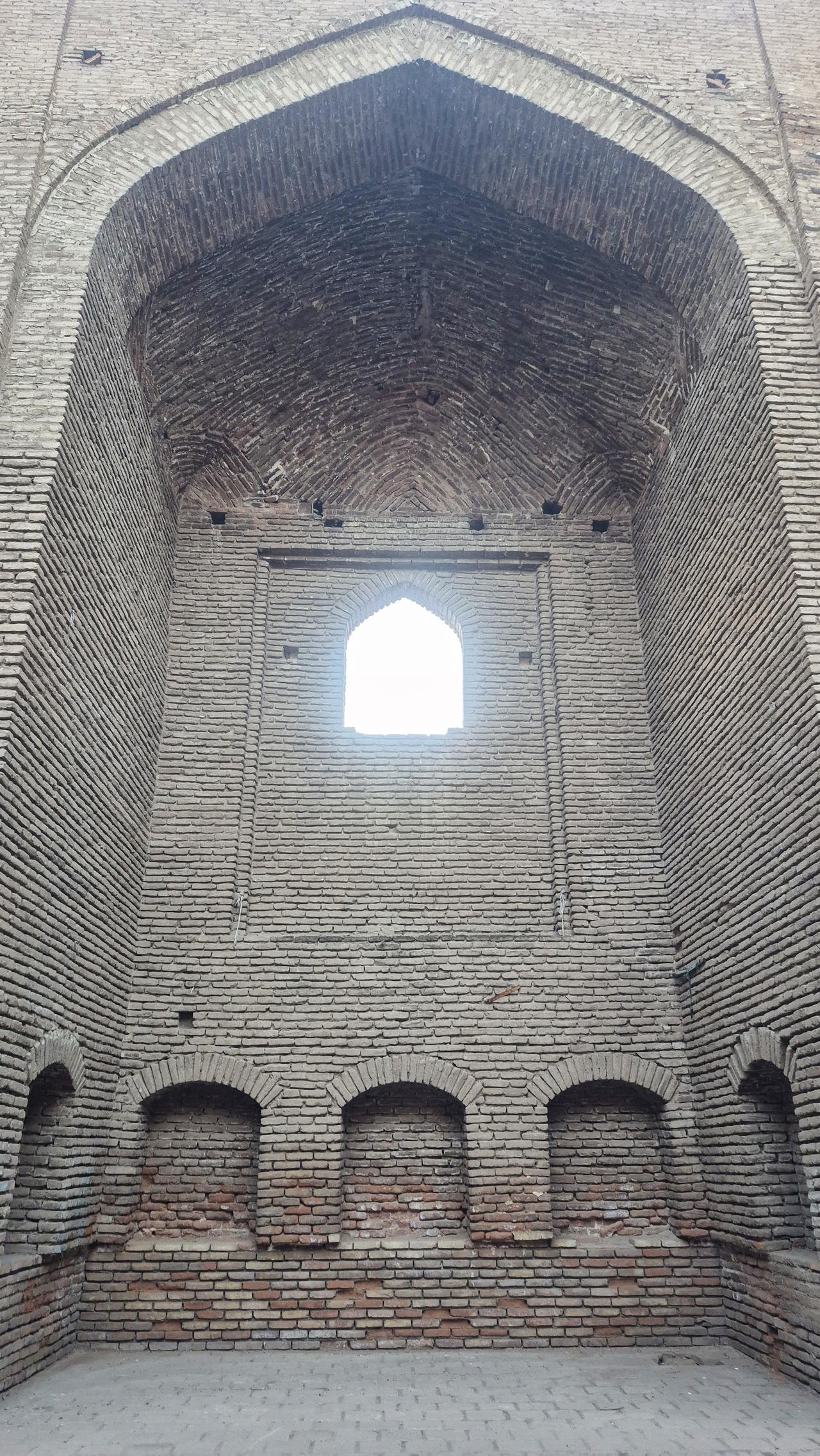
Among the mosque's most prominent features is its 12.5-meter-high mihrab, a niche indicating the direction of Mecca for Muslim prayers, alongside a 15-meter portico and a 25-meter iwan, a vaulted architectural space open on one side.
Its interior and exterior walls are built from undecorated bricks arranged in geometric patterns, while the two-story structure incorporates traditional plaster ornamentation known as muqarnas above the mihrab.
The upper floor includes areas separated by wooden railings for women, which can be reached through staircases positioned at the building's four corners. Historically, the mosque also served as a place of religious education for students.
The mosque took on its final architectural form under Muttalib Khan, the chief jeweler of Abbas Mirza, crown prince of Qajar ruler Fath Ali Shah.
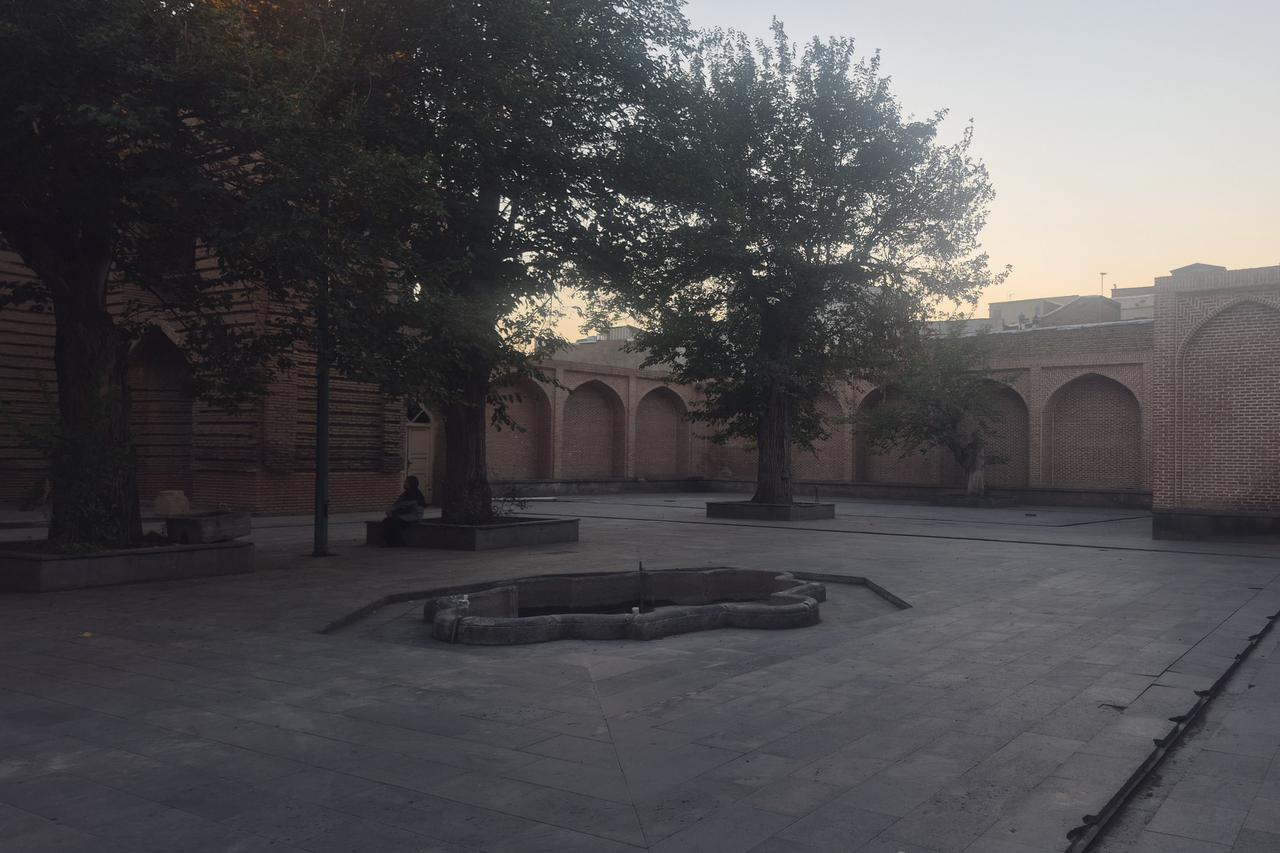
A large courtyard with an ornamental pool stretches out in front of the prayer area.
According to local tradition, the mosque's original dome-less construction was inspired by the earliest Muslim prayer spaces during the time of the Prophet Muhammad, when places of worship were built without roofs.
The design is therefore understood to reflect an architectural tradition associated with the beginnings of Islam.
However, to protect the building from unfavorable weather, a lightweight, movable metal dome spanning 18 meters was later added.
Having undergone restoration on several occasions, Muttalib Khan Mosque was officially added to Iran's National Heritage List on March 19, 2000.


 Set as preferred source
 Set as preferred source


 2 min read