

 Newsletters


A monumental marble statue dating back roughly 2,500 years has been brought to light at the ancient city of Sardis in western Türkiye, offering new evidence about the local elite, religious practices and cultural exchanges of the period.
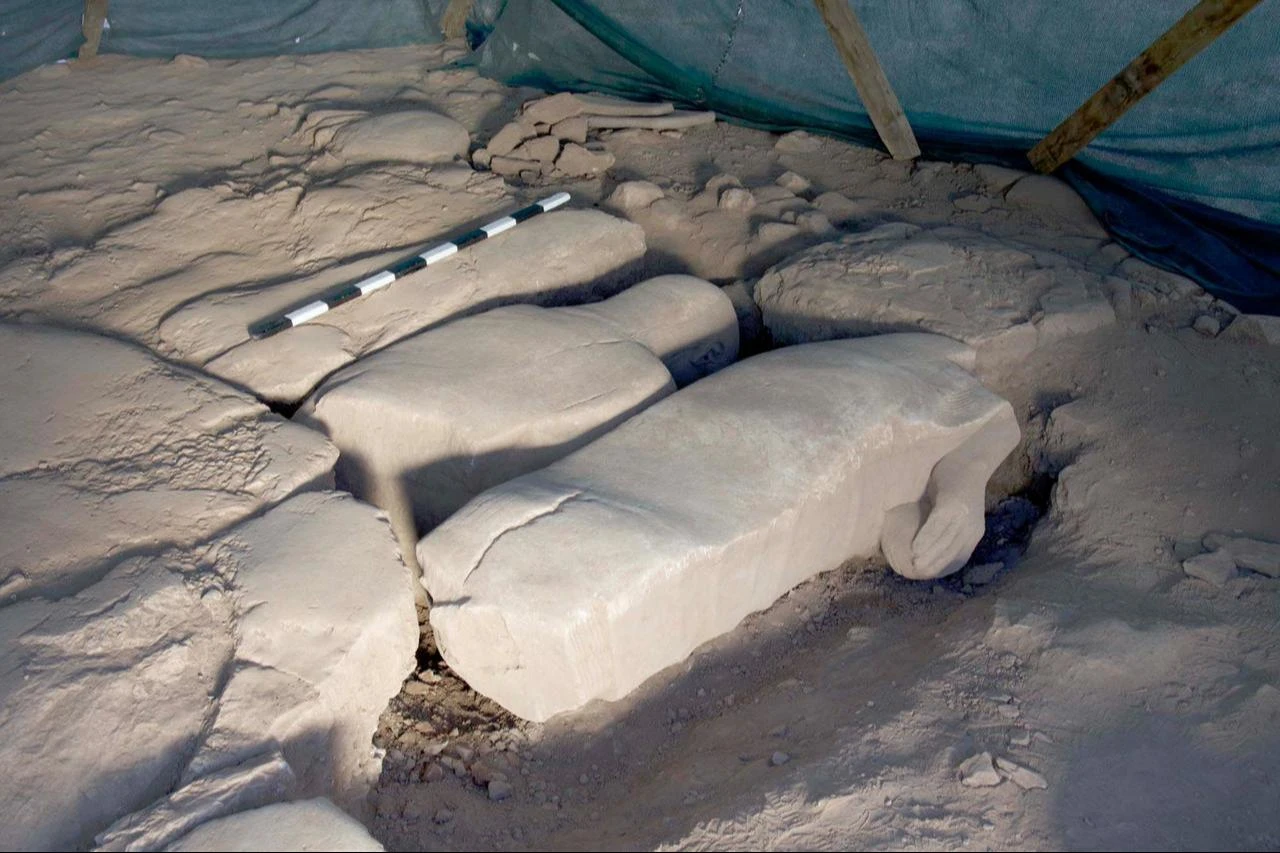
The 2.2-meter-high statue depicts a standing young man and dates to between 470 and 450 B.C., according to Türkiye's Ministry of Culture and Tourism. It was found in two large sections, while its feet and several smaller pieces remain missing.
Culture and Tourism Minister Mehmet Nuri Ersoy described the find as "a unique discovery at Sardis that will shed light on Anatolian archaeology," pointing to its monumental scale, well-preserved condition and unusual details.
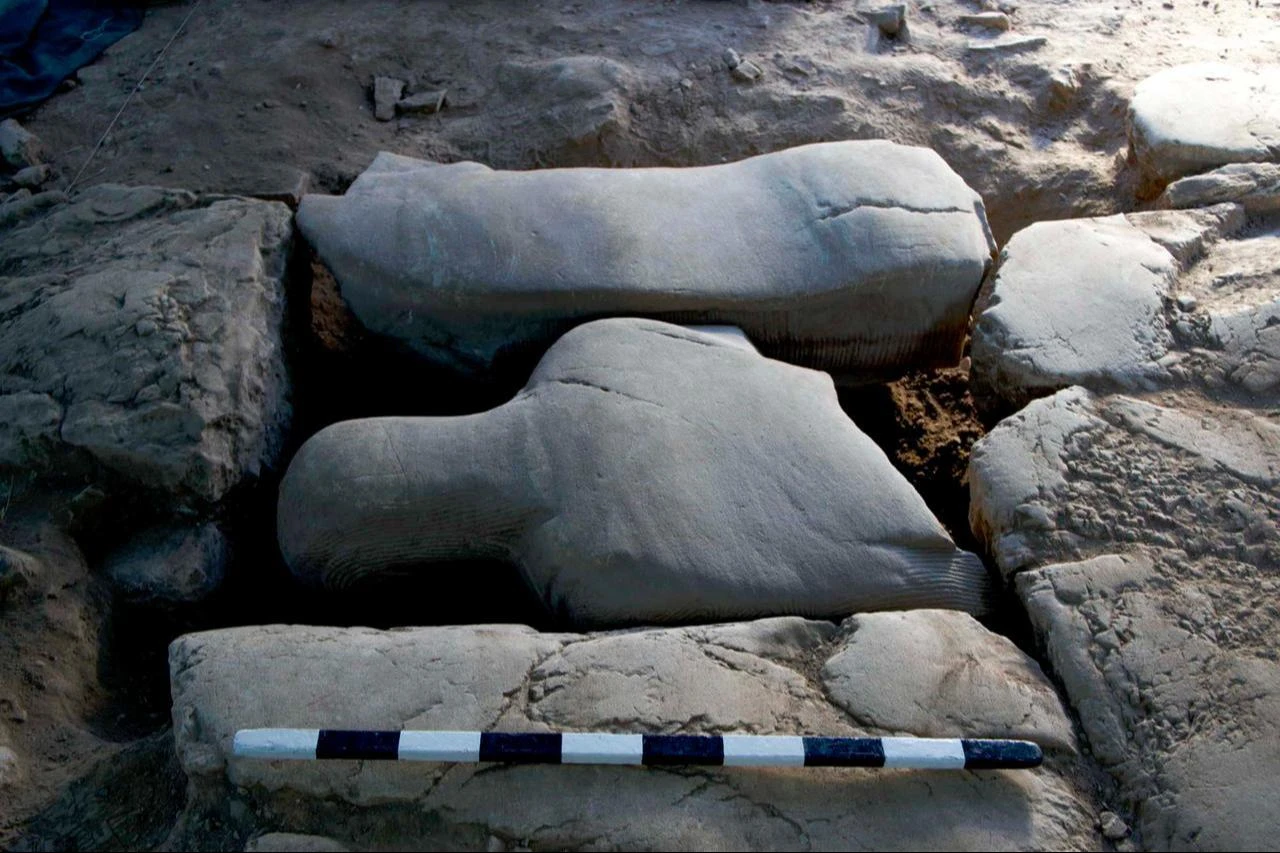

The statue was reused during the Roman period as paving material along the colonnaded avenue at the entrance to Sardis. It was laid face down, a position that helped protect its facial features and other carved details over the centuries.
After carefully clearing the surrounding soil, specialists safely lifted the two sections from the ground.
Although the figure's upright posture and long hair recall sculptures from the sixth century B.C., its facial structure, anatomical details and workmanship place it in the first half of the fifth century B.C.
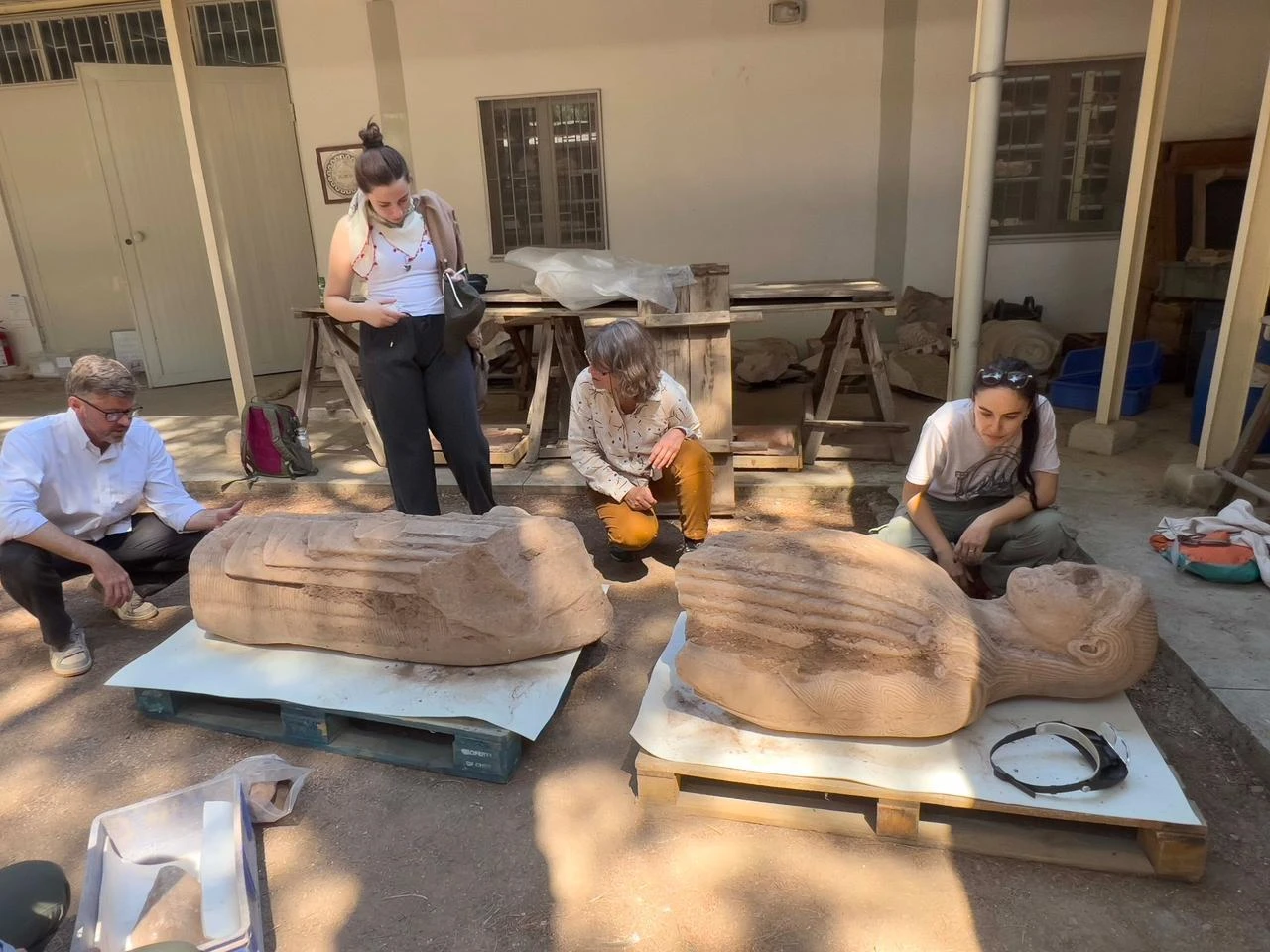
The young man wears a thick himation, an outer cloak commonly used in the ancient Greek world, over a light chiton, a tunic-like garment. Beneath them is another item of clothing marked by horizontal lines.
This combination has not been identified on comparable sculptures from Anatolia or Greece, according to the ministry. The unusual dress therefore sets the work apart and points to local traditions connected with Lydian culture.
The figure also holds a fruit in his right hand, possibly a quince, which may have been intended as an offering to a god or goddess.
The sculpture dates to a period when Sardis served as the satrapal capital of the Achaemenid Persian Empire's western province. A satrap was a provincial governor, while a satrapal capital functioned as an administrative center.
The statue brings together the classical artistic style developing around the Aegean with Lydian clothing traditions and visual expression. Its size and state of preservation make it a rare example among early monumental sculptures found across the Mediterranean.
Researchers expect the work to provide further information about the beliefs, daily life and culture of Sardis' elite during the early fifth century B.C.
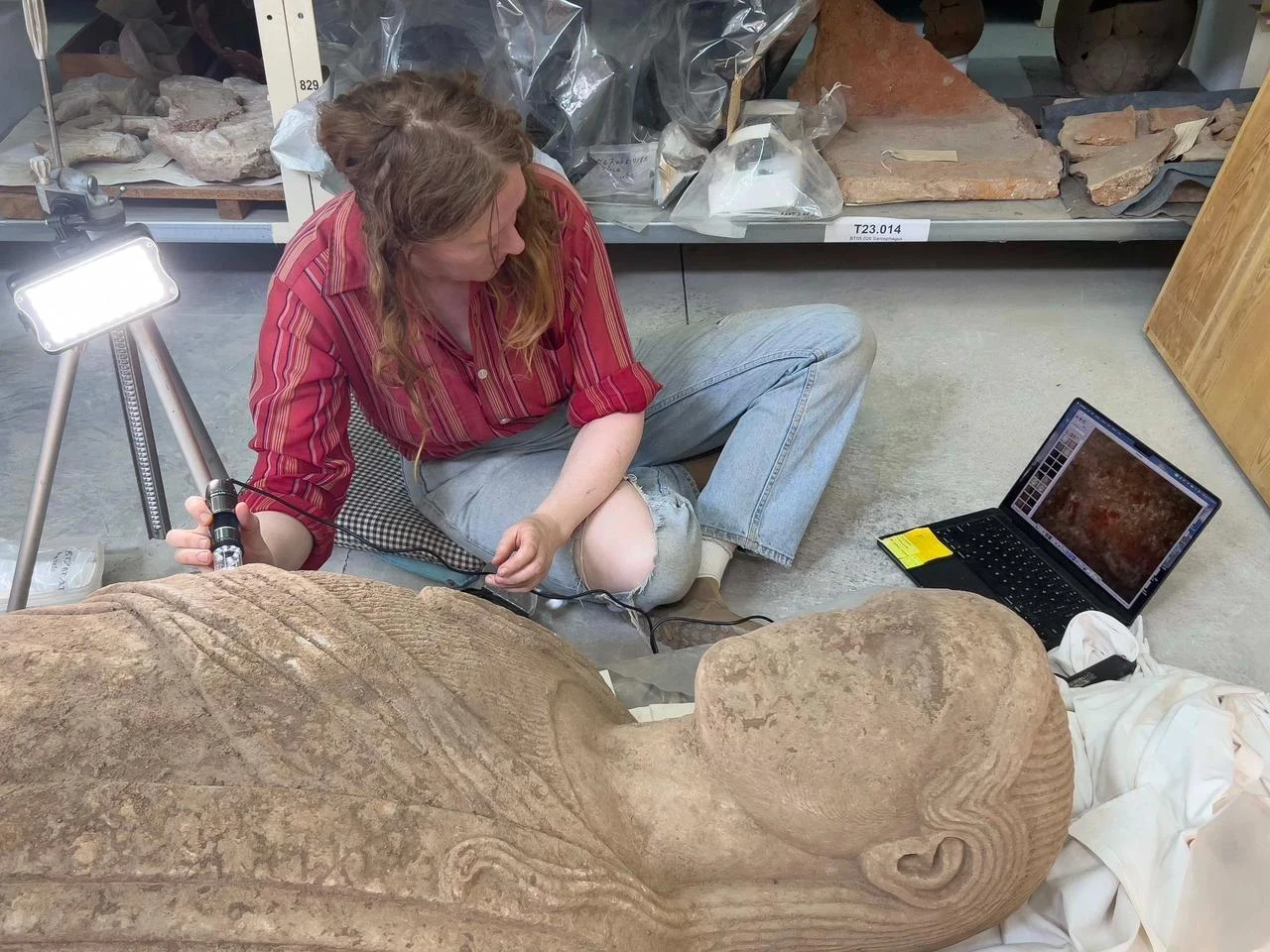
Marble statues in antiquity were often painted rather than left completely white. However, the Sardis statue is covered by a thick and hardened layer of deposits after spending centuries underground.
Conservation specialists will carry out a detailed cleaning process designed to avoid damaging any surviving pigments. Experts in ancient polychrome sculpture will also examine the statue's surface and the surrounding soil for traces of paint.
Once cleaning, scientific analysis and restoration work have been completed, the statue will go on display at Manisa Museum.


 Set as preferred source
 Set as preferred source


 1 min read

 1 min read


