Newsletters


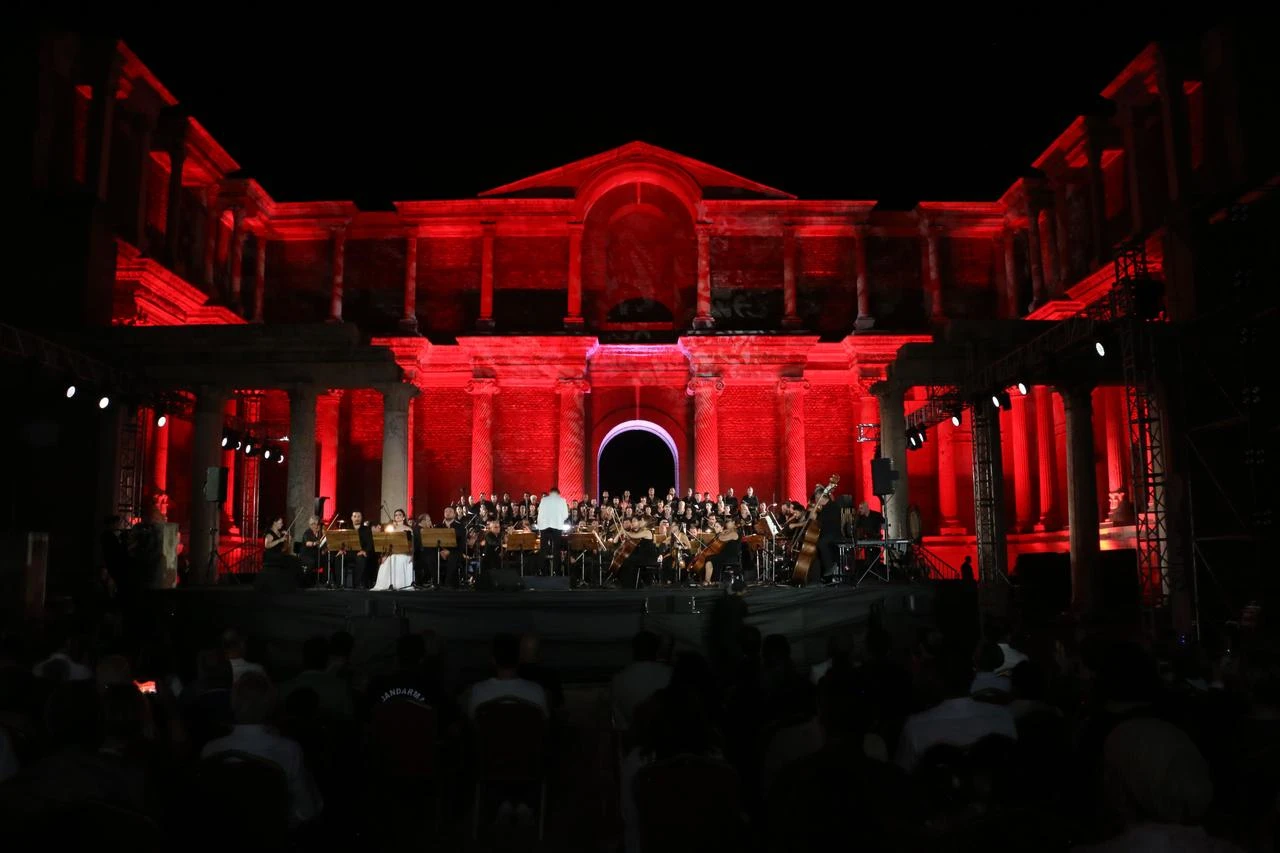


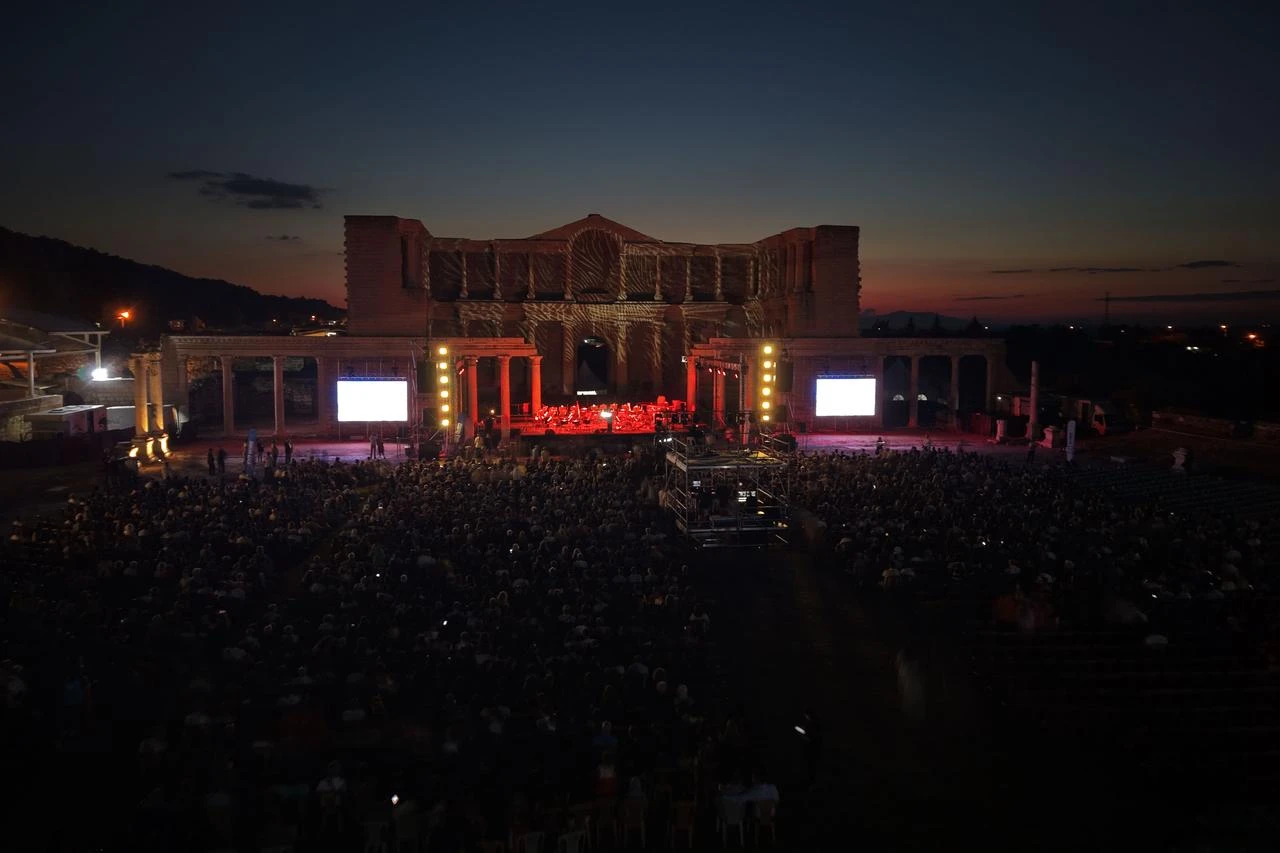
The Izmir State Opera and Ballet (IZDOB) performed Carl Orff's "Carmina Burana" at the Gymnasium Open-Air Venue in Sardis, in the Salihli district of Manisa, western Türkiye. The concert marked one year since Sardis and the Bin Tepe Lydian tumuli were added to the UNESCO World Heritage list.
The Salihli District Governor's Office hosted the event as part of the Sardis Antique City Concert Days.
Artists and local residents came together for the occasion. Manisa Governor Vahdettin Ozkan, IZDOB General Director Baris Salcan, district governors, mayors, institutional representatives, and many members of the public attended.
The audience gave long applause for the performance, which took place against the backdrop of the ancient site.
The performance featured IZDOB's orchestra, chorus, soloists and children's chorus, conducted by Vladimir Lungu, with Orhan Oner Ozcan leading the chorus and Basar Unal directing the children's chorus. Soprano Ayse Senogul, tenor Burak Dabakoglu and baritone Nejad Begde performed as soloists.
Organizers said the event aimed to raise awareness of the preservation of the UNESCO World Heritage site and the transfer of cultural heritage to future generations.
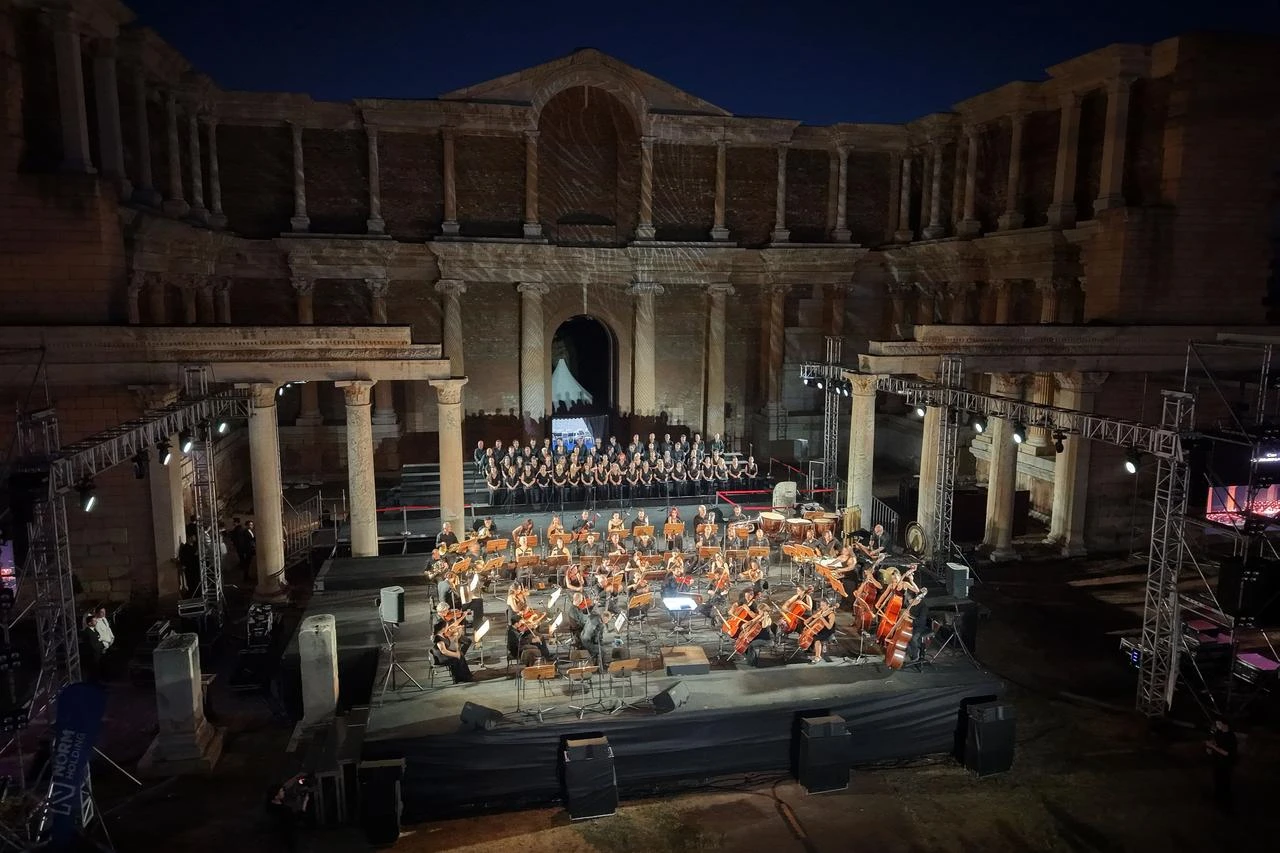

Sardis was once the capital of the Iron Age kingdom of Lydia and was later ruled by Persians, Hellenistic powers, Romans, Byzantines, and Ottomans.
For over sixty years, the Harvard-Cornell Exploration of Ancient Sardis has studied the site. Excavations began in 1958, led by George M.A. Hanfmann and Henry Detweiler, and have recorded a continuous history from the Bronze Age to the Ottoman era.
Unlike many ancient sites, Sardis was never covered by a later city, so its timeline remains unbroken, which researchers say is rare in the region.
The project has uncovered city walls, acropolis buildings, Persian-era refuse pits, a gold refinery, a Roman shopping district, and, most recently, a sanctuary plaza that took 15 years to excavate.
Researchers have also rebuilt the site's large bath-gymnasium complex and the world's largest known ancient synagogue, both recognized as important examples of heritage restoration.
The Harvard Art Museums now lead the project with Turkish institutions and universities, including Wisconsin-Madison and California-Berkeley. Each summer, Cornell University sends students for 10 weeks of fieldwork, where they sort ceramic fragments, assist with excavation trenches, and record findings under the guidance of senior archaeologists.
Trenches at the site, which is on a silt plain, can reach depths of up to 12 meters. In recent years, more researchers from the Sardis area, including women in excavation and conservation, have played a bigger role in the work.
The first modern excavation at Sardis started in the early 1900s, led by the American Society for the Excavation of Sardis.
Some artifacts from that time were later returned to Türkiye, making it one of the first examples of cultural restitution in modern archaeology.
However, other items, such as a monumental column, are still abroad, including at the Metropolitan Museum of Art in New York.
The UNESCO listing has highlighted ongoing threats to the site. Sardis and the nearby tumuli are still at risk from erosion, farming expansion, and looting. Some illegal digs have even used explosives and heavy machinery.


 Set as preferred source
 Set as preferred source


 3 min read