Newsletters





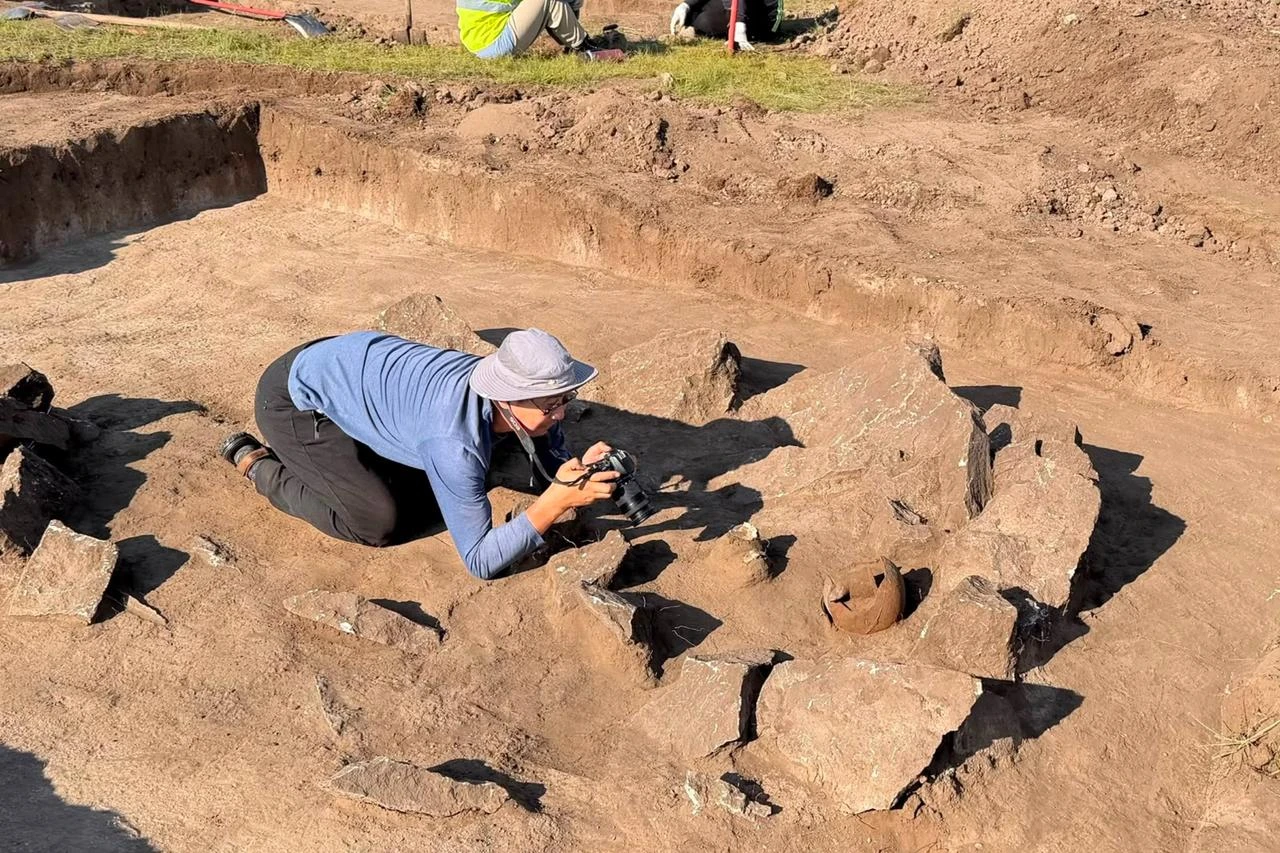
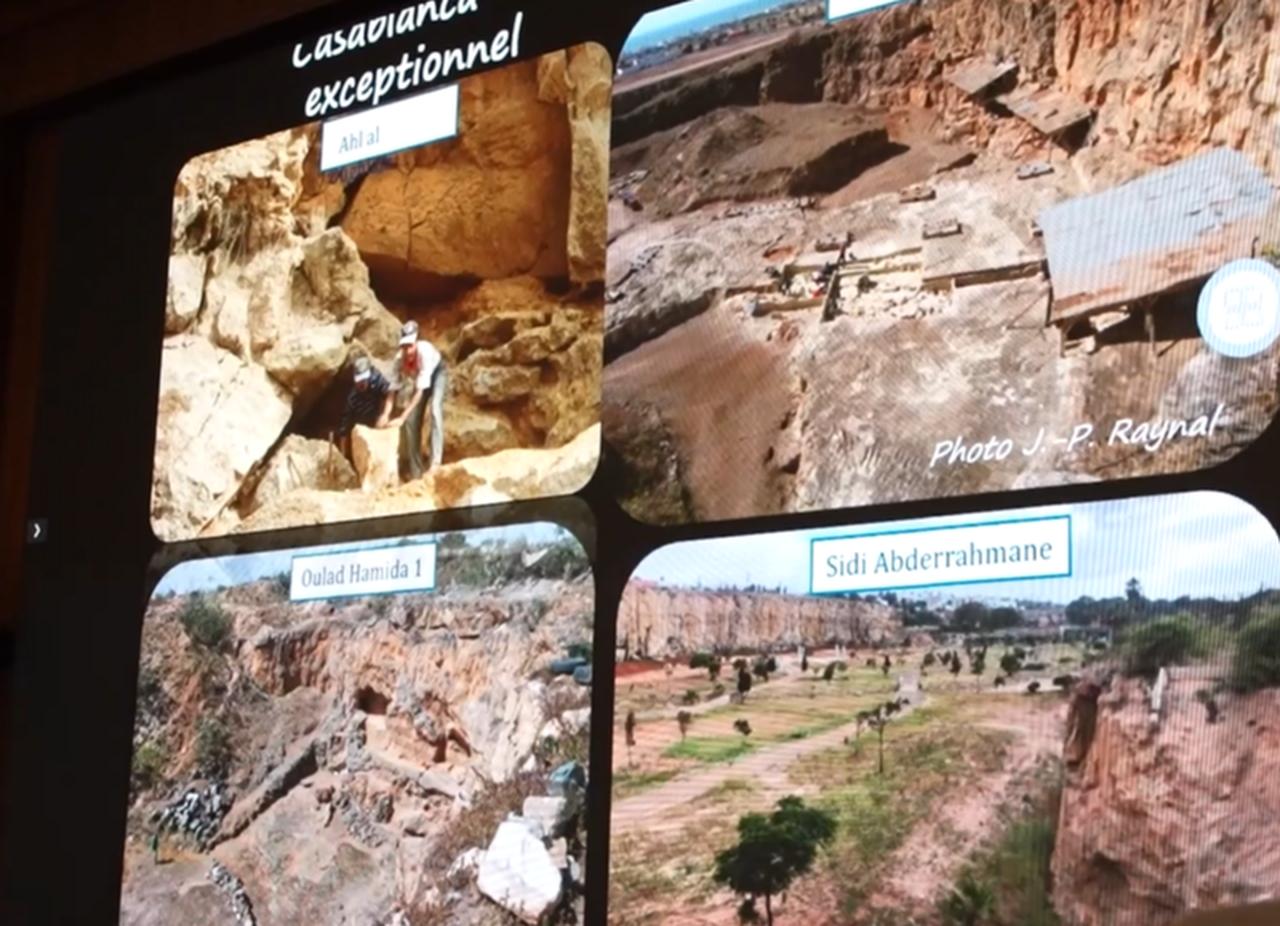
Human fossils dating to approximately 773,000 years ago have been discovered in a cave in the suburbs of Casablanca in western Morocco, according to the Culture Ministry.
The ministry said in a statement on X that the fossils provide unprecedented data about a critical period in human evolution.
It said the remains of human ancestors discovered in a cave at the Thomas I quarry near Casablanca include several adult and child jawbones, dental remains, and post-cranial fragments.
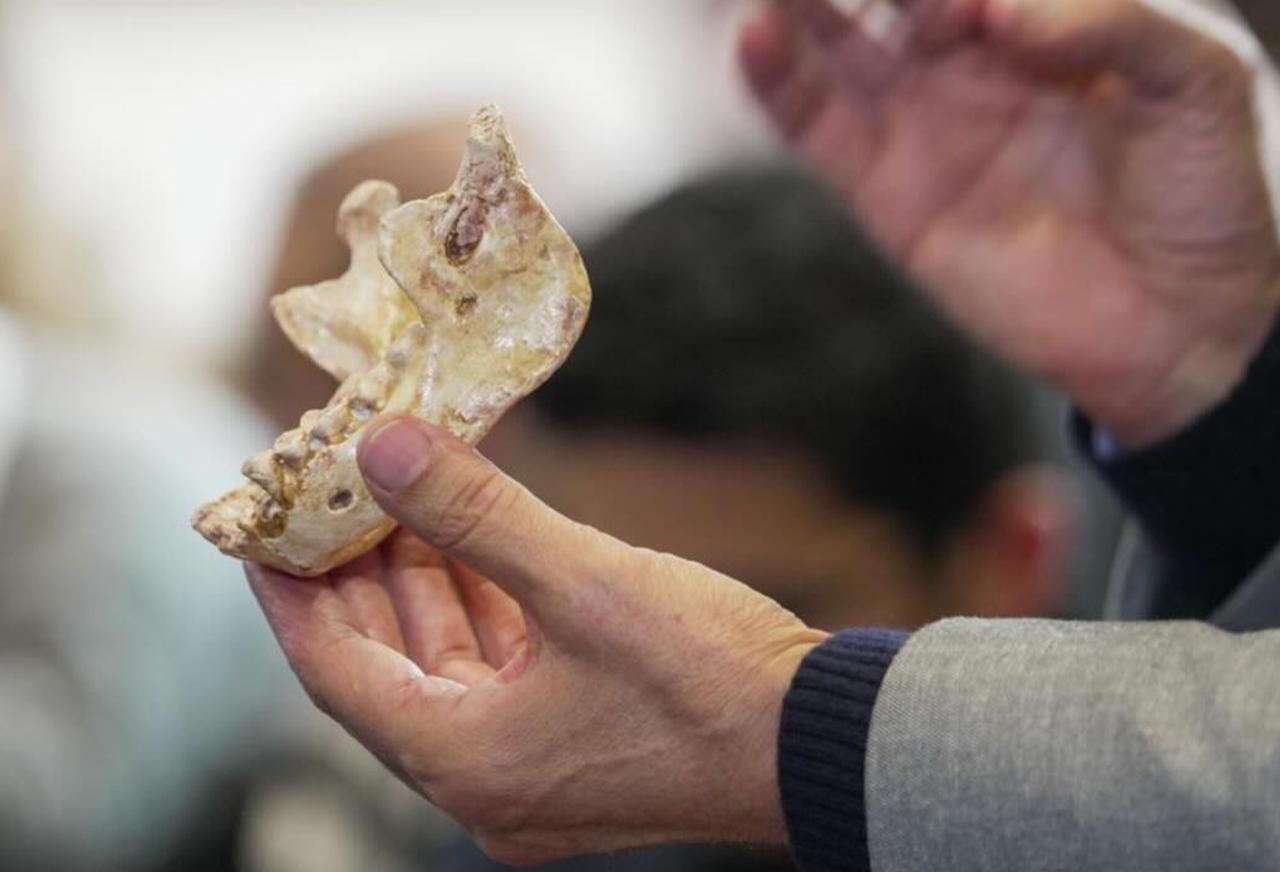

According to the ministry, detailed analyses have made it possible to date the remains to around 773,000 years ago, strengthening Morocco’s and North Africa’s position in understanding the deep roots of human history.
It was discovered in a cave known as the “Hominins’ Cave” at a site in the city of Casablanca.
Researchers assume that the cave may have been a lair for predators: A femur bears bite marks, suggesting the person may have been hunted or that hyenas fed on the body.
The authors argue that the new hominin remains strengthen the case that the lineage leading to Homo sapiens was taking shape in Africa.
The new discovery is now forcing a fresh look at one of human evolution’s most contested chapters: where, and what, the ancestors of modern humans were just before the evolutionary branches leading to Homo sapiens, Neanderthals and Denisovans split.
According to Nature, a British weekly scientific journal , these ThI-GH hominins provide “strong evidence” for an African lineage ancestral to our species, while also offering clues about the last common ancestor shared with Neanderthals and Denisovans.
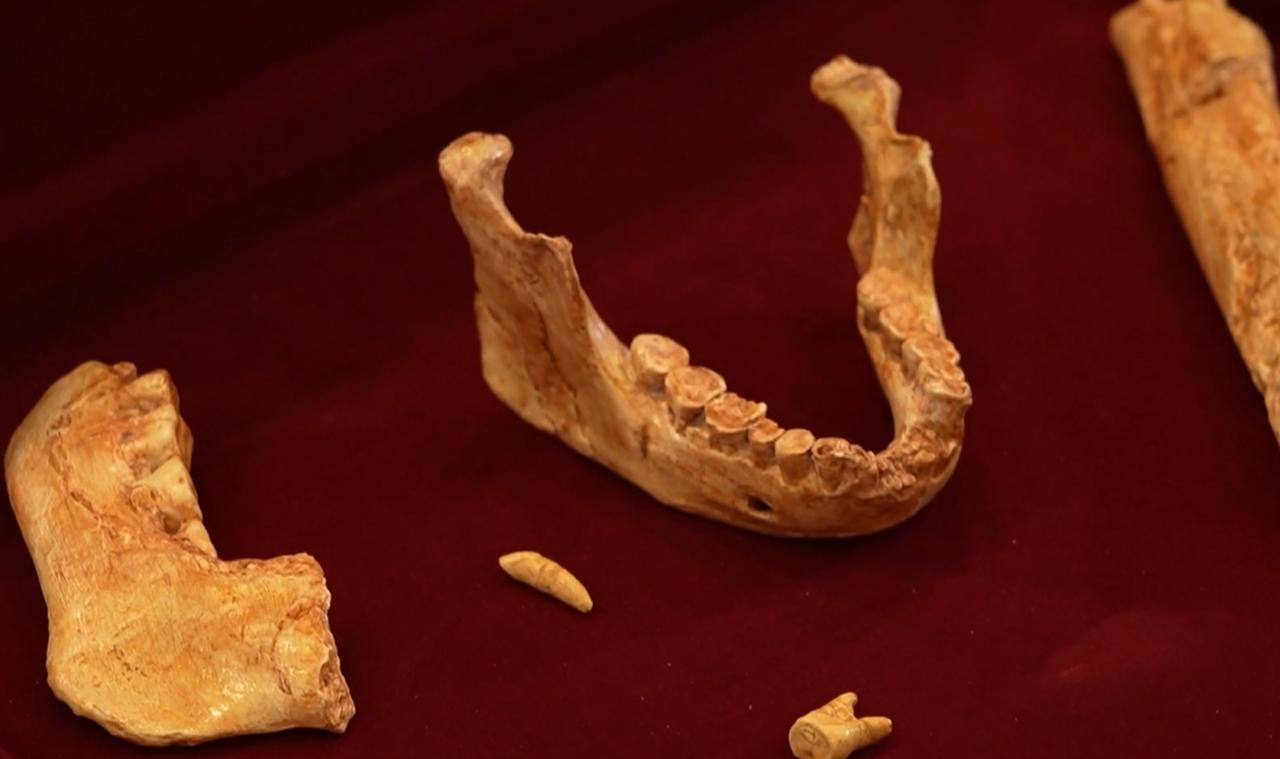
The story of these remains stretches back decades. In 1969, an amateur collector found a partial hominin mandible on a slope below the cave. Later, systematic investigations between 1994 and 2015 produced additional hominin fossils in what the researchers describe as an “undisputable stratigraphic context,” alongside Acheulean stone tools and a diverse animal fossil assemblage.
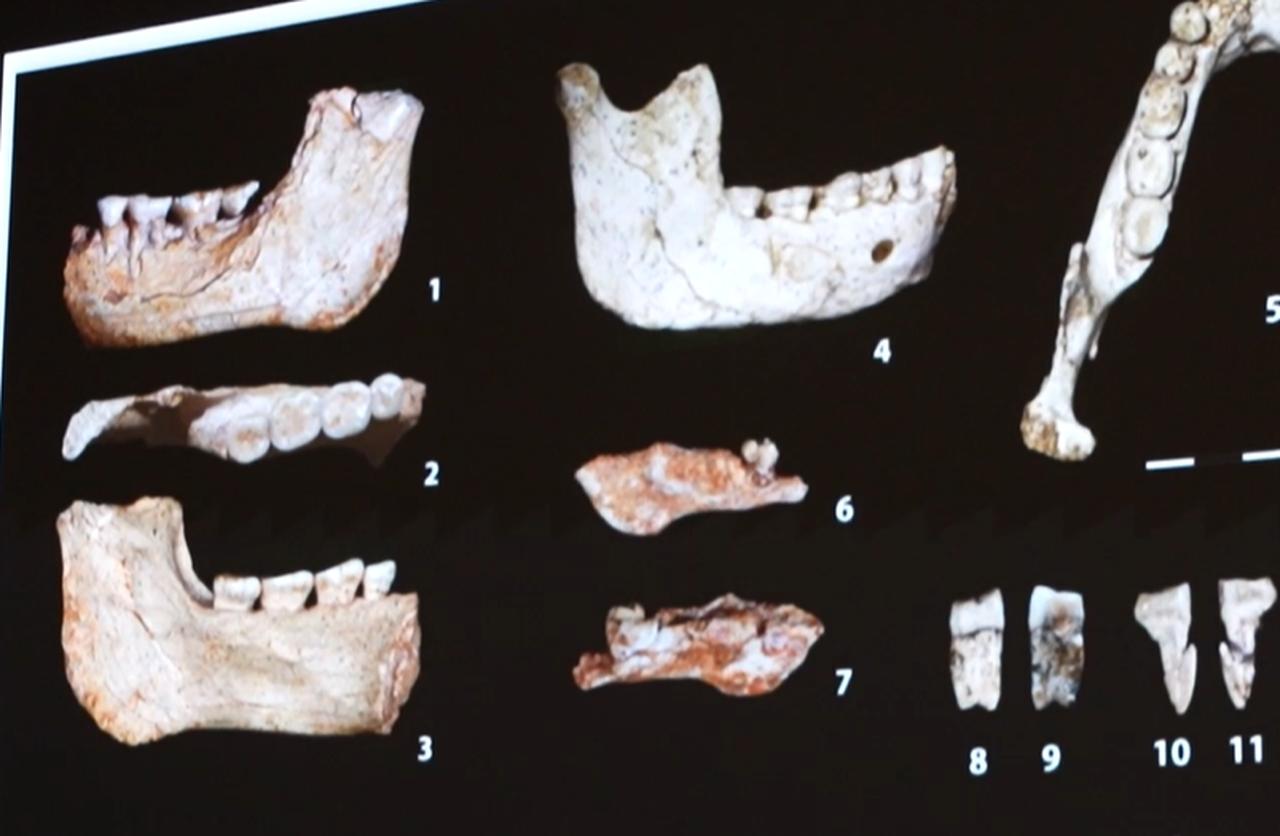
The fossil collection presented includes multiple mandibles, an array of teeth, and vertebrae, documented and illustrated in the paper’s figures and specimen list.
The study situates the discovery in a high-stakes time frame: Paleogenetic evidence, the authors note, suggests the last common ancestor of present-day humans, Neanderthals and Denisovans lived roughly 765,000 to 550,000 years ago.
That time bracket has fueled competing hypotheses, including arguments that point to European fossils such as H. antecessor as possible candidates.
But the authors also highlight another long-running tension: fossils securely dated to before 90,000 years ago that belong to Homo sapiens have been found in Africa or at “the gateway to Asia,” which, they argue, strongly suggests an African rather than Eurasian origin for our species.
What makes ThI-GH especially provocative is not only its age, but its anatomy.
In the abstract, the authors describe a blend: primitive traits alongside derived features that they say are reminiscent of later H. sapiens and Eurasian archaic hominins.
Deeper in the paper, the team details how parts of the mandibles and dental patterns align in some ways with broader H. erectus variation, while other traits pull in different directions.
For example, they describe aspects of jaw form that they say are reminiscent of H. sapiens and diverge from Neanderthal patterns, while also noting features on one mandible that align with some European Middle Pleistocene hominins and Neanderthals.
Their tooth analyses add another layer: the authors report that for several tooth positions, the ThI-GH teeth fall outside and adjacent to samples of Neanderthals and H. sapiens, and they describe an incisor crown falling within early and recent H. sapiens variation, alongside other measurements that do not line up so neatly.
Even the vertebrae enter the argument. A set of eight vertebrae found directly beneath one mandible is presented as likely belonging to the same small-bodied adult. Morphologically, the authors say the most complete vertebrae are more similar to H. erectus than to recent Homo species.


 Set as preferred source
 Set as preferred source


 3 min read