

 Newsletters


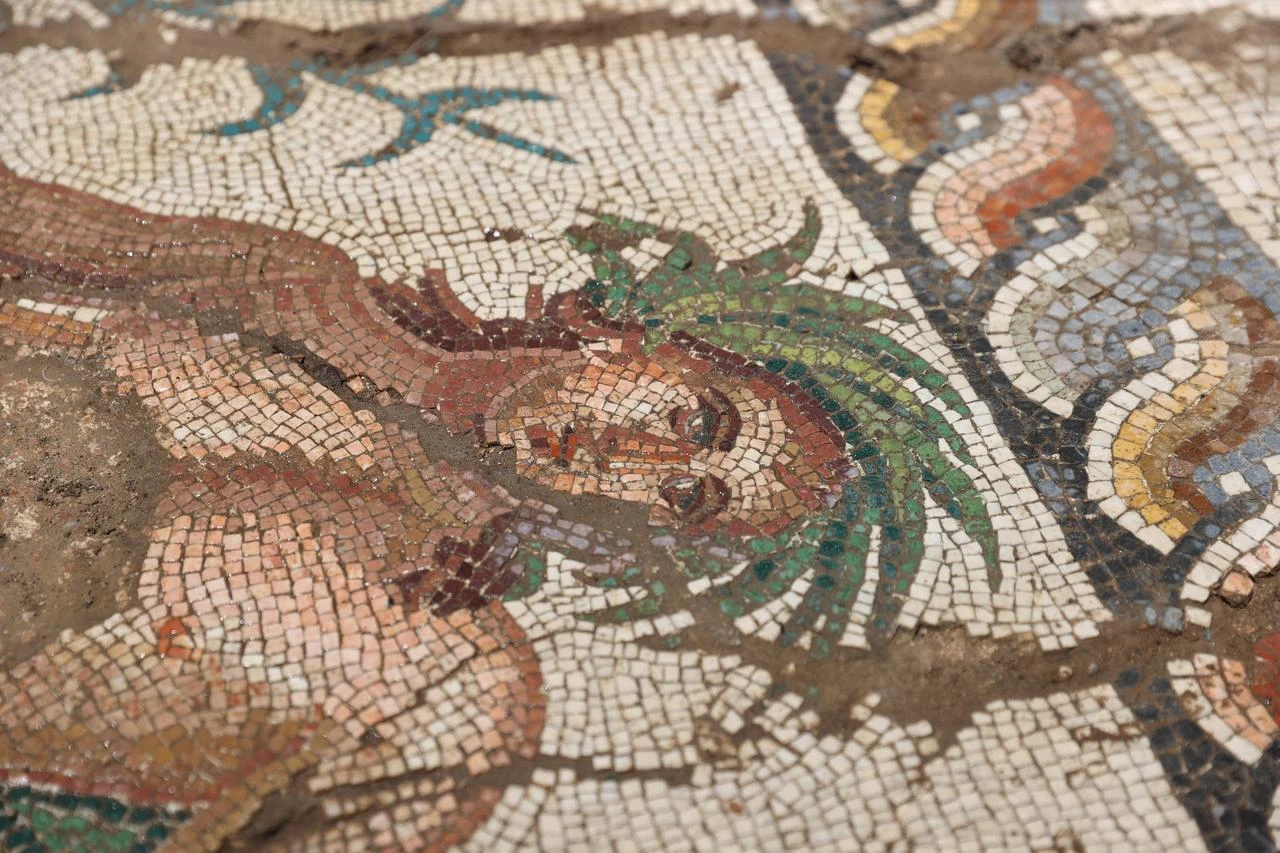


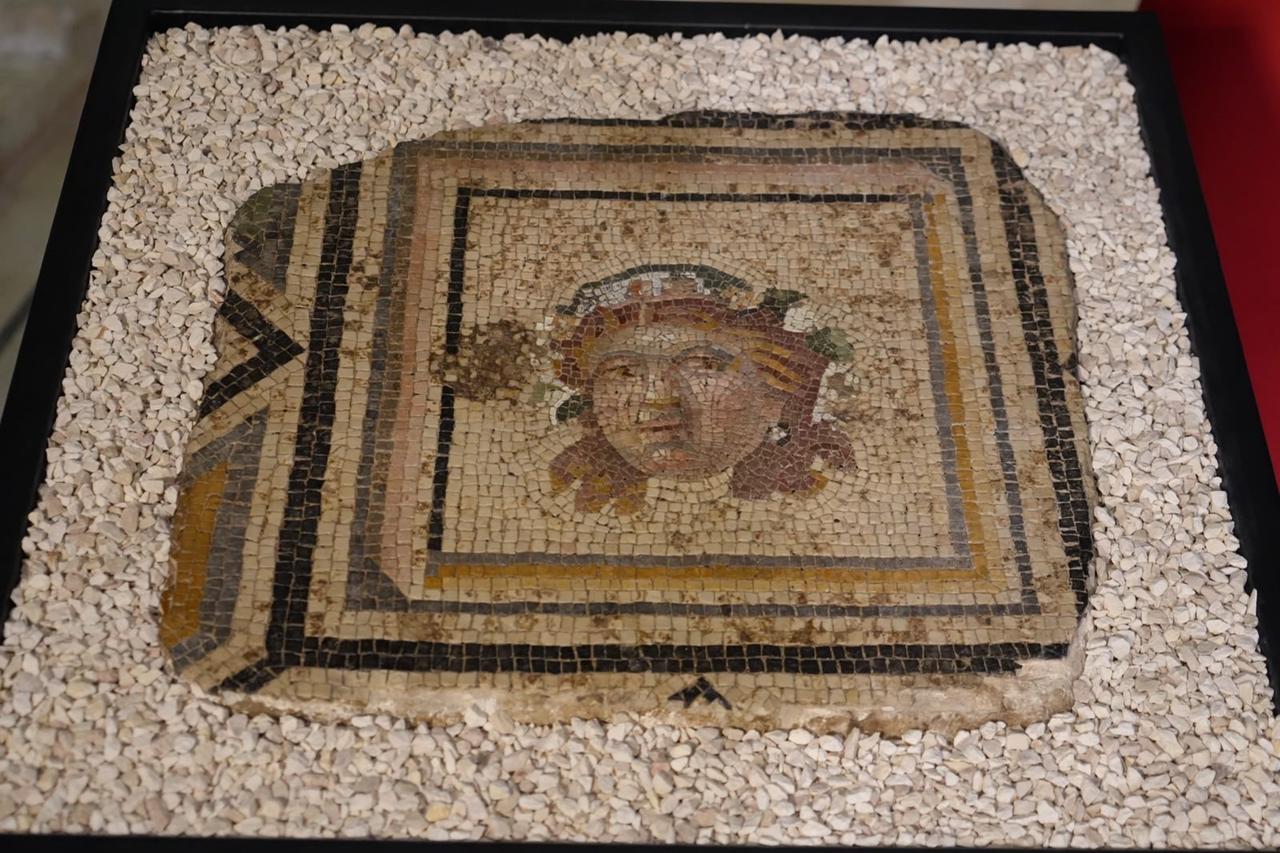
A mosaic depicting a young river god, uncovered during excavations at the ancient city of Aspendos in southern Türkiye, has become one of the most visited spots at the site, drawing large numbers of local and foreign tourists.
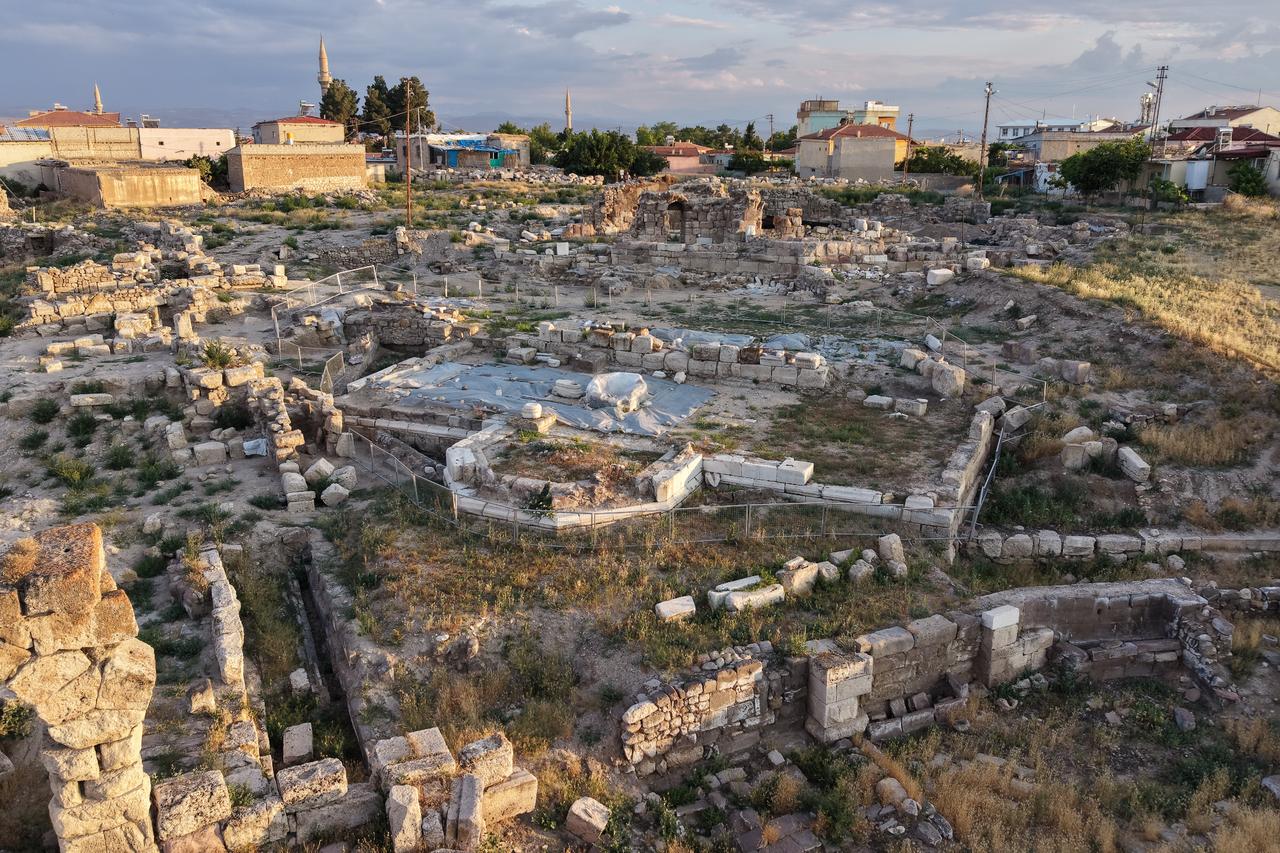
The mosaic, dated to the third century, was found in the eastern square of Theatre Street at Aspendos, located in the Belkis neighborhood of Antalya province's Serik district. Excavation work at the site is part of the Culture and Tourism Ministry's Legacy for the Future Project.
At the center of the mosaic is a depiction of a youthful figure representing the Eurymedon River, known today as the Koprucay, which flows past the ancient city and was historically considered its lifeline.
The figure is shown with reed leaves at its head and in its hand, while amphora and fish motifs surround it, and color transitions draw particular attention from visitors and researchers.
Beyond showcasing the artistic wealth of Aspendos, the mosaic offers insight into Roman-era Anatolian mosaic art and has increased interest in the ancient city overall.
Depictions of river gods are rare in mosaic art, making the find at Aspendos especially notable. Archaeologists continue to carry out cleaning and landscaping work around the mosaic as visitors, many of whom arrive after touring the ancient theatre nearby, stop to examine it closely.
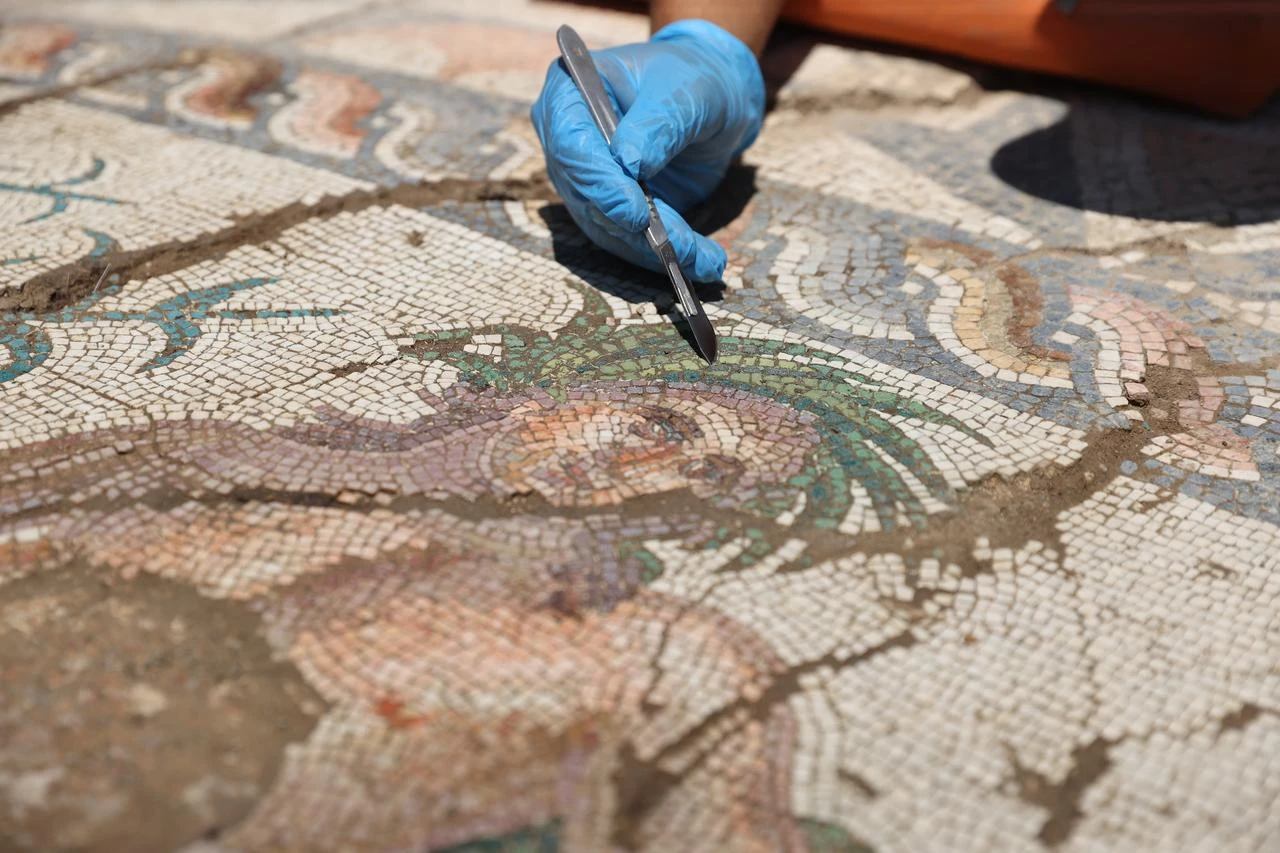

Mustafa Bilgin, head of excavations at Aspendos and a faculty member at Afyon Kocatepe University, said that water sources were of great importance in the ancient world, which is why Aspendos was built along the banks of the Eurymedon River.
He explained that rivers were widely believed to bring fertility to the regions they passed through, and that cities situated along riverbanks often depicted the river through a symbolic deity.
Bilgin said the team identified a pool area during excavations, at the base of which the mosaic was found, and named the figure the Aspendos river god, Genc Eurymedon.
Bilgin noted that river gods have been found in many riverside cities, but are typically rendered as statues or stamped on the reverse side of coins depicting the city.
A depiction of a river god in mosaic form, he said, is far less common. He added that work in the area is ongoing and similar finds could still emerge.
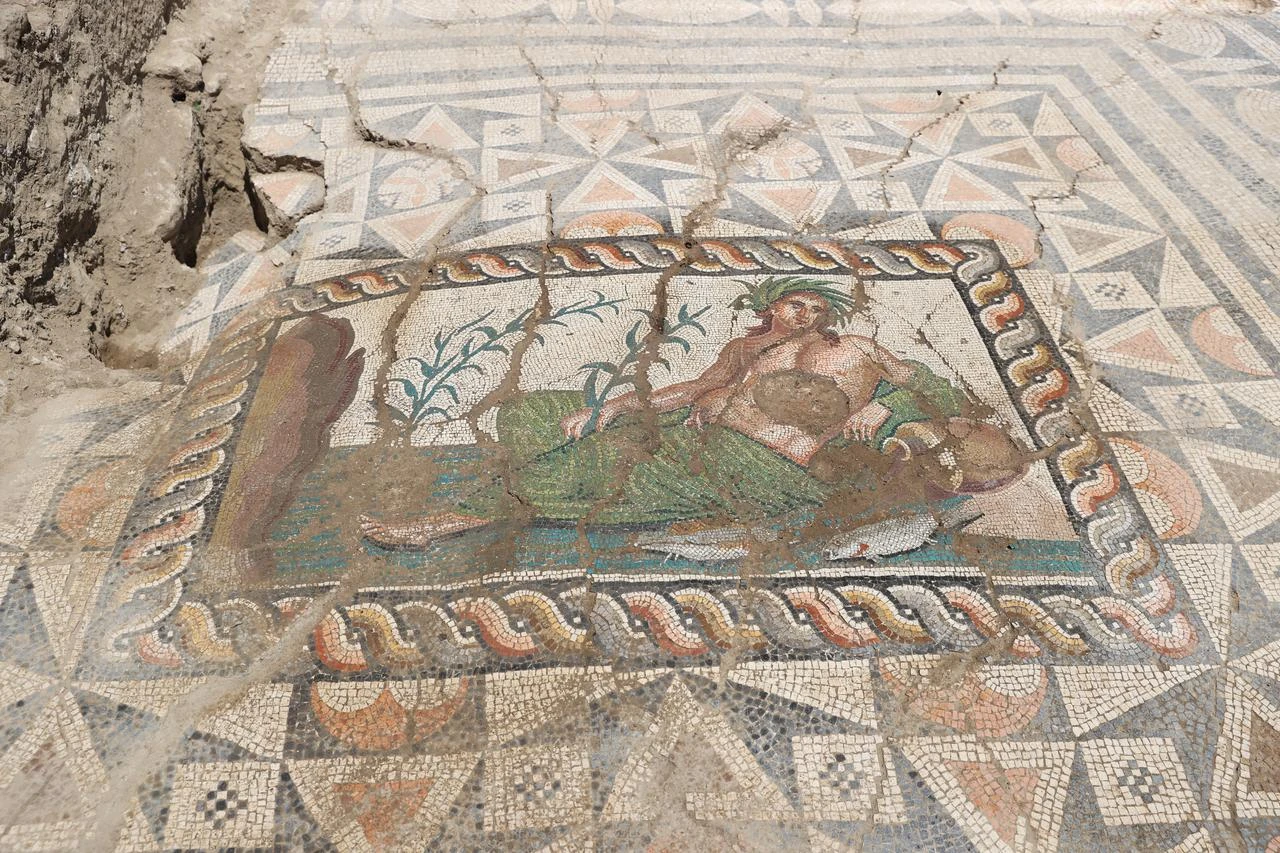
According to Bilgin, river gods in other cities are usually portrayed as mature male figures, while the Aspendos example is depicted as young, dynamic and energetic, animating the region it represents.
"The mosaic in mosaic art depicting a river god is a very rare example," he said.
Describing the structure in more detail, Bilgin said the mosaic covers a 7.5-meter surface across two panels at the Eastern Square.
The southern panel is composed largely of geometric patterns, while the northern panel contains the figurative decoration, including the river god itself.
Bilgin said the mosaic features outer borders made of tesserae, cube-shaped stones that become progressively smaller toward the central panel.
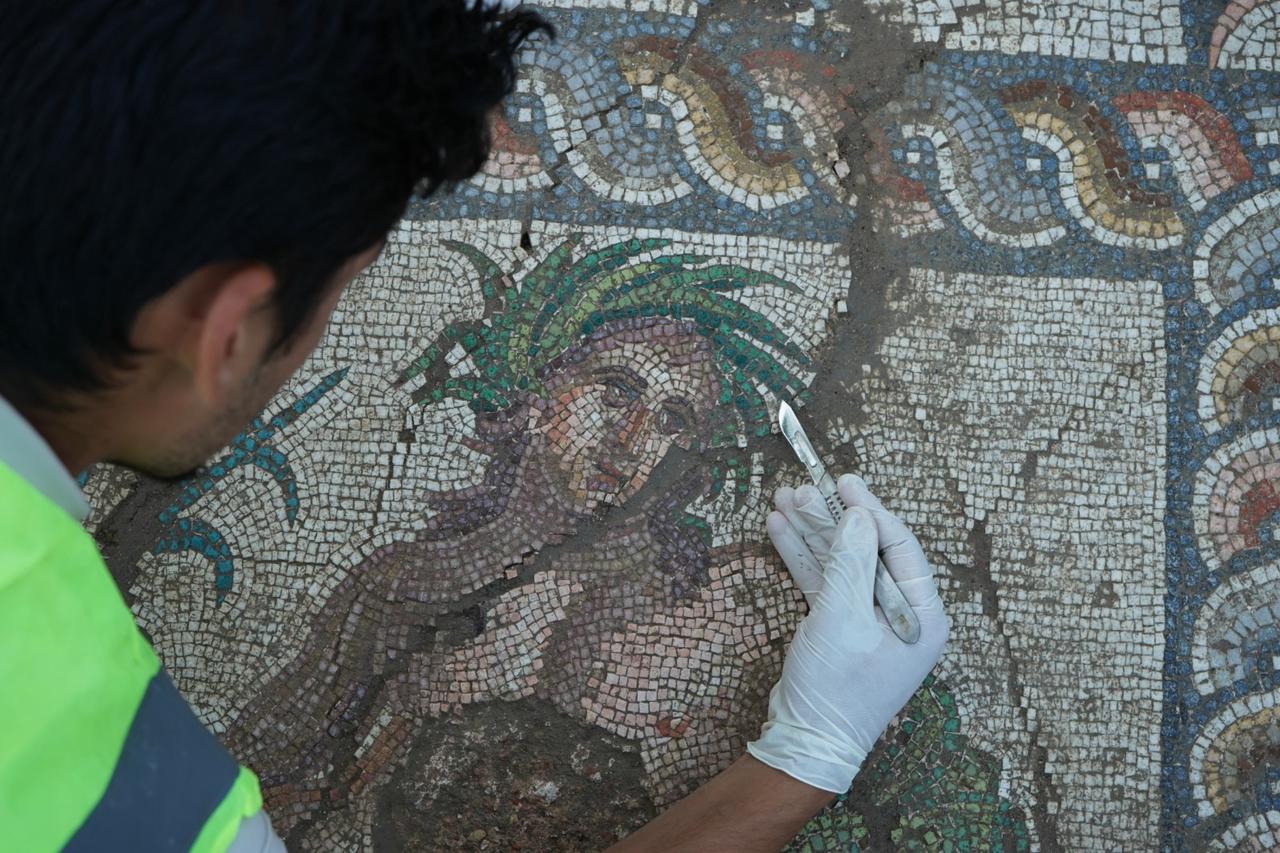
The tesserae used to depict the river god figure were found to be made of glass paste rather than stone, a detail he described as an important artistic finding intended to add richness of color to the figure.
The reed leaves held by the figure and the color transitions in its garment were achieved through the use of these glass-paste tesserae, he said.
Examining the face, body details and the reed crown atop the figure's head, Bilgin said varying shades of green, red and skin tone can be observed, reflecting the level of care mosaic artists of the period put into the work for the city.
He said the mosaic has drawn strong interest from visitors, many of whom ask where it is located as soon as they arrive at the site, before examining it closely.


 Set as preferred source
 Set as preferred source


 2 min read
 1 min read


