Newsletters




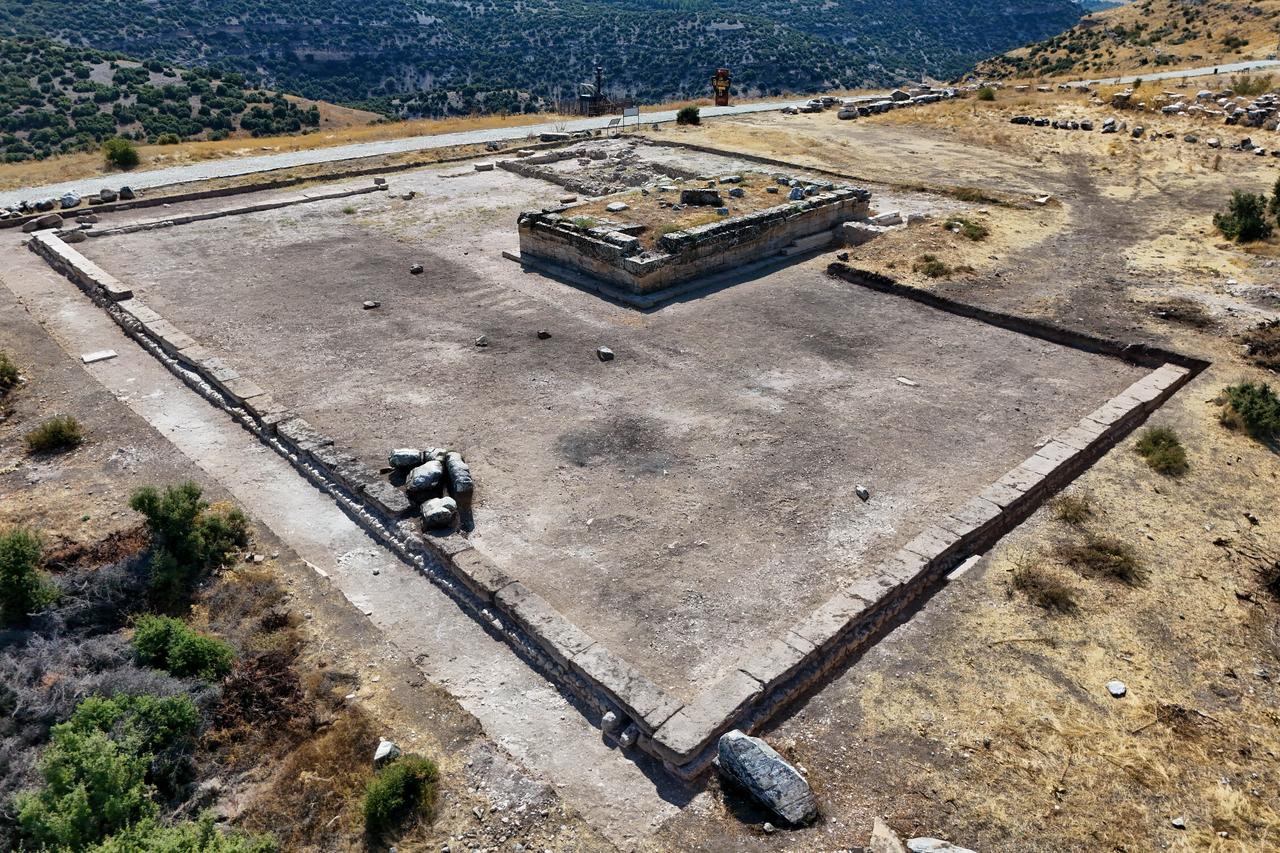
A newly released open-access digital database bringing together 483 Bronze Age settlement sites in western Anatolia is expected to help researchers clear up long-standing gaps in knowledge about one of the ancient world’s least understood regions, which once sat between the Aegean and the Near East more than 3,000 years ago.
Built after a decade-long effort by researchers from the Ministry of Culture and Tourism, Türkiye, and the Switzerland-based Luwian Studies Foundation, the resource pulls together scattered archaeological evidence into a single, searchable catalog designed to support international research and cross-disciplinary studies.
The Bronze Age, roughly spanning from 3,300 to 1,200 B.C., marked a period of major transformation, with early urban life taking shape, metallurgy becoming widespread, and long-distance trade networks being set up. Western Anatolia played a central role in this era as a geographical and cultural bridge between Mycenaean Greece in the Aegean and the Hittite Empire in the Near East. The region was home to Luwian-speaking communities whose settlements linked these major powers.
Despite this strategic position, western Anatolia has often been left out of broader Bronze Age discussions. According to the researchers, this was largely due to archaeological data being fragmented across institutions and countries, as well as studies being published in multiple languages, making comprehensive analysis difficult to carry out.
To deal with this problem, the research team set out to track down, review, and digitize all available information on Bronze Age settlements in the region, bringing dispersed material into a unified structure.
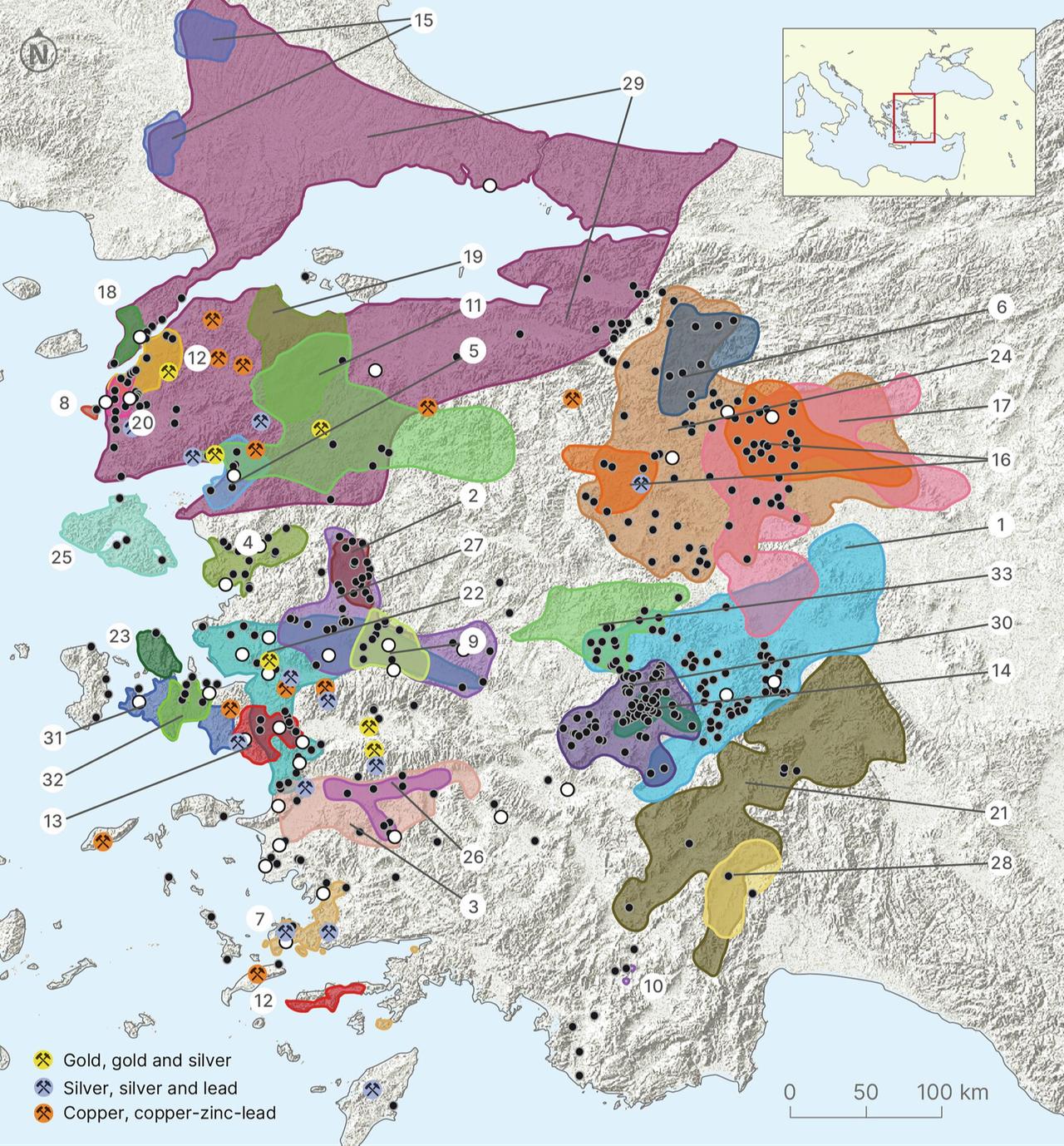

As described in the journal Scientific Data, the team focused on the Middle and Late Bronze Age, covering roughly 2,000 to 1,200 B.C. They drew on regional archaeological studies, historical maps, systematic surface surveys, and satellite imagery to build up the dataset.
Clear inclusion criteria were applied to keep the database consistent. Each site had to measure at least 100 meters in diameter and contain ceramic material dating to the second millennium B.C. This approach allowed the researchers to filter out uncertain locations while keeping the focus on settlements with firm archaeological evidence.
The resulting relief map of western Türkiye shows excavation areas, known settlement sites, surveyed zones, and documented ore deposits, offering a regional overview that had not previously been available in a single format.
The completed catalog has been made freely available on Zenodo, an open platform used for sharing scientific data. Each entry includes information on site function, such as whether a location served as a fort, cemetery, or regional center, as well as data on occupation periods and nearby mineral resources, including gold, copper, and tin deposits.
The database has also been linked up with global reference systems like Wikidata and GeoNames. This setup allows researchers to plug the information into their own digital tools and combine it with other datasets, making comparative studies easier to carry out.
In their paper, the researchers noted that, “By combining standardized metadata with semantic linking, the resource facilitates reuse within broader digital infrastructures.” They added that the database provides “a transparent, openly licensed foundation for analyzing regional settlement systems” and is meant to encourage more integrated approaches to studying Bronze Age Anatolia.
By setting up an accessible and interconnected digital resource, the project aims to help scholars work through unanswered questions about settlement patterns, economic organization, and cultural interaction in western Anatolia.
With data that can now be searched, filtered, and linked across platforms, researchers are expected to be better placed to piece together how communities in the region developed and interacted with their powerful neighbors.


 Set as preferred source
 Set as preferred source


 2 min read