Newsletters


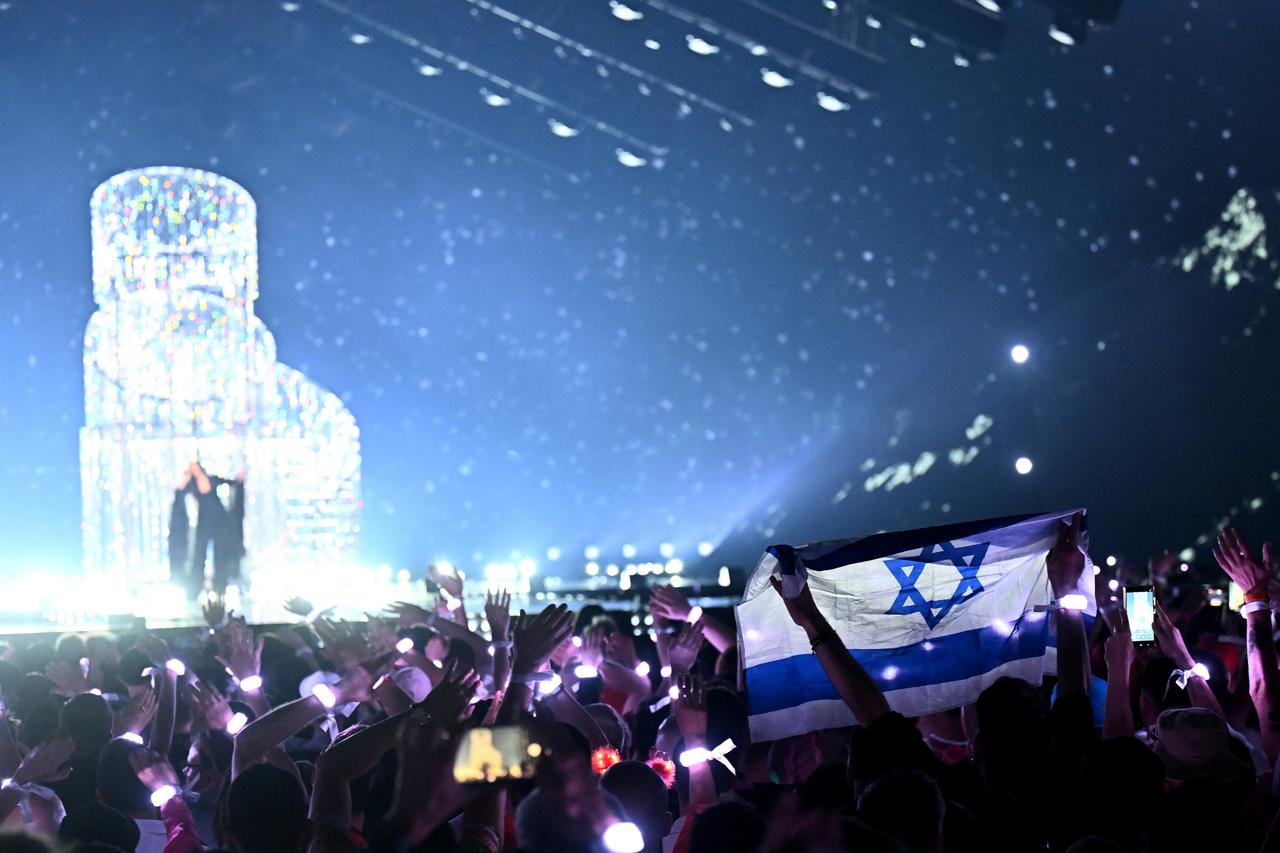


Spain, the Netherlands, Ireland, and Slovenia have declared that they will boycott the 2026 Eurovision Song Contest following the European Broadcasting Union’s (EBU) decision to allow Israel’s participation.
The announcements were made after the EBU’s General Assembly on Thursday in Geneva, where a majority of member broadcasters voted in favor of including Israel in next year’s competition.
The decision to include Israel in the 2026 contest, which will take place in Vienna, Austria, has drawn harsh criticism amid continued political tensions over the humanitarian crisis in Gaza due to Israel’s offensive and blockade.
Spain's RTVE criticized Israel's use of the Eurovision Song Contest for political purposes, particularly in light of the ongoing situation in Gaza. RTVE Secretary General Alfonso Morales stressed that maintaining Eurovision as a neutral cultural event had become increasingly difficult given the current geopolitical climate. Morales also highlighted the difficulty of keeping Eurovision apolitical when the humanitarian crisis in Gaza has become such a focal point of global attention.
Similarly, the Dutch broadcaster AVROTROS and Ireland's RTE announced their decision to withdraw from Eurovision 2026.
AVROTROS also expressed its discomfort with the participation of a country involved in such a conflict, stating that it could not reconcile its decision to take part in the contest with its public values of neutrality and human dignity.
Ireland's RTE emphasized that it could not justify participation in an event that would take place while innocent lives were being lost and journalists were being targeted in the region.
Slovenia also joined the growing list of boycotting countries, with RTV Slovenia’s Chairwoman Natalija Gorscak explaining that the country would not participate in Eurovision 2026 "on behalf of the 20,000 children who died in Gaza."

On the other hand, while the decision to allow Israel’s participation has sparked a backlash among key participants, countries like Germany have voiced support for Israel's continued involvement. Austria's public broadcaster ORF, next year's Eurovision host, has expressed hope that a consensus can be reached so that it can host "as many participants as possible."
In Israel, President Isaac Herzog welcomed the EBU's decision, asserting that Israel "deserves to be represented on every stage around the world." Israel's Foreign Minister Gideon Saar expressed his support for the EBU's decision, condemning the countries that decided to boycott next year’s event in response to Israel’s participation.
"I welcome the European Broadcasting Union's decision. I am ashamed of those countries that are choosing to boycott a music competition like Eurovision because of Israel's involvement. The disgrace falls on them," Saar said.
Israel would be the third country excluded from Eurovision, following Russia's ban in 2022 due to its invasion of Ukraine and Belarus's removal a year earlier after the disputed re-election of President Alexander Lukashenko.
 Breaking News, Direct to You.
 Follow Türkiye Today on WhatsApp
for real-time updates and key insights from Türkiye and beyond.
Follow Türkiye Today on WhatsApp
for real-time updates and key insights from Türkiye and beyond.
The EBU's decision to allow Israel's participation in Eurovision 2026 came after significant reforms were made to the contest's voting system. While the reforms were intended to "reinforce trust and protect neutrality," addressing concerns that Eurovision’s voting process could be manipulated or influenced by external political forces, the voting system has been subject to scrutiny, particularly after Israel's entries in recent years.
Critics have pointed to concerns over possible manipulation, citing the example of Israel’s 2023 entry, which saw a controversial surge in votes after significant lobbying efforts by Israeli supporters abroad. The claims raised suspicions about the integrity of the voting process, with some arguing that political lobbying could unduly influence the outcome of the contest, thus compromising its fairness.
Previously, Türkiye's state broadcaster, TRT, last participated in 2012 and suspended its participation thereafter, also citing manipulation and unfairness in the voting system as the reasons for its withdrawal.


 Set as preferred source
 Set as preferred source


 1 min read

 1 min read