Newsletters


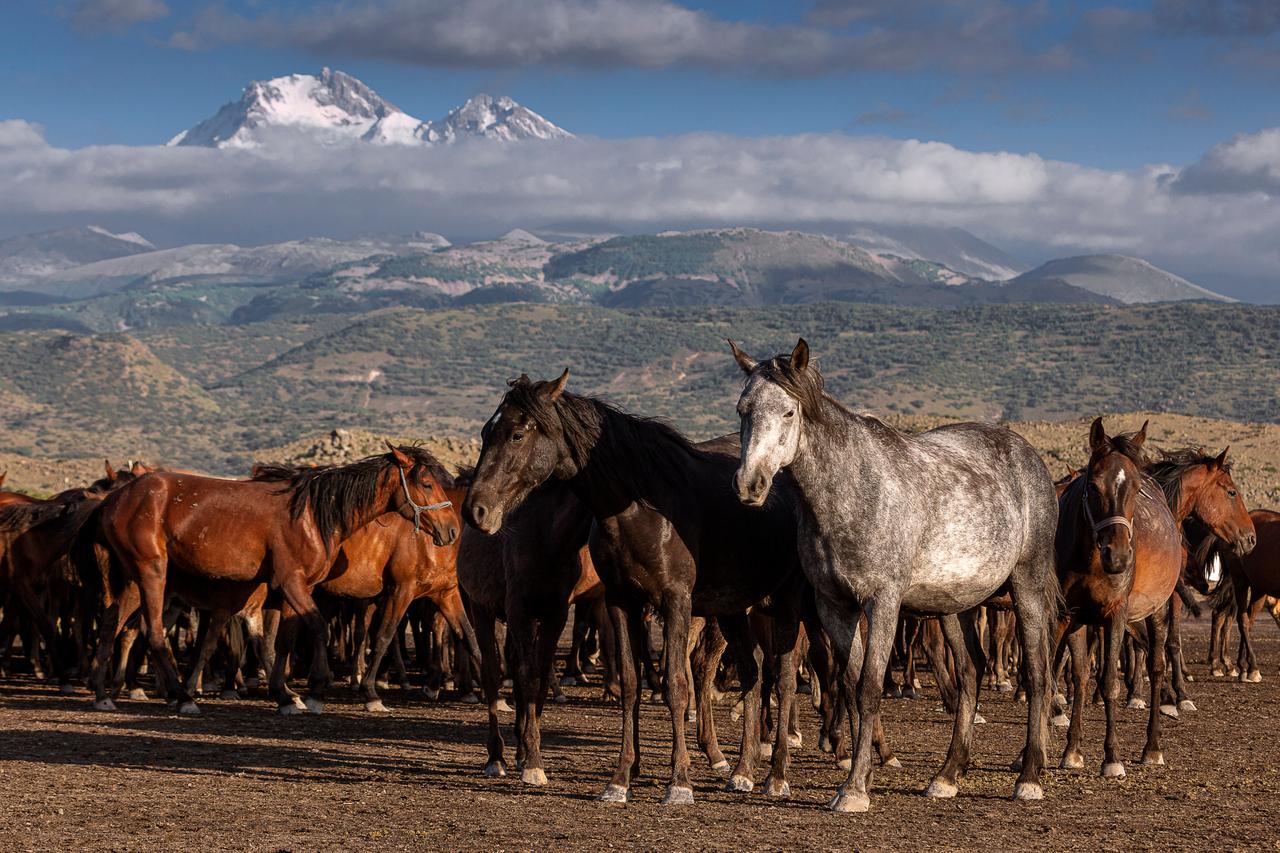


New research suggests that humans were riding, managing and using horses in organized ways as early as the fourth millennium B.C., centuries before the timeline often linked to full horse domestication.
The study, published in Science Advances, argues that horse domestication was not a single breakthrough but a long and uneven process that played out across Eurasia over generations.
Researchers say the evidence points to early taming, milking, riding and management before the rise of fully domesticated horses shortly before 2,000 B.C.
The research challenges the idea that domestication should be dated only to the period around 2,200-2,100 B.C., when genetic changes linked to calmer and more enduring horses became widespread.
Instead, the authors argue that humans were already working with horses in several regions before that point. Archaeological, osteological and ancient DNA evidence suggest that different horse populations were being managed, milked and ridden long before one lineage became dominant.
Professor Volker Heyd, co-lead author of the research, said horses were already being used in sophisticated and widespread ways before researchers could clearly identify full domestication. He said that the gap changes how scholars understand human history.
The study identifies three major horse groups known as DOM1, DOM2 and DOM3, which ranged from western Siberia to Central Europe.
DOM1 is linked to Botai horses in present-day Kazakhstan, where researchers have found evidence that horses were corralled, milked and possibly ridden. DOM2 is associated with the Pontic-Caspian steppe, including Yamnaya horses, which later became the direct ancestors of modern domestic horses. DOM3 refers to a European-Anatolian lineage discussed in the study as part of the wider early horse-management picture.
The researchers argue that early taming efforts took place independently across regions around 3500-3000 BCE, and possibly even earlier. However, only DOM2 horses were fully domesticated between 2200 and 2100 BCE, before spreading widely across Eurasia and into the Middle East.
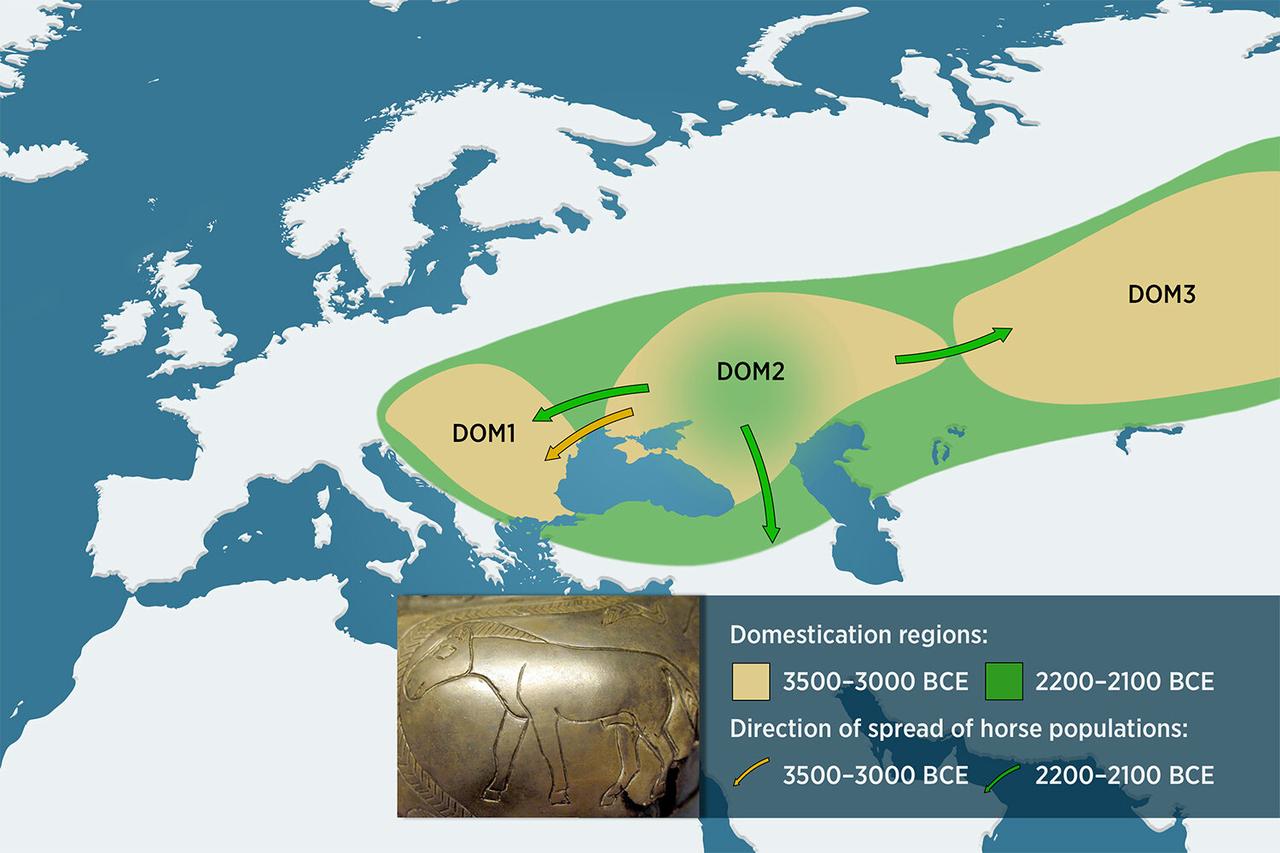

The timing matters because major changes in mobility were unfolding across Eurasia at the same time. Around 3500-3,000 B.C., steppe populations began moving east and west, bringing wheeled transport with them.
Cattle pulled the first wagons, while horses gave people a faster way to move across large distances. A rider could cover in hours what a wagon might take days to cross, making both innovations central to transport, herding and long-distance movement.
The study links this mobility to the spread of Proto-Indo-European languages, the reconstructed ancestor of many languages spoken today across Europe and parts of Asia. In this view, horses helped carry not only people, but also words, customs and social systems.
Although several horse populations were involved in early human-horse relationships, the study says modern domestic horses descend from the DOM2 lineage.
The authors also note that truly wild horses no longer exist today. Even Przewalski's horse, often described as a surviving wild horse, is now understood to descend from early domesticated populations, showing how deeply humans shaped horse lineages over time.
Heyd said horses later became central to conflict, expansion and transport, from Eurasian nomadic groups to warfare and global movement. He also noted that horses remain important today as companions and sources of attraction, making the earliest stages of the human-horse relationship especially significant.


 Set as preferred source
 Set as preferred source


 2 min read