Newsletters


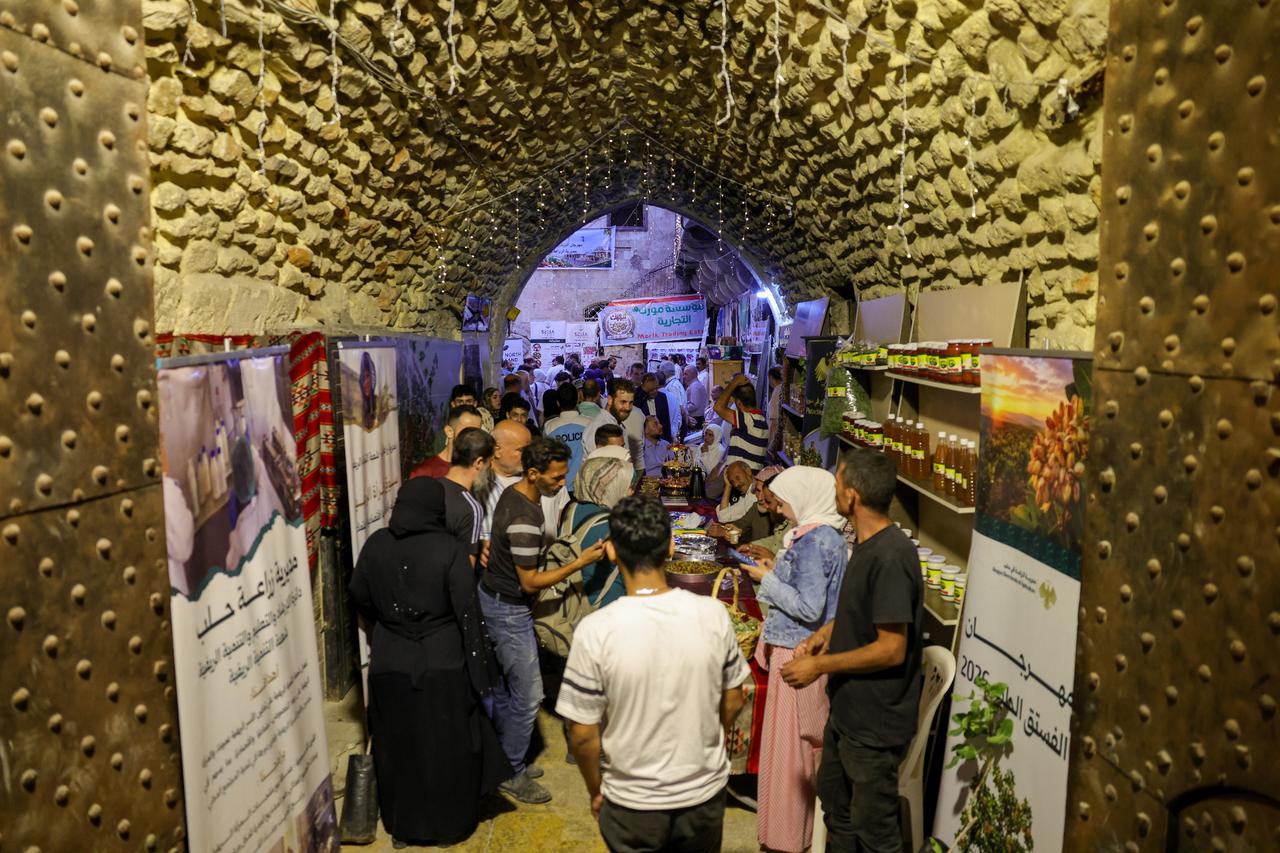


Syria held its first pistachio festival in Aleppo's historic Silk Market, bringing together farmers, producers, residents and visitors while highlighting the crop's economic importance and the city's long-standing culinary traditions.
The festival took place inside the recently restored market and opened with musical performances by a scout group. Stalls showcased pistachios alongside sweets and dishes associated with Aleppo and eastern cuisine, while traditional and natural products made in the city were also put on display.
Organizers also set up an information section for farmers, with discussions covering pistachio quality, growing techniques and ways to deal with diseases and agricultural pests.
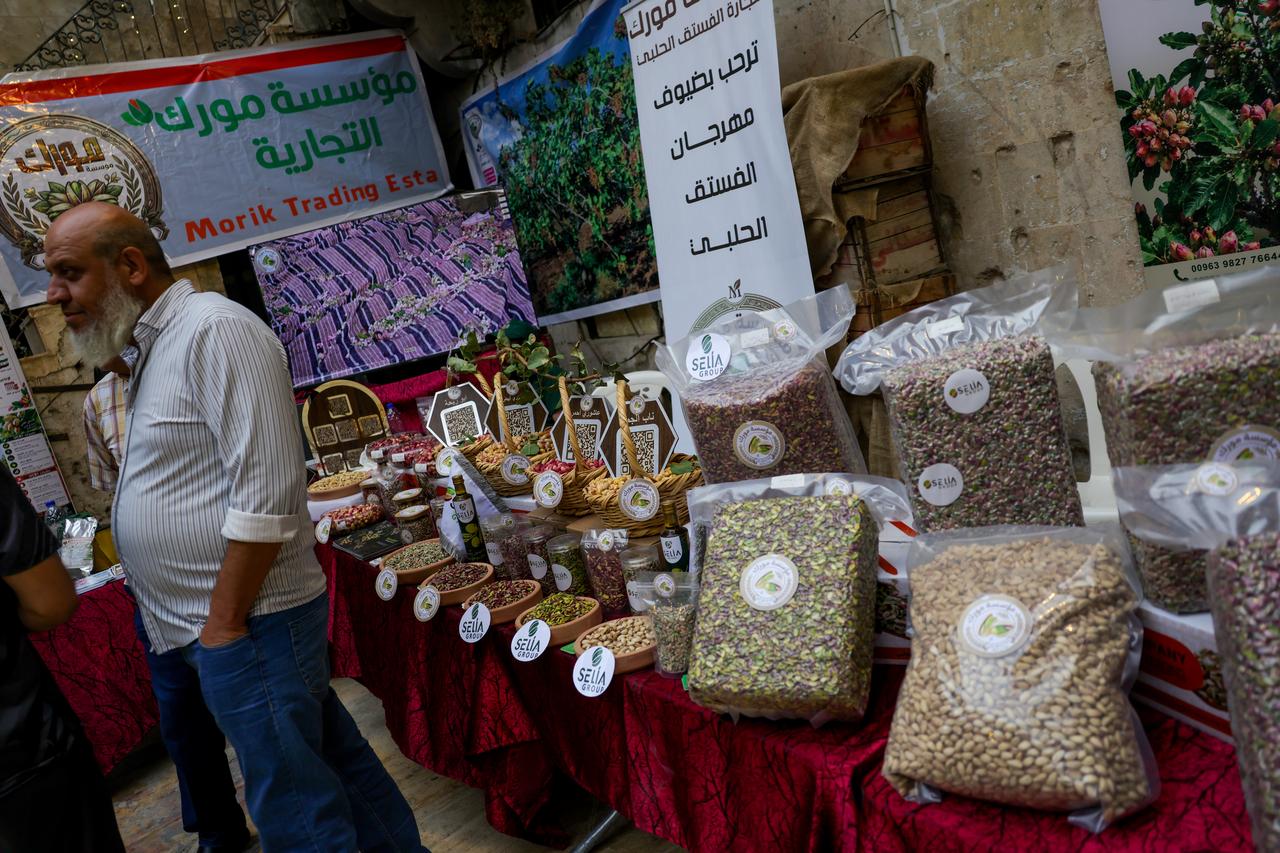

Omer Nasir, a board member of the Aleppo Chamber of Agriculture, said the festival had brought together pistachio producers from across Syria.
Nasir said pistachio cultivation was particularly associated with Aleppo and described the city as the place where the Asuri variety was first grown before production spread to other parts of Syria.
He added that the festival covered the entire production process, from pistachio trees to the harvested crop, while also providing information on the product's characteristics, quality and cultivation methods.
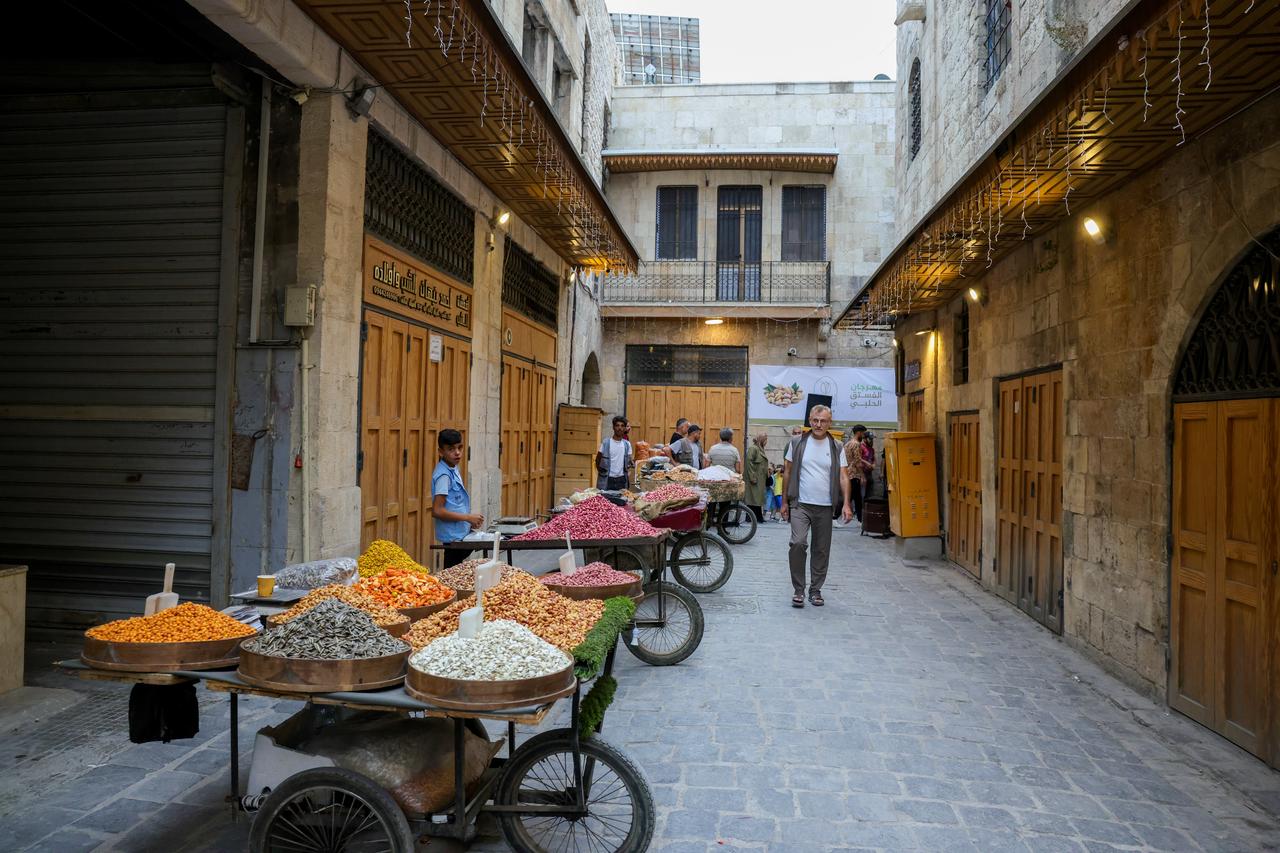
According to Nasir, the event was also intended to help introduce and document knowledge connected with pistachio production.
Abdulmelik Duba, a pistachio producer from Aleppo's Bab Neyrab district, said his family had been involved in pistachio farming for more than a century.
Duba also linked the crop's origins and production tradition with Aleppo, saying numerous varieties were grown around the city, including Eleymi, Baturi, Arasi, Abu Riha and both red and white Asuri pistachios.
He said holding the festival for the first time in Aleppo could encourage farmers across Syria, while emphasizing pistachio growing as a deeply rooted agricultural heritage through which producers could earn an income.
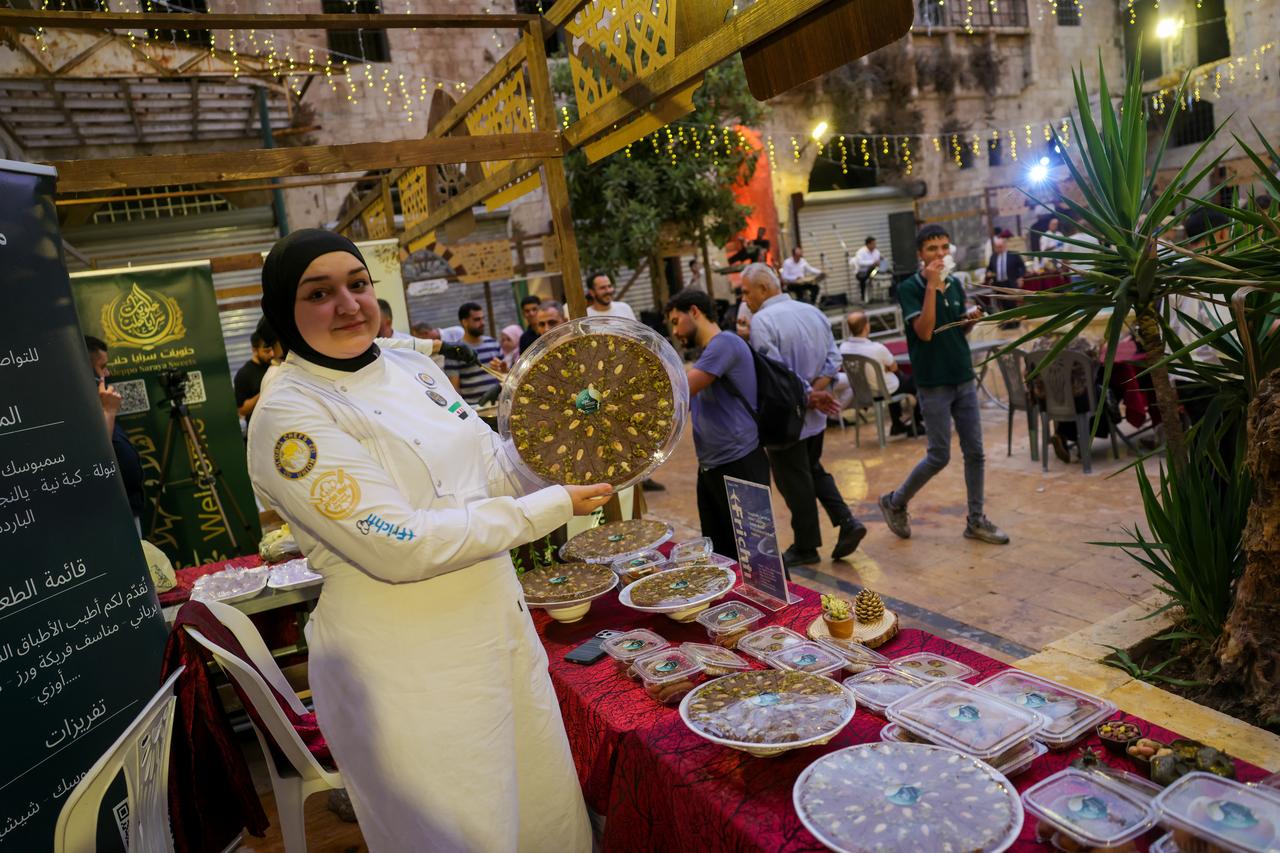
The event also turned attention to Aleppo's traditional food culture, with participant Kamer Anberci presenting several varieties of kubbe, a traditional regional dish, along with local specialties including Sivar el-Set, Mebrume and Kubbetu'd-Dervis.
Anberci said Aleppo's food culture formed an important part of the city's cultural heritage and that she had joined the festival to help keep those traditions alive.
She also stressed that cultural heritage was not limited to historical monuments, antiques and exhibitions, but also included traditional food.
After 14 years of war in Aleppo, Anberci described the festival as a new source of joy for residents and said she hoped to take part in more events aimed at preserving and promoting the city's cultural heritage.


 Set as preferred source
 Set as preferred source



 2 min read