Newsletters


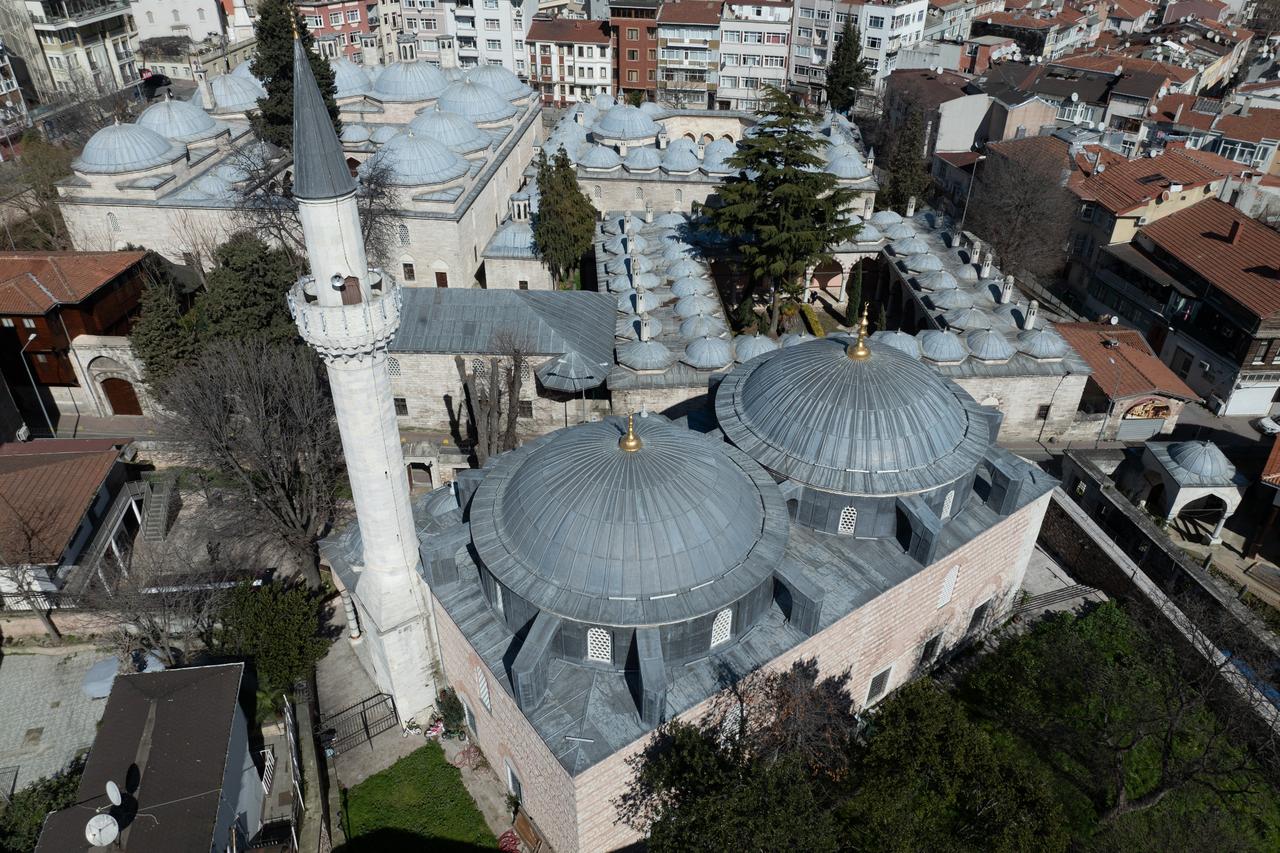


Situated in the historic Fatih district of Istanbul, the Haseki Hurrem Sultan Mosque is recognized as one of the earliest and most distinguished examples of Ottoman classical architecture. It represents the first major project completed by Mimar Sinan following his appointment as chief imperial architect.
Commissioned by Sultan Suleiman I, also known as Suleiman the Magnificent, in honor of his wife Hurrem Sultan, the mosque was constructed between 1538 and 1539. It functioned not only as a place of worship but also as the central structure of a large kulliye, or Ottoman charitable complex, which shaped social welfare in Istanbul for centuries.
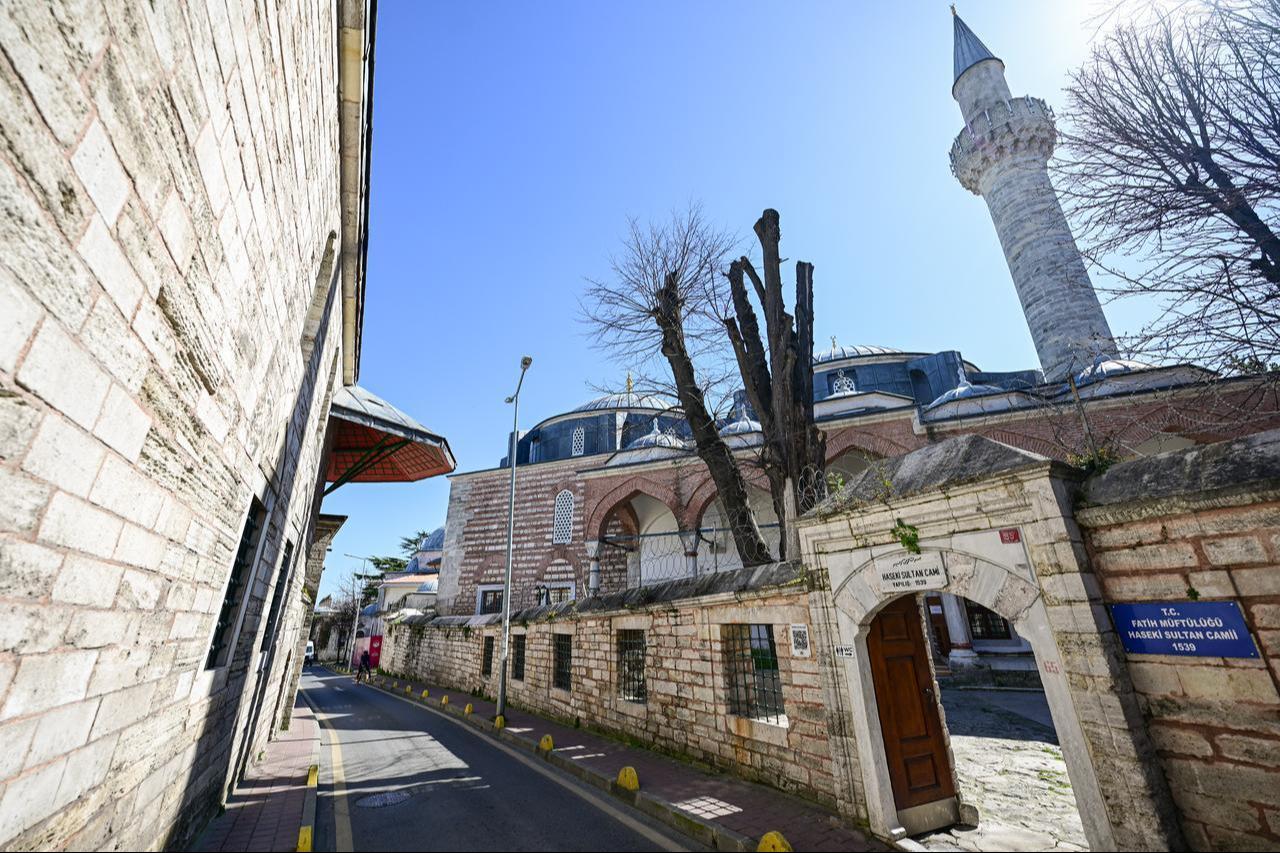

Dr. Resul Yelen, an assistant professor of Turkish and Islamic Art History at Istanbul Medeniyet University, told Anadolu Agency (AA) that construction of the kulliye began with the mosque in 1538, which was completed within a year. The remaining components of the complex, including a madrassa, darussifa (hospital), imaret (public kitchen), sibyan mektebi (primary school), and hammam, required an additional 12 years to complete.
"This is the first work Sinan completed after becoming chief architect," Yelen stated. "The inscriptions on the mosque indicate that construction began in 1538 and was completed within a single year. The other structures were finished 12 years later."
Initially constructed with a square floor plan and a single dome, the mosque underwent expansion in 1612 under Sedefkar Mehmed Agha, a student of Sinan, during the reign of Sultan Ahmed I. This expansion introduced a second domed section to the east, and the mihrab was repositioned to the center to maintain symmetry. The site was originally known as Avrat Pazari, or Women's Market, and only became known as Haseki from the 19th century onward.
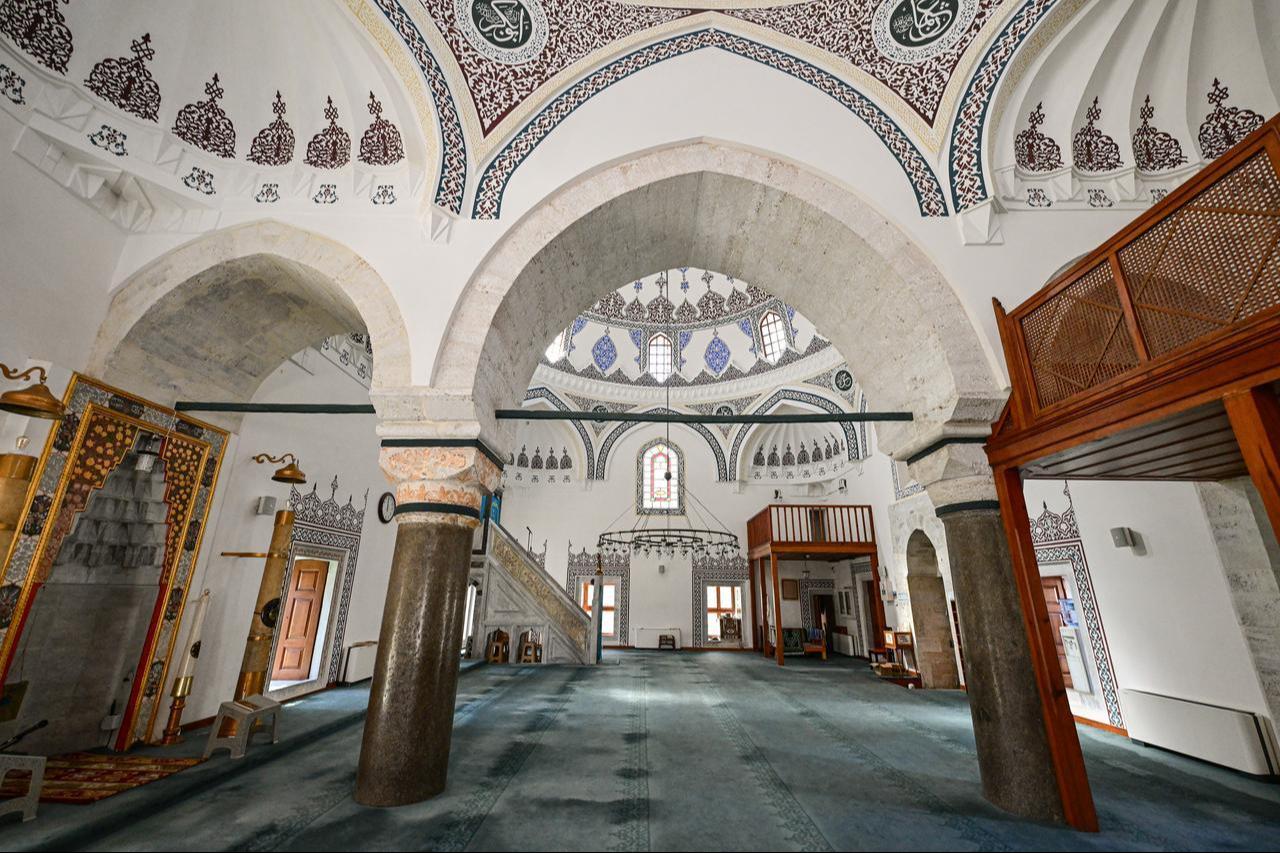
Built from cut stone, the mosque's interior is distinguished by its balanced and restrained aesthetic. Two columns separate the two domed sections, and the dome transitions are supported by tromp arches, a shell-like structural form that Yelen compares to oyster shells. The five-unit son cemaat yeri, or outer portico, is characterized by diamond-patterned column capitals.
The mosque's stone entrance gate is elaborately decorated, featuring mukarnas carvings and oyster-shell motifs that mirror the dome's transitions. Two inscriptions flank the gate: one displays the Kalimat al-Tawhid, the Islamic declaration of faith, while the other repeats the name of the Prophet Muhammad four times in makili script, a geometric calligraphic style.
"The interior contains a significant amount of kalem isi, or hand-painted decorative work," Yelen noted. "Much of this has been restored over time, but the mihrab is particularly notable. It features vase-and-flower reliefs and a lamp motif at its center, which are likely additions from the Westernization period."
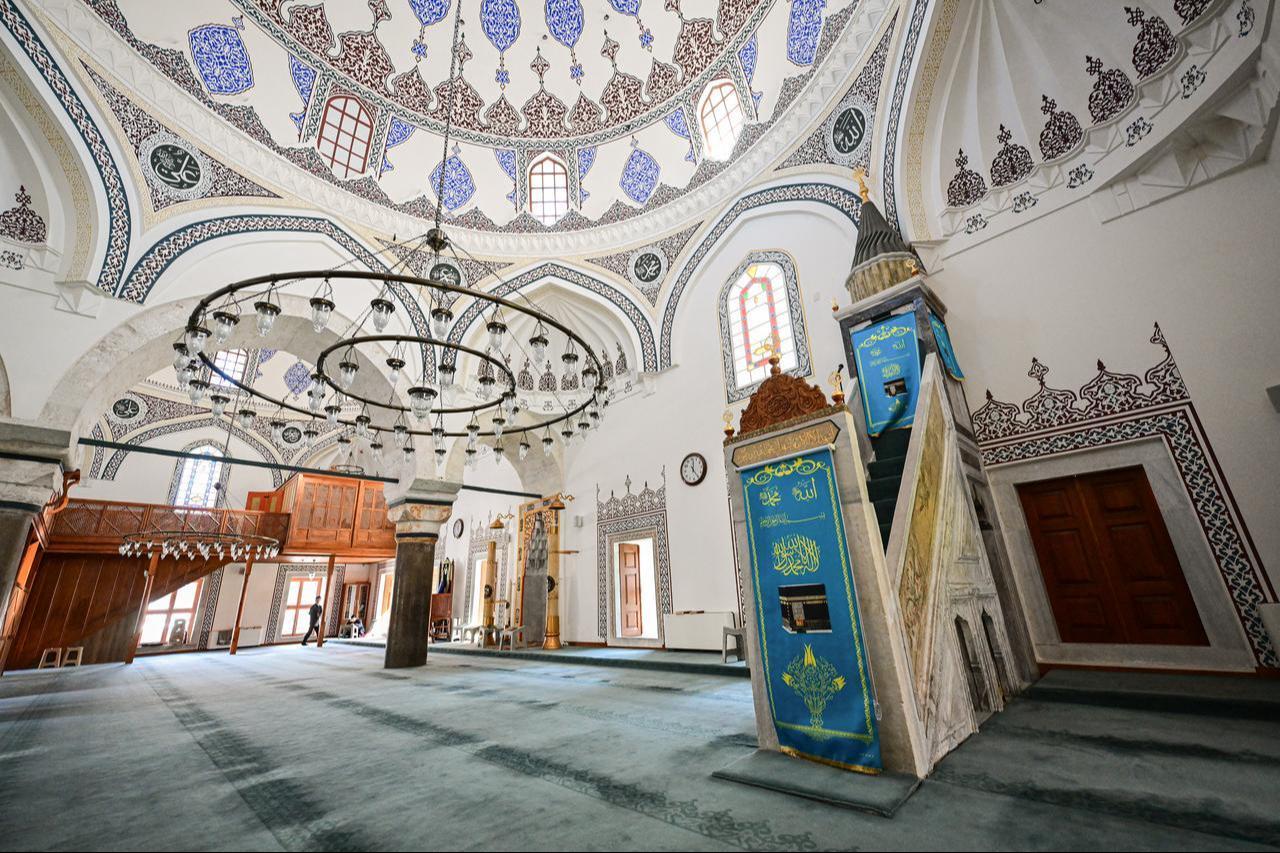
The Haseki kulliye was one of Istanbul's most significant charitable institutions, particularly noted for its darussifa and imaret. Yelen observed that Hurrem Sultan's philanthropic legacy extended beyond Istanbul, as she commissioned charitable structures throughout Anatolia and in Jerusalem. A soup kitchen she established in Jerusalem remains operational today.
Today, the Haseki Hurrem Sultan Mosque is recognized as one of Istanbul's most significant cultural landmarks, serving as evidence of both Mimar Sinan's architectural expertise and the lasting charitable tradition of the Ottoman kulliye.


 Set as preferred source
 Set as preferred source


 2 min read