Newsletters


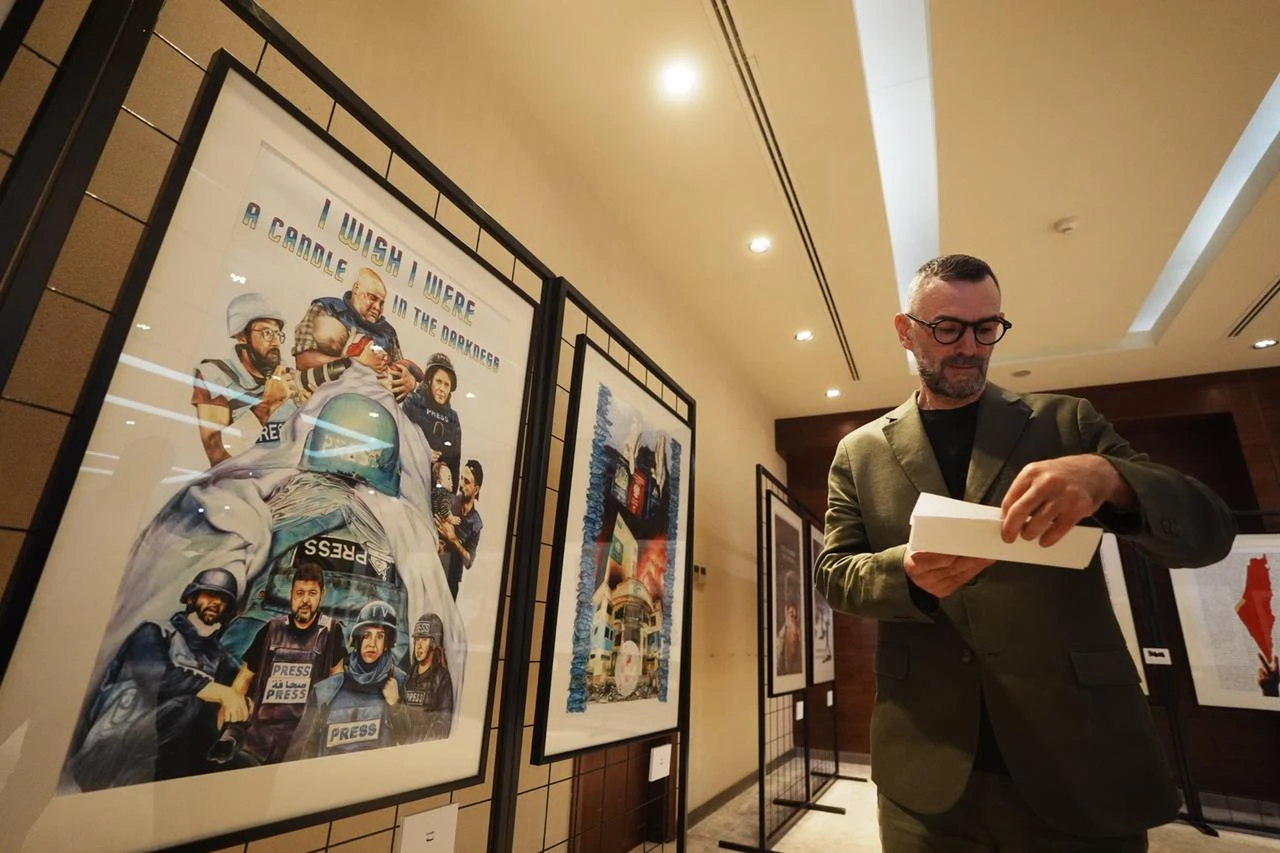


A new exhibition by Turkish artist Ahmet Yusuf Aygec has opened at the Mahmoud Darwish Museum in Ramallah, bringing together Palestinian experiences and the poetry of Mahmoud Darwish, widely regarded as Palestine's national poet.
Titled "Posters to the Olive Tree in Exile," the exhibition features 20 works produced with colored pencils and soft pastels. It will remain open at the museum, located in the occupied West Bank, through Aug. 2.
Curated by Samed Karagoz and supported by the Palestine office of the Turkish Cooperation and Coordination Agency, commonly known as TIKA, the exhibition takes up themes including suffering, resistance and everyday life under occupation.
Verses drawn from Darwish's poems, writings and speeches accompany nearly all of the works, linking Aygec's visual language with the poet's reflections on exile, identity and attachment to the Palestinian homeland.
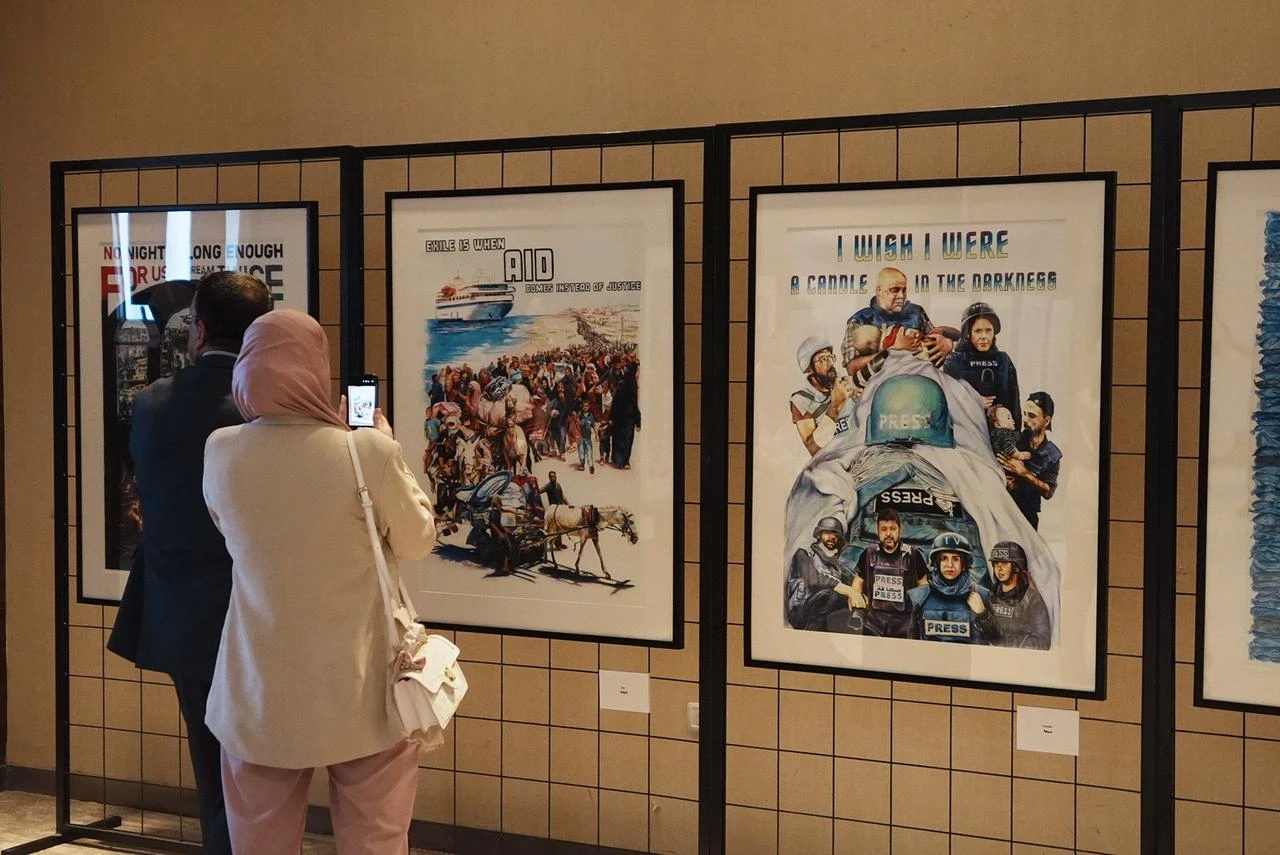

Aygec was unable to attend the opening after Israel did not grant him a visa.
The ceremony brought together Palestinian Culture Minister Imad Hamdan, Turkish Deputy Consul General in Jerusalem Aleyna Karasac, representatives from TIKA, the Yunus Emre Institute in Ramallah and members of the Palestinian arts community.
Hamdan said the exhibition stood out because it brought Darwish's poetry to life through the perspective of a Turkish artist.
According to the minister, the posters carry messages connected to resistance, captivity, martyrdom, and faith while reflecting the Palestinian people's connection to their land "like an olive tree."
He added that every work aimed to carry the Palestinian cause beyond the region and introduce it to a wider international audience.
Addressing Aygec's absence, Hamdan said Israel did not want "a witness" to stand alongside Palestinians on their land. However, he stressed that the artist's message had still reached Ramallah from Türkiye through the works on display.
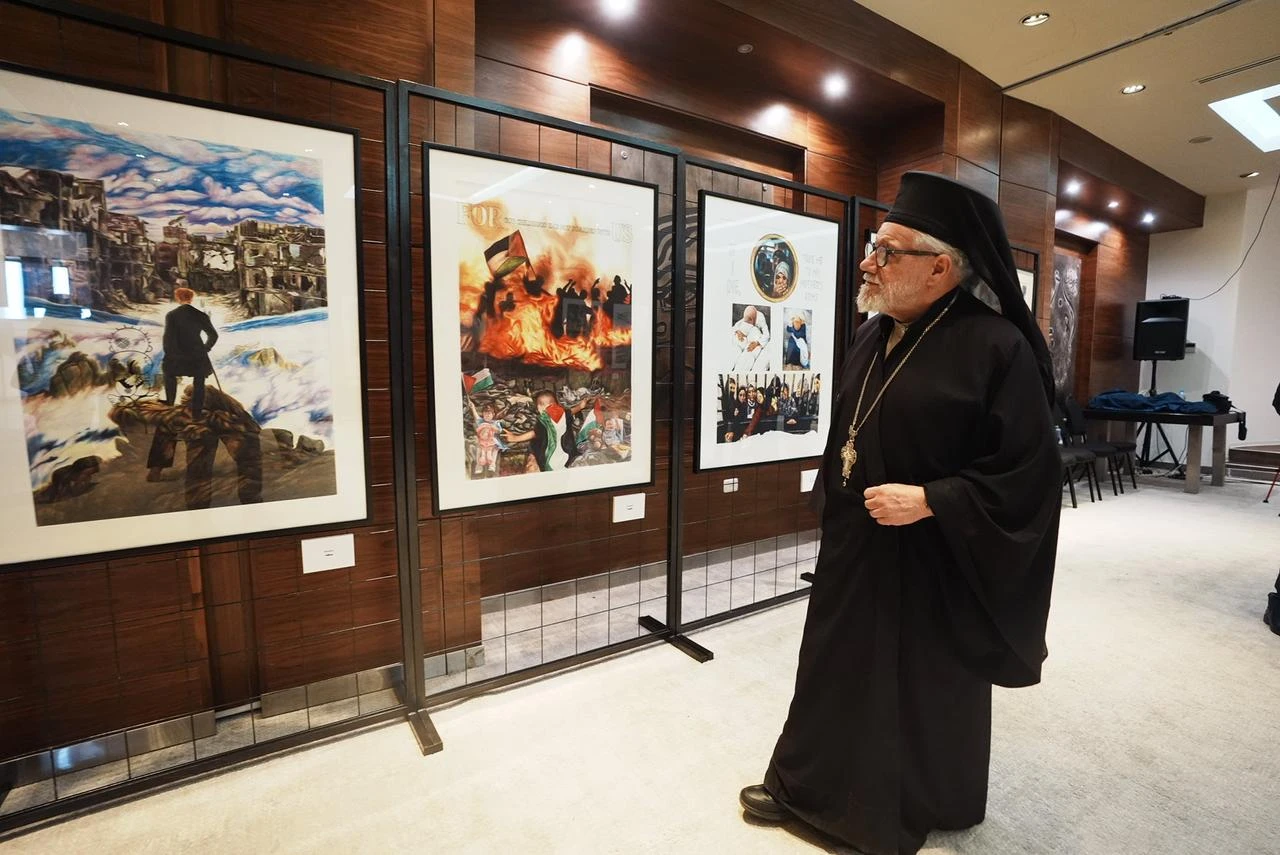
Karagoz said the exhibition draws on the Palestinian poster movement of the 1960s and 1970s, a period when politically engaged graphic art from Palestine influenced artists across Europe.
The exhibition's title was adapted from Darwish's phrase, "Letters to the Olive Tree in Exile."
Karagoz said Aygec spent around a year putting the collection together. All but one of the works feature quotations taken from Darwish's poetry, prose or public speeches.
He described displaying the collection at the Mahmoud Darwish Museum as "a source of pride," adding that presenting it directly to Palestinian audiences carried particular importance.
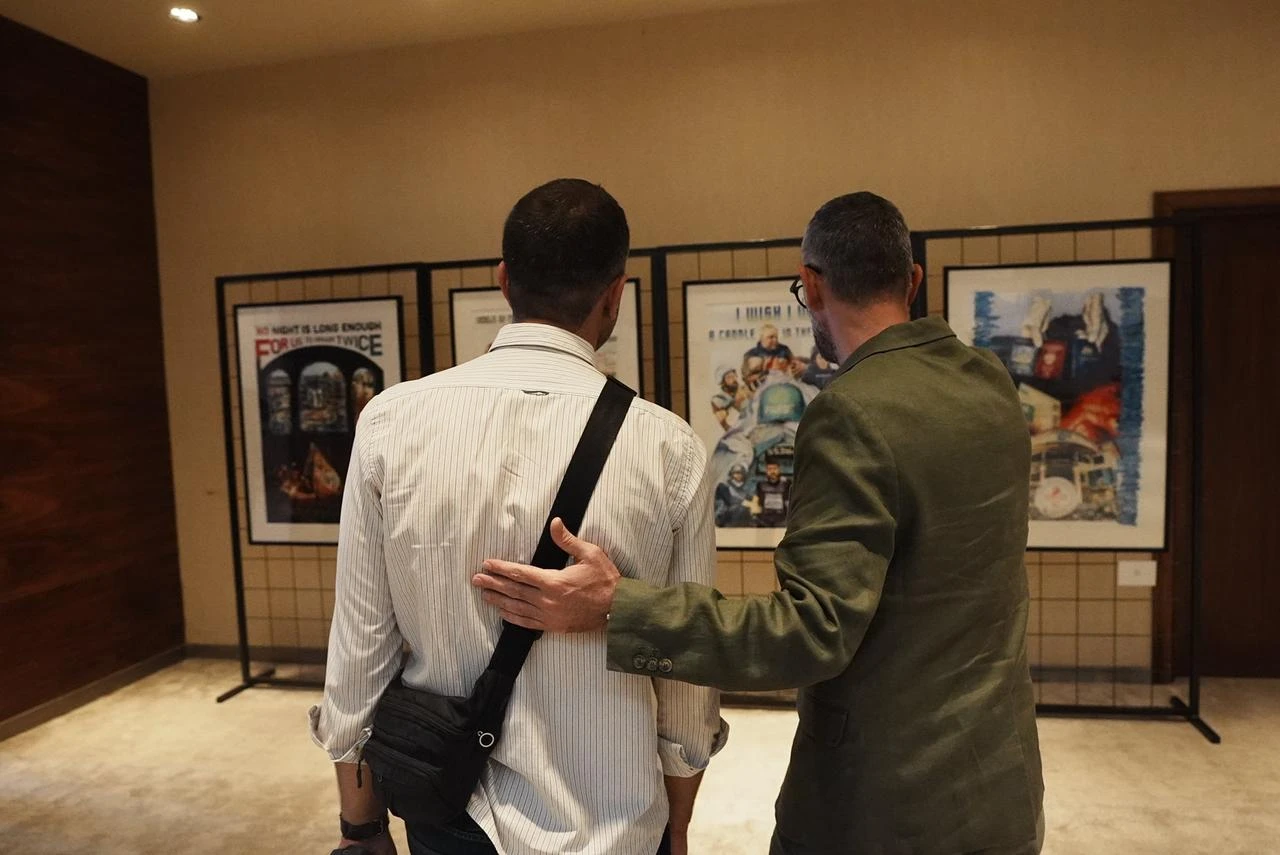
Organizers also faced difficulties while trying to bring the exhibition into Ramallah.
Because they feared that the original artworks could be damaged or confiscated, they initially sent limited-edition prints instead. However, the shipment was held at customs and later returned in an unusable condition.
The exhibition therefore had to be printed locally with support from TIKA's Palestine office.
Karagoz, who has followed developments in Palestine for many years, said daily life in the West Bank had become increasingly difficult as checkpoint restrictions tightened and fuel shortages set in.
He added that these conditions had made travel nearly impossible for many Palestinians.
The exhibition will remain open to visitors at the Mahmoud Darwish Museum in Ramallah through Aug. 2.


 Set as preferred source
 Set as preferred source


 3 min read