Newsletters




Türkiye has recovered 13,574 cultural artifacts from other countries between 2002 and 2026, according to figures released by the Ministry of Culture and Tourism, with 126 objects returned this year alone.
Marking UNESCO's International Day Against Illicit Trafficking in Cultural Property on Nov. 14, Culture and Tourism Minister Mehmet Nuri Ersoy called on the public to speak out against illegal excavations and the trafficking of historical artifacts.
In a social media statement, Ersoy warned that illicit excavations not only remove cultural objects from their original locations but also permanently destroy archaeological evidence that helps researchers understand the past.
He emphasized that protecting Türkiye's cultural heritage requires public awareness alongside cooperation among law enforcement, customs authorities and judicial institutions.
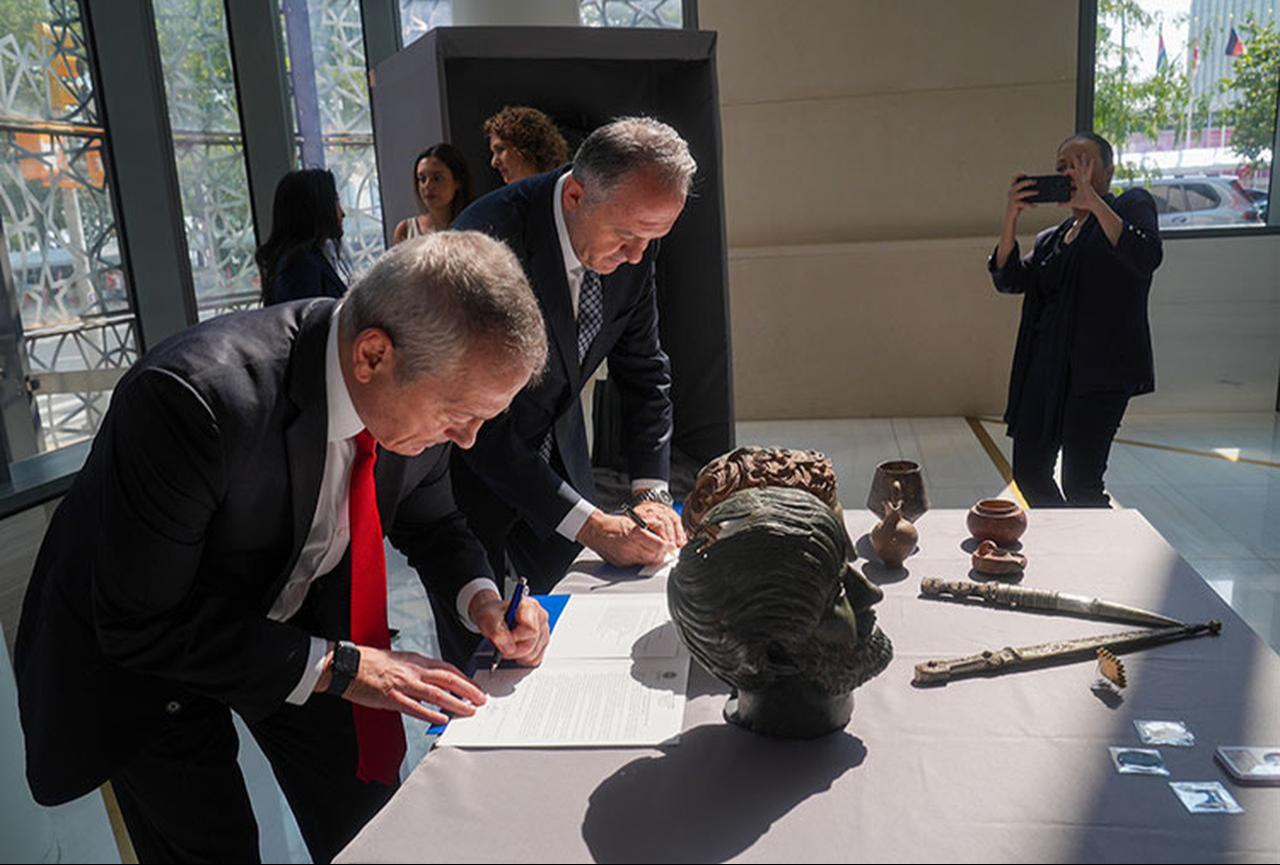

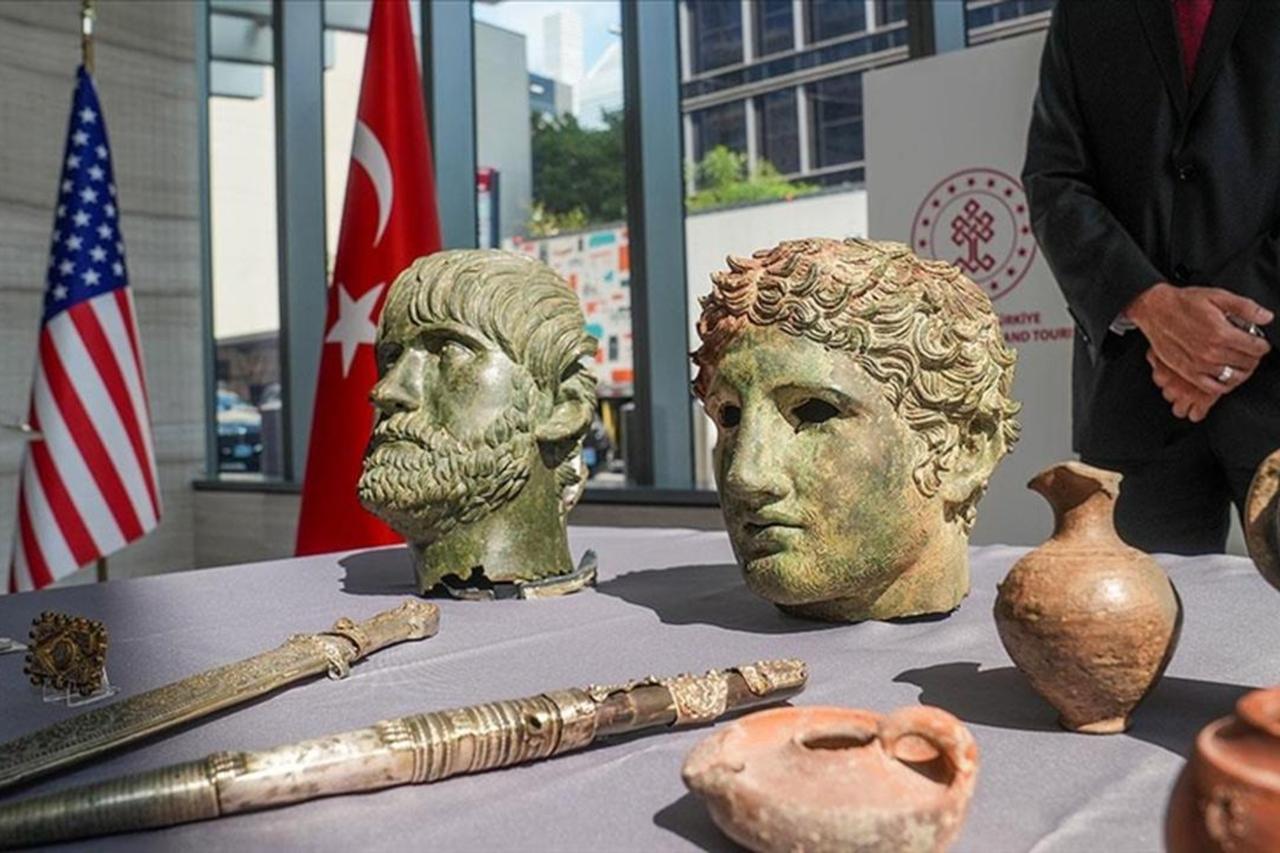
Among the latest recoveries are 100 cultural objects returned through cooperation with US authorities and subsequently presented at the Istanbul Archaeological Museums.
The collection includes 40 Early Bronze Age artifacts originating from Horoztepe in Türkiye's northern Tokat province and 44 Archaic-period objects from Duver in the southwestern province of Burdur.
A portrait illegally removed from the ancient city of Aphrodisias was also among the returned objects.
According to the ministry, scientific research, historical archives and international judicial cooperation played a key role in establishing the artifacts' origins and supporting their return.
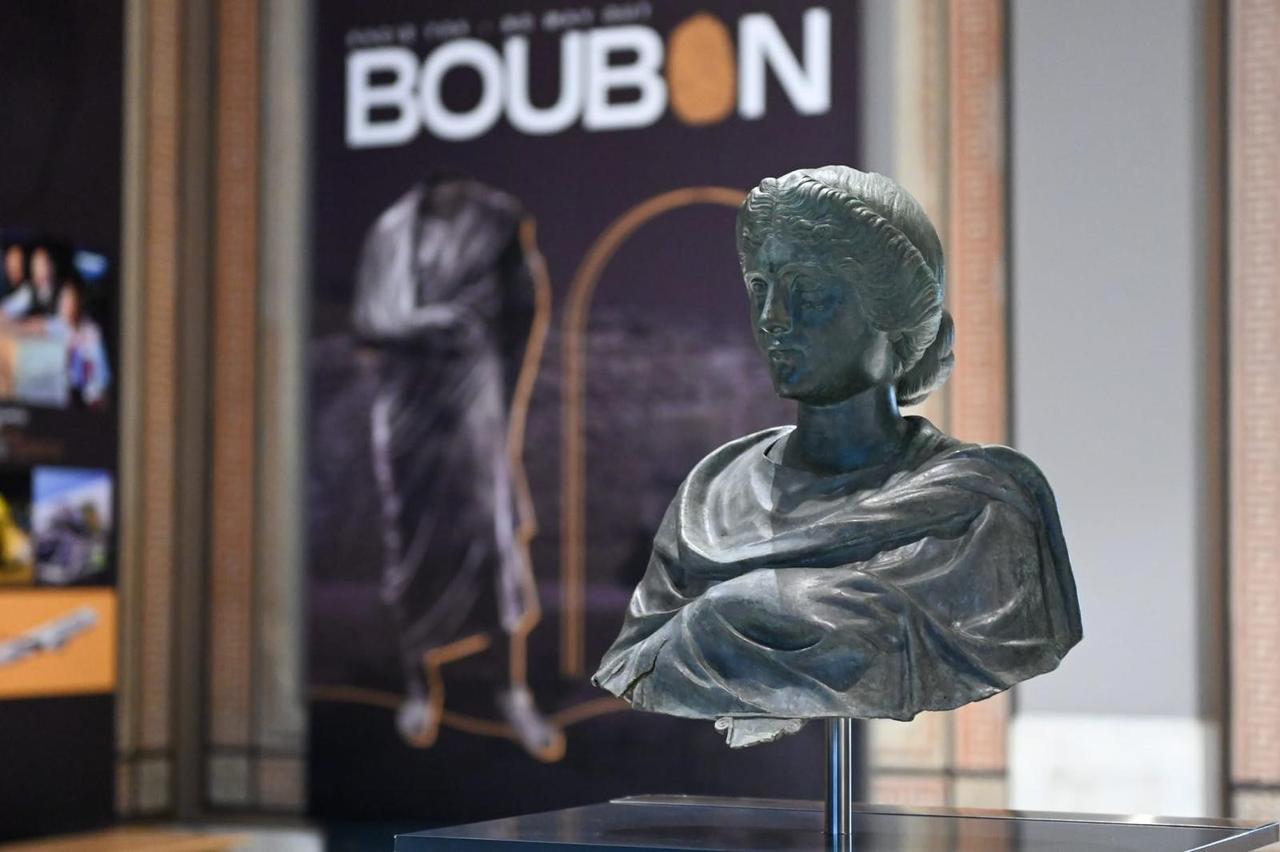
Efforts to recover bronze objects originating from Boubon, an ancient site in southwestern Türkiye, have similarly brought together archaeological evidence and international legal proceedings.

Alongside diplomatic and legal efforts, the ministry has introduced a software system to monitor international auction houses and gallery websites for cultural objects suspected of having been illegally taken out of Türkiye.
The system identifies and archives suspicious listings, allowing specialists to investigate the objects' origins and trace how they may have reached foreign markets.
The resulting records and documentation help strengthen restitution claims, extending Türkiye's efforts against cultural property trafficking into the digital marketplace.
These activities are carried out within the framework of UNESCO's 1970 Convention, an international agreement aimed at preventing the illegal import, export and transfer of ownership of cultural property.
Türkiye also works with the United Nations Office on Drugs and Crime (UNODC) on regional initiatives intended to strengthen legal frameworks, operational capabilities and information-sharing across southeastern Europe.
Beyond recovering artifacts already taken abroad, Turkish authorities are stepping up measures to prevent archaeological objects from being removed in the first place.
In September 2026, Ersoy inaugurated an Aerial Monitoring and Security Center at Sardis, an ancient city in western Türkiye, as part of efforts to protect cultural heritage at its original location.
The ministry continues to coordinate with security forces, customs officials and judicial authorities to tackle illegal excavations and the illicit antiquities trade.
Ersoy also highlighted the importance of international cooperation and public participation, describing citizens' awareness as a key element in protecting cultural heritage for future generations.


 Set as preferred source
 Set as preferred source



 1 min read