Newsletters


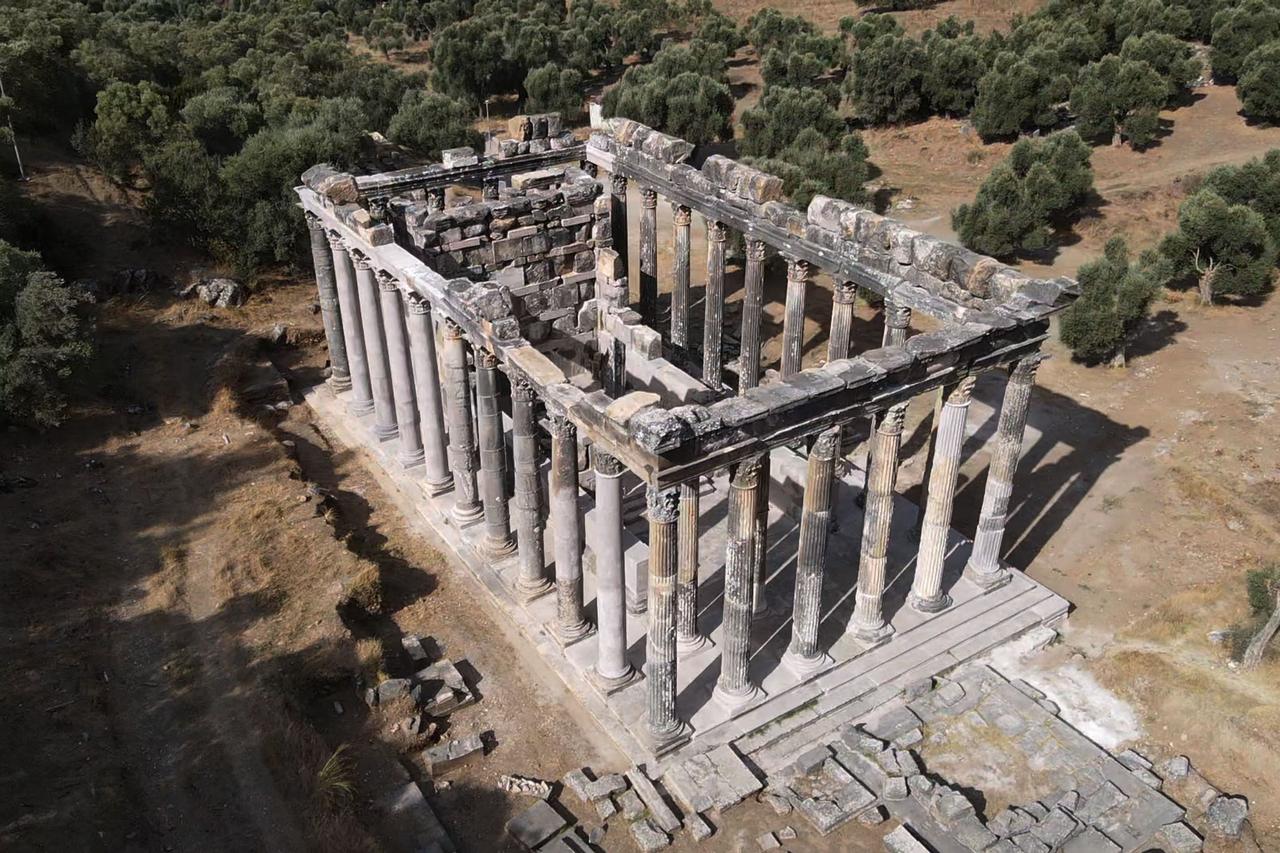


The 1,900-year-old Temple of Zeus Lepsynos in the ancient city of Euromos, in Türkiye’s southwestern Mugla province, has been restored after nearly 900 architectural blocks were examined and about 70% were returned to their original positions.
Built in the second century A.D. during the Roman Imperial period, the temple is among the major surviving structures of Euromos, an ancient settlement in the Caria region of southwestern Anatolia. The restoration aims to preserve the monument for future generations while drawing more visitors to the archaeological site.
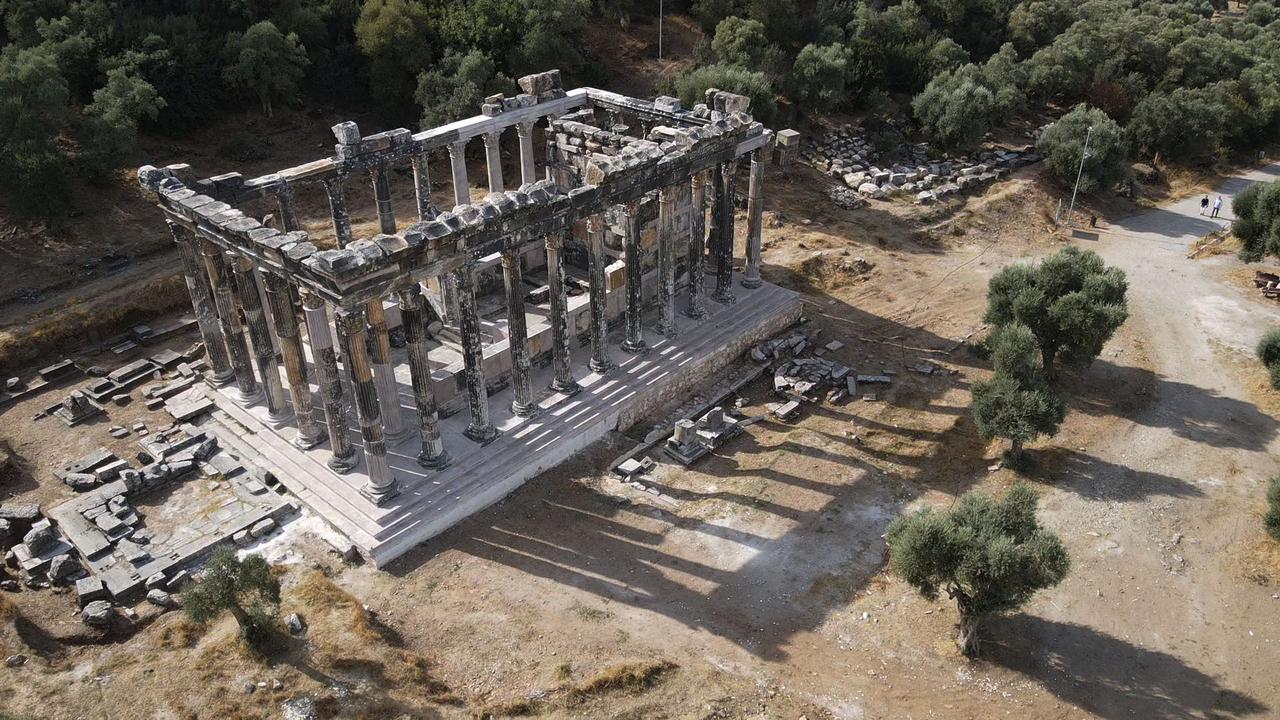

The restoration process began in 2015 with architectural surveys, documentation and the cataloging of individual stone blocks recovered from the temple.
Researchers examined approximately 900 architectural elements to determine their original locations within the structure. About 70% of the blocks were subsequently put back in place, while new stone brought in from local marble quarries was used to replace pieces that could no longer be reused.
The work was carried out under the direction of Professor Abuzer Kizil on behalf of Mugla Sitki Kocman University, with support from Türkiye's Ministry of Culture and Tourism, the Mugla Governor's Office and the Turkish Historical Society.
The project focused on stabilizing and rebuilding the ancient structure, parts of whose original columns had survived to the present day.
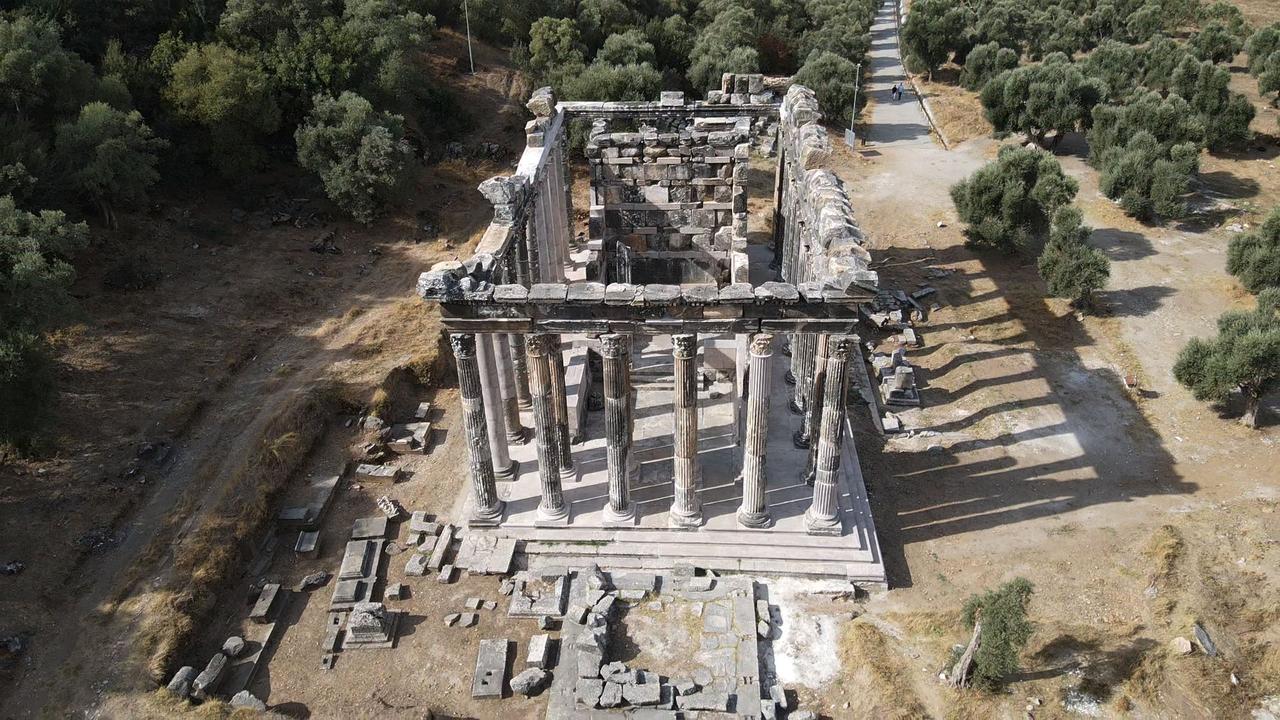
Located near the foot of Kizilbayir Mountain, approximately 12 kilometers (7.5 miles) from the center of Milas, Euromos was an important settlement in ancient Caria and developed further under Roman rule.
The archaeological site contains several other surviving structures, including an agora, the public marketplace of an ancient city, as well as a theater, baths, defensive walls, burial grounds and the remains of a chapel.
The Temple of Zeus Lepsynos is believed to have been built during the reign of Roman Emperor Hadrian, who ruled from A.D. 117 to 138.
With restoration work now completed, the temple is expected to contribute to the promotion of Euromos and strengthen cultural tourism in the Milas district.


 Set as preferred source
 Set as preferred source



 1 min read