Newsletters


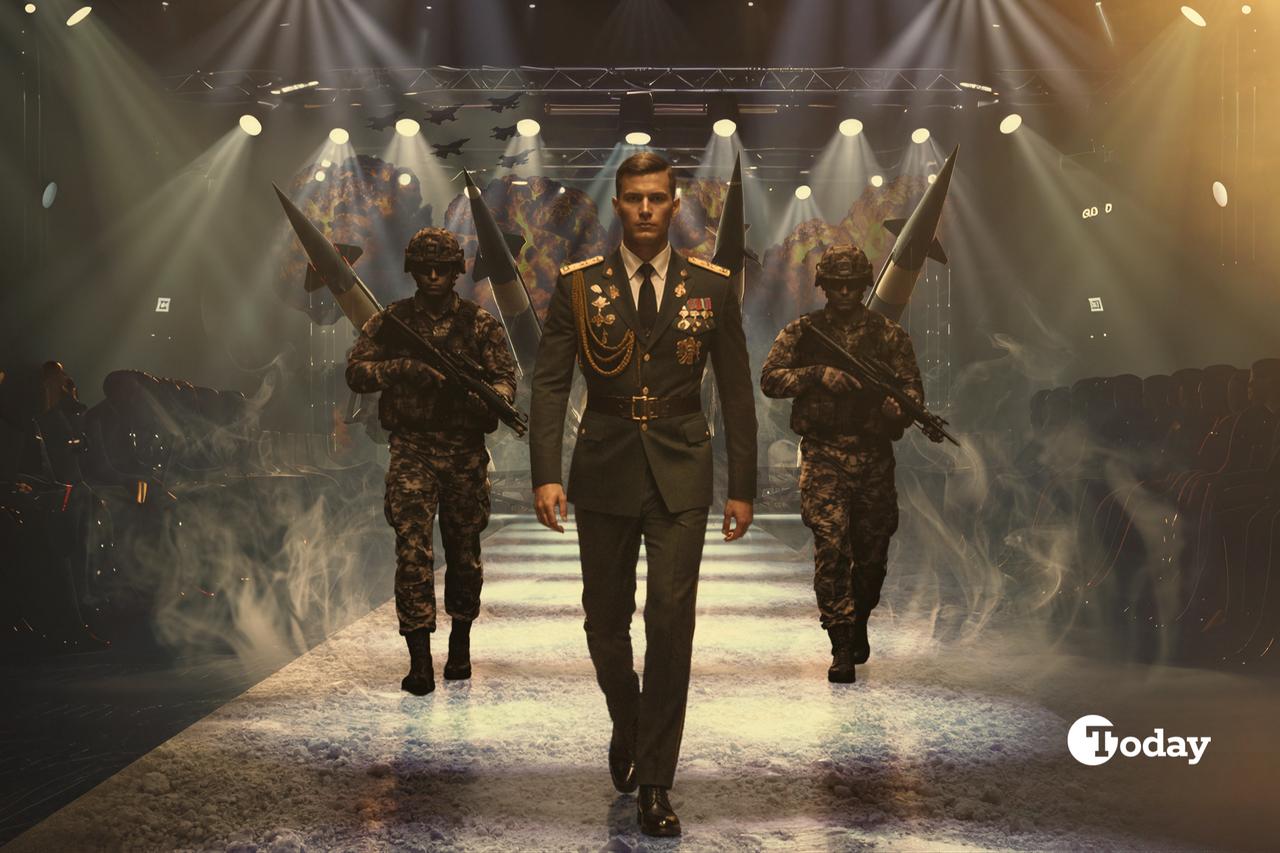


Inside the shimmering expanse of the Elie Saab Spring Summer 2025 show, the runway feels less like a presentation and more like a slow, deliberate procession. The air is charged, not with mere spectacle, but with intention.
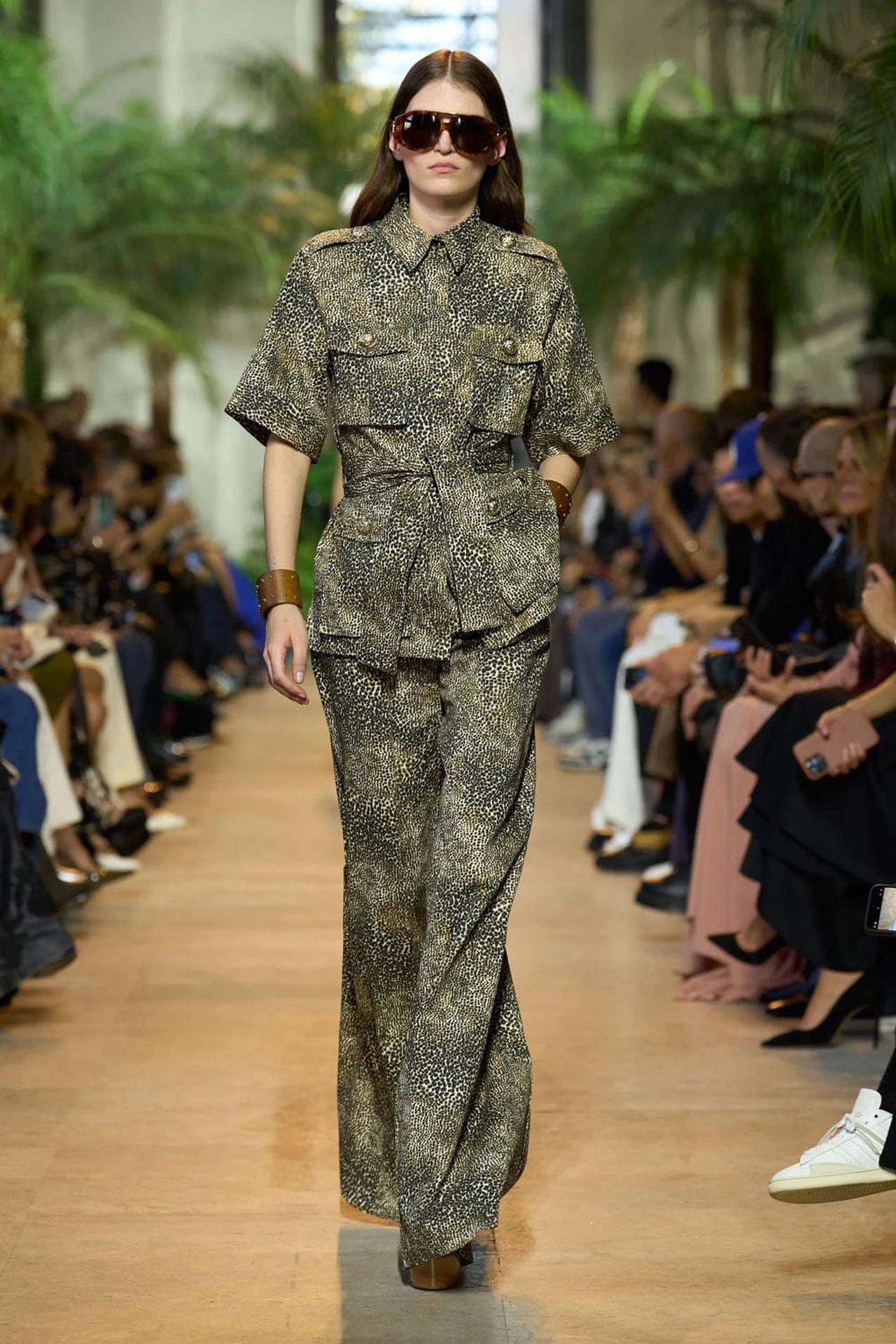
Military-inflected silhouettes emerge with quiet control. Safari jackets, softened yet structured, move alongside crepe jumpsuits and belted suits that echo uniforms without literalism. Raffia textures and fluid chiffon catch the light like heat rising off arid terrain. Each step feels measured, as though guided by an unseen command.
The palette tells its own story: ochre, elephant gray, fireball lily tones and lush rainforest greens replace expected neutrals. Colors shaped by landscape and endurance, now reframed under the glow of the runway.
Across the season, Emporio Armani sharpens this language further. Camouflage printed sportswear moves with sleek precision. Relaxed trousers with flap pockets and polished sneakers strike a deliberate, almost tactical rhythm, balancing functional discipline with ease.
The audience senses something deeper beneath the luxury.
Military uniforms are not simply clothes; they are a strategy, existing at the intersection of war, technology and fashion. As photographer Moni Basu once observed, fashion and war share a visual language. In this space, the silhouette speaks first.

Thousands of kilometers from Paris, another story unfolds.
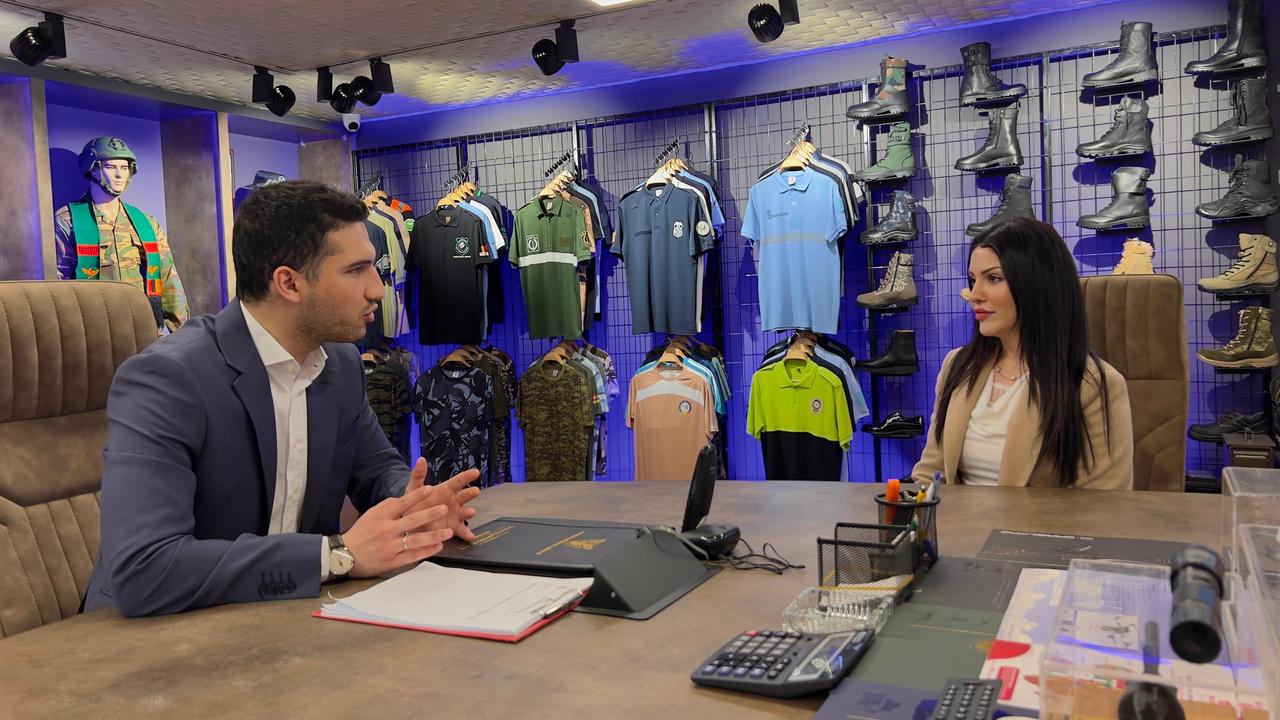
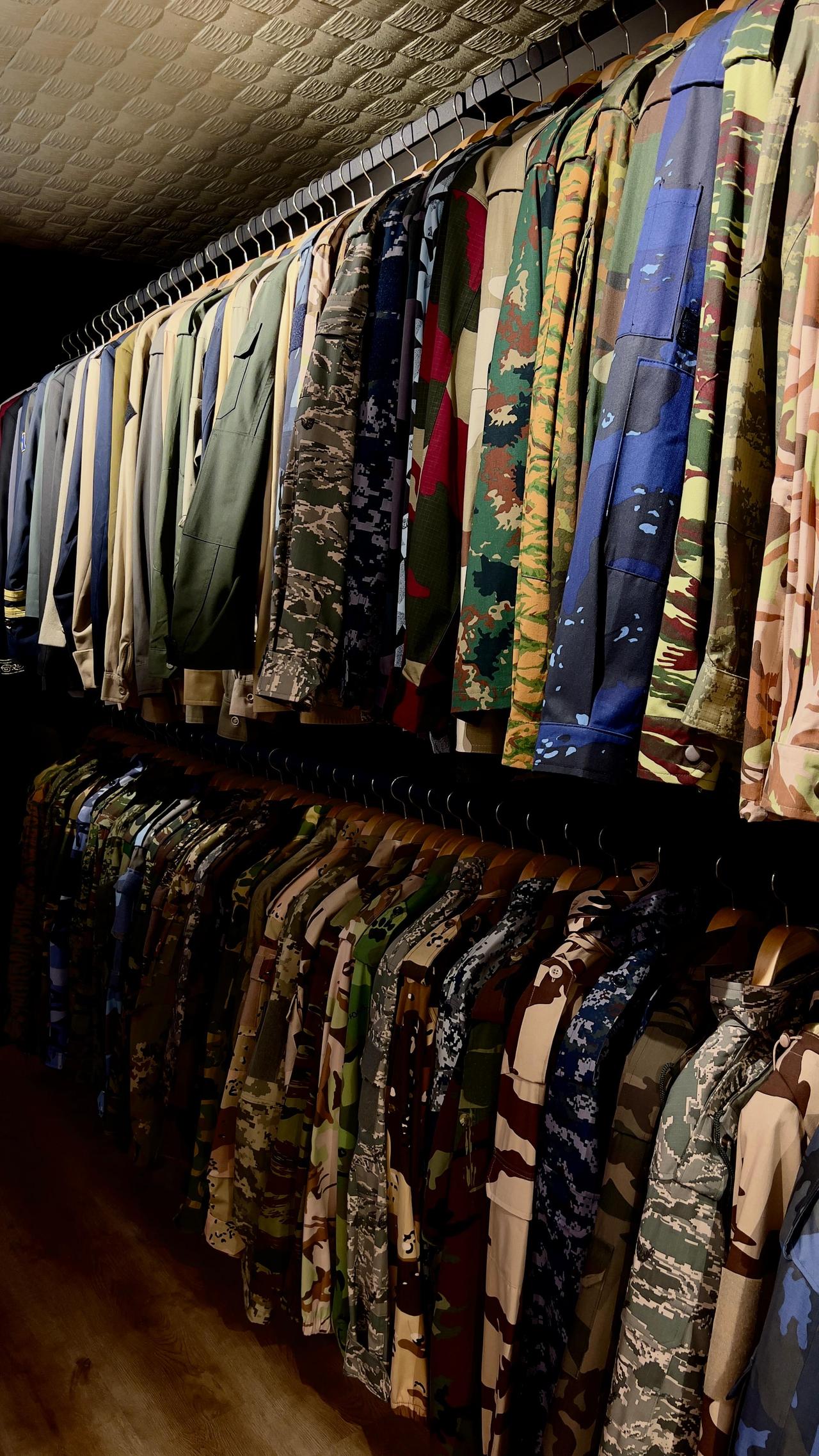
Inside the maze-like rooms of Istanbul’s Raff Military Textile, camouflage fabrics hang like fragments of distant landscapes.
Woodland greens rest beside desert sands. Digital patterns vibrate under fluorescent lights, each one designed to vanish somewhere far beyond the workshop walls.
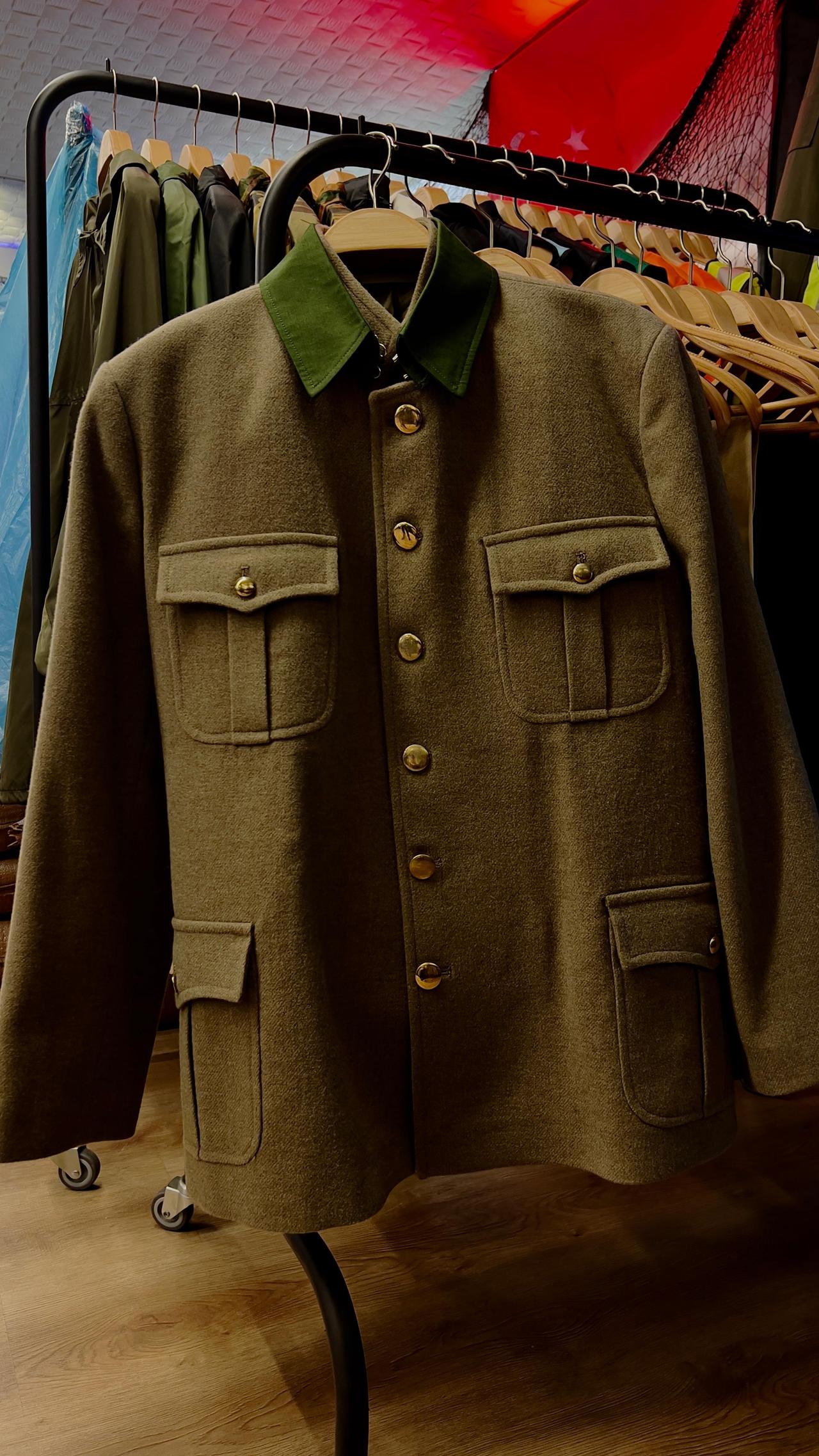
Oguzhan Yukseloglu, the fourth generation in a family defined by military tailoring, lifts a heavy wool jacket preserved for a museum.
“Pure wool was used in the late Ottoman Empire,” he says, smoothing the sleeve. The piece was recreated in the textile city of Usak using traditional methods.
“Forty-five needles together make that army jacket. No machine can do it. It is an old, handmade technique. It was worn during the independence of Türkiye, and Ataturk used to wear it.” History settles quietly into the very grain of the fibers.
Across the workshop, Yukseloglu lifts a square of camouflage fabric and studies it like a map.
“From the outside, it is just colorful fabric,” he says. “But inside, there are many things you must consider. Style is the least important part. Operational capacity is the most important.”
He rubs two layers together, listening for a friction that isn't there.
“If soldiers move inside a building, the fabric should make zero noise.”
Combat clothing here feels closer to engineering than fashion.
“My great-grandfather was an army officer,” Yukseloglu zones out while sipping his tea. “He repaired torn uniforms during training. After retiring, that skill became a tailoring shop.”
Today, the small repair table has grown into a global supplier.
“Now we work with many countries,” he says. “But every army wants something different: weather, terrain, missions.”
Military garments rarely reveal their complexity at first glance.
“Modern military uniforms often use a NATO-standard blend of 50% cotton and 50% nylon,” Yukseloglu says, feeling the silent slide of the fabric between his fingers. “Cotton allows the body to breathe. Nylon provides the structural integrity to survive rough terrain.”
But the true sophistication lies in the invisible.
Some fabrics reduce visibility under near-infrared cameras used in night operations.
Others receive chemical treatments to repel insects in tropical climates.
“In African countries, we use permethrin,” Yukseloglu explains, showing a specimen designed for the continent's dense environments. “Mosquitoes smell it, but humans do not. It keeps them away from the uniform.”
Fire-resistant materials protect soldiers working near fuel or explosions.
Yet, with each added layer of technology comes another calculation.
“Everything you add to the clothing increases cost,” Yukseloglu says with a document in his hand. “It depends on what the customer wants and where the uniform will be used.”
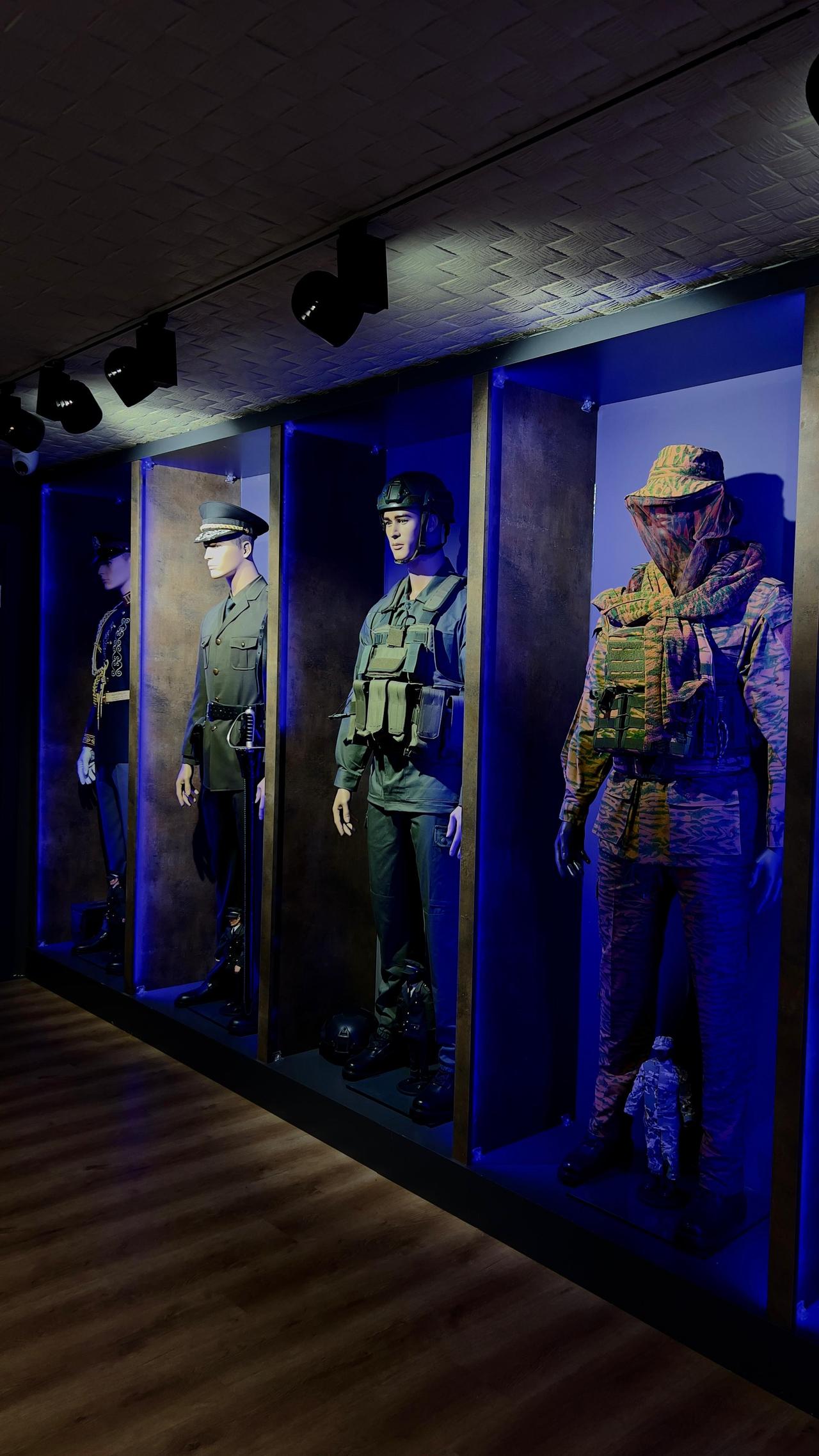
Even camouflage patterns differ dramatically between nations.
“Türkiye, like the United States and Canada, has its own camouflage pattern,” he explains proudly. “Even if two armies look similar at first glance, the designs are completely different.”
For centuries, the battlefield has quietly shaped civilian style. Garments created for survival have drifted into everyday wardrobes, carrying echoes of discipline and resilience.
The pea coat began as heavy wool outerwear for Dutch and British sailors braving icy seas.
Chino trousers started as lightweight khaki field pants worn by American soldiers in warm climates before moving onto campuses and into offices.
The cardigan takes its name from James Brudenell, the 7th Earl of Cardigan, who wore a knitted wool jacket during the Crimean War.
Combat boots, once built for mud and trenches, later marched into punk culture, streetwear, and luxury runways.
Military design once signaled authority and protection. Today, those same silhouettes still carry the quiet language of power.
World War II accelerated this transformation.
Fabric shortages forced designers to simplify garments. Durability replaced decoration. Utility replaced luxury.
Women working in wartime industries adopted trousers and sturdy jackets inspired by military utility.
Fashion historian Lilah Ramzi describes the era as a “make-do-and-mend culture.”
Clothing built for necessity slowly became everyday style. Practical silhouettes remained long after the war ended. Structured jackets, durable fabrics and functional pockets quietly entered civilian life.
Military clothing also reveals geography and politics.
As the current war between Iran, Israel, the United States and several Gulf countries unfolds, the differences in what soldiers wear become striking.
The Israel Defense Forces favor solid olive green, blending with desert shadows.
Camouflage becomes less useful in environments with limited vegetation.
“Unlike other countries, Iran produces its own military clothing,” Yukseloglu says.
Police uniforms follow different rules.
“The police cannot wear camouflage,” Yukseloglu explains. “They work in the city, so they wear navy blue.”
Each camouflage reflects terrain, mission and identity.
War shapes uniforms. Uniforms shape fashion.
And somewhere between survival and style, the language of the battlefield continues to dress the world.


 Set as preferred source
 Set as preferred source


 3 min read