Newsletters


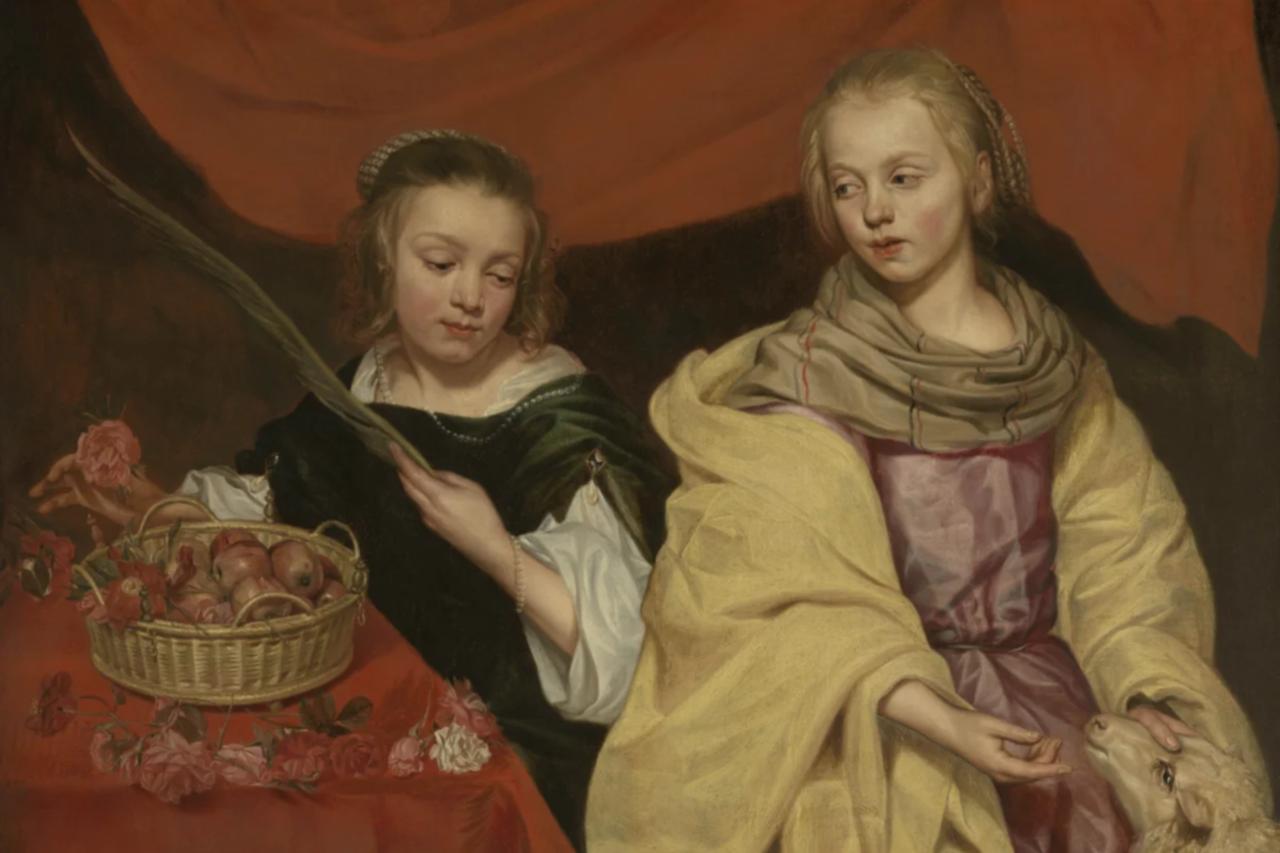


Several women artists achieved remarkable success during the Dutch and Flemish Golden Age of the 17th century.
Their paintings attracted royal patrons, commanded high prices, and circulated across Europe. Yet many of these artists disappeared from mainstream art history for centuries.
A new exhibition in Belgium now seeks to correct that record by placing women artists back into the story of one of Europe’s most celebrated artistic periods.
The exhibition, "Unforgettable: Women Artists from Antwerp to Amsterdam, 1600-1750," opened at the Museum of Fine Arts in Ghent (MSK) and presents the work of more than 40 women artists active in the Low Countries during the 17th and early 18th centuries.
The show was organized in partnership with the National Museum of Women in the Arts in Washington and brings together paintings, prints, lacework, and paper cuttings to highlight the breadth of women’s artistic production during the era.
Curators argue that women were not simply subjects or models in artworks of the time but active participants in the artistic economy. Many accepted commissions, trained pupils, and sold works to a growing market of collectors.
Despite that success, their names rarely appear alongside the canonical “Old Masters.”
Some of the artists featured in the exhibition enjoyed significant fame during their lifetimes.
Dutch still life painter Maria van Oosterwijck counted Louis XIV of France, Holy Roman Emperor Leopold I, and William III of England among her patrons. Rachel Ruysch produced detailed floral compositions that sold in Amsterdam for prices higher than works by Rembrandt.
Judith Leyster also built a successful career. As a member of the Guild of St Luke in Haarlem, she ran her own workshop and produced lively scenes of musicians, drinkers, and social gatherings.
Yet many of these artists gradually disappeared from historical narratives.
“You feel that people really want to hear and see work by these women,” said Frederica Van Dam, curator at the Museum of Fine Arts in Ghent, to the Financial Times.
Van Dam noted that many of these artists were well known during their lifetimes. However, later art historians often wrote from a male-centered perspective that excluded them.
“She was one of the most important still life painters of her time, yet despite her contemporary fame and inclusion in early artists’ biographies, later art historians failed to give her the attention she deserved,” she said, referring to van Oosterwijck.
Some artists were praised by early biographers but later faded from public memory. The portrait painter Margaretha Wulfraet was described in an 18th-century account as having a “purity of the brush” that “delights connoisseurs.” Her estate inventory listed more than 50 paintings when she died, yet only a small number survive today.
Curators say several historical factors contributed to women artists being overlooked.
One was the way art history later divided disciplines into “fine art” and “decorative art.” Many women produced work in areas such as lace making, printmaking, and paper cutting, which were later treated as secondary forms.
“In the 17th century, there was not such a division between fine arts and decorative arts,” Van Dam explained. “In the 19th century, art historians made this more artificial type of division.”
Another problem involved the attribution of artworks. Women often trained in family workshops, which meant their paintings could be absorbed into the work of fathers, husbands, or brothers.
Van Dam pointed to the example of Maria Schalcken, whose signature was removed and replaced with her father’s name to increase the painting’s market value.
Judith Leyster’s work faced a similar fate. Her paintings were long attributed to her husband, Jan Miense Molenaer, or to the painter Frans Hals. The connection to Leyster was only rediscovered in 1893 when a scholar identified her distinctive monogram signature.
Even then, recognition came slowly. Major research on her work only appeared in the 1970s.
Today, museums and scholars are increasingly revisiting these overlooked artists. Recent exhibitions and research projects aim to restore their place in art history and expand the traditional canon of the Dutch and Flemish Golden Age.
The Ghent exhibition will run from March 7 to May 31.


 Set as preferred source
 Set as preferred source



 2 min read