Newsletters


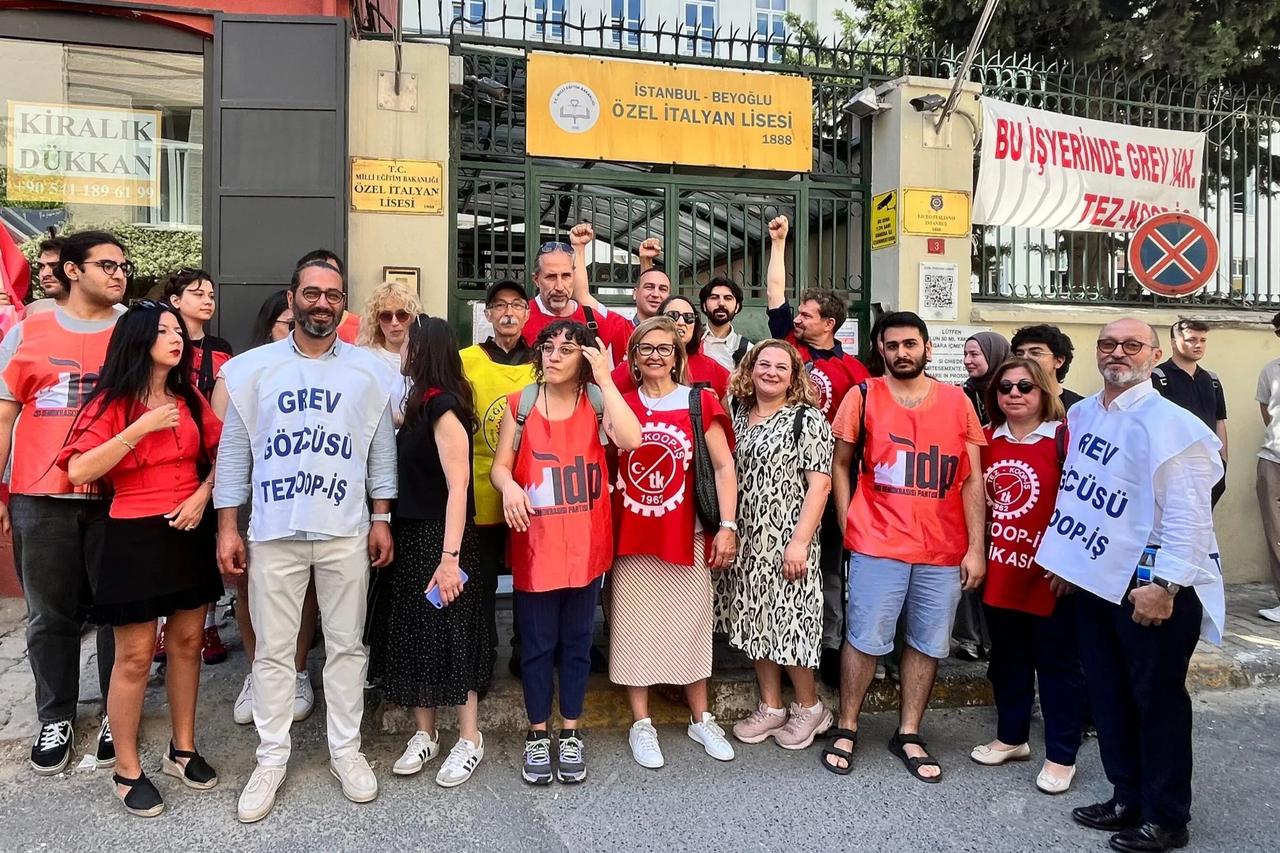


The 123-day strike by Turkish teachers at Istanbul's Private Italian High School (Liceo Italiano IMI) ended when the Tez-Koop-Is union and school management reached a settlement that brought major improvements in pay, working conditions and employee rights.
Teachers went back to their classrooms the afternoon after the agreement was officially announced.
Both the union and school management said the deal provides financial and professional protections for Turkish staff that had been missing during months of unsuccessful talks.
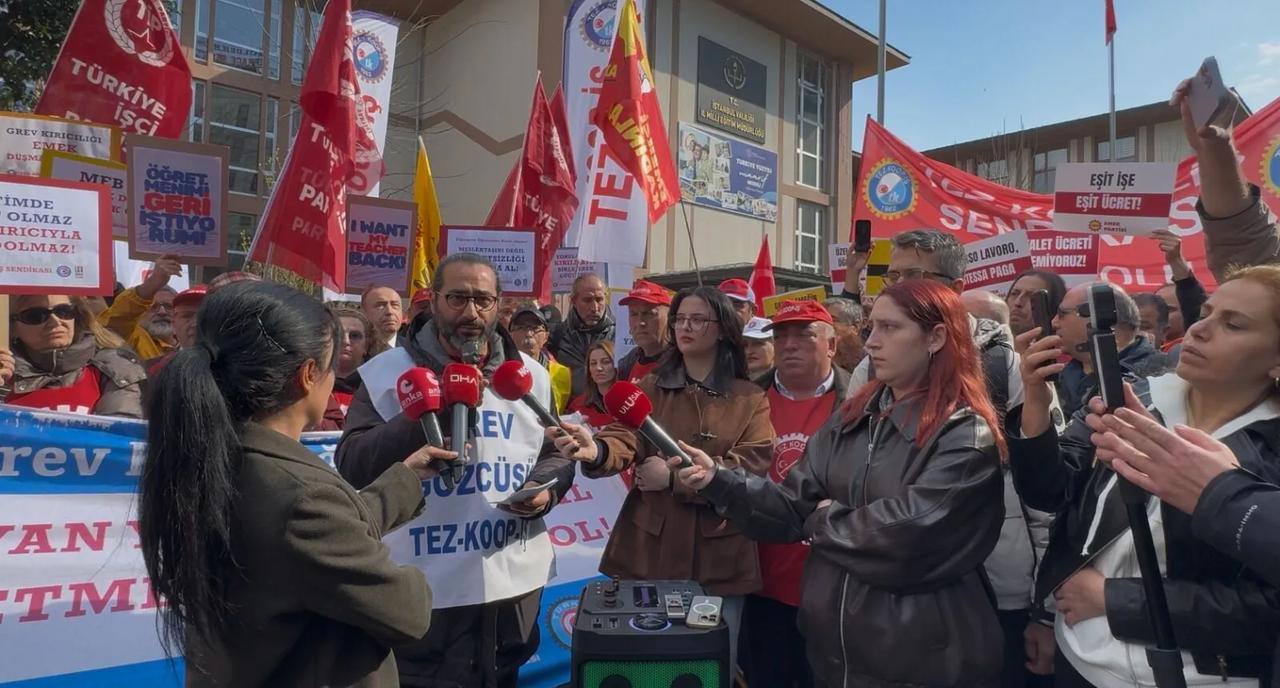
Selahattin Karakurt, chair of Tez-Koop-Is Istanbul Branch No. 5, said outside the school that the long struggle led to what he called a "precedent-setting" deal.
He explained that Turkish teachers now have international-standard working conditions and a fair system for extra-lesson pay, and that their professional and institutional status is officially guaranteed.
Literature teacher Firat Aydin, speaking on behalf of the striking teachers, said they had finally completed a long and difficult process and that their legal and formal rights are now secured.
He added that this experience showed again that real progress for workers comes not from promises but from legal agreements that protect them and secure their future.

According to the agreement, Turkish teachers will receive a 25% salary increase starting Jan. 1, 2026, followed by 5% raises in both 2027 and 2028. The number of teaching hours included in the base salary will drop from 40 to 20 per week, and any hours above that will be paid as extra lessons.
Teachers will also get extra pay for up to four hours of supervisory duties each week.
Other benefits include a 13th-month salary paid every December, a two-month compensatory payment for 2025, a teacher card worth 1,200 euros net in 2026, and a severance guarantee equal to 16 months' pay if a teacher is wrongfully dismissed.
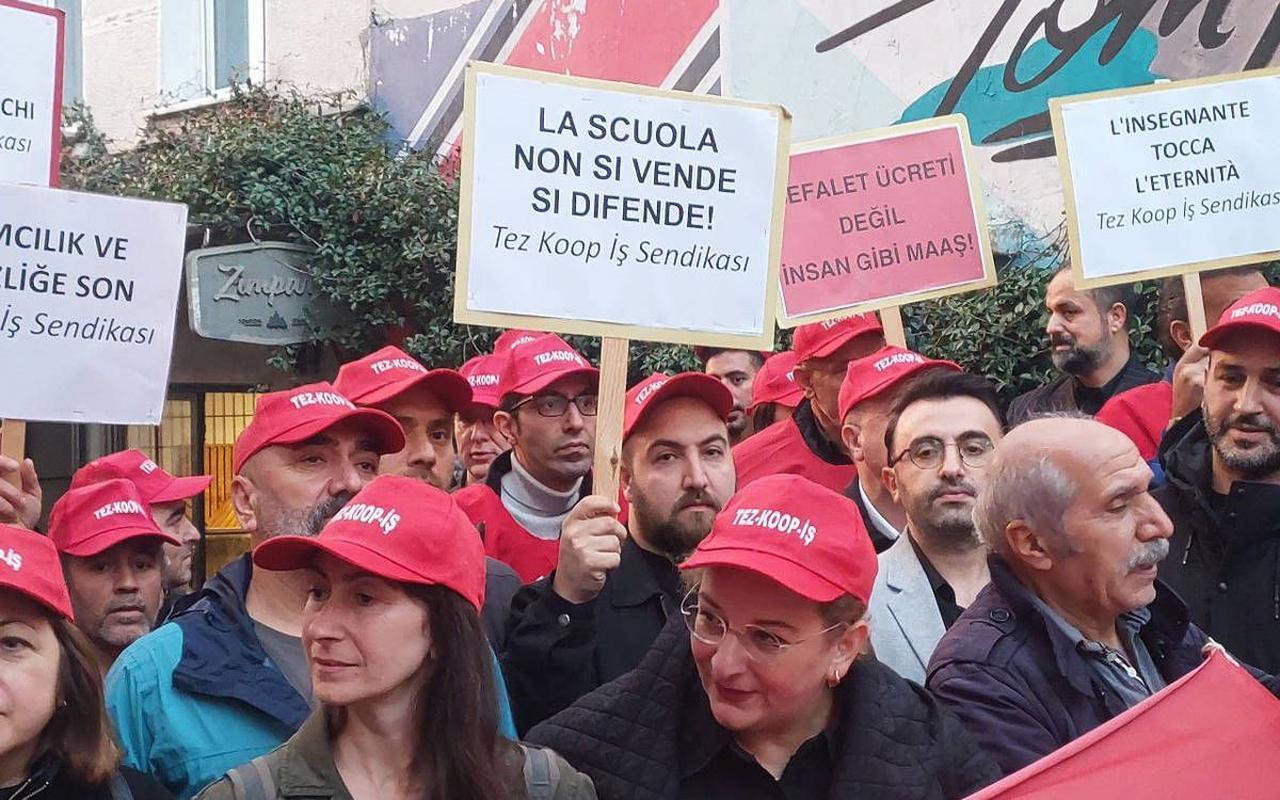
The union said the strike began because of a deep structural inequality between Turkish and Italian staff at the school. Before the strike, Tez-Koop-Is reported that Turkish teachers earned about 40% less than the Istanbul official poverty line, while their Italian colleagues at the same school earned five to six times as much.
The union also pointed out differences in workload. Turkish teachers had heavier teaching schedules and more supervisory duties, and they did not receive extra pay when covering a colleague's class, whereas Italian teachers did.
Four months of collective bargaining and subsequent mediation did not lead to any progress. Before the strike ended, the school management's final offer was a 0% pay rise for 2025, 15% for 2026, and 0% again for 2027, which the union said it could not accept.
The private Italian High School has a unique place in Istanbul's education system. In Türkiye, it is considered a foreign private school, while in Italy, it is a state school.
This dual structure lets Turkish students who finish the Italian curriculum and pass the exams earn an Italian state diploma as well as their Turkish qualification, which is recognized for university applications in Italy, EU countries, and elsewhere.
The school is located in a late Ottoman-era masonry building and has been running for over a century, educating generations of students who have gone on to work in Türkiye and around the world.


 Set as preferred source
 Set as preferred source



 2 min read