Newsletters


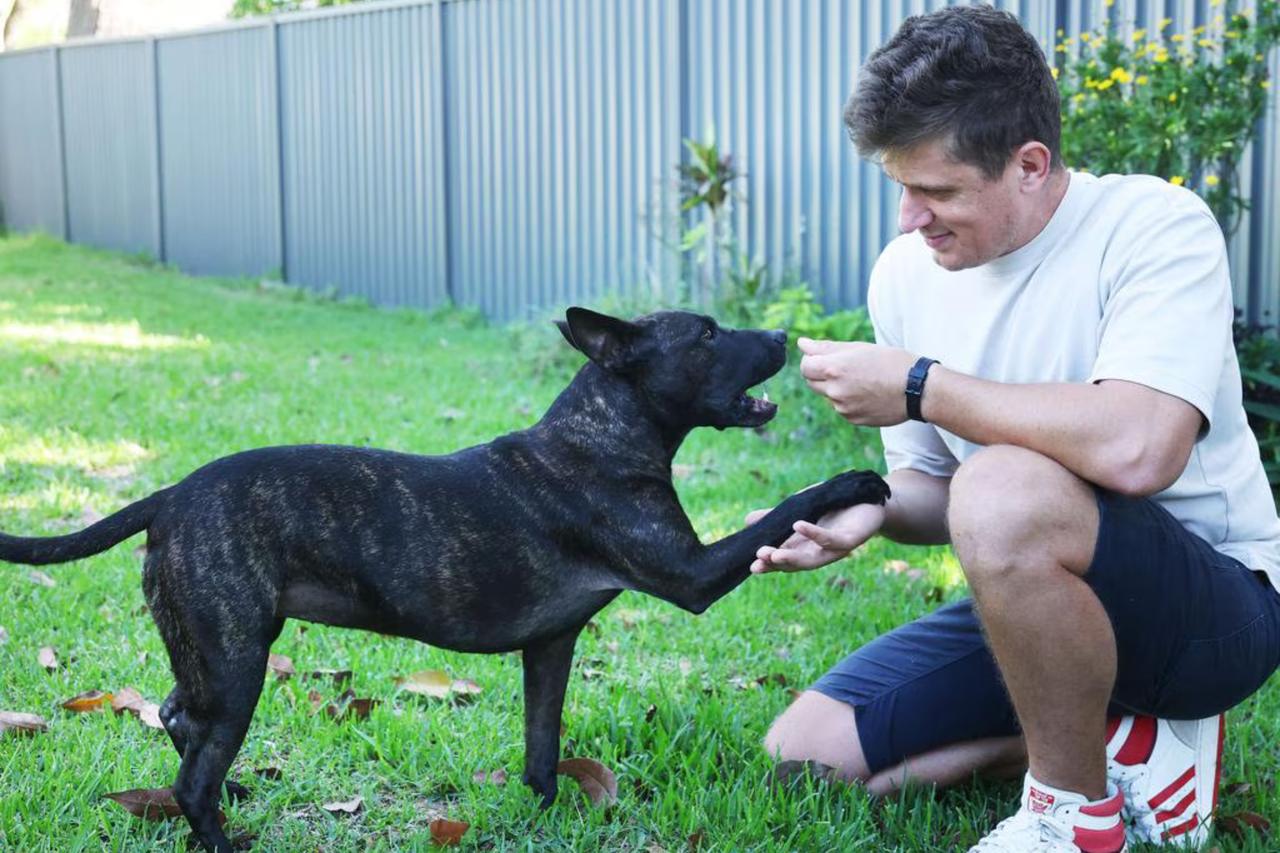


Paul Conyngham, a Sydney tech entrepreneur and AI specialist, used artificial intelligence (AI) to design a personalized mRNA cancer vaccine for his rescue dog, Rosie. Scientists say this breakthrough could speed up the development of similar treatments for people.
Rosie, an 8-year-old staffy-Shar Pei mix, was diagnosed with mast cell cancer in 2024 after large tumors appeared on her back leg. Mast cell cancer is the most common skin cancer in dogs and usually appears as lumps or masses.
Even after spending thousands on chemotherapy and surgery, Conyngham saw the treatments slow the tumors but not shrink them.
Seeking a cure, Conyngham, who co-founded Core Intelligence Technologies and served as a director at the Data Science and AI Association of Australia, used ChatGPT to explore treatment options. The chatbot suggested immunotherapy and the University of New South Wales (UNSW) Ramaciotti Centre for Genomics, where he paid $3,000 to have Rosie's DNA sequenced.
"The first step was to reach out to the university to get Rosie's DNA sequenced," Conyngham said. "You take the healthy DNA out of her blood and the DNA out of her tumor and sequence both to see exactly where the mutations have occurred."
With AI tools like AlphaFold, Conyngham processed large amounts of genetic data to identify tumor mutations and potential treatment targets. This surprised Martin Smith, an associate professor of computational biology and director of the Ramaciotti Centre for Genomics at UNSW.
"Paul was relentless," Smith said. "He called and told me he had analyzed the data, found mutations of interest, used AlphaFold to find the mutated proteins, identified potential targets, and matched them to drugs. I'm like, 'Woah, that's crazy!'"
When the manufacturer refused to allow an initial immunotherapy drug for compassionate use, Smith introduced Conyngham to Pall Thordarson, director of the UNSW RNA Institute. Thordarson used Conyngham's data, condensed into a half-page formula, to create a custom mRNA vaccine for Rosie. This was the first personalized cancer vaccine ever made for a dog.
"This is still at the frontier of where cancer immunotherapeutics are," Thordarson said. "What Rosie is teaching us is that personalized medicine can be very effective and done in a time-sensitive manner with mRNA technology."
Rachel Allavena, a professor of canine immunotherapy with the required ethics approvals, administered the vaccine to Rosie at the University of Queensland's School of Veterinary Science in Gatton. Conyngham drove 10 hours with Rosie for her first injection in December 2025, then returned for a booster in January 2026, with another planned for this month.
The results have been striking. A tennis ball-sized tumor on Rosie's hock has shrunk by about 75%, and her overall condition has improved. "In December, she had low energy because the tumors were creating a huge burden for her," Conyngham said. "Six weeks post-treatment, she spotted a rabbit at the dog park and jumped the fence to chase it."
"It was like holy crap, it worked!" Smith said. "It raises the question, if we can do this for a dog, why aren't we rolling this out to all humans with cancer? It gives hope to a lot of people."
Allavena confirmed the treatment worked. "Rosie's cancer was really, really advanced, but one tumor has shrunk quite a lot, probably by half," she said. "Even her coat looks glossier, and she just seems much happier and healthier."
Conyngham is now developing a second vaccine for a tumor that did not respond to the first treatment. He called the experience an example of citizen science, and researchers think it could help shape the future of cancer treatment for animals and people.
"There's actually a chance that for some cancers, we can change it from being a terminal sentence to a manageable disease," he said. "She's been with me through a whole bunch of really tough times, giving unconditional love. She's my best mate."


 Set as preferred source
 Set as preferred source


 1 min read