Newsletters





In the district of Bogazkale in Corum, home to the ancient Hittite capital Hattusa, a traditional springtime event known as “Cigdem Gezmesi” was carried out, reflecting practices believed to date back to the Hittites.
Held within the framework of a cultural activity recognized on the UNESCO World Cultural Heritage List, the event brought together students, teachers, and local institutions around the ancient landscape of Hattusa, a site with a history stretching back around 8,000 years.
Participants moved around the area carrying wooden sticks called “kiskic,” which are simple hand-held tools used during the ritual, as they gathered yellow crocus flowers, locally known as cigdem. The activity tied the natural arrival of spring to a long-standing communal tradition that continues to be passed down through generations.
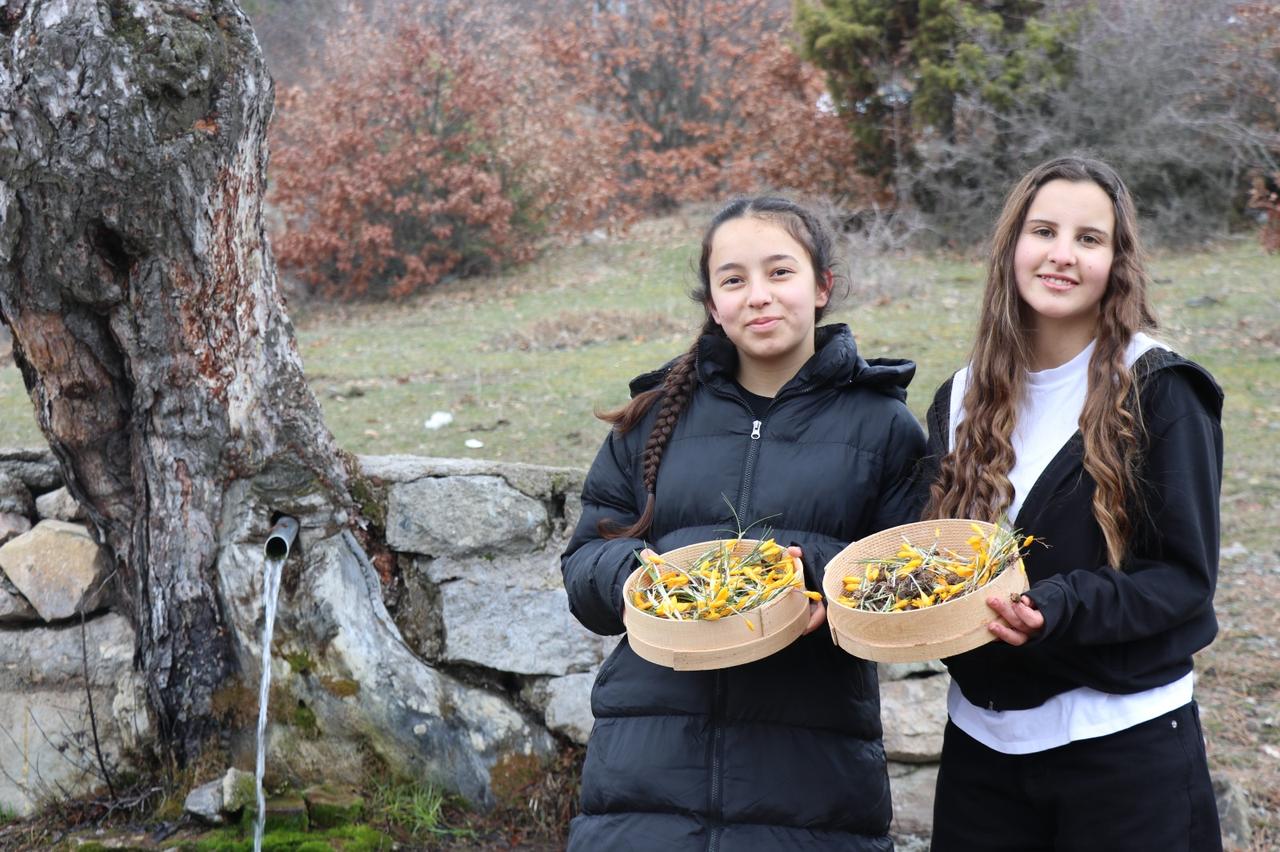

After collecting the flowers, the participants attached them to a branch of the igde tree, a type of wild olive commonly found in the region, and walked through the town center while reciting traditional rhymes.
As the group went from door to door, children called out to residents using another verse, encouraging household participation. In response, locals placed items such as oil and bulgur, a cracked wheat staple widely used in regional cuisine, into the children’s bags. In return, the children handed out crocus flowers, symbolically wishing prosperity and abundance for each home.

The gathered ingredients were then taken to a communal cooking area set up in the garden of the so-called Hittite village, where large cauldrons were used to prepare a traditional dish known as “cigdem asi,” a meal associated with the ritual.
Alongside the main event, children were given sweets, balloons, and various gifts through coordination between local administrative bodies and the provincial Directorate of Culture and Tourism. A mobile library service was also set up, offering access to books and educational materials, further expanding the day’s activities beyond the ritual itself.


 Set as preferred source
 Set as preferred source



 3 min read