Newsletters


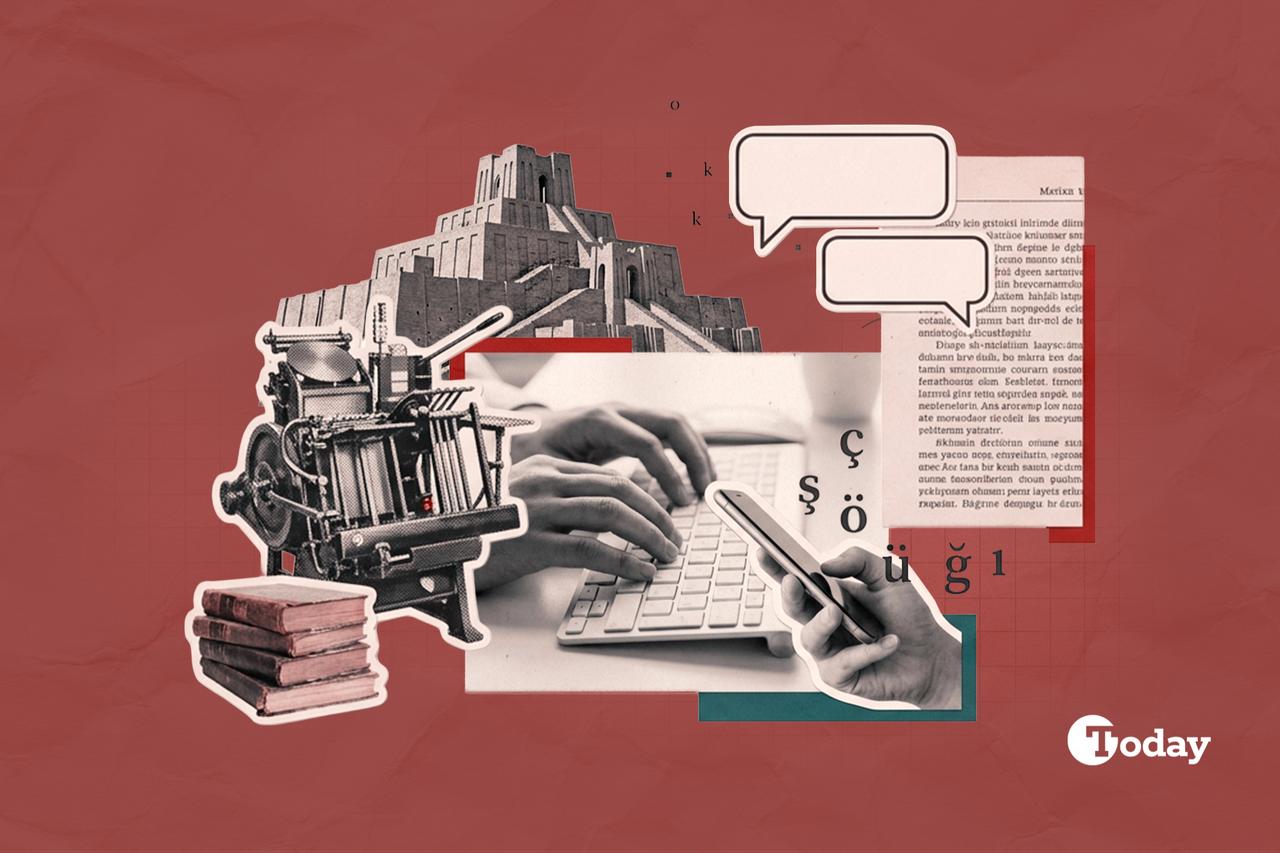


It is one of humanity’s oldest stories. In it, people speak one unified language. Without a communication barrier, they are able to carry their civilization to unparalleled heights. They begin to build a testament to their capability. However, their hubris results in a division of languages, leaving them unable to understand one another.
For as long as we have used language, we have gloried in its ability to advance our civilizations, and we have worried about its disintegration.
When William Caxton brought the printing press to England in 1476, he was faced with a choice: what language to print his books in. Even English was fragmented into multiple regional dialects at that point. He ultimately chose the Chancery Standard, the language used in the Chancery in London for business and other official documents. In the following century, Martin Luther used the Saxon Chancery Language, which he infused with idiomatic expressions familiar to everyday folk, for his Bible translation. The printing press gave languages a guideline for fixed spelling and helped democratize reading. Centuries later, there are concerns over how another revolutionary technology, digital media, may be affecting literacy.
The American version of this concern comes with large numbers and loud headlines, with outlets using the term “literacy crisis.” The figures reported are difficult to shrug off: “57 million American adults are functionally illiterate,” according to Georgetown professor Jishnu Das and his co-authors. Their study is based on the OECD’s 2023 PIAAC (Programme for the International Assessment of Adult Competencies) assessment, which defines literacy as “the ability to understand, evaluate, use and engage with written texts to participate in society and achieve one’s goals.” So this does not mean that 57 million Americans cannot read, but that they may struggle with routine tasks, like following written directions on a bottle of medicine.
Commentator Jared Henderson cautions that “there is no single ‘literacy crisis.’” This label, he argues, lumps together different issues, from how many adults struggle with reading to whether educated people still read at all. The latter problem, it appears, is one that Türkiye shares.
According to 2025 TurkStat data, 97.8% of the population of Türkiye can read and write. However, a TurkStat survey from 2022 says 69.0% of individuals aged 15 and over did not read any books in the past year. And when Türkiye last took part in the OECD’s adult skills survey in 2014–15, 45.7% of adults reportedly scored at the lowest level or below. This is an old figure, but it still helps indicate two issues: a skill gap and a habit gap. Though the habit gap is easier to observe, in this current time of rapid digital task switching, it is harder to change.


The hyper-fragmented digital ecosystem in which we live offers almost instantaneous retrieval of information and services. We begin to expect the same ease and lack of friction from more complex tasks.
Are our smartphones to blame, then? Das and his co-authors also found that declining literacy skills affect different age groups in different countries. New Zealand’s young adults fell sharply, while France lost ground in older adults. So, blaming the usual suspects—younger people's growing use of social media—would not be entirely correct. The situation calls for more comprehensive, country-specific research on this phenomenon.
The shrinking appetite for long reading and careful writing could affect important skills. Following a complex argument, holding a thought for a long stretch of time, and noticing logical gaps are skills that suffer if not exercised. Digital habits do not rule out long reading or writing, but they make the short version easier. The question, to me, is how these habits will shape the way we produce and disseminate works of long-form thought in the coming decades.
The parable of the Tower of Babel ends with people scattered, unable to understand one another. But people divided by language kept speaking, writing, and learning each other’s tongues, building new towers.
At this point in time, more people than ever have the tools to build a platform, interact with others across the world, and share knowledge, or misinformation, making gaining and preserving critical-thinking skills all the more significant. And though more traditional long-form modes of entertainment like reading or going to the cinema are in decline, other long-form storytelling formats like podcasting or video essays are emerging as ways to produce or disseminate knowledge.
This is as much a time of creation as it is a time of decline. The words we write, and the way we write them, tell the story of where we are now. And how language will stretch and expand to fit our newer habits is a story I’m personally looking forward to.


 Set as preferred source
 Set as preferred source



 2 min read