Newsletters


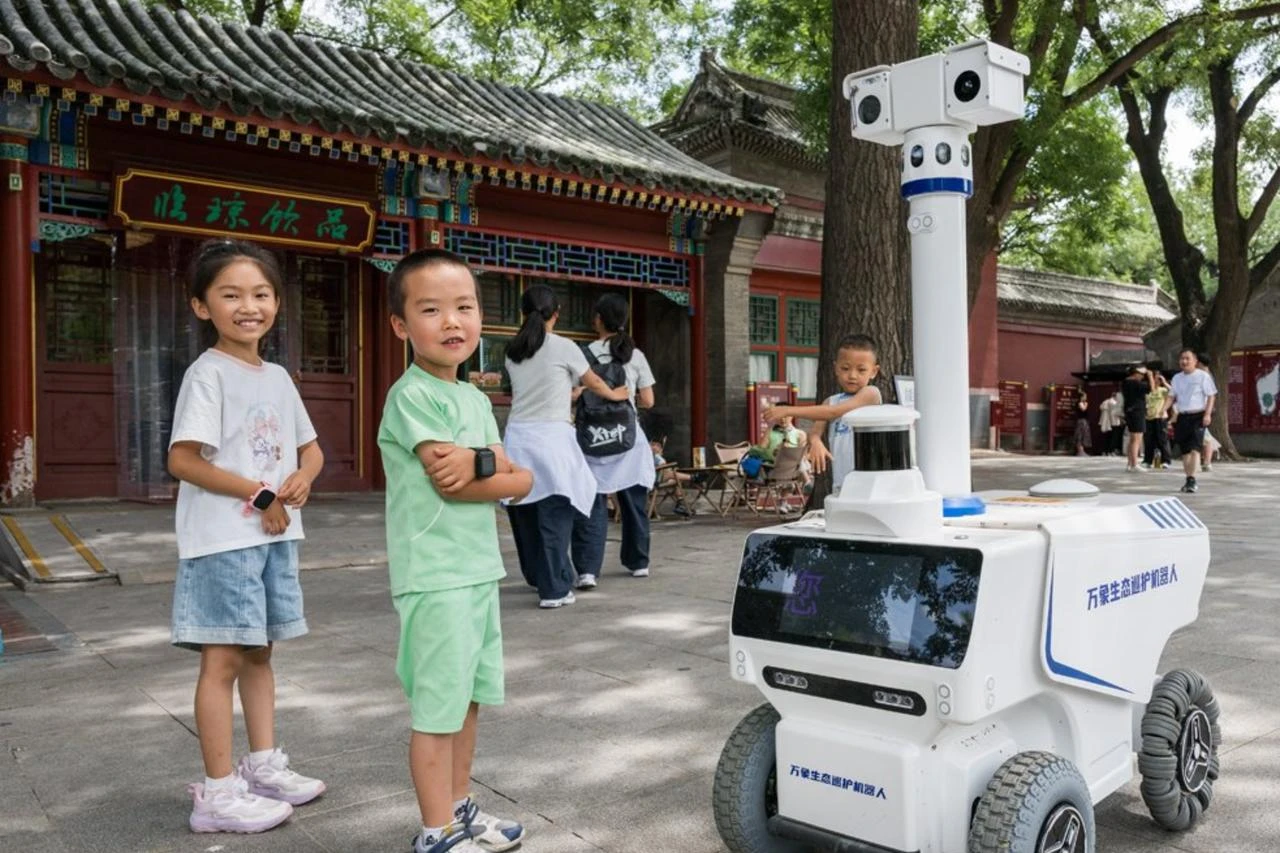


Beijing has deployed 72 robot “employees” across 14 municipal parks this summer, bringing automated cleaning, security patrols, visitor guidance, and pest-control services into public green spaces during periods of high temperatures.
The machines have been assigned different duties depending on each park’s operational needs, while authorities are gathering data from the devices to broaden the use of robotics in urban landscaping and park management.
At the Summer Palace, one of Beijing’s best-known imperial parks, sanitation workers can set up cleaning robots through a mobile application by marking out working areas and choosing the required operating mode.
Once programmed, the machines can start working within 30 seconds. They sweep up litter, spray water, clean along pavement edges, and adjust their intensity according to the amount of waste they detect.
The robots use lidar, a laser-based system that maps surroundings and measures distances, together with other sensors to move through the park while avoiding pedestrians and vehicles.
The Summer Palace has also brought in robotic tour guides, which follow preset routes, provide information, answer visitors’ questions, and remind crowds to maintain order.
Yuyuantan Park has rolled out 11 robots, including a 1.5-meter-tall patrol machine fitted with radar, cameras, and more than 10 artificial intelligence models.
The device can pick up behaviors such as smoking and respond by playing prerecorded warnings.
The wider program first got underway at Yuyuantan Park in 2024, when Beijing set up its first “robot + landscaping” pilot project, combining automated technology with the maintenance and management of public green areas.
Over the following two years, 23 robotic devices developed by 18 companies went through field testing at the park. Technologies that performed successfully were gradually introduced at other municipal parks.
At Zizhuyuan Park, mosquito-catching robots imitate the carbon dioxide released through human breathing, drawing insects toward the machines so they can be captured.
Beijing has also introduced aquatic weed-removal robots capable of cutting, collecting, draining, transporting, and unloading vegetation.
These machines can be controlled remotely or operate autonomously, reducing the need for workers to carry out each stage manually.
Authorities now plan to bring together operational data collected from robots across the parks, allowing managers to monitor their performance and expand their role in landscaping, maintenance, and public-space management.


 Set as preferred source
 Set as preferred source


 1 min read
 1 min read