Newsletters


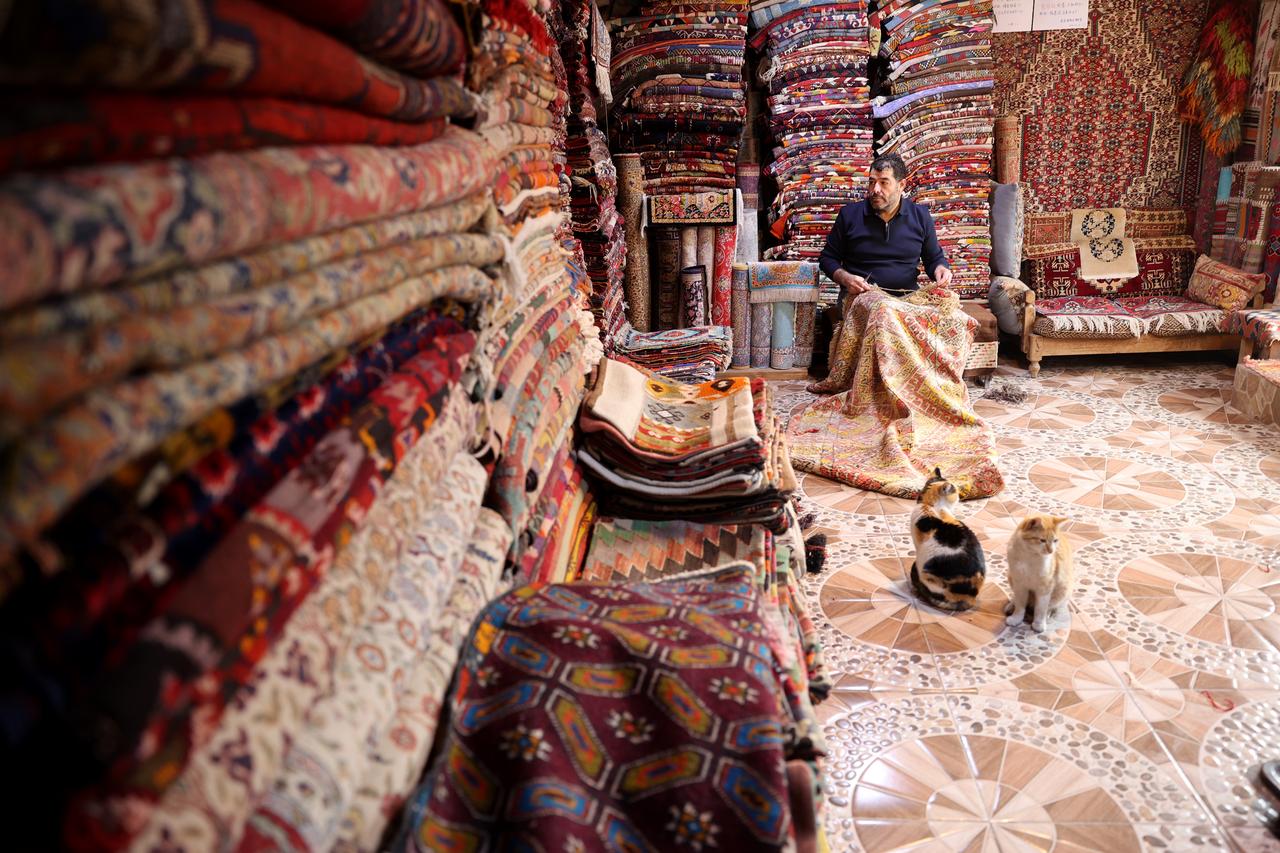
Suleyman Akbas, 50, has devoted nearly four decades of his life to restoring handwoven rugs and kilims, preserving a craft that is slowly disappearing.
His journey began in Sultanhani, Aksaray, where, as a young boy, he entered a small rug repair workshop.
Over the years, he honed his skills in Istanbul and Azerbaijan, learning nuances of weaving and repair that cannot be taught from books.
Today, in Goreme, Nevsehir, he continues his work with the same dedication he had on his first day, treating each rug as a living memory.
For Akbas, every thread is a conversation with the past, and every repaired piece is a bridge connecting generations.
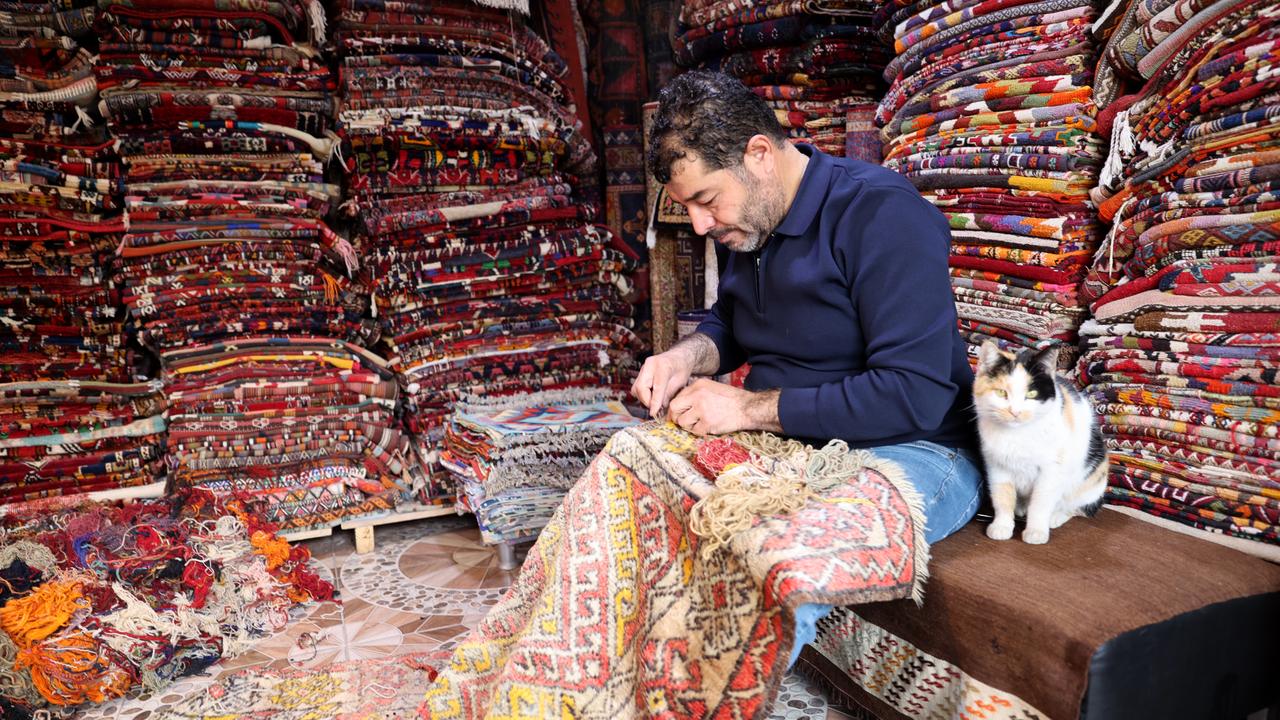
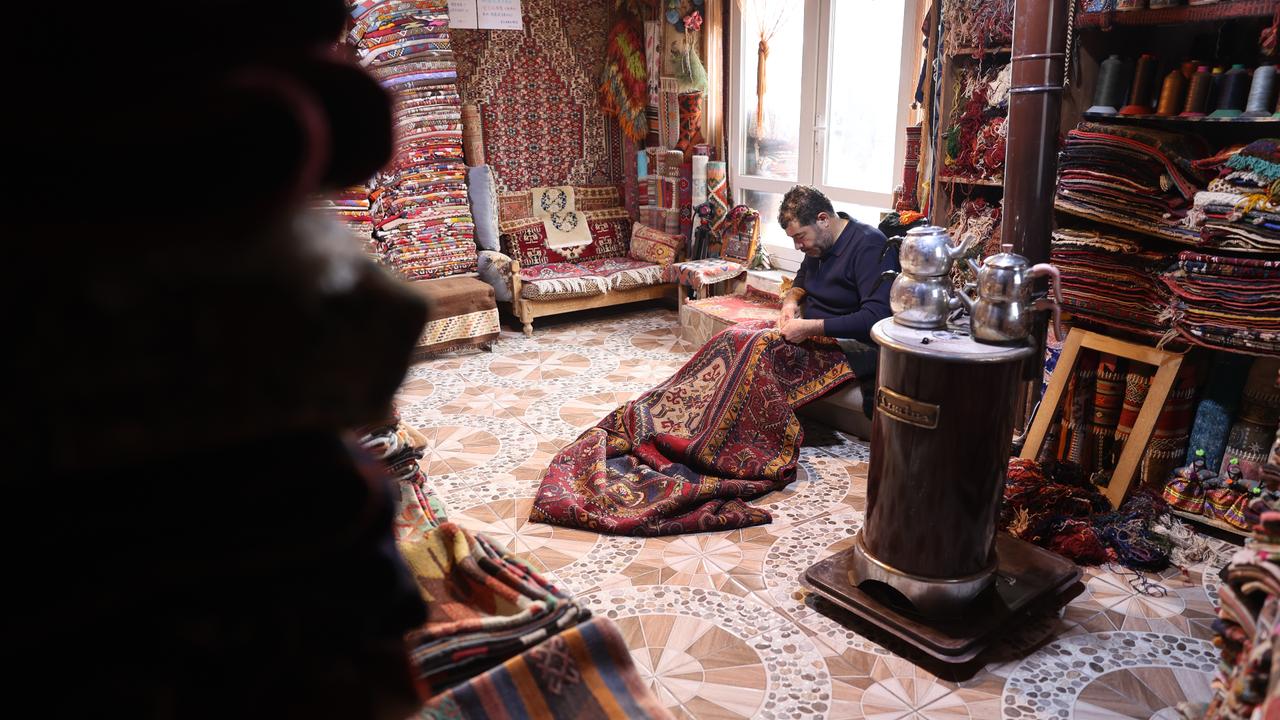
Stepping into Akbas’ workshop in the Gaferli Neighborhood feels like entering a living museum.
Stacks of rugs and kilims rise from the floor to the ceiling, some rolled neatly, others folded and waiting their turn.
The faint earthy scent of wool mixes with the subtle aroma of natural dyes.
Light filters through the windows, casting soft shadows over intricate patterns, some faded with age, others vibrant from careful repair.
Akbas begins by examining each motif closely, tracing the history woven into the fibers.
Many of the rugs that come to Akbas are considered beyond repair.
Rather than discarding them, he salvages the yarn, carefully untangling decades of use and wear.
The fibers, once dull and lifeless, are transformed into vibrant threads that match the original colors almost perfectly.
“I try to give these rugs a second life,” Akbas says. “Each one has seen families grow, rooms fill with laughter, and footsteps echo.
By reusing the threads, their stories continue.”
Through this labor, Akbas practices both sustainability and reverence for history, proving that the life of a rug does not end when it is worn.
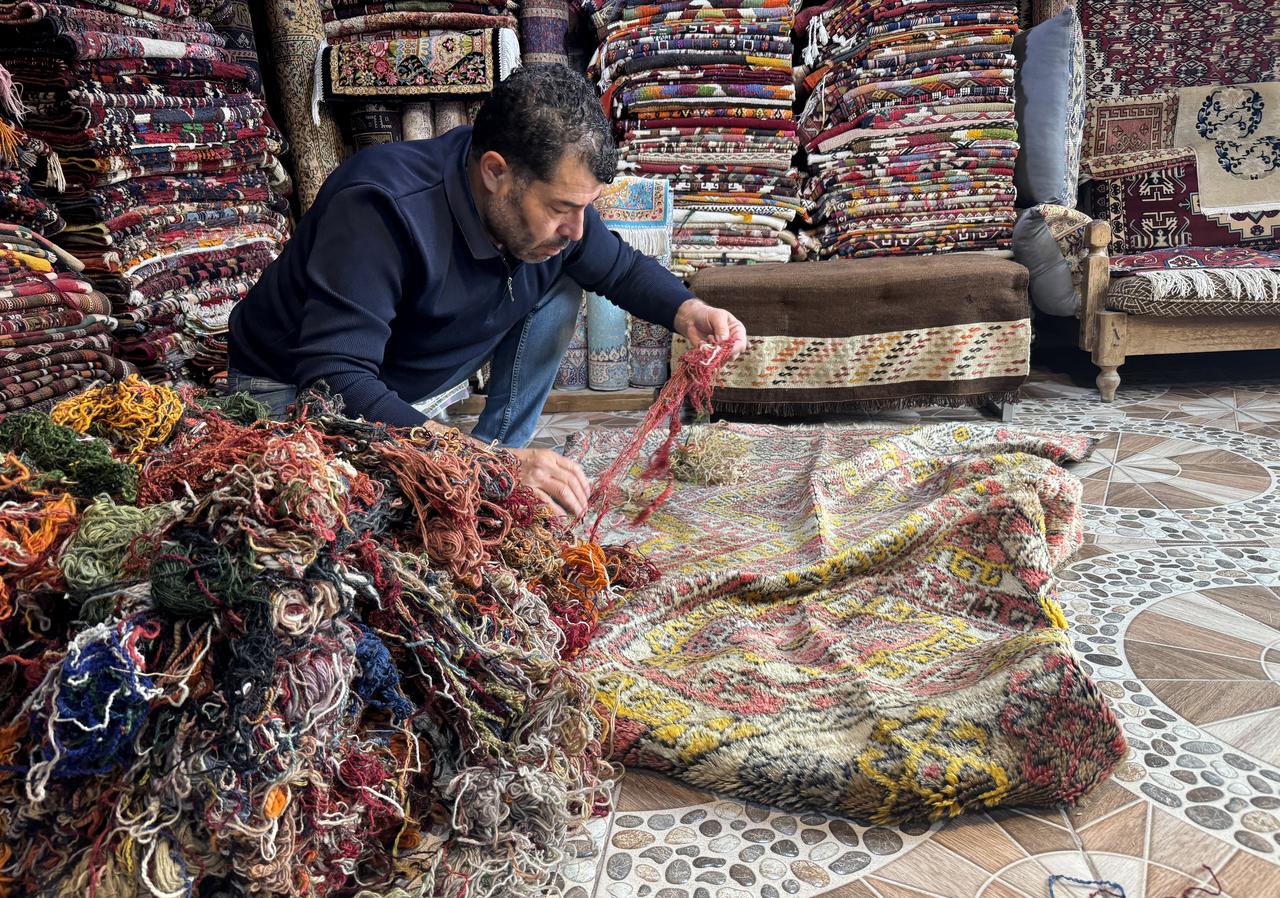
“Repairing is harder than weaving,” Akbas explains. Unlike weaving, where the maker controls every thread from the start, restoration requires understanding the original work, analyzing every knot, warp, and weft, and matching it meticulously. A single mistake can disrupt the pattern, altering its rhythm and authenticity.
He compares the work to a doctor performing surgery-delicate, precise, and demanding complete focus. Each stitch he makes revives the original structure, restoring both beauty and function.
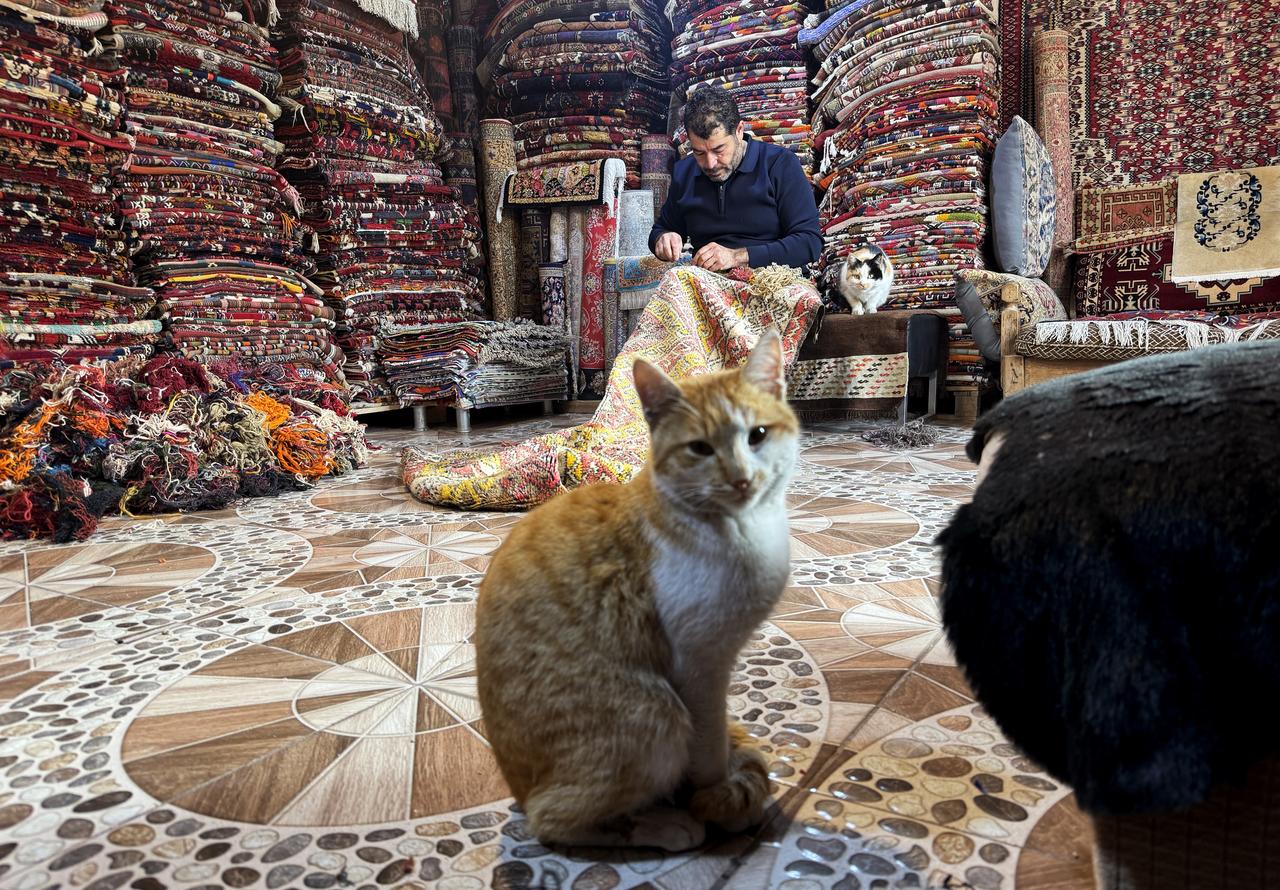
Two cats, Kehribar and Sari, roam freely through the workshop, often curling beside Akbas as he works.
The strays he rescued wait for him at the door each morning, their soft purrs accompanying the quiet hum of needle and thread.
Their presence is comforting, a small but constant reminder that the space is alive, not just with rugs but with companionship and warmth.
Akbas laughs as he says, “They are not mine—they are Allah’s (silent) creatures—but they give me energy, calm my stress and watch over my work.”
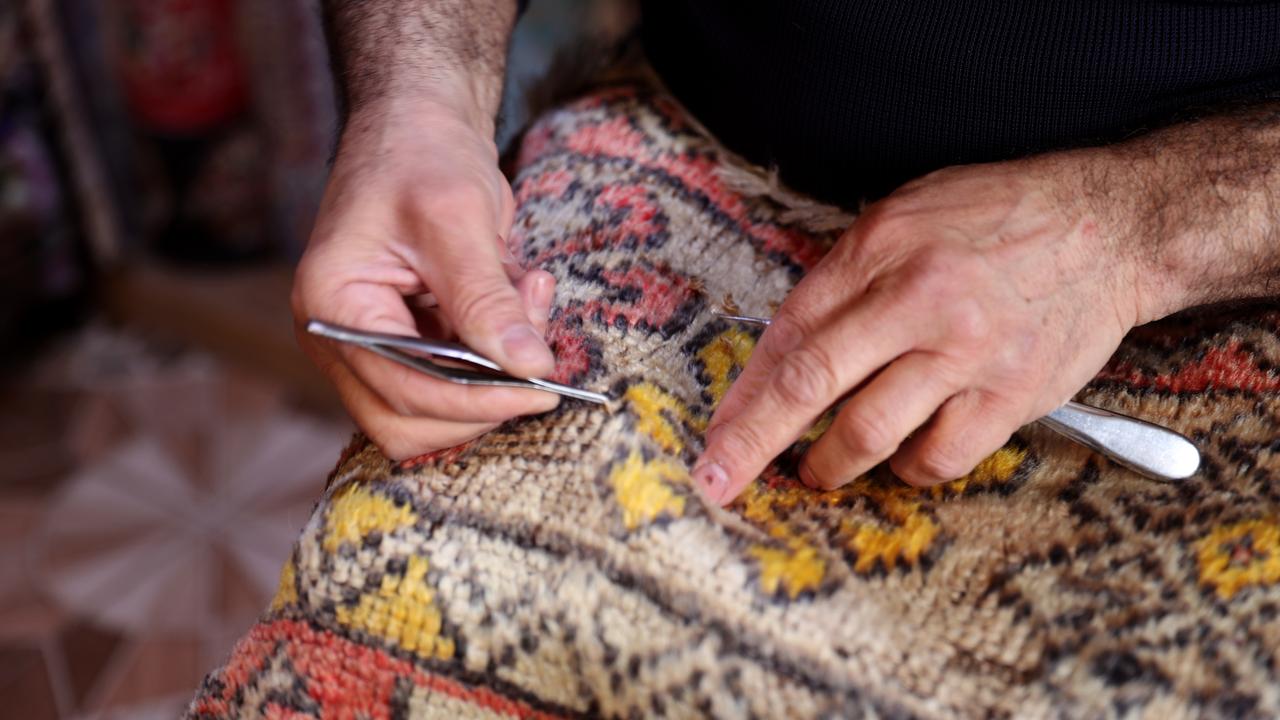
Akbas stands among the last keepers of this tradition, bringing old rugs back to life with patience and skill.
“Machines cannot replicate the soul of these rugs,” he says. “But if people continue to value them, this culture will survive.”


 Set as preferred source


 2 min read